Deer Carts on Forest Roads
Dragging a deer out of the woods after a successful hunt is one of the toughest parts of the entire experience, especially when you're miles back on a winding forest road that's too narrow for a truck. Many hunters face the daunting task of muscle and grit, wondering if there's a better way to get their hard-earned venison back to the vehicle without throwing out a back. This guide is all about making that retrieval easier, focusing on how deer carts can become your best friend when hunting Virginia's diverse public lands, particularly those with accessible forest roads.
Why a Deer Cart is a Game-Changer on Forest Roads
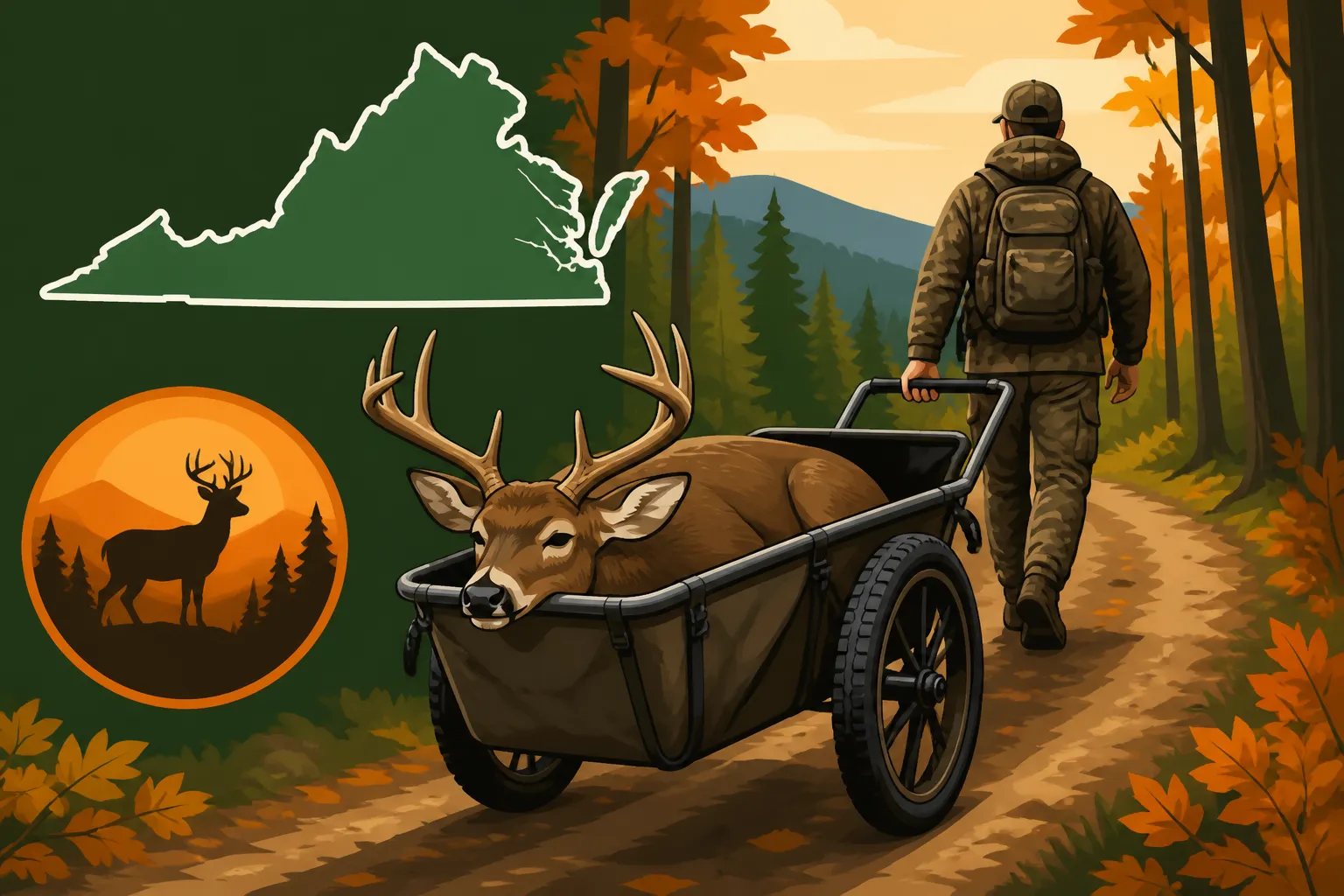
Let's be honest: nobody looks forward to the drag. After the shot, the adrenaline starts to wear off, and the reality of moving a hundred-plus-pound animal through brush, over downed logs, and across uneven terrain sets in. If you're hunting spots like the George Washington National Forest or the Jefferson National Forest, or even many of Virginia's Wildlife Management Areas, you often find yourself miles from a paved road, navigating a network of old logging roads or gravel paths. This is precisely where a quality deer cart shines, transforming a back-breaking ordeal into a manageable task.
Alleviating Physical Strain on Long Hauls
The primary benefit of a deer cart is simple: it saves your back. Traditional dragging, even with a good deer sled, forces you into awkward postures, strains your lower back, and wears you out quickly. When you're trying to Dragging a Deer Out of a Mountain Hollow or just traverse a few miles of rolling hills, every bit of energy conserved is precious. A deer cart allows the animal's weight to be distributed over wheels, turning a pull into a push or a lighter pull, especially on relatively flat or gently sloping forest roads. This means less exhaustion at the end of the day, and more importantly, less risk of injury, allowing you to be ready for the next hunt.
Imagine a scenario: you've just taken a nice doe about a mile and a half back on an old, overgrown logging road within a WMA. The path is clear enough, but it has some rocky patches and gradual inclines. Without a cart, you're looking at a grueling hour-long drag, stopping every 50 yards to catch your breath. With a sturdy deer cart, you can load the deer, strap it down securely, and systematically navigate the terrain. What was once a painful slog becomes a focused, albeit still physically demanding, trek that gets you back to your truck faster and with less residual pain. This is particularly true if you are Packs for a Jefferson Forest Day Hunt and are already carrying your stand and other gear.
Navigating Varied Virginia Forest Roads
Virginia's forest roads aren't all uniform. You'll encounter everything from well-maintained gravel roads to barely-there two-tracks, often with significant ruts, loose rock, or sections covered in leaf litter. A well-designed deer cart is built to handle this variety, excelling where a simple drag strap falls short. While a cart won't magically float over every obstacle, it provides a mechanical advantage that allows you to maneuver over or around challenging spots much more easily than muscling the entire weight yourself.
Consider the difference between dragging a deer across deep gravel versus rolling it on a cart. The deer's body will dig into the loose gravel, creating immense friction. A cart, with its larger wheels, will roll over the top, making the same stretch of road significantly less demanding. Even on slightly muddy or uneven sections, the wheels can provide better traction and leverage. However, it's crucial to understand that extremely steep or boulder-strewn sections will still pose a challenge, and sometimes you might need to temporarily unload and carry parts of the cart or the deer separately over the worst obstacles before reloading. Planning your route and knowing the Vehicle Rules on Virginia Public Land for specific roads can inform your cart choice.
Choosing the Right Deer Cart for Virginia's Terrain
Selecting a deer cart isn't a one-size-fits-all decision. The best cart for you will depend heavily on the specific types of terrain you hunt, the size of game you typically pursue, and your budget. In Virginia, where you might hunt flat Piedmont agricultural lands one weekend and then steep Appalachian slopes the next, versatility or having specialized equipment can be key. When you're browsing options, thinking about what kind of ground you usually cover is going to be your guiding star.
Types of Deer Carts and Their Features
Deer carts come in a few main designs, each with pros and cons that are worth considering.
- Two-Wheel Carts (Standard): These are the most common type. They typically feature a metal frame (often aluminum or steel) and two wheels. They're designed for balance and stability, allowing you to load a deer and push or pull it.
- Pros: Generally lighter, easier to maneuver in tighter spots, and often more affordable. Good for rolling over logs or through shallow ruts.
- Cons: Can be challenging on very steep side-slopes, and if the load isn't balanced, more weight falls on the user. Smaller wheels can get bogged down in soft ground.
- Four-Wheel Carts (Wagons): Less common for single deer retrieval, but some larger models resemble wagons or small utility trailers.
- Pros: Excellent stability, distributes weight very evenly, can handle heavier loads, great for relatively flat and open ground like wide forest roads or fields.
- Cons: Heavier and bulkier to transport, less maneuverable in tight timber, and generally more expensive. Not ideal for truly rugged, uneven, or steep mountain terrain.
- Single-Wheel Carts (Game Carriers): These are more like a heavy-duty wheelbarrow for game.
- Pros: Extremely narrow profile, allowing access through dense woods or very tight trails where two-wheel carts might struggle. Good for balancing on narrow paths.
- Cons: Requires more strength and balance from the user, as the entire weight rests on one wheel and the user balances the handles. Can be unstable if the game isn't centered perfectly.
When researching, hunters often turn to forums or review sections on sites like GoHunt to see how different carts perform in real-world hunting situations. You'll find folks discussing everything from wheel durability to how easy a cart is to fold and strap to a tree while hunting.
Key Considerations for Virginia Hunters
Virginia offers diverse hunting landscapes, so your cart choice should reflect that.
| Feature | Piedmont (Flatter, Farm Country) | Mountains (Steep, Rocky, Uneven) | Eastern Shore (Sandy, Marshy) |
|---|---|---|---|
| Wheel Size | Medium to large (16-20 inches) for efficiency on gravel/dirt | Large (20+ inches) with aggressive tread for traction and obstacle clearance | Large, wide wheels to resist sinking in soft ground |
| Frame Material | Steel or aluminum; durability is key | Durable aluminum for weight savings and strength | Corrosion-resistant aluminum preferred |
| Weight Capacity | Standard capacity (200-300 lbs) sufficient for most deer | Higher capacity (250-400 lbs) if targeting larger bucks/bears | Standard capacity, but overall cart weight matters for transport |
| Foldability | Convenient for transport in truck beds or smaller vehicles | Important for stowing when walking into remote areas | Less critical if using larger vehicles/ATVs for access |
| Tires | Pneumatic (air-filled) for cushioning over gravel | Pneumatic, thick tread, or solid non-flat options for ruggedness | Puncture-resistant, wide pneumatic tires |
If you're primarily hunting the vast expanses of the Jefferson or George Washington National Forests, you'll want a cart with larger, more robust wheels, preferably pneumatic (air-filled) with aggressive tread, to navigate rocks, roots, and steep grades. A cart that folds down for easy transport in your vehicle or even to be lashed to a pack for a short walk into a remote area is also a huge plus. On the other hand, if you're hunting more open, relatively flat Hunting the Virginia Piedmont farm country, a slightly smaller, lighter cart with good maneuverability on dirt access roads might suffice.
Think about the largest animal you realistically expect to haul. Most Virginia deer range from 100-200 pounds field dressed, but a big buck or even a bear could easily push that higher. Ensure the cart's weight capacity and overall construction are up to the task. Nothing is worse than having your cart fail halfway through a retrieval.
Maximizing Efficiency: Using Your Deer Cart Effectively
Having a deer cart is one thing; using it effectively to make your retrieval as smooth as possible is another. It takes a bit of practice and planning, especially when you're dealing with varied terrain and the unexpected challenges that always seem to pop up on a hunt. A well-used cart can be a lifesaver, but a poorly managed one can add more frustration than it solves.
Pre-Hunt Scouting and Route Planning
The work for an efficient retrieval starts long before you pull the trigger. When you're doing your Scouting Virginia Public Land Before Season, pay close attention to potential access points and the condition of forest roads. Use mapping tools like those offered by GoHunt or a good topo map to identify old logging roads, fire breaks, or designated trails that are wide enough and stable enough for a deer cart. Understanding the topography and identifying "bailout" routes can save you a lot of headache.
Even when you're hunting within a specific area like Where George Washington Forest Bucks Bed, having a mental or marked map of possible cart routes from likely kill zones back to your vehicle is invaluable. Look for natural funnels, saddles, or benches that might offer easier travel. Sometimes, a slightly longer route on a better road is far less effort than a shorter, direct path through thick timber or down a treacherous slope. Pay attention to how the road itself lays out, noting any particularly steep sections or large washouts that might require extra effort or a different approach.
Proper Loading and Securing Your Harvest
Once you have your deer down and field-dressed (or are performing the gutless method), proper loading onto the cart is crucial for stability and ease of movement.
- Field Dressing: Make sure the deer is thoroughly field-dressed. This reduces the weight considerably and makes the carcass much easier to handle. If you're hunting in warm weather, getting the guts out quickly is also vital for meat preservation. For tips, you might check out Field Dressing a Deer in Cold Weather.
- Positioning: Lay the deer on the cart with its back to the frame. This keeps the deer relatively flat and low, which aids stability. For a buck, often the antlers can be positioned over the front or rear to prevent them from catching on brush.
- Balancing the Weight: Try to center the deer's weight over the axle(s) as much as possible. This minimizes strain on your arms and back. If the deer is too far forward or back, it will feel much heavier and be harder to control.
- Securing the Load: Use several strong straps or bungee cords to tightly secure the deer to the cart frame. You don't want the deer shifting around as you move, especially on uneven ground or inclines. A shifting load can cause the cart to tip or become uncontrollable. Two straps are a minimum; three or four are better, crisscrossing them for maximum security.
- Head and Legs: Tuck the deer's legs and head close to the body, often tying them with rope or extra straps, to prevent them from snagging on branches or underbrush as you walk. This is particularly important on overgrown forest roads.
When you begin moving, go slowly at first, especially on declines or tricky sections. Use the cart's handles to guide, not just pull. You're steering more than dragging. On steep downhills, allow the cart to lead, maintaining control by holding back on the handles and letting the wheels roll slowly. On uphills, pushing can often be easier than pulling, using your body weight to drive it forward.
Navigating Challenging Sections of Forest Road
Even the best forest roads have their challenges. Here's how to tackle some common issues:
- Loose Gravel/Soft Dirt: Maintain steady momentum. If the wheels start to dig in, try to shift your weight or push from the side to keep the wheels on top of the surface. Wider tires generally perform better here.
- Ruts and Bumps: Don't try to power directly through deep ruts. Instead, try to position one wheel in the rut and the other on the higher ground, or straddle the rut if it's not too wide. For large bumps or small logs, a good cart will allow you to leverage the handles to lift the front wheels over, then push the rear wheels over.
- Steep Inclines/Declines: These are where carts can be most challenging. On steep uphills, take frequent breaks. If hunting with a partner, one person can pull from the front while the other pushes from behind. On steep downhills, be extremely cautious. Go slow, keep a firm grip on the handles, and let the cart roll at a controlled pace. If it feels too fast, wedge a wheel with a foot or find a spot to pause and regain control. Never let go of the cart on a steep descent.
- Side Slopes: Forest roads sometimes cut across hillsides, creating a slight side slope. This can cause a two-wheel cart to want to tip. Keep your weight on the uphill side of the cart, pulling it slightly against the slope to maintain balance.
- Obstructions: If you encounter a large tree fall or a boulder too big for the cart, you may have to temporarily unload the deer and carry it over the obstruction, then re-load. Sometimes, two people can lift the entire loaded cart over smaller obstacles.
Remember that hunting in high-pressure areas, especially during Virginia's General Firearms Deer Season, means you might share these forest roads with other hunters. Be courteous and safe.
Maintenance and Care for Your Deer Cart
A deer cart is an investment in your hunting comfort and success. Like any piece of gear, it will serve you best if you give it a little love and attention, especially after a grueling retrieval down a dusty, muddy, or rocky Virginia forest road. Neglecting maintenance can lead to unexpected breakdowns in the field, which is the last thing you want when you're exhausted and miles from your truck.
Post-Hunt Cleaning and Inspection
Once you've successfully brought your harvest home and processed your deer, your cart needs attention. It's likely covered in mud, blood, and bits of leaves or debris.
- Hose Down: A simple hose-down with water is usually enough to remove most dirt and blood. For stubborn grime, a brush and some mild soap can do wonders. Pay close attention to the wheels, axles, and any folding mechanisms where gunk can accumulate.
- Disinfect: Blood can carry pathogens, and you don't want to bring those home or leave them on your gear. A diluted bleach solution or a commercial disinfectant designed for hunting gear can be used to sanitize the frame and straps. Rinse thoroughly after disinfecting.
- Lubricate: The axles and any moving parts (especially on folding carts) will benefit from a light application of a water-resistant lubricant. This prevents rust and ensures smooth operation for your next outing.
- Inspect for Damage: Take a moment to thoroughly inspect the frame for any cracks, bends, or loose bolts. Check the tires for punctures, tears, or excessive wear. Look at the straps for fraying or cuts. It’s much better to identify a problem now, when you have time to order replacement parts or make repairs, than finding out your wheel is wobbling when you're three miles deep in a WMA.
Off-Season Storage and Repairs
The off-season is the perfect time to get your deer cart in prime condition for the next hunting season. If you put it away dirty or damaged, you're setting yourself up for trouble.
- Tire Care: If your cart has pneumatic tires, check the air pressure before storing it. Over time, tires can lose air, and storing them flat can lead to cracking or dry rot. Inflate them to the recommended pressure. If you noticed any slow leaks during the season, consider patching or replacing the inner tubes. Some hunters opt for solid or foam-filled tires to avoid flats altogether, which can be a worthy upgrade if you hunt particularly thorny or rocky areas. Many hunters check GoHunt forums for discussions on the pros and cons of different tire types.
- Frame Protection: If your cart's paint or coating is chipped, consider touching it up to prevent rust, especially on steel frames. Storing the cart in a dry place, out of direct sunlight and extreme temperatures, will prolong its life.
- Strap Replacement: Even the best straps wear out. If yours are showing significant wear and tear, replace them. Strong, reliable straps are non-negotiable for securely transporting a deer.
- Folding Mechanisms: If your cart folds, ensure the pins, latches, or bolts that secure it in the open and folded positions are in good working order. These are critical for both transport and safe use.
By giving your deer cart the attention it deserves, you ensure it's always ready to perform when you need it most, whether you're bringing a deer out of a dense Hunting a Funnel Between Two Hollows or off a long logging road in the mountains. This dedicated care will help it last for many Virginia hunting seasons to come.
Disclaimer
This article is for general informational purposes only and does not constitute professional advice. Laws, prices and regulations vary by location and change over time. Consult a qualified professional for guidance on your specific situation.