Two-Way Radios on a Deer Drive
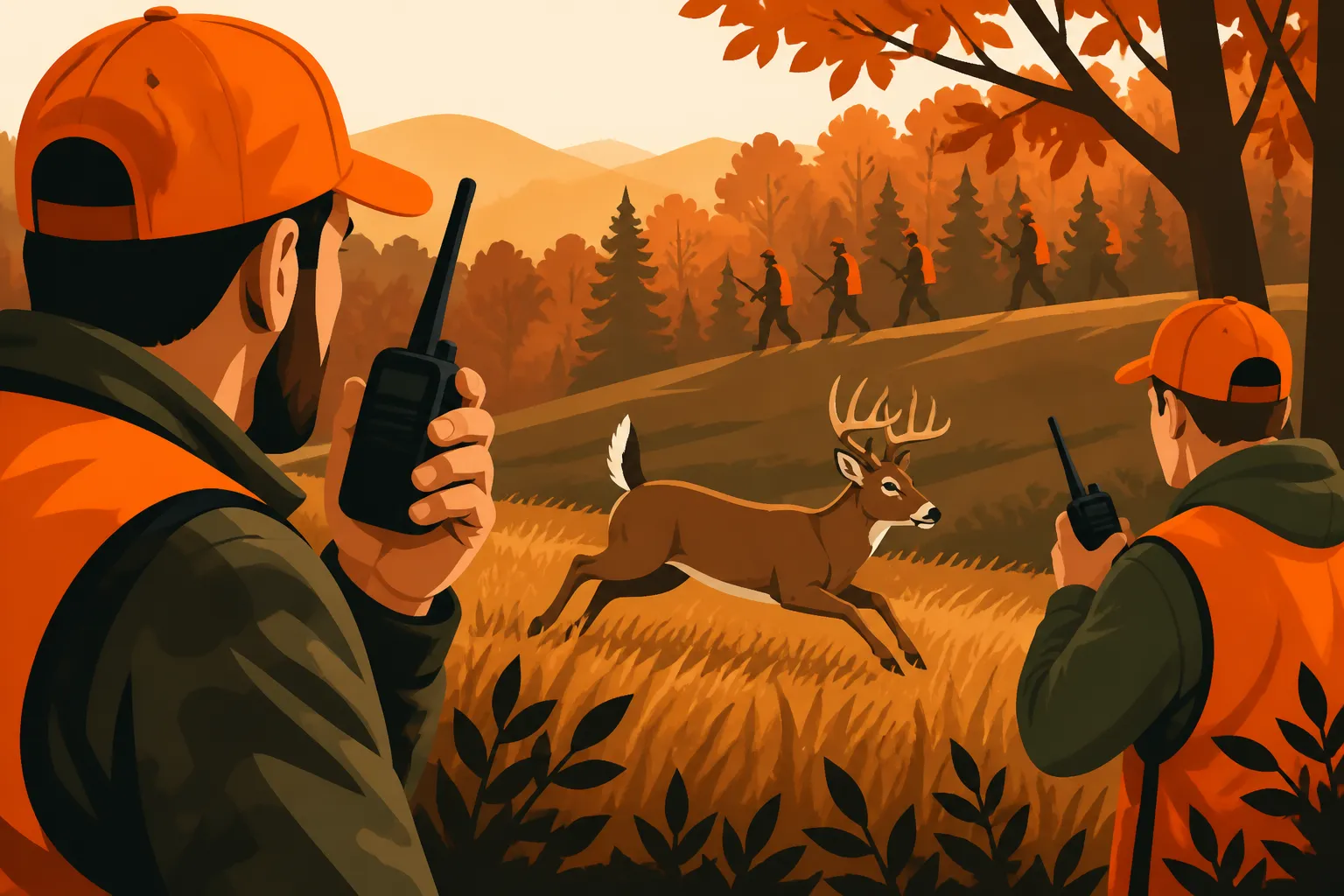
There’s nothing quite like the adrenaline of a deer drive, especially when you’re pushing big timber or winding through thick Virginia cover, trying to put deer on your buddies. But let’s be honest, the communication can often be a mess. You’re shouting, trying to guess where everyone is, and the deer always seem to know exactly where you are before you can even signal. This guide will walk you through how two-way radios can transform your deer drive communication, making it safer, more efficient, and ultimately, more successful.
The Critical Role of Communication in Deer Drives
Deer drives, when executed properly, can be an incredibly effective method for hunting whitetails, especially on larger tracts of public land or private timber that holds deer. However, their success hinges almost entirely on clear, consistent communication between the drivers and the standers (or blockers). Without it, you’re essentially just walking around in the woods, hoping for the best, and potentially compromising safety.
Why Shouting Just Doesn't Cut It
Think about the last time you tried to coordinate a deer drive by yelling. You probably ended up with a lot of confusion, spooked deer, and maybe even a few frustrated hunters. Virginia's diverse terrain, from the steep, hollowed mountains of the Jefferson National Forest to the thick pine plantations and hardwood bottoms of the Piedmont, amplifies these communication challenges. Sound doesn't travel far in dense woods, and yelling only alerts every deer in a quarter-mile radius to your presence. It's not just ineffective for moving deer subtly, but it can also be a significant safety concern if hunters don't know where their partners are or which direction the drive is heading. This breakdown in communication is a common frustration, and it's where modern technology like two-way radios truly shines.
Enhancing Safety and Coordination
Safety is paramount in any hunting scenario, and deer drives present unique challenges due to the movement of multiple hunters in potentially unfamiliar terrain. When you’re running a drive, knowing exactly where your fellow hunters are, both drivers and standers, is absolutely critical. Radios allow for constant, real-time updates on location, progress, and any encountered obstacles or deer movement. Imagine a driver encountering a steep ravine or a downed tree; a quick radio call can alert the team, ensuring everyone stays safe and on track. Similarly, standers can confirm they are in position and ready before the drive begins, eliminating guesswork. This level of coordination helps prevent hunters from accidentally walking into a line of fire or getting disoriented, making the whole operation much smoother and significantly safer. Reliable communication keeps everyone on the same page, turning a chaotic push into a well-orchestrated maneuver.
Choosing the Right Two-Way Radios for Your Hunt
Not all two-way radios are created equal, and what works for a construction site might not be ideal for a deer drive in the George Washington National Forest. When you're selecting radios for your hunting group, you need to consider factors like range, durability, battery life, and ease of use, especially when you're wearing gloves or focusing on the hunt.
Understanding FRS and GMRS Radios
For most recreational hunting groups, you'll be looking at two main types of two-way radios: Family Radio Service (FRS) and General Mobile Radio Service (GMRS).
-
FRS Radios: These are typically what most people think of as "walkie-talkies." They are low-power, short-range devices that operate on specific channels. The great thing about FRS radios is that they are license-free, making them very accessible and easy to use. They're perfect for small groups hunting close together in relatively open terrain, or for Deer Drives With Three or Four Hunters where everyone stays within sight or earshot. However, their range can be significantly limited by thick cover or mountainous topography, which is common throughout Virginia. Don't expect crystal-clear communication across a deep hollow or over a thick ridgeline with basic FRS units.
-
GMRS Radios: These radios offer higher power output and, consequently, greater range than FRS radios. They share some channels with FRS but also have access to additional, more powerful channels. To legally operate a GMRS radio at its full power, you typically need a license. While this might sound like a hassle, it's usually a one-time fee for your entire family and allows for much more reliable communication over longer distances and through tougher terrain. If you're Posting a Drive Around a Mountain Hollow or conducting a large drive where hunters might be spread out, GMRS radios are often the better choice. They also tend to have more robust construction and better battery life.
Consider the terrain you typically hunt. If you're primarily in flat, open Piedmont farm country, FRS might suffice. But if you're navigating the rugged Appalachian ridges, the extra power of GMRS will be a game-changer.
Key Features to Look For
Beyond FRS or GMRS, several features can make a big difference in the field:
- Durability and Weatherproofing: Hunting conditions are rarely pristine. Look for radios that are rugged, water-resistant, or even waterproof. A sudden downpour or an accidental drop shouldn't put your communication system out of commission. Brands like Midland and Motorola offer models specifically designed for outdoor use.
- Battery Life: There's nothing worse than a radio dying halfway through a drive. Opt for models with excellent battery life, preferably those that use rechargeable battery packs and have the option to use standard AA or AAA batteries as a backup. Always start your hunt with fully charged batteries.
- Privacy Codes/Sub-channels: While not truly "private," these codes help filter out transmissions from other radio users on the same channel, reducing interference and ensuring you only hear your hunting party. This is particularly useful on public lands where other groups might be using radios.
- Voice-Activated Transmission (VOX): This feature allows you to transmit without pressing a button, which can be handy when you need both hands free for your firearm or gear. However, it can also pick up ambient noise, so test it thoroughly before relying on it during a crucial moment.
- Headset Compatibility: Being able to use an earpiece and microphone can dramatically improve communication by keeping your hands free and allowing for quieter, more discreet conversations, especially when you're a stander trying not to move.
- Range and Power: While advertised ranges can be optimistic, especially in thick woods, look for radios with higher power output (measured in Watts) for better penetration of cover. Some GMRS radios can transmit at up to 50 watts (with the appropriate license).
Radio Comparison for Virginia Hunting
| Feature | FRS Radios (Family Radio Service) | GMRS Radios (General Mobile Radio Service) |
|---|---|---|
| Power Output | Low (typically 0.5-2 Watts) | Higher (up to 50 Watts with license, many handhelds 5-8W) |
| Range (Typical) | Short (0.5-2 miles in dense woods, up to 5 miles line-of-sight) | Medium to Long (1-5 miles in dense woods, up to 35 miles line-of-sight) |
| Licensing | No license required | FCC license required for full power use (one license covers family) |
| Channels | 22 channels (shared with GMRS) | 22 shared channels + 8 dedicated GMRS repeater channels |
| Durability | Varies, many consumer-grade | Often more rugged, professional-grade options available |
| Cost | Generally lower | Generally higher, especially for higher power models |
| Best Use Case | Small groups, short distances, relatively open terrain, simple communication | Larger groups, longer distances, rugged terrain, enhanced safety |
For those scouting new areas or trying to understand topography, tools like GoHunt, with its detailed maps and layers, can help you anticipate potential radio dead zones and plan your drive accordingly. Knowing the elevation changes and thickest cover beforehand can inform your radio choice and communication strategy.
Best Practices for Using Radios on a Deer Drive
Having the right radios is only half the battle; knowing how to use them effectively and safely is equally important. Proper radio etiquette and a well-thought-out communication plan can make all the difference in the success and safety of your drive.
Pre-Drive Planning and Channel Selection
Before you even step foot in the woods, the entire hunting party should gather to discuss the drive plan and radio usage. Assign clear roles – who are the drivers, who are the standers? Establish a primary radio channel and a backup channel in case of interference. Use privacy codes if your radios have them, to ensure you're only hearing your group. Make sure everyone understands the boundaries of the drive, the planned route for drivers, and the designated stander positions. This is also a good time to review hand signals for silent communication when radios aren't feasible or could spook nearby deer. You can also use a good mapping application to mark positions and potential hazards, and GoHunt offers excellent functionality for this, allowing you to share waypoints and routes with your team.
For instance, if you're planning a drive on a specific ridge line, perhaps following advice for Still-Hunting Jefferson Forest Ridges, pre-program your radios, do a radio check, and confirm everyone knows the plan.
Clear and Concise Communication
When using radios during a drive, brevity and clarity are key. Avoid unnecessary chatter. Use clear, simple language and establish agreed-upon codewords or phrases for common situations. For example, "Deer moving east, between stander 2 and 3" is much more useful than a panicked "Deer! Over here!" Always identify yourself when you begin speaking, especially if multiple people are on the same channel. "Stander 1 to Driver 3, I have movement," lets everyone know who is talking and who they're addressing. Remember the "radio check" before you begin the drive and periodically throughout to ensure everyone is still connected. In the heat of the moment, it's easy to get excited, but maintaining composure and clear communication will yield better results and enhance safety.
Battery Management and Signal Checks
Radios are only useful if they're powered on and working. Always start your hunt with fully charged batteries, and carry spares if possible, especially on longer hunts or multi-day trips. Periodically check your signal strength, especially as drivers move through varied terrain. If a stander reports a weak signal, advise them to adjust their position slightly or be prepared for potential communication loss. Cold weather can significantly impact battery performance, so keeping spare batteries warm in an inner pocket can be a smart move. On a cold December day when you’re Cold-Weather Sitting Strategy in the Mountains, a dying radio is the last thing you need.
Legal and Ethical Considerations
While two-way radios greatly enhance safety and coordination, it's important to be aware of any regulations and to always hunt ethically.
Virginia Regulations and Etiquette
Generally, there are no specific Virginia Department of Wildlife Resources (DWR) regulations prohibiting the use of two-way radios for communication during deer drives. However, it's always wise to double-check current DWR guidelines, as rules can change. The main concern, ethically, is ensuring that radio use doesn't give an unfair advantage in a way that goes against the spirit of fair chase, but for coordinating drives and enhancing safety, they are widely accepted. When you're on public land, remember that other hunters might be nearby. Keep your radio volume low and avoid excessive chatter to minimize disturbance to other hunters and wildlife. Respect for fellow hunters is a cornerstone of our sport. Imagine setting up for a Deer Drives on Virginia Public Land only to have another group's loud radio calls spook your deer.
Maintaining Situational Awareness
Even with crystal-clear radio communication, never let technology replace your own situational awareness. Always know your surroundings, your shooting lanes, and the location of your fellow hunters. Radios are a tool to aid your hunting, not replace your instincts and careful observation. Keep your head on a swivel, wear your required Virginia Blaze Orange Requirements, and be aware of potential hazards, whether it's difficult terrain or other wildlife. If you're Tracking a Deer Through Virginia Leaf Litter after a shot, a radio can help coordinate the tracking effort with your group, but your eyes and ears are still your primary tools.
Always prioritize safety. If you lose radio contact with a hunter and cannot re-establish it, pause the drive and take steps to locate them. A deer isn't worth a preventable accident.
Disclaimer
This article is for general informational purposes only and does not constitute professional advice. Laws, prices and regulations vary by location and change over time. Consult a qualified professional for guidance on your specific situation.