Posting a Drive Around a Mountain Hollow
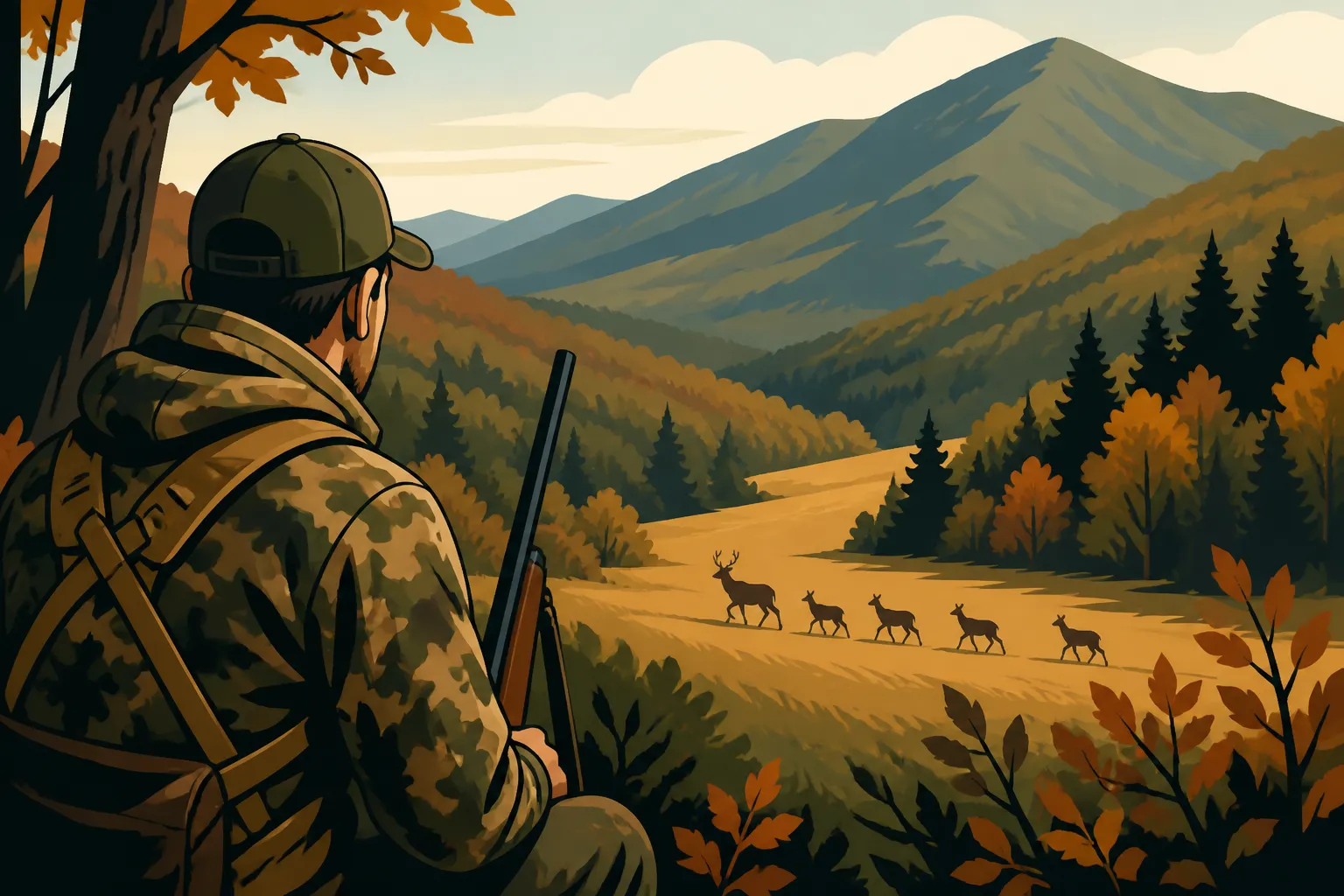
Trying to organize a deer drive in Virginia's vast, rugged mountain country can feel like herding cats in a fog. Those deep, winding hollows offer deer endless places to hide, circle back, or simply vanish, leaving drivers exhausted and posters scratching their heads. This guide is here to unravel the complexities of executing a successful deer drive around a mountain hollow, giving you the strategic insights and practical tips needed to push deer effectively and safely to waiting hunters.
Understanding the Mountain Hollow Dynamics
Mountain hollows are fascinating, complex pieces of deer habitat. They aren't just empty spaces; they're intricate systems of cover, food, and escape routes that deer know like the back of their hoof. Understanding how deer utilize these features is the first step to planning any effective drive.
How Deer Use Hollows for Cover and Escape
Imagine a deep, secluded hollow, perhaps with a small creek trickling through its bottom, flanked by steep, timbered slopes. To a deer, this isn't a problem; it's a sanctuary. During the day, particularly after some hunting pressure has been applied, deer will often bed down in these hollows, seeking refuge from the wind and direct sunlight. The dense undergrowth, laurel thickets, or even just thick stands of mature timber provide excellent visual cover. These hollows act as natural funnels and thermal highways. Early mornings, cool air sinks to the bottom, and deer often move along these colder currents, sometimes feeding on the softer mast or browse found there. As the sun rises and warms the slopes, the thermals reverse, carrying scent upwards, which deer use to detect danger from above.
When a deer drive begins, these hollows become escape routes. A deer pushed from above might immediately drop into the hollow, using its contours and cover to circle the drivers or slip out a side drain. Conversely, a deer bedded deep in the hollow might try to run up the steepest side, knowing that hunters typically stick to easier, more open terrain. They'll also use any small benches, old logging roads, or subtle changes in elevation as pathways to avoid detection. Recognizing these tendencies is crucial; it helps you anticipate where deer will likely go and, more importantly, where they won't. The goal isn't just to make noise, but to influence their movement along predictable pathways.
Reading the Terrain for Strategic Posting
Before you even think about setting foot in the woods, you need to pore over maps. Topographical maps, satellite imagery, and even tools like GoHunt that layer public and private land boundaries are your best friends here. Look for saddles connecting two ridges, which act as natural deer crossings. Identify finger ridges that extend into the hollow, creating subtle funnels or pinch points where deer might be channeled. Pay close attention to the steepest, nastiest sections – these are often the "safe zones" deer will try to utilize for escape.
When you're physically on the ground, confirm what your maps showed you. Are there old logging roads that run along the side of the hollow, providing a relatively easy escape route? Is there a thick stand of pines on one side that offers unparalleled cover? How does the wind typically blow through this specific hollow at different times of day? A thermal inversion in the morning might mean deer are moving up the slopes, while an afternoon breeze could push them laterally. Understanding Wind and Thermals on a Blue Ridge Slope is paramount. Look for fresh sign: rubs, scrapes, and particularly trails where deer are regularly entering and exiting the hollow. These tell-tale signs confirm active deer movement and reveal their preferred pathways, helping you decide where to place your posters for the best shot opportunities. It's like a giant puzzle, and every piece of terrain tells a part of the deer's story.
Assembling Your Drive Team and Roles
A successful mountain hollow drive isn't about brute force; it's about coordinated effort and precise execution. Each member of your team has a vital role, and clarity on these roles is key to both effectiveness and safety.
The Driver's Role and Movement Strategy
Drivers are the engine of the drive, but their role isn't just to make noise. It's about managing deer movement. For a mountain hollow, you'll generally want 2-4 drivers, depending on the size and complexity of the hollow. Too few, and deer can easily slip by unnoticed. Too many, and you risk over-pressuring deer into unpredictable escape patterns, or worse, pushing them directly into another driver. When planning Deer Drives With Three or Four Hunters, each person needs a clear lane.
The driver's movement strategy is critical. They should move slowly and deliberately, covering the ground thoroughly but not rushing. The goal isn't to spook deer into a dead sprint, but to nudge them out of their beds and influence them to walk towards the waiting posters. Walking silently, then occasionally making some noise (a voice, a rustle of brush) can be more effective than a constant, loud racket. Drivers should try to walk along the contours of the hollow, pushing deer generally upwards or laterally towards known escape routes or saddles. If the hollow is particularly deep, one driver might stay low along the bottom, while others work higher on the slopes, forming a wide, sweeping arc. Always consider where George Washington Forest bucks bed, as this will dictate initial driver positioning and movement. It's about creating pressure without panicking the deer, guiding them rather than stampeding them.
The Poster's Positioning and Patience
Posters are the linchpin of the drive. Their success hinges on being in the right place at the right time and, most importantly, remaining absolutely still and quiet. For a mountain hollow drive, posters need to be strategically positioned along ridge lines, in saddles, or guarding key escape routes that deer are likely to use when pushed from the hollow. These are often the "pinch points" identified during your mapping and scouting.
When choosing a spot, consider visibility, wind direction, and a clear shooting lane. You want to see deer before they see you. Set up so the wind is blowing away from where you expect the deer to approach. If the wind is swirling or unpredictable, pick a spot where you have a wide field of view, allowing you to react if deer come from an unexpected direction. Think about the sun's position too, especially in the mornings or late afternoons – you don't want to be staring directly into it. Posters should get to their positions well before the drive starts, settle in, and become part of the environment. Silence is paramount; no talking, no unnecessary movement. Be patient. Deer pushed out of a hollow often move cautiously, pausing frequently to look and listen. Sometimes they'll walk straight to you; other times they'll try to sneak by at the last second. Having a sturdy tree to lean against or a small, well-brushed-in ground blind can help with concealment and comfort during long waits, especially when Using a Ground Blind on Virginia Public Land. Remember, you're not just waiting; you're actively scanning and listening, ready for the moment of truth.
Executing the Drive for Success
Even with the best plan and positions, the execution of a deer drive, especially in challenging mountain terrain, requires constant vigilance, clear communication, and an adaptable mindset.
Communication and Safety Protocols
Safety must be the absolute top priority for any deer drive. Before anyone steps into the woods, a thorough pre-drive briefing is non-negotiable. Everyone needs to understand the exact boundaries of the drive, where drivers will be moving, and where posters will be positioned. Go over the shooting lanes for each poster – what's safe to shoot, what's not, and what's beyond the safe zone, especially regarding other hunters and potential trails.
Radios are invaluable for communication, but they must be used judiciously. Establish clear codes or phrases to indicate deer movement, shot opportunities, or emergencies without giving away your position to deer. For example, "Movement on my left" is better than "Deer running towards you!" Everyone must wear sufficient blaze orange, as mandated by Virginia Blaze Orange Requirements. This isn't just a rule; it's a life-saving practice. Before the drive begins, confirm that every person has visual or radio contact with an adjacent team member. Never, ever shoot at movement or sound. Always positively identify your target and know what's beyond it. A well-organized drive relies on trust and adherence to these critical safety protocols to ensure everyone goes home safely at the end of the day.
Dealing with Unpredictable Deer Movement
The one constant in deer hunting is that deer are unpredictable, and this is magnified during a drive in a mountain hollow. You might have the perfect plan, but a wise old doe or an experienced buck might decide to do something completely unexpected. Deer might break early, especially if they catch a whiff of a driver or hear an unnatural sound. They might circle back behind the drivers, using the terrain to their advantage. Some deer, particularly mature bucks, will hold incredibly tight in thick cover, letting drivers walk right past them only to slip out the back once the noise has moved on.
As a poster, you need to be ready for deer to come from any direction, not just the one you anticipate. This means constantly scanning, especially your flanks and behind you. If a deer breaks early, drivers might need to adjust their path or speed to try and re-engage it. If deer are circling, posters might need to call out their location (if safe to do so) to give drivers a heads-up. Sometimes, a drive might yield no deer at all, not because there aren't any there, but because they've outsmarted you. Learn from these experiences. Pay attention to how the deer react, not just if they react. This information will be invaluable for your next drive. Hunting the Western Region requires constant adaptation, and dealing with these unexpected movements is part of the game.
| Role | Primary Objective | Key Responsibilities | Safety Considerations |
|---|---|---|---|
| Drivers | Eject deer from cover, push towards posters | Move slowly/deliberately, cover ground thoroughly, communicate deer movement, maintain spacing | Always know poster locations, never shoot towards posters, wear blaze orange |
| Posters | Intercept deer, take ethical shot | Remain silent/still, position for visibility & wind, identify target, maintain vigilance | Clear shooting lanes, positive target identification, wear blaze orange |
Advanced Tactics and Post-Drive Considerations
Beyond the basics, there are always ways to refine your mountain hollow drive strategy. It's an iterative process, learning and adapting with each outing.
Scouting and Pre-Season Planning
The foundation of any successful deer drive in mountain country is diligent scouting, long before opening day. You need to know these hollows like the back of your hand. Use the off-season to hike these areas, even when there's no deer sign, just to understand the terrain. Look for subtle benches, abandoned logging roads, natural funnels, and dense cover thickets. Walk different routes, imagining how a deer would move through them. Take notes, mark waypoints on your GPS or GoHunt app, and study how the wind and thermals typically behave in specific hollows.
Install trail cameras on potential travel corridors or pinch points identified through your scouting. These cameras can reveal not only the presence of deer but also their preferred travel times and routes, helping you fine-tune your drive plan. Understanding Scouting Virginia Public Land Before Season is crucial for maximizing your chances. Look for water sources, old apple trees, or persistent green browse that might hold deer longer into the season. The more intimate knowledge you have of a specific hollow, the better you can predict deer behavior and position your team for success. This pre-season work drastically increases your odds come hunting season.
Tracking and Recovery in Tough Terrain
Even with the best shot, recovering a deer in rugged mountain hollows can be a monumental task. The dense cover, steep slopes, and rocky ground make blood trailing incredibly challenging. As soon as you take a shot, mark your location and the exact spot where the deer was standing or last seen. Take a few minutes to compose yourself, then begin your track slowly and methodically. Look for blood, hair, bone fragments, and disturbed leaves. If blood is sparse, grid search the area in ever-widening circles.
Don't push a potentially wounded deer too quickly, especially in thick cover. Give it time to lie down and stiffen up. If you lose the blood trail or if darkness is approaching, back out and return in the morning with more help and fresh eyes. Remember, Blood Trailing After Dark in Virginia is significantly harder and often less successful. If you're tracking a deer into extremely steep or rough terrain, always consider the safety of your recovery team. Having strong flashlights, a good first-aid kit, and communication devices is essential. Once the deer is down, the challenge shifts to extraction. Dragging a deer out of a deep hollow is physically demanding, so consider methods like boning out the animal on the spot, especially if it's a long way to the truck. This is where a good frame pack comes in handy. Knowing how to safely and efficiently recover a deer, even from the most challenging terrain, is the final, crucial step in completing a successful mountain hollow drive. For more detailed information, consider reading Recovering a Deer From a Mountain Hollow.
Always remember that hunting is a privilege, and proper planning, respect for the land, and unwavering commitment to safety are paramount.
Disclaimer
This guide is for informational purposes only and does not supersede any official Virginia Department of Wildlife Resources (DWR) regulations. Always consult the most current Virginia DWR hunting regulations before engaging in any hunting activities. Hunting involves inherent risks, and safety should always be your top priority.