Reading a Ridge for Blue Ridge Deer
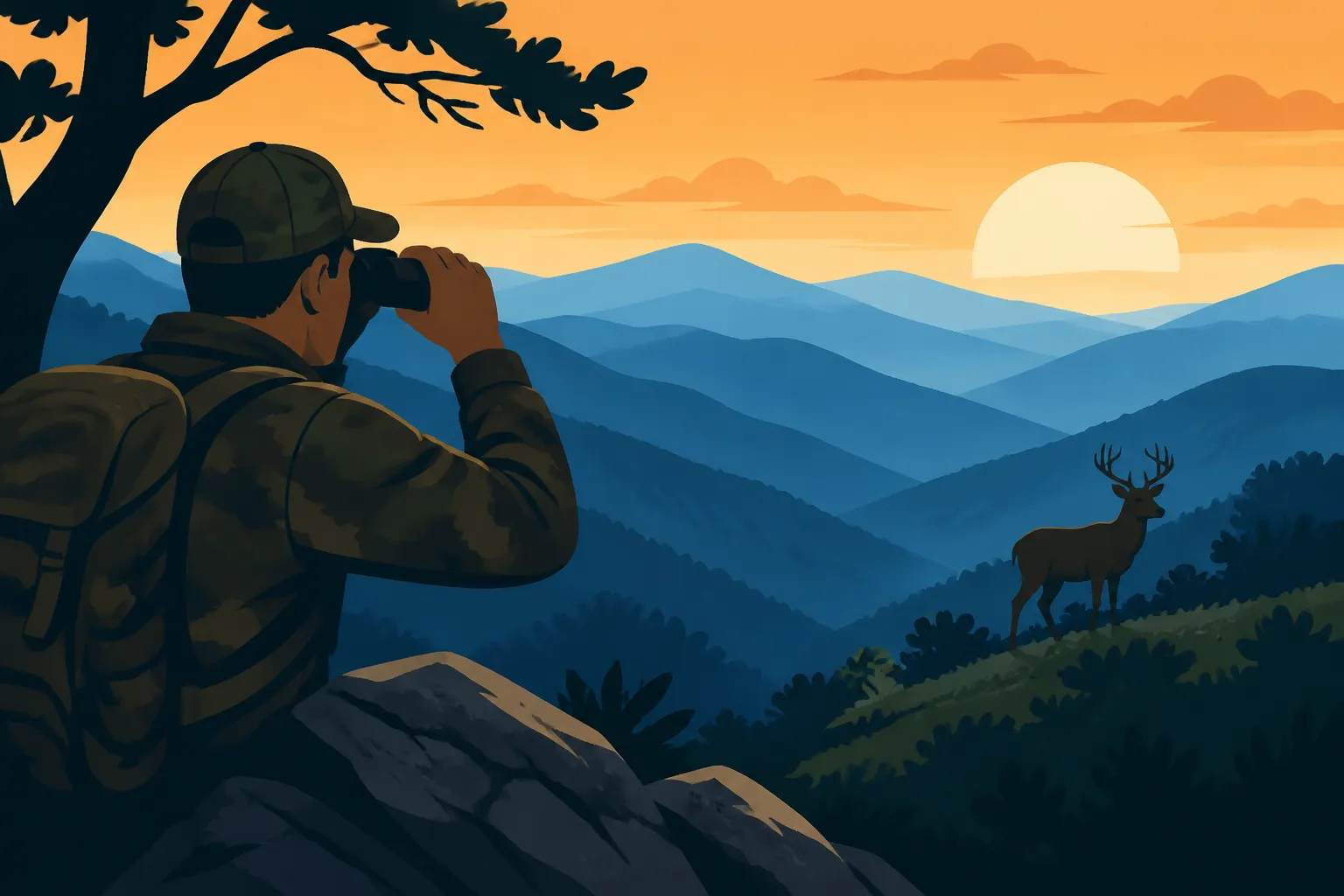
Blue Ridge country in Virginia holds some of the most beautiful and challenging deer hunting around. You’ve probably spent hours staring at topo maps, seeing those sweeping ridgelines, imagining a big buck cruising the top. But then you get out there, hike for what feels like forever, and find… nothing. Or maybe a few old tracks that tell you the deer were there, just not when you were. It’s a common frustration, feeling like these majestic mountains are hiding their secrets. This guide is all about peeling back those layers, helping you truly understand how to read those Blue Ridge ridges and find success where others might give up.
Understanding Blue Ridge Deer Behavior on Ridgelines
Hunting the Blue Ridge is a whole different ballgame compared to the flatter, more agricultural lands of the Piedmont or Eastern Shore. Here, deer are masters of elevation, using the terrain to their absolute advantage for security, travel, and finding food. If you want to connect with a Virginia whitetail in these mountains, you’ve got to think like they do, using the ridge itself as your guide.
The Draw of Elevation and Cover
Deer on Blue Ridge ridges aren't just there by accident; they actively seek out these elevated features for a number of strategic reasons. First and foremost, ridges offer security. From a high vantage point, deer can often see or hear approaching threats from a distance, giving them ample time to slip away into the dense cover that often blankets these slopes. Think of those thick rhododendron and mountain laurel thickets you encounter – to a deer, that’s a fortress, especially when combined with steep terrain. During warmer parts of the season, higher elevations also provide cooler temperatures and a consistent breeze, which helps keep biting insects at bay. As a hunter, understanding this means realizing that while the top of a ridge might be a travel corridor, the truly secure bedding areas are often tucked just below the crest or on thick benches, providing both escape routes and visual advantage.
Their use of these areas also changes throughout the day and the season. Early in the morning, deer might be coming off a ridge where they’ve spent the night bedding, moving down to lower feeding areas. As the sun rises and pressure from other hunters potentially increases, they'll often retreat back to the safety of those ridge-top thickets. Conversely, in the late afternoon, they might start to stir from their beds, slowly working their way along the ridge to access a hidden pocket of mast or a secluded water source before heading down into a hollow. It’s a constant chess match with elevation and cover, and if you can predict their moves, you're halfway to success. These deer are often accustomed to the specific challenges of Hunting West of the Blue Ridge, where steep terrain is the norm.
Thermals and Wind Patterns
If you hunt the Blue Ridge and aren't obsessed with thermals and wind, you're missing a critical piece of the puzzle. Wind patterns in the mountains are notoriously tricky, creating swirls and eddies that can carry your scent in unexpected directions. However, thermals – the rising and falling air currents created by temperature changes – are predictable. In the morning, as the sun warms the slopes, air rises, creating an upward thermal. In the evening, as the air cools, it sinks, creating a downward thermal. Deer know this instinctively and use it to their advantage, often bedding in places where their scent is carried up or down to detect threats, while they maintain a visual on their surroundings.
Imagine you're hunting an open hardwood ridge during Virginia's General Firearms Deer Season. In the morning, you might want to set up just below the crest, with the rising thermal carrying your scent up and over the ridge. This allows deer moving up the face of the ridge to pass below you undetected. In the evening, the opposite is true; a downward thermal means you might want to be higher on the ridge, letting your scent fall away from deer moving uphill. It's a dance with the elements, and ignoring them means risking being scented by a cautious buck. This intricate relationship with elevation and airflow is why understanding Wind and Thermals on a Blue Ridge Slope is absolutely non-negotiable for success here.
To effectively account for thermals and wind, you need to think about your approach and exit routes, too. Hiking straight up a ridge with an upward thermal in the morning will blow your scent directly into the areas deer are likely to be bedding. Instead, try to approach from the side, staying low, or circling to get above your intended hunting spot. Tools like GoHunt's mapping features, which often show terrain contours, can be incredibly helpful for visualizing these subtle changes in elevation and planning your approach, minimizing the chance of blowing deer out of their beds before you even get set.
Decoding Deer Sign on Blue Ridge Ridges
While understanding deer behavior and thermals is crucial, nothing beats finding actual deer sign on the ground. On Blue Ridge ridges, this sign can be more subtle than in other areas, but once you learn to look for it, it paints a clear picture of how deer are using the landscape.
Locating Primary Travel Corridors
Deer on Blue Ridge ridges are not just aimlessly wandering. They utilize the terrain to create efficient travel routes, much like we use highways. Your job is to find these "deer highways" – the heavily used trails that connect bedding areas to feeding grounds, water, or escape routes. These aren't always on the very top of the ridge. Often, you'll find primary trails running just below the crest, along a specific contour line, or cutting through a saddle. These subtle benches and saddles are particularly important because they represent natural funnels where deer movement is concentrated. A deer will almost always take the path of least resistance when traveling long distances, and these features provide just that.
When scouting, look for trails that are worn down to mineral soil, especially on the side of a steep incline. Connect the dots: where do these trails lead? Do they go from a thick bedding area to a stand of oaks? Do they dip into a hollow where a spring might be? A great resource for identifying these patterns and applying them to your hunting strategy is understanding Hunting a Ridge-Top Saddle for Rutting Bucks. These saddles, often subtle dips in the ridge line, act as natural bridges that deer will use to cross from one side of a mountain to another, especially during the peak of Hunting the Virginia Rut in November. Using GoHunt’s satellite imagery and topo maps can help you pinpoint these saddles and benches from home, saving you countless miles of aimless hiking.
Identifying Bedding Areas and Feeding Sign
Once you've identified potential travel corridors, the next step is to pinpoint where deer are spending their time resting and eating. Bedding areas on ridges are typically chosen for maximum security and strategic advantage. Look for thick cover – again, those rhododendron and mountain laurel thickets, or areas of dense younger timber – often on south-facing slopes during colder weather for warmth, or north-facing for cooler temperatures in early season. A prime bedding spot will offer the deer a good view of their downhill approach, allowing them to see danger coming, while the uphill side is often protected by swirling thermals or dense cover, giving them the wind advantage. Look for flattened grass or leaves, fresh droppings, and even shed hair in these secluded spots.
Feeding sign, on the other hand, will vary greatly with the season and available food sources. Early in the season, deer might be browsing on green forbs and leaves. As fall progresses, mast crops become king. Oak ridges, particularly those with white oaks, will be hotbeds of activity when acorns are dropping. Look for disturbed leaves where deer have pawed through to find acorns, fresh droppings, and even rubs and scrapes along the edges of these feeding zones. If it's Hunting After a Poor Acorn Year, deer will shift to other food sources, like browse, persimmons, or honeysuckle, and you’ll need to adjust your search accordingly. Keep an eye out for fresh rubs on small trees or branches and active scrapes along travel routes; these indicate a buck is in the area and actively marking his territory, often during the rut.
Strategic Hunting Approaches for Ridgelines
Now that you know what to look for, how do you actually hunt these challenging Blue Ridge ridges effectively? It requires a blend of meticulous scouting, careful planning, and often, a willingness to cover ground slowly and deliberately.
Still-Hunting and Scouting Techniques
Still-hunting is perhaps the most effective method for covering ground on big mountain ridges, allowing you to both scout and hunt simultaneously. It's a slow, methodical process that involves taking a few steps, then stopping for several minutes to scan your surroundings, listen, and glass. Don’t just look for a whole deer; look for parts – a horizontal line in a vertical forest, a patch of brown that seems out of place, the flick of an ear. Use your binoculars constantly to pick apart dense cover, focusing on benches, saddles, and the edges of thickets. You’d be amazed what you can see when you slow down and let your eyes do the work. This method is perfectly suited for Still-Hunting Jefferson Forest Ridges, where the terrain often dictates a deliberate pace.
The best time to still-hunt is often during periods of light rain or damp conditions, which quiet your footsteps, or on windy days, when the wind masks your movement and sound. When scouting off-season, you can move a bit faster, but the principle remains the same: identify those key features like saddles, benches, and old logging roads that act as natural funnels. Use satellite imagery and topographic maps from GoHunt or similar mapping platforms to identify potential hotspots before you even step foot in the woods. Look for changes in timber type, transition zones, or areas of unique topography. Then, on the ground, verify these spots, look for fresh sign, and mark them for future hunts. Scouting Virginia Public Land Before Season is absolutely paramount for unlocking these remote ridge secrets.
Stand Placement and Setup Considerations
While still-hunting is excellent for covering ground, there will be times when a static setup is more appropriate, especially if you’ve pinpointed a high-traffic area. Choosing the right stand location on a Blue Ridge ridge requires careful consideration of wind, thermals, and deer movement patterns. As discussed earlier, setting up to account for thermals is paramount. In the morning, position yourself below the crest of the ridge, allowing the rising thermal to carry your scent away and above deer moving up. In the evening, consider a higher position to let your scent drop downhill as thermals fall. Always place your stand downwind of expected deer travel, even if it means a longer, more challenging approach.
Consider what type of stand suits the terrain. On steep, rough terrain, a lightweight climbing stand or a saddle hunting setup offers maximum mobility and flexibility for Treestand Setups in George Washington National Forest. These allow you to quickly adapt to changing conditions or move to a new area if deer patterns shift. Focus on ambush points: saddles are classic bottlenecks, but also look for small benches or flats where multiple trails converge, or where a thicket forces deer to walk a specific path. If you’ve spent time Hanging a Stand on a Jefferson Forest Ridge, you know that finding the right tree and a safe setup is half the battle. Remember, safety first – always use a full-body harness when in a treestand, and consider a lifelife for added security.
| Ridge Hunting Strategy: Time of Day & Thermals | Morning (Rising Thermals) | Evening (Falling Thermals) |
|---|---|---|
| Deer Movement | Moving up from lower feeding areas | Moving down from bedding to feed |
| Ideal Stand Placement | Just below ridge crest, downwind | Higher on ridge, downwind |
| Scent Dispersal | Scent rises and dissipates upwards | Scent falls and dissipates downwards |
| Approach/Exit | From side/low to avoid upward scent | From top/side to avoid downward scent |
| Focus | Bedding areas, travel to food | Feeding areas, travel from bedding |
Overcoming Challenges and Adapting to Conditions
Hunting Blue Ridge ridges isn't always easy. It's often physically demanding, and the deer can be incredibly wary. To consistently find success, you need to be prepared for the challenges and willing to adapt your approach.
Dealing with Hunting Pressure
Public land in the Blue Ridge, particularly during popular seasons, can see significant hunting pressure. Deer aren't stupid; they quickly learn to avoid areas where they encounter hunters. This pressure often pushes deer into thicker, steeper, and more remote areas of the ridges – places that most hunters aren't willing to go. This is where your detailed scouting and physical conditioning pay off. Learn to find Finding Ground Others Walk Past. This might mean hiking an extra mile or two deeper into a hollow, ascending a particularly nasty slope, or focusing on smaller, less obvious ridges that get overlooked.
Sometimes, pressure can even push deer into unexpected places, forcing them to use secondary trails or less obvious saddles they might not typically frequent. Pay attention to fresh sign in these areas. While a primary travel corridor might be quiet due to heavy human traffic, a more secluded, albeit less direct, route might suddenly become active. Using GoHunt's public land layers can help you identify remote pockets of public ground that might see less pressure, often requiring a bit more effort to access. Don't be afraid to try different tactics; if traditional stand hunting isn't working, switch to still-hunting or try to push deer to a waiting partner (where legal and safe).
Weather Impacts on Ridge Hunting
Virginia weather can be famously fickle, especially in the mountains, and it plays a huge role in deer behavior and your hunting strategy. A crisp, clear, high-pressure day after a cold front can be fantastic for deer movement. They're often up and feeding, trying to make up for lost time. Conversely, a warm, drizzly day might make deer less active, but it can also be a great day for still-hunting as the rain quiets your footsteps. Extreme cold can make deer bed down more, conserving energy, but they'll often make short forays to feed. Snowfall, while beautiful, can make tracking easier but also makes deer more visible to predators.
Being prepared for all conditions is essential. Layering your clothing is key for warmth and flexibility. You’ll be hiking up and down, generating heat, but then sitting still, getting cold. Having a system that allows you to shed or add layers quickly is critical. This is where quality gear comes into play. Make sure your outer layers are waterproof for those unexpected mountain showers, and invest in good insulation for late-season hunts. A good resource for this is Clothing for a Virginia Late Season, which offers excellent advice on staying warm and dry. Furthermore, don't underestimate the importance of reliable footwear; good, insulated, waterproof boots are essential for staying comfortable on long treks through diverse terrain, especially when you're considering Insulated Boots for All-Day Sits. Always check the weather forecast before heading out and have a contingency plan. A change in weather might require a complete shift in your hunting location or strategy, but with a solid understanding of how deer use Blue Ridge ridges, you'll be well-equipped to adapt and increase your chances of success.
Disclaimer
Hunting is an inherently dangerous activity. Always prioritize safety, follow all local and state regulations set forth by the Virginia Department of Wildlife Resources (DWR), and obtain proper licenses and permits before heading afield. The information provided here is for educational and entertainment purposes only and should not replace professional guidance or proper hunter education.