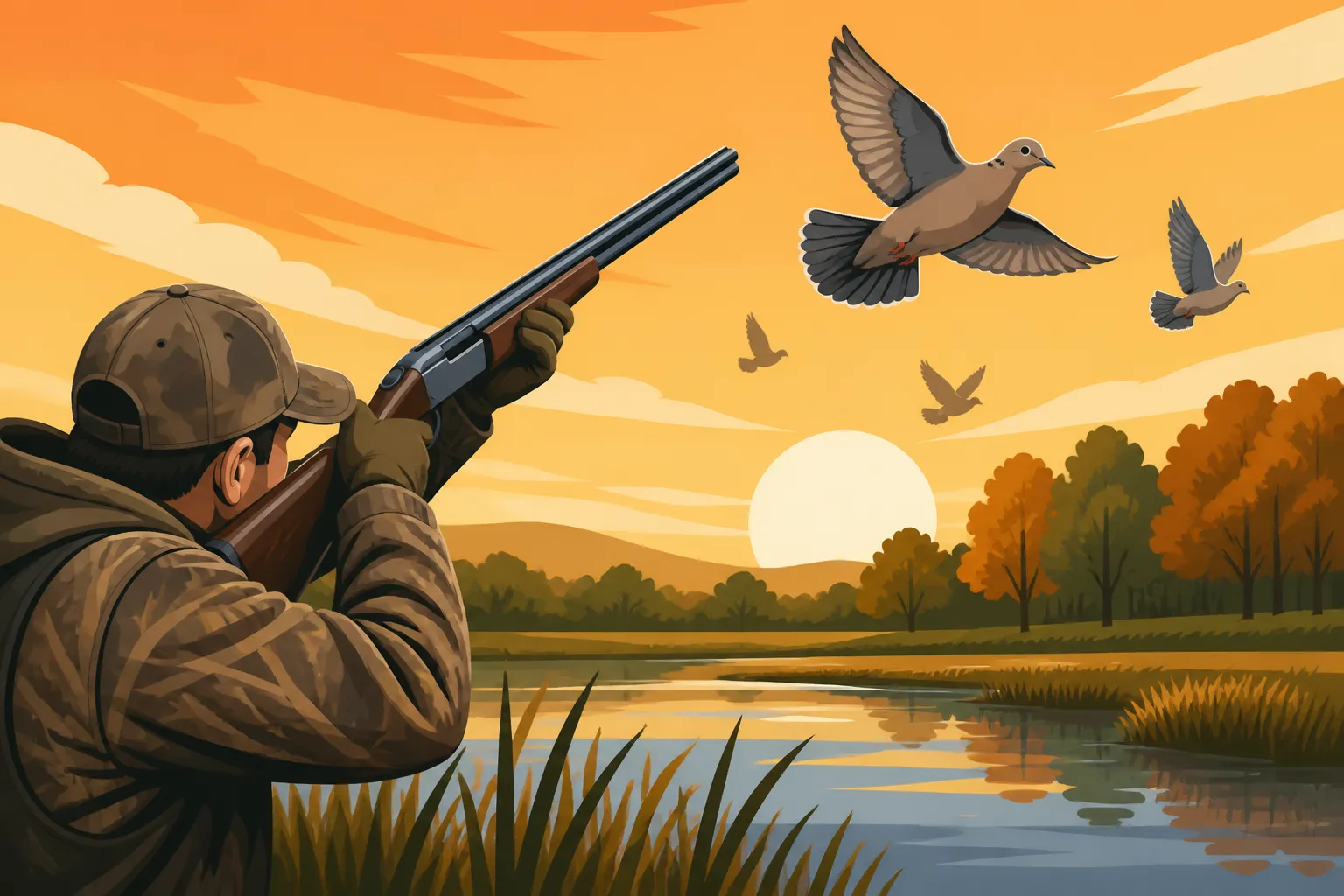
Pass-Shooting Doves Over a Water Hole
It's incredibly frustrating when you've scouted a beautiful dove field, spent hours setting up your decoys, and then the birds just aren't flying like they should be. Sometimes, those traditional fields get too much pressure, or the feed just isn't quite right, and you find yourself wondering where all the doves went. But there's a secret weapon many hunters overlook: the humble water hole. This guide is all about mastering the art of pass-shooting doves over these vital water sources, offering a high-action, effective alternative when the fields fall silent.
Understanding Dove Behavior Near Water
Doves, particularly mourning doves, are creatures of habit and necessity. Just like us, they need to eat and drink. While they get a lot of attention for feeding in cut grain fields, their need for water, especially during the hot, dry Virginia late summer and early fall, is equally critical. Understanding why and when they visit water holes is your first step to success.
Why Doves Gravitate Towards Water Sources
Mourning doves have a relatively high metabolic rate, and they primarily eat dry seeds. This combination means they need to drink water frequently throughout the day to aid digestion and maintain hydration. Think about those scorching September days in Virginia; doves are feeling the heat just as much as we are, and they'll seek out relief. They can lose a significant amount of water through respiration and waste elimination, making consistent access to water absolutely vital for their survival, especially for young birds.
Beyond just staying hydrated, the grit doves ingest to help grind seeds in their gizzards also requires moisture to work effectively. Without adequate water, their digestive system slows down, impacting their overall health and ability to process food. This fundamental biological need drives them to water holes, often multiple times a day, providing a predictable pattern you can exploit as a hunter.
Peak Activity Times at Water Holes
Doves are most active at water holes during certain times, which typically mirror their feeding patterns. You'll generally find the busiest times right after they leave their roosts in the morning, usually within an hour or two of sunrise. This early morning drink helps them kickstart their digestion after a night of rest.
The second major peak often occurs in the late afternoon, as they finish their last feeding cycle of the day and head back towards roosting areas, needing another drink before settling down for the night. However, don't discount the midday hours, especially if it’s particularly hot and dry. On those sweltering days, doves might make shorter, more frequent trips to water sources throughout the afternoon. Keep a keen eye on the weather and adapt your schedule accordingly. A useful tool like GoHunt can help you track historical weather patterns for your scouting area, giving you an edge.
Scouting and Setup Strategies for Water Holes
Finding the right water hole and setting up effectively is where the real work—and often the most rewarding success—happens. It's not just about finding any pond; it's about finding one doves prefer and positioning yourself for the best shooting opportunities.
Identifying Productive Water Sources
Not all water is created equal in a dove's eyes. They prefer shallow, open edges where they can land safely, walk to the water, and have a clear view of approaching predators. Think about cattle ponds with trampled edges, exposed creek beds with sandbars, or even large puddles in dirt roads or recently tilled fields after a rain. Ponds with steep, vegetated banks are often less appealing to them. Look for signs like dove droppings along the waterline, discarded feathers, or even their distinctive three-toed tracks in soft mud. This is where detailed scouting comes in, often requiring boots on the ground long before opening day.
When scouting, pay attention to the surrounding cover. Doves often stage in nearby trees or power lines before dropping down to water. These staging areas can give you clues about their flight paths. If you're on public land, don't be afraid to walk a little farther from the main roads. Sometimes the best spots for Hunting Pressure on Virginia Public Land are those that require a bit more effort to reach. Remember, even a small, overlooked puddle can be a goldmine if it's the only reliable water source in an otherwise dry area. Mapping tools, including those found within the GoHunt platform, are invaluable here, allowing you to pinpoint potential water sources from aerial views before you even set foot in the field.
Optimal Concealment and Approach
Doves have incredibly sharp eyesight and can spot unnatural shapes or movements from a great distance. Therefore, concealment is paramount. Natural cover like thick brush, standing corn, or the edge of a timber line works wonders. If natural cover is sparse, a simple pop-up ground blind or even ghillie netting can make all the difference. The key is to blend in completely and minimize movement.
Position yourself with the sun at your back if possible. This not only makes it harder for doves to see you but also gives you a clear, glare-free view of incoming birds. Consider the prevailing wind direction; doves often approach into the wind, giving you a slightly slower target as they cup their wings to land. Always approach your chosen spot well before the doves start flying, and be as quiet and discreet as possible. One wrong move or loud noise can put birds off an area for hours.
Execution: The Art of Pass-Shooting
Once you've done your scouting and established your setup, it's time for the real test: hitting those fast-flying targets. Pass-shooting doves is exhilarating but challenging, requiring a good understanding of lead, timing, and consistent swing.
Mastering the Lead on Fast-Flying Doves
Doves are notoriously fast and agile. A bird covering 60 miles per hour will travel roughly 88 feet per second. When that bird is only 30-40 yards away, you need a significant lead to put your shot string in the right place. There are generally two popular methods for leading a bird: the swing-through method and the sustained lead method.
With the swing-through method, you start with your barrel behind the bird, smoothly swing past it, and fire as you overtake it, continuing your swing. The speed of your swing and the distance you swing past the bird determine your lead. This method is often intuitive and works well for birds that are changing direction.
The sustained lead method involves establishing a consistent lead in front of the bird, maintaining that lead, and then firing. This requires more precise judgment of the bird's speed and distance but can be very effective for birds flying a straight, predictable path. No matter which method you prefer, the cardinal rule is to keep the gun moving through the shot. Stopping your swing is the quickest way to shoot behind a dove. Practice with clay targets is invaluable; it builds muscle memory and helps you instinctively judge leads. Remember, every shot is different, and adapting your lead on the fly is part of the challenge and fun.
Shot Placement and Follow-Through
For ethical and effective harvesting, aim for the front half of the dove. A shot placed here will quickly dispatch the bird. Shooting at the tail will often result in a few lost feathers and a frustrated hunter. As mentioned, the follow-through is critical. Imagine you're painting a line through the bird with the barrel of your shotgun. Don't stop that paint stroke after you pull the trigger. Many missed birds are the result of hunters stopping their swing the moment they fire.
Consider your range. Most pass-shooting over water holes will be within 20-40 yards. While a 12 gauge shotgun is a popular choice for Shotguns for Virginia Grouse and Dove, a 20 gauge can be just as effective and lighter to carry, especially when paired with the right choke and ammunition. For these ranges, an Improved Cylinder or Modified choke usually provides the best pattern density without being too tight, which can make hitting a fast-moving target even harder. You'll find more details on how various chokes perform in our guide on Choke Choice for Fast Flushes. Always retrieve your downed birds immediately to prevent loss and ensure a clean harvest.
Gear and Etiquette for Water Hole Hunting
Having the right gear makes your hunt more enjoyable and effective, but understanding and practicing good hunting etiquette is just as important, ensuring safety and preserving the quality of the hunting experience for everyone.
Essential Gear for Dove Hunters
Beyond your trusty shotgun, a few key items will significantly improve your water hole dove hunt.
- Ammunition: Doves are small targets, and you'll often take many shots. Bring plenty of shells; a couple of boxes (50 rounds) per hunt is usually a good starting point, but some active days might demand more. For Shot Size for Grouse and Woodcock, #7.5 or #8 lead shot is ideal for doves, offering a dense pattern with enough pellets to bring down these small birds.
- Portable Seat or Stool: You'll be sitting still for extended periods, so a comfortable, lightweight stool or bucket seat is a game-changer.
- Water and Snacks: Especially during the early season in Virginia, it can get hot. Stay hydrated.
- Blaze Orange: While not always required while actually hunting doves (check current Virginia Small Game Season Rules), wearing blaze orange when walking in and out of your hunting spot is always a smart safety practice, especially on public lands or during overlapping seasons.
- Insect Repellent: Mosquitoes, ticks, and chiggers are unwelcome guests in Virginia's late summer and early fall woods.
- Binoculars: Small binoculars can help you spot distant doves and observe their flight patterns without making much movement. A good pair of 8×42 binoculars offers a wide field of view and decent light gathering for those dawn and dusk flights.
Respecting the Resource and Other Hunters
Good etiquette is paramount when hunting, especially on public lands or properties where others might be present. Always maintain a safe distance from other hunters. If you see someone already set up on a water hole, find another spot. A generally accepted rule is at least 100-150 yards, but more is always better for safety and to avoid disturbing each other's hunt. Communication is key; if you need to pass by another hunter, make your presence known respectfully and avoid walking directly into their shooting lanes.
Remember to be a good steward of the land. Pick up all your spent shell casings, any trash, and leave the area cleaner than you found it. This practice ensures future access and maintains a positive image for hunters. Always know and abide by the specific regulations, including the Virginia dove daily bag limit and any specific requirements like Virginia HIP Certification for Bird Hunters for migratory birds. Utilizing tools like the GoHunt app for detailed regulations and mapping can help ensure you’re always compliant and respectful of the areas you hunt. Leaving a good impression makes it easier for everyone to enjoy Virginia's fantastic dove hunting opportunities.
| Shotgun Gauge | Recommended Choke | Preferred Shot Size | Effective Range (yards) | Pros | Cons |
|---|---|---|---|---|---|
| 12 Gauge | IC, Mod | #7.5, #8 | 20-45 | Powerful, wide variety of ammo | Heavier, more recoil |
| 20 Gauge | IC, Mod | #7.5, #8 | 15-40 | Lighter, less recoil, suitable for youth | Slightly less pattern density at long range |
| 28 Gauge | IC | #8 | 15-30 | Very light, minimal recoil | Limited range, specialized ammo |
The choice of shotgun, as explored in more detail in our guide on Shotgun Gauge Choice for Virginia Grouse, largely comes down to personal preference and comfort, but for pass-shooting doves, pattern density is often more important than raw power.
Disclaimer
Hunting is an activity with inherent risks. Always prioritize safety by adhering to all firearm safety rules, understanding and following all local, state, and federal hunting regulations. The information provided here is for educational purposes and should not replace official regulations or professional guidance. Consult the Virginia Department of Wildlife Resources (DWR) for the most current rules and season dates.