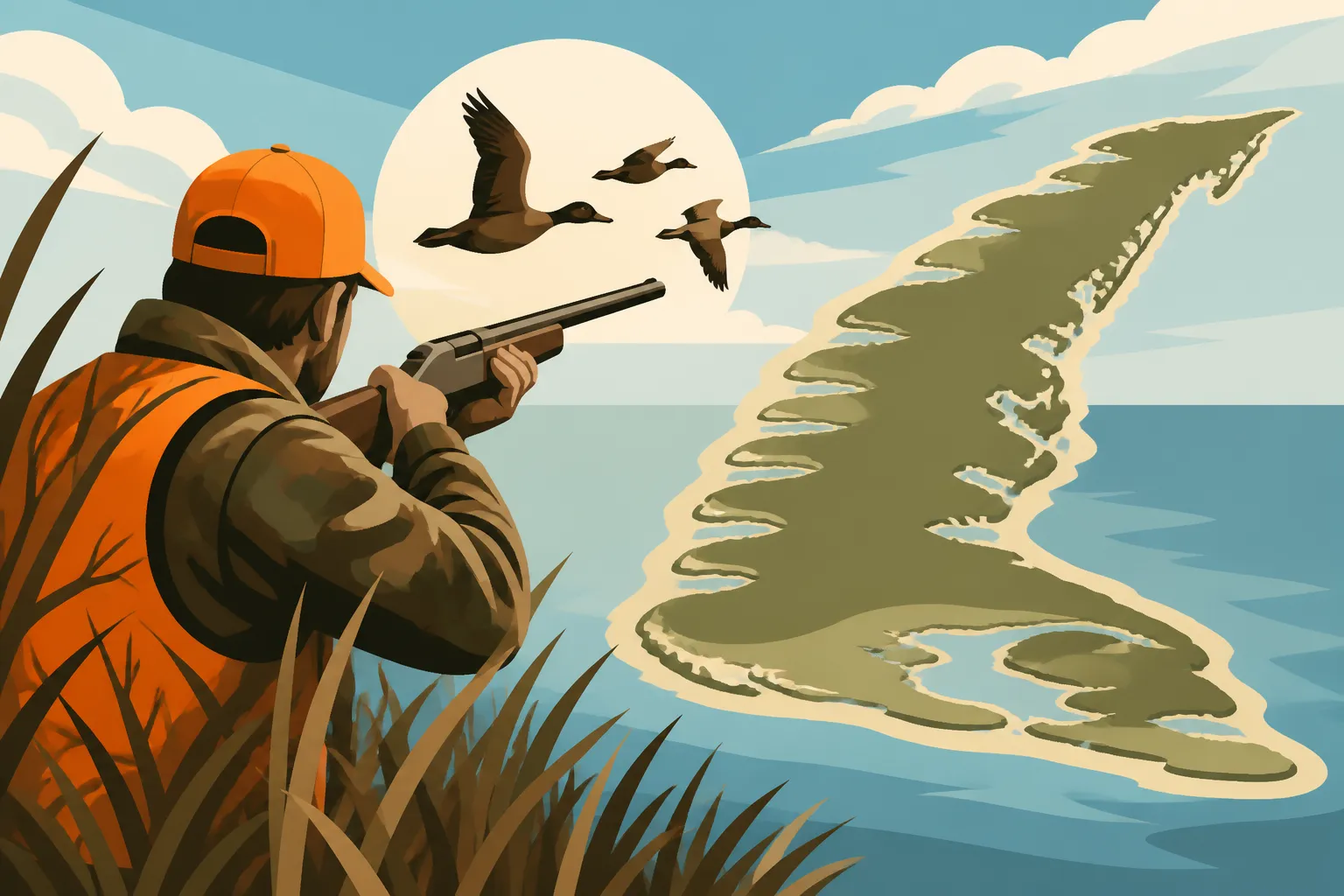
Hunting the Eastern Shore Peninsula
Hunting the Eastern Shore Peninsula can feel like stepping into a different world compared to the rest of Virginia. The unique blend of expansive salt marshes, isolated timber pockets, and agricultural fields presents a distinct set of challenges and incredibly rewarding opportunities for the persistent hunter. This guide is here to walk you through what to expect, how to prepare, and the tactics you'll need to fill your tags on this truly unique sliver of the Commonwealth.
The Eastern Shore's Unique Landscape and Environmental Challenges
The Eastern Shore of Virginia, primarily composed of Accomack and Northampton counties, is a narrow strip of land separating the Chesapeake Bay from the Atlantic Ocean. This peninsula's geography dictates everything about hunting here, creating a highly specialized environment that demands specific approaches and gear. It's not just "hunting," it's "Eastern Shore hunting."
Navigating the Tidal Marsh Environment
One of the most defining features of the Eastern Shore is its vast network of tidal marshes. These aren't just pretty backdrops; they're dynamic ecosystems that impact everything from waterfowl movements to deer travel patterns. When you're thinking about hunting the Eastern Shore, you're often thinking about getting wet, getting muddy, and timing your movements with the tides.
Imagine trying to navigate a dense maze of spartina grass, interspersed with guts and creeks that fill and empty with the Chesapeake Bay's rhythm. For waterfowl hunters, these marshes are a lifeline, drawing in thousands of ducks and geese during migration. You'll spend hours slogging through knee-deep (or deeper!) mud, setting decoys, and brushing in blinds, all while keeping a watchful eye on the ever-changing tide. A wrong turn or a miscalculation of the tide can leave your boat stranded or your waders filled. It's a humbling experience but one that connects you deeply to the primal act of hunting. Deer, too, use the edges of these marshes, especially during high tides when higher ground offers sanctuary. Understanding the ebb and flow is paramount here.
Isolated Woodlands and Scattered Farmland
Beyond the marshes, the Eastern Shore is characterized by relatively flat terrain dotted with agricultural fields—primarily corn, soybeans, and some wheat—and scattered, often isolated, pockets of woodland. These woodlots can range from dense pine thickets to mixed hardwoods, but they rarely form the expansive, continuous forests you find west of the Blue Ridge.
This fragmented habitat creates unique patterns for deer and turkey. Deer often use these woodlots as bedding areas during the day, venturing out into the fields to feed, especially at dawn and dusk. Their travel corridors are typically narrow, dictated by fencerows, drainages, and the edges of standing crops. Unlike mountain deer that might roam large tracts, Eastern Shore deer often live their lives within a relatively small radius, moving between specific woodlots and feeding areas. Turkeys, while present, are less numerous than in other parts of Virginia due to the limited contiguous timber, but they can still be found in those larger woodland blocks and along creek bottoms. Knowing how to read these smaller, often pressured, woodlots is key. It's not about finding vast expanses, but pinpointing those subtle pinch points and transitions that funnel game.
Coping with Coastal Weather and Winds
The Eastern Shore's proximity to both the Chesapeake Bay and the Atlantic Ocean means the weather is often a significant factor, particularly the wind. Unlike the swirling thermals of the mountains, coastal winds tend to be more consistent but can be relentlessly strong and unpredictable in their shifts.
Wind direction is always critical for hunters, but on the Eastern Shore, it's doubly so. For deer hunters, a steady coastal breeze can carry your scent for miles across open fields or through sparse timber, making careful stand placement and approach routes essential. For waterfowl hunters, wind is both a blessing and a curse. A strong wind can bring ducks and geese flying low and fast, but a shifting wind can make decoy spreads ineffective or force birds to land in unexpected locations. Additionally, the proximity to water means colder, damp conditions. A clear, calm morning might quickly turn into a blustery, bone-chilling afternoon, making robust, waterproof, and warm clothing a non-negotiable part of your gear list. You can’t just dress for the temperature; you have to dress for the wind chill and the dampness that penetrates everything.
Key Game Species and Prime Hunting Opportunities
While the Eastern Shore might not offer the vast wilderness experience of the national forests, it provides exceptional hunting for certain species, particularly migratory birds. Don't overlook the deer and turkey opportunities, however, as they offer exciting challenges in this distinct environment.
Deer Hunting in the Peninsula's Pockets
Deer hunting on the Eastern Shore is a study in precision and knowing your specific property. The whitetail deer here are generally smaller-bodied than their mountain cousins, but they are abundant. The season structure for the Eastern Shore falls under the Eastern Region rules, which often means generous antlerless harvest opportunities, allowing hunters to contribute significantly to herd management. You'll find that these deer are masters of utilizing dense cover within those smaller woodlots and heavy brush along drainages.
Hunting these areas often involves sitting field edges, hunting small woodlots, or scouting thick fencerows that connect food sources to bedding cover. Early season archery can be fantastic, especially if you can find a landowner willing to let you hunt over standing soybeans or corn before harvest. When the general firearms season opens, pressure can increase on public land, but private land hunters often find success by focusing on the transition zones between woods and agriculture. Deer drives can also be effective on private tracts, pushing small woodlots or swamps where deer often hunker down. For a comprehensive look at the overall deer season, check out our guide on Virginia Deer Season Structure Explained. Understanding the local nuances of deer behavior, such as how they use ditches and small elevation changes for cover in this flat landscape, is far more important than covering miles.
Waterfowl: The Eastern Shore's Crown Jewel
Without a doubt, waterfowl hunting is where the Eastern Shore truly shines. Situated squarely in the Atlantic Flyway, the peninsula sees incredible numbers of ducks and geese migrating through and wintering in its marshes, bays, and agricultural fields. From fast-flying divers on the Chesapeake Bay to dabblers in brackish impoundments and Canada geese feeding in cut corn, the opportunities are diverse and world-class. If you're passionate about ducks and geese, this is a destination.
Duck hunters can expect to encounter a mix of species. The open waters of the Bay and its expansive tidal creeks are prime for diving ducks like Canvasbacks, Redheads, Bluebills, and Buffleheads. Layout blind hunting can be highly effective for these birds, especially when set up in areas with good tidal currents. For more shallow-water dabblers like Mallards, Black Ducks, and Green-winged Teal, targeting managed impoundments, tidal guts, and secluded ponds is key. Geese, both resident and migratory, are abundant, offering field hunting opportunities over decoys in agricultural areas. Many hunters consider Hunting Chesapeake Bay Diving Ducks to be the quintessential Eastern Shore experience, often requiring specialized boats and blinds. Familiarize yourself with Virginia Waterfowl Zones and Seasons to plan your hunts effectively.
Small Game and Turkey Prospects
While not as prevalent as waterfowl or deer, the Eastern Shore does offer some respectable small game and turkey hunting. Rabbit hunting is popular in thickets, fencerows, and brushy field edges, often with beagles. Squirrels can be found in the more mature hardwood stands, particularly around oaks and hickories, which are less common but vital when located.
Wild turkeys, though not as widespread as in the Piedmont or mountains, have established populations in areas with suitable timber and cover. You'll need to work harder to find them, often focusing on larger private land timber tracts or the more expansive DWR properties. When you do find them, they can be a real challenge, as they often receive less hunting pressure and can be quite callable. Success often comes down to extensive scouting, listening for roosts, and then being patient in areas where you’ve identified birds. The density might be lower, but the satisfaction of bagging a gobbler on the Eastern Shore is immense.
Public vs. Private Land Access Strategies
Accessing hunting grounds on the Eastern Shore can be a mixed bag. While there are some excellent public opportunities, a significant portion of the land is privately owned, making landowner relations crucial for consistent success.
Navigating Public Hunting Lands
Virginia’s Department of Wildlife Resources (DWR) manages several Wildlife Management Areas (WMAs) on the Eastern Shore, offering varied hunting experiences. These WMAs are typically a mix of marsh, managed impoundments, and some limited upland timber. Hog Island WMA, for example, is renowned for its waterfowl hunting, often requiring lottery draws for prime blinds, but it also offers some deer and small game hunting in its upland portions.
Other public access points might include certain National Wildlife Refuges like Chincoteague National Wildlife Refuge, which offers specific quota hunts for deer and some waterfowl opportunities by special permit. These hunts are highly regulated and often require applying months in advance, so planning is essential. It's not as simple as just walking in; you need to understand the specific rules for each unit. A critical first step for anyone planning to hunt these properties is to review the DWR website or call the local office to confirm regulations and access requirements. Our guide on Virginia Wildlife Management Areas can give you a broader overview of how these invaluable properties are managed across the state. Using mapping applications like the DWR app or services like GoHunt can be invaluable for identifying boundaries, access points, and understanding habitat types on public land. GoHunt, for instance, often includes layers that show hunt units, past harvest data, and even property ownership details that can guide your scouting efforts.
The Importance of Private Land Permission
Given the prevalence of private land on the Eastern Shore, securing permission from landowners is often the most consistent way to gain access, especially for deer and upland hunting. Many properties here are large farms, and building relationships with farmers can unlock incredible hunting opportunities. This isn't always easy, and it requires persistence, respect, and often a bit of luck.
The process of Getting Private Land Permission in Virginia on the Eastern Shore is similar to other agricultural regions but with its own nuances. Many properties might be owned by out-of-state individuals or leased by hunting clubs. Don't be discouraged if you're met with "no" a few times. Approach landowners politely, offer to help with chores, respect their property, and always leave it better than you found it. Showing up in person, well-dressed, and with a sincere offer to help control problematic deer or geese can go a long way. This is where a tool like GoHunt can be a real game-changer; it often provides landowner names and addresses, allowing you to identify potential contacts and make a personal connection rather than just guessing.
Comparing Public and Private Hunting on the Eastern Shore
To give you a better idea of the differences, here's a quick comparison of what you might expect:
| Feature | Public Land (e.g., Hog Island WMA, Chincoteague NWR) | Private Land (Farm fields, private timber) |
|---|---|---|
| Accessibility | Often restricted (lotteries, permits, specific entry) | Requires landowner permission; can be exclusive |
| Hunting Pressure | High, especially on weekends and opening days | Varies greatly; can be low if you're the sole hunter |
| Game Diversity | Excellent for waterfowl, fair for deer/small game | Good for deer, waterfowl, small game; depends on habitat |
| Habitat | Marshes, impoundments, some scrub/upland timber | Agricultural fields, woodlots, fencerows, small swamps |
| Regulations | Highly specific to each area; DWR/Refuge rules | Primarily statewide DWR rules; some landowner restrictions |
| Tools for Access | DWR website, Refuge websites, Go Outdoors Virginia | GoHunt, county tax maps, networking, direct approach |
Essential Gear and Tactics for Success
Hunting the Eastern Shore requires a specific gear list and a refined tactical approach to match its unique environment. Skimping on the right equipment here isn't just uncomfortable; it can be downright dangerous or lead to missed opportunities.
Waders, Boats, and Waterproof Gear: Your Lifeline
If you plan on waterfowl hunting, or even just scouting, good quality waders are non-negotiable. The tidal marshes and creeks will test the durability and waterproofing of any gear. Chest waders are typically preferred for deeper water crossings and colder temperatures, offering more protection than hip waders. Neoprene is excellent for warmth, while breathable material is better for slogging long distances in milder weather. For some specific considerations, check out our piece on Waders for Cattail Marsh Hunting.
Beyond waders, a reliable boat is often essential for accessing prime marsh and bay hunting locations. Shallow-draft boats like jon boats or specialized marsh boats, often equipped with push poles, are invaluable for navigating the skinny water and mud flats. Don't forget PFDs, emergency kits, and a way to communicate, as these remote areas can be isolated. Layering your clothing with waterproof outer shells is also critical, as coastal weather can change rapidly from calm to windy and wet.
Decoys and Calls for Waterfowl Dominance
A robust spread of decoys is fundamental for successful waterfowl hunting on the Eastern Shore. The type and size of your spread will depend on your target species and location. For divers on the Bay, larger, more visible decoys are often effective, sometimes numbering into the dozens or even hundreds for serious hunters. For dabblers in impoundments, a smaller spread of realistic mallard, black duck, and teal decoys can be sufficient.
Understanding local bird behavior and flock sizes will help you tailor your spread. Many hunters experiment with different configurations, like "J" hooks or large landing zones. Keep your decoys clean and realistic; shy birds have seen it all. Mastering calls is equally important. A good duck call can finish wary mallards, while a goose call is essential for stopping and turning passing Canada geese. Practice is key, and knowing when not to call is as important as knowing when to blow your best spread. For insights on what makes a good spread, consider our article on Decoy Spreads for Chesapeake Bay Divers.
Scent Control and Wind Awareness for Deer
While the wind is often discussed in the context of waterfowl, it's just as vital for deer hunting on the Eastern Shore. The relatively flat landscape and open fields mean your scent can carry for long distances. A slight shift in a coastal breeze can easily betray your presence, spooking deer that are already wary from agricultural activity and localized hunting pressure.
Meticulous scent control is paramount. This means showering with scent-free soaps, washing your hunting clothes in scent-free detergent, and storing them in airtight bags. Paying attention to predicted wind directions and having multiple stand options for different winds are crucial. Use elevated stands (if allowed) to help disperse scent, or carefully choose ground blind locations that offer natural barriers or funnel wind. Always approach your stand with the wind in your face or quartering. Even a slight thermal shift from sun heating up a small patch of woods can carry your scent further than you think, so a keen awareness of wind on the Eastern Shore means constantly monitoring it.
Blinds and Stands: Adapting to the Cover
The sparse, fragmented nature of cover on the Eastern Shore means hunters need to be strategic about their concealment. For waterfowl, permanent marsh blinds, layout blinds, or boat blinds are commonly used. Layout blinds, in particular, are excellent for Layout Blind Hunting Eastern Shore Fields where geese and field-feeding ducks are targeted. Blending them into the stubble is a crucial art form.
For deer and turkey, ground blinds can be very effective, especially when brushed in heavily along field edges or in dense thickets. Portable treestands, including ladder stands or hang-on stands, are also valuable for getting above a deer's line of sight in the scattered timber. Because woodlots are often smaller, the ability to quietly enter and exit your stand without disturbing the area is paramount. Scouting for subtle changes in elevation, old logging roads, or natural funnels created by dense vegetation will lead you to the best stand sites. Don't forget that using mapping tools like GoHunt during your Scouting Virginia Public Land Before Season can help identify these prime locations even before you step foot on the property.
Disclaimer
Please remember that hunting regulations, seasons, and licensing requirements can change. Always consult the official Virginia Department of Wildlife Resources (DWR) website or their current hunting regulations digest before planning any hunting trip. This guide is for informational purposes only and should not be considered a substitute for official DWR resources.