Virginia Early Muzzleloader Tactics
That early chill in the morning air, the promise of autumn, can be incredibly deceiving when the midday sun still blasts down like it’s mid-August. This unique weather pattern, coupled with deer behavior that hasn't quite shifted into full rut mode, makes Virginia's early muzzleloader season a real head-scratcher for many hunters. You're trying to figure out if you should be wearing your heavy wool or packing for a summer hike, all while hoping to intersect a deer that might be moving more like a phantom. This guide is all about cutting through that confusion, offering proven tactics to help you navigate these tricky conditions and fill your tag during the early Virginia muzzleloader hunt.
Understanding the Early Muzzleloader Season in Virginia
The early muzzleloader season in Virginia is a fantastic opportunity, a bridge between the intense quiet of archery season and the high-octane excitement of general firearms. But it’s also a season with its own distinct personality, heavily influenced by weather, habitat, and the ever-present question of what the deer are actually doing. If you go into it expecting rifle season behavior, you're likely to be disappointed. Success here demands a different mindset and a specific approach.
Key Dates and Regulations
Virginia's early muzzleloader season generally kicks off in late September or early October, and it's absolutely critical to know the precise dates for your specific county or region. While it’s often a statewide season, there can be nuances, especially if you're hunting within a specific disease management area (DMA) or an urban archery zone. Always, always check the current Virginia Department of Wildlife Resources (DWR) regulations guide before you hit the woods. This is where you’ll find the definitive answers on everything from season length to bag limits, and it can vary slightly year to year. For instance, the general framework might allow either-sex deer hunting for a portion of the season, but specific counties might have antler point restrictions or antlerless deer requirements that dictate what you can and cannot harvest. It’s also crucial to remember the Virginia Deer Season Structure Explained – understanding how muzzleloader season fits into the broader deer hunting calendar gives you a clearer picture of deer pressure and behavior.
Furthermore, make sure you understand the legal requirements for your muzzleloader itself. This isn't a rifle, and while modern inline muzzleloaders are incredibly accurate, they still fall under specific rules. For example, Virginia requires certain minimum calibers and can have restrictions on telescopic sights during certain parts of the season, or if you're using particular ammunition types. Double-check all these specifics before opening day to ensure you’re hunting legally and ethically. It's a quick read that can save you a world of trouble.
Deer Behavior in Early Fall
During the early muzzleloader season, deer are still largely in their summer patterns, albeit with a slight shift. The rut is usually still weeks away, meaning bucks aren't chasing does with reckless abandon. Instead, their focus is heavily on food and building up reserves for the colder months and the rigors of breeding. This translates to more predictable, but often nocturnal, movement patterns. They're trying to put on as much weight as possible.
You'll find bucks might still be in bachelor groups, though these groups often start to break up as testosterone levels rise in preparation for the rut. Does will be with their fawns, and their movements will be primarily tied to safe bedding areas and prime feeding spots. Understanding this pre-rut phase is paramount. Deer might only be active at dawn and dusk, especially if temperatures are still high, retreating to thick cover during the day. Your best bet is to key into these feeding and bedding transitions, rather than expecting a cruising buck at midday.
Weather Considerations and Their Impact
Ah, the weather. This is arguably the biggest wild card for early muzzleloader season. One day might feel like pure summer, with temperatures soaring into the 70s or 80s, and the next could bring a cold front that drops temperatures by twenty degrees. These fluctuations dramatically impact deer movement. Warm, muggy days often push deer activity almost entirely into the nighttime hours. They simply don’t want to expend energy moving around in the heat.
Conversely, a sudden cold front can be a game-changer. It signals a shift, often bringing deer out earlier in the evening and keeping them moving later in the morning. A steady rain, as long as it's not a torrential downpour, can also increase deer movement by providing cover and cooler temperatures. However, heavy rains can also make tracking a challenge and keeping your powder dry in a muzzleloader a constant concern. Always check the forecast leading up to your hunt and adapt your strategy accordingly. A warm morning might mean sitting closer to a bedding area, waiting for deer to return after a night of feeding, while a crisp, cold morning could have them out browsing longer.
Scouting for Success Before the Season Opens
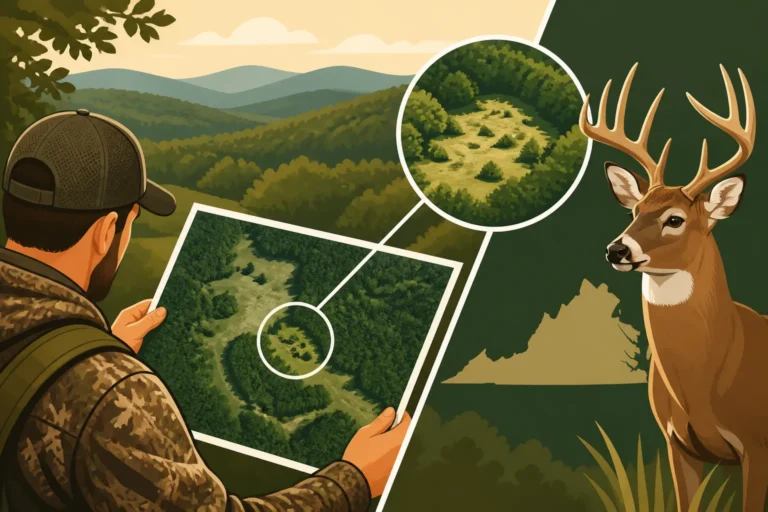
You wouldn't head out on a road trip without a map, right? Well, scouting for deer is your map to success, especially in the early muzzleloader season when deer patterns are still somewhat in flux. Relying on last year's hotspots without fresh information is a recipe for frustration. This is where dedicated pre-season legwork pays dividends, allowing you to pinpoint where deer are right now, not where they were or might be.
Locating Early Season Food Sources
During the early fall, deer are absolute chowhounds, focusing heavily on calorie-rich foods. Hard mast, especially acorns, is king. If you can find white oak or red oak stands dropping acorns, you've likely found a deer magnet. White oaks tend to drop earlier and are preferred by deer due to their lower tannin content, but red oaks will be hit heavily once the white oaks are depleted. Look for areas with fresh cuttings, deer droppings, and even tracks around these trees. Don't forget soft mast either – persimmons and wild grapes are often overlooked but can be incredibly attractive to deer. They provide quick energy and are often found in transition areas between bedding and harder-to-reach food sources.
Beyond natural mast, don't ignore agricultural fields. Standing corn or soybean fields are huge draws, offering both food and cover. If you’re hunting near farm country, identifying the edges or interior pockets of these fields where deer might stage before entering at dark or linger after first light is critical. Scouting often means looking beyond the obvious; sometimes the best food source is a small, overlooked patch of browse or a hidden persimmon tree deep in the woods that others ignore. Using tools like GoHunt can help you overlay property lines with topographical maps to identify potential hidden food plots or neglected corners of private land that might hold deer.
Identifying Core Bedding Areas
Once you know where the deer are eating, the next puzzle piece is figuring out where they're sleeping. Bedding areas during early muzzleloader season are usually thick, secure spots that offer both thermal cover and protection from predators. Think dense pine thickets, laurel patches in the mountains, thick regenerating clear-cuts, or river bottom canebrakes. Deer will choose bedding locations that provide them with a good escape route and typically an advantageous wind direction.
Walk the edges of these thickets, looking for trails leading in and out. You want to identify the main arteries that connect these bedding areas to your discovered food sources. Be careful not to bust deer out of their beds while scouting, especially close to the season, as this can change their patterns. Instead, observe from a distance, or scout during midday when deer are typically bedded down tight. A good strategy is to find sign along the fringes – rubs, scrapes (though not as intense as the rut), and heavy tracks. This sign tells you deer are using the area without having to push deep into their sanctuary. Knowing Where George Washington Forest Bucks Bed can give you a starting point for understanding how deer utilize topography for security.
Using Trail Cameras Effectively
Trail cameras are your eyes in the woods when you can’t be there, and they are invaluable for early muzzleloader scouting. Set them up on active trails leading to and from food sources, or along the edges of bedding cover. Focus on pinch points, funnels, or specific mast trees you’ve identified. During early season, deer might still be moving somewhat predictably, offering a chance to pattern them. Pay close attention to the time stamps on your photos. Are deer moving in daylight, or strictly after dark? If it's mostly nocturnal, you know you need to adjust your setup to be closer to bedding or consider a different approach.
Position your cameras strategically to monitor different areas without over-pressuring them. You don't want to check them every day. Leave them for a week or more if possible to minimize human disturbance. The goal is to get a sense of the flow of deer traffic, identifying specific deer you might target, and most importantly, pinpointing when they are most active. This intel allows you to make an informed decision on when and where to hang your stand. Remember, deer in early season might be using different trails than they would in the rut, so focus on fresh sign.
Muzzleloader Setup and Accuracy for Virginia's Terrain
Hunting with a muzzleloader is a distinct experience, a blend of tradition and modern technology. It requires a different level of attention to detail than hunting with a high-powered rifle. The one-shot nature of the muzzleloader hunt elevates the importance of precision, both in your equipment and your shooting skills.
Choosing the Right Muzzleloader and Load
The market for muzzleloaders has exploded, offering everything from traditional flintlocks to highly advanced inline percussion rifles. For Virginia’s varied terrain, from the dense Piedmont woods to the open ridges of the Blue Ridge, an inline muzzleloader is often the most practical choice. Brands like CVA and Traditions offer excellent, reliable options that are relatively easy to clean and maintain. When choosing, consider the balance and weight – you'll be carrying this through thick woods and up steep hills.
Equally important is selecting the right load. Many hunters opt for saboted projectiles, like Barnes Spit-Fire T-EZ or Hornady SST, paired with a reliable powder charge, often 100-150 grains of a Hodgdon Triple Seven or IMR White Hots equivalent. The key is consistency. Once you find a load your muzzleloader likes, stick with it. Experimenting with different powders and bullet combinations at the range is crucial to finding what groups best for your specific rifle. Remember, the goal is consistent, repeatable accuracy out to your maximum ethical shooting distance. You can't afford to second-guess your setup when that deer steps out.
Mastering the Shot at Common Distances
Unlike rifle hunting, where shots might extend to 200 or 300 yards, muzzleloader hunting in Virginia typically involves much shorter distances. Most ethical shots will be within 100-125 yards, and often much closer in the dense hardwoods or thickets. This means practicing at these common distances is paramount. Spend time at the range, not just shooting from a bench, but from kneeling or standing positions, simulating real-world hunting scenarios.
Understand your bullet drop. A muzzleloader projectile has a significantly different trajectory than a modern rifle bullet. Know exactly where your bullet will impact at 50, 75, and 100 yards. Practice quickly loading a second shot – while it's often a one-shot opportunity, knowing you can reload effectively provides confidence. Many hunters set their muzzleloaders to be dead-on at 75 yards, which provides a forgiving point-blank range for most scenarios. Remember, ethical hunting with a muzzleloader is about knowing your limitations and sticking to them.
Dealing with Inclement Weather and Misfires
The Achilles' heel of muzzleloaders? Moisture. Early muzzleloader season can be notoriously damp, with morning dew, fog, or unexpected rain showers. Keeping your powder dry is not just a cliché, it's essential for preventing misfires. Modern inline muzzleloaders are far more resistant to moisture than their traditional counterparts, but they're not impervious. Invest in good breach plug grease, and consider a small piece of electrical tape over the muzzle and primer cap (if using 209 primers) while walking to your stand. Remove it silently once you're settled.
Despite all precautions, misfires can happen. Knowing how to safely clear a misfire is crucial. Never immediately open the breach. Wait a minute or two, keeping the muzzle pointed in a safe direction. If it doesn't fire, follow your firearm's instructions for safely removing the prime and then the bullet. It's a rare occurrence with modern components, but being prepared can prevent a dangerous situation. Always carry a cleaning kit and tools specifically for your muzzleloader. This preparation ensures you're ready for anything the unpredictable early fall weather might throw at you. For more insights on this, read up on Keeping Powder Dry in Wet Weather.
Effective Hunting Strategies for Early Muzzleloader
The beauty of early muzzleloader season is that it demands a more intimate understanding of deer movement and habitat. You can't just rely on long-range shooting or the chaotic energy of the rut. Instead, success hinges on stealth, smart stand placement, and a keen awareness of how deer are using their environment.
Stand Placement and Wind Considerations
Where you set up is perhaps the most critical decision you'll make. During early muzzleloader, deer are still relatively unpressured, but they are also highly attuned to their surroundings. You want to be positioned in a transition area between a bedding sanctuary and a primary food source. Look for natural funnels – creek bottoms, saddles, fence lines, or strips of timber connecting two larger woodlots. These are natural travel corridors. Consider reading Hunting a Funnel Between Two Hollows to maximize your understanding of these critical choke points.
Crucially, wind is king. With a one-shot weapon, you absolutely cannot afford to be scented. Play the wind meticulously. Before every hunt, check the forecast and plan your entry and exit routes to avoid blowing your scent into areas where deer are likely to be. If the wind isn't right for your primary stand, have a secondary option. Often, mornings will have a different wind direction than evenings, so plan accordingly. Setting up on a field edge, for example, needs a completely different approach depending on whether the wind is blowing towards the field or into the timber. A good resource like GoHunt can provide real-time wind data and mapping tools to help you plan your entry and stand placement perfectly.
Still Hunting and Stalking Tactics
While sitting in a stand is a classic method, still hunting or stalking can be incredibly effective during early muzzleloader, especially if you're hunting areas with abundant thick cover or varied terrain like the George Washington National Forest. This method allows you to be more proactive in finding deer, rather than waiting for them to come to you. The key is to move incredibly slowly, pausing frequently to observe and listen. Take five steps, stop for five minutes. Scan with your binoculars. Listen for subtle sounds – a rustle in the leaves, a twig snap, a distant grunt.
Focus on areas with fresh sign – tracks, droppings, and fresh rubs. Walk into the wind, or with a crosswind, always paying attention to what your scent cone is doing. Use natural terrain features and cover to break up your silhouette. In the mountains, move quietly along contour lines or subtle benches, always glassing ahead and to the sides. This isn't about covering ground quickly; it's about systematically dissecting an area, piece by piece, until you locate deer. The patience required for still hunting is immense, but the reward of outsmarting a wary deer on its home turf is incredibly satisfying.
Understanding Deer Movement During Warm Spells
Warm weather in early fall throws a wrench into many hunters' plans, but it doesn't mean deer stop moving entirely. It simply means you need to adjust when and where you expect them to move. As mentioned, during hot days, deer will often become almost completely nocturnal. Your best chances for daylight movement will be during the first hour or two after sunrise and the last hour or two before sunset.
During these warm spells, deer will seek out cooler, shadier bedding areas, often near water sources. Think dense creek bottoms, north-facing slopes, or shaded swamp edges. When they do move to feed, it will likely be to the closest, most calorie-efficient food source from their bedding. Instead of covering long distances, they'll make short forays. Focus your efforts on these tight transition zones. As a hunter, you might also need to adjust your own attire; wearing too much can make you uncomfortable and less alert. Layering is key, allowing you to shed clothing as the day warms up.
| Time of Day | Expected Deer Behavior (Early Season, Moderate Temp) | Expected Deer Behavior (Early Season, Warm Temp) |
|---|---|---|
| Pre-Dawn | Moving from feeding to bedding | Moving from feeding to bedding (earlier) |
| Dawn – 9 AM | Feeding, lingering in fields/food sources | Quick return to bedding after feeding |
| 9 AM – Noon | Bedded down, minimal movement | Deeply bedded in thick, cool cover |
| Noon – 3 PM | Bedded down, minimal movement | Deeply bedded, almost no movement |
| 3 PM – Dusk | Moving from bedding to feeding | Slow movement from bedding to feeding (later) |
| Post-Dusk | Heavy feeding activity | Heavy feeding activity |
Dealing with Post-Shot Tracking and Meat Care
You've made the shot! Now the real work begins. With a muzzleloader, especially in early season, the challenges of tracking and meat care are amplified due to the nature of the weapon and the potentially warmer temperatures. Being prepared for this phase of the hunt is just as important as the shot itself.
Blood Trailing Challenges in Early Season
Muzzleloader projectiles, particularly traditional lead balls or slower-moving conicals, sometimes create less dramatic blood trails compared to high-velocity rifle rounds. Combine this with the often-thicker cover and more abundant vegetation of early fall, and you can have a real tracking puzzle on your hands. Always observe where the deer was standing when you shot, and mark that spot. Then, pay close attention to the deer's reaction and its direction of travel. Did it kick, stumble, or run off with its tail tucked? These are vital clues.
After the shot, resist the urge to immediately rush in. Give the deer at least 30 minutes, or even an hour if you suspect a marginal hit, to bed down and expire. This patience drastically increases your chances of recovery. When you begin tracking, move slowly and meticulously. Look for blood on both sides of the trail, disturbed leaves, broken twigs, and matted grass. Small drops of blood can be difficult to find on vibrant green leaves or against autumn's mottled browns. If you lose the trail, spread out and search in ever-widening circles in the direction of travel. Consider using a good headlamp, as Blood Trailing After Dark in Virginia can be necessary, but significantly more challenging. Utilizing a tracking dog, where legal, can be a game-changer for difficult trails.
Rapid Field Dressing and Cooling Techniques
Warm temperatures during early muzzleloader season are the enemy of venison quality. Once you find your deer, the clock starts ticking. The absolute priority is to field dress it as quickly and efficiently as possible to begin the cooling process. Get the guts out to stop the internal heat build-up. This significantly reduces the risk of bacterial spoilage.
If you're hunting in a remote area, having a plan to get the deer out quickly is paramount. This might mean using a deer cart, a sled, or even breaking the animal down into quarters using the gutless method if you're far from your vehicle. Don't underestimate how heavy a deer can be, especially if you're solo. Consider options for Dragging a Deer Out of a Mountain Hollow if you're on public land like the Jefferson National Forest. The faster you can remove the hide and get it into a cooler, the better.
Avoiding Meat Spoilage in Warm Temperatures
Even after field dressing, if temperatures are still warm, the meat can spoil rapidly. If you're fortunate enough to harvest a deer on a hot day, you need an immediate plan for cooling. This means having large coolers packed with ice ready at your vehicle. Once the deer is field dressed and transported, skin it promptly. The hide acts like an insulated blanket, trapping heat.
Once skinned, quarter the deer and place the meat directly on ice, ensuring the ice drains as it melts. Never let the meat sit in bloody water. Replace ice as needed until you can get the meat to a butcher or into your own cold storage. Game bags are excellent for keeping meat clean while allowing air circulation, especially when cooling. For warmer early season hunts, having good Coolers and Game Bags for Early Archery can be your best defense against ruined venison. If you're planning a multi-day hunt and expecting warm weather, dry ice can be an even more effective cooling agent in large coolers. Proper meat care is a sign of respect for the animal and ensures you get to enjoy the delicious reward of your hunt.
Disclaimer
Hunting involves inherent risks, including but not limited to those associated with firearms, broadheads, tree stands, and navigating outdoor terrain. Always prioritize safety and adhere to all local, state, and federal hunting regulations. The information provided in this guide is for informational purposes only and should not replace proper hunter education, professional guidance, or personal due diligence. Always be aware of your surroundings, know your target and what is beyond it, and exercise extreme caution.