Hunting a Clear-Cut Regrowth Edge
Hunting clear-cut regrowth edges in Virginia can feel like trying to find a needle in a haystack for many hunters. The sheer density of the vegetation, the tangled mess of downed timber, and the seemingly chaotic landscape can be incredibly intimidating. But what looks like a disaster zone to some is, in fact, an absolute magnet for deer, offering a bounty of food and impenetrable cover. This guide will walk you through how to unlock the secrets of these dynamic habitats, turning frustration into successful hunts in the Old Dominion.
Understanding the Appeal of Clear-Cuts for Virginia Deer
Clear-cut areas, especially those in the early to mid-stages of regrowth, are undeniably some of the most productive habitats for white-tailed deer in Virginia. It’s easy to look at a recently logged tract and just see a mess, but for deer, it's a buffet and a fortress all rolled into one. When a section of timber is cut, the forest floor is suddenly exposed to sunlight, triggering an explosion of new growth. This creates a smorgasbord of browse that simply isn't available in mature, closed-canopy timber.
The first few years after a clear-cut, the ground bursts with tender shoots, forbs, and saplings. These young plants are incredibly nutritious, packed with the protein and minerals deer need for antler growth and overall health. As the regrowth matures, it transforms into an incredibly thick tangle of brush, briars, and young trees. This dense cover provides thermal protection from harsh winter winds and scorching summer sun, but more importantly, it offers unparalleled security from predators and hunters alike. Deer feel incredibly safe bedded down in these thickets, knowing they can move through them largely unseen.
Across Virginia, from the rolling hills of the Piedmont to the steep slopes of the Blue Ridge, logging operations create these temporary but vital habitats. Understanding the different stages of regrowth is key to knowing how deer will use them. A very young clear-cut might be primarily a food source, drawing deer in to feed before they retreat to thicker cover nearby. An older, denser clear-cut, perhaps 5-15 years post-cut, becomes a fantastic bedding area, with deer often only moving out to feed in adjacent, more open areas or even within the clear-cut itself if enough browse remains accessible.
Food and Cover Dynamics in Early Regrowth
In the immediate aftermath of a clear-cut, the sudden influx of sunlight to the forest floor acts like a giant fertilizer spreader. Within a year or two, you’ll see an explosion of herbaceous plants, brambles, and sprouts from cut stumps. Species like blackberry, greenbrier, honeysuckle, and various weeds quickly colonize the disturbed soil, offering a deer population a highly palatable and nutritious food source. Deer will flock to these areas, especially during the spring and summer, to pack on weight and grow antlers.
As these plants mature, the clear-cut begins to morph into an almost impenetrable wall of vegetation. This density, while a nightmare for hunters to walk through, is precisely what makes it so attractive to deer. They can disappear into these thickets, moving silently through tunnels they create, utterly concealed from view. This dense cover acts as both escape cover and thermal cover, allowing deer to conserve energy during cold snaps or find relief from summer heat. When scouting, look for trails that lead into and out of these thick sections, or even faint tunnels within the regrowth itself. These are highways for deer movement.
The Role of Edge Habitat in Deer Movement
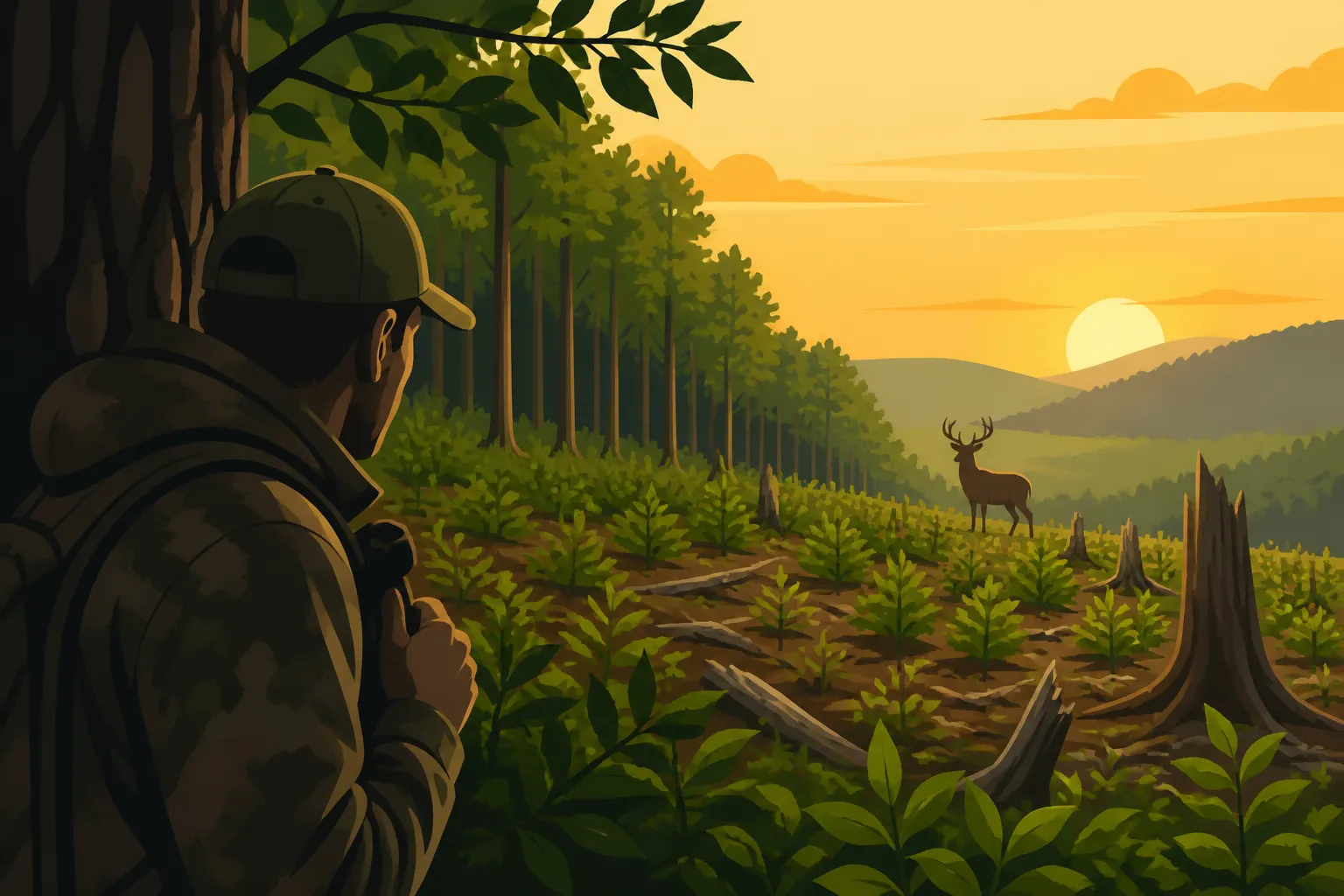
The "edge" of a clear-cut, where the dense regrowth meets mature timber, is where the magic truly happens for deer hunters. Deer are creatures of the edge, constantly seeking transitions that offer both food and security. This seam between two distinct habitat types becomes a natural travel corridor, a place where deer feel comfortable moving between their bedding areas within the clear-cut and their feeding or watering spots elsewhere.
Think of it as a highway for deer, but one with plenty of exits and hiding spots. They might bed deep in the thick stuff but use the edge to cruise, scent check, or browse. Bucks, especially during the rut, will often skirt these edges, looking for does that might be moving in and out of the clear-cut. Does, always wary, use the edge as a safe transition zone before committing to more open feeding areas. Focusing your efforts on these edges, rather than trying to penetrate the center of a dense clear-cut, is often the most productive strategy.
Scouting Clear-Cut Edges for Deer Sign
Successful hunting on clear-cut regrowth edges starts long before you ever carry a weapon into the woods. Scouting is paramount, and it involves both digital reconnaissance and old-fashioned boots-on-the-ground effort. You need to understand not just where the clear-cuts are, but how deer are using them.
Start by identifying potential clear-cuts in your hunting area, whether it's public land like a section of the George Washington National Forest or private timberland. Aerial imagery is your best friend here. Satellite maps on platforms like GoHunt or even the Virginia DWR mapping tool can quickly reveal logged areas by their distinct appearance – often lighter green, uniform texture, or a patchwork pattern compared to mature forest. Look for the irregular shapes, the distinct boundaries where the dense, regenerating forest meets the taller, older trees. These are the edges you'll want to investigate.
Once you’ve pinpointed some promising clear-cuts from the air, it's time to hit the woods. Your goal is to find the well-used trails, rubs, scrapes, and bedding areas that indicate consistent deer activity. Don't be afraid to skirt the edges of the thick stuff, looking for where deer are entering and exiting. Often, there will be a faint trail just inside the mature timber, paralleling the clear-cut, that deer use for secure movement. Look for pinch points along these edges – places where the clear-cut narrows, or where a point of timber juts into the cut, forcing deer into a smaller travel lane. These are prime ambush locations.
Interpreting Maps and Digital Tools
Modern hunting has been revolutionized by digital mapping tools, and they are especially powerful for scouting clear-cuts. Services like GoHunt allow you to overlay property lines, topographic maps, and satellite imagery, helping you quickly identify not just clear-cuts, but also the terrain features that will influence deer movement around them. You can use these tools to find potential access points, whether it’s an old logging road, a utility right-of-way, or a subtle ridge line that leads to the edge.
When reviewing aerial photos, pay close attention to areas where clear-cuts meet other features like creeks, swamps, agricultural fields, or even old fencerows. These intersections often create high-traffic zones. You can also trace how deer might move between different clear-cuts, or from a clear-cut to a known bedding or feeding area. The Virginia DWR app also provides valuable information on public land boundaries and sometimes even habitat management projects, which can include recent logging activity. This initial digital scouting helps narrow down your physical scouting efforts, making your time in the woods more efficient. For a deeper dive into digital tools, consider reading about Reading Aerial Photos for Piedmont Deer.
Boots-on-the-Ground Reconnaissance
No amount of digital scouting can replace actually walking the ground. Once you have a few target clear-cut edges identified, head out with your boots on. Start by walking the perimeter where the new growth meets the old timber. This transition zone is critical. Look for heavily used deer trails that parallel the clear-cut, often just inside the mature timber line. These trails usually have fresh tracks, droppings, and sometimes rubs or scrapes along them, especially if it’s getting close to the rut.
Venture carefully into the edge of the clear-cut itself, looking for tunnels and smaller trails that weave through the densest cover. Don't try to bust through the middle unless you have a very specific reason; it's often too noisy and difficult. Instead, focus on finding areas where deer are consistently entering and exiting the thicket. Look for rubs and scrapes on the trees along the edge, indicating where bucks are marking their territory. During the late season, pay attention to potential thermal bedding areas deep within the thickest parts of the clear-cut, especially on south-facing slopes that catch more sun. For tips on effective pre-season scouting, check out Scouting Virginia Public Land Before Season.
Effective Hunting Strategies for Regrowth Edges
Once you've done your homework and found those promising clear-cut edges, it's time to implement a strategy. Hunting these areas requires patience, stealth, and often a willingness to adapt your approach based on the specific conditions of the day. The thick cover can make visibility challenging, but also offers great opportunities for close encounters if you play your cards right.
Your choice of hunting method will often depend on the specific clear-cut, the time of year, and the amount of hunting pressure in the area. Treestands, ground blinds, and still-hunting all have their place. Remember, deer are using these edges for a reason – they offer security. Your goal is to capitalize on that security by setting up in a way that allows you to intercept them as they move along or through these vital transition zones.
Stand and Ground Blind Placement
For stand hunting, whether you prefer a treestand or a ground blind, placement is everything. Look for natural pinch points along the clear-cut edge where deer movement is concentrated. This could be where a logging road intersects the edge, a saddle in a ridge, or a narrow strip of timber between two thickets. Often, a mature tree right on the edge of the clear-cut, offering a good vantage point into the thick stuff and along the timber line, is ideal. When setting up a treestand, make sure your entry and exit routes are quiet and won't alert deer. Consider reading about Treestand Setups in George Washington National Forest for more ideas.
Ground blinds can be incredibly effective in clear-cuts because they allow you to set up directly in the dense cover, breaking up your outline and offering excellent concealment. You can brush in a pop-up blind along a well-used trail just inside the clear-cut, or even build a natural blind out of downed timber and brush. The key is to blend in completely. Make sure your shooting lanes are cleared before the season, as trying to cut branches during a hunt will certainly spook deer. Remember to always use a safety harness when in a treestand. For more details on this tactic, explore Using a Ground Blind on Virginia Public Land.
Still-Hunting and Driving Tactics
Still-hunting the edges of a clear-cut can be incredibly productive, especially during the rut when bucks are cruising for does, or in the late season when deer are seeking thermal cover. This method involves moving very slowly, taking a few steps, then stopping to scan the woods, often for 5-10 minutes. Use your binoculars to pick apart the dense cover, looking for a horizontal line, a flick of an ear, or an antler tine. Focus on moving into the wind or a crosswind, using the natural terrain and cover to your advantage. The goal is to spot the deer before it spots you, giving you time to set up a shot.
Deer drives, while sometimes controversial, can be very effective in large clear-cuts, particularly on public land with a group of hunters. This involves strategically positioning "posters" along known escape routes or pinch points on one side of the clear-cut, while "drivers" slowly and deliberately push through the dense cover from the opposite side. Communication is vital for safety and success. Drives work best in areas where deer have predictable escape routes out of the thickets. It's a method that requires careful planning and coordination, and it's essential to understand Deer Drives With Three or Four Hunters before attempting this tactic.
Overcoming Challenges and Staying Safe
Hunting clear-cut regrowth edges, while rewarding, definitely comes with its own set of challenges. The thick cover that attracts deer also makes hunting more difficult for us. Visibility is often severely limited, tracking can be a nightmare, and these productive areas often draw other hunters, leading to increased pressure. However, with careful planning and a commitment to safety, these challenges can be managed, leading to a much more enjoyable and successful experience.
One of the biggest frustrations is the sheer difficulty of moving silently through the thickets. Every step seems to snap a twig or rustle dry leaves. This is where patience really pays off. Embrace the slow pace, and use the wind to your advantage. Another challenge is the reduced visibility. A shot opportunity might only last a second or two in a small window. This means you need to be constantly vigilant, ready to raise your weapon at a moment's notice.
Navigating Dense Cover and Reduced Visibility
The dense regrowth in a clear-cut means your line of sight is often just a few yards, even from an elevated stand. This necessitates specific hunting gear and techniques. A shotgun or a rifle chambered in a cartridge suitable for shorter ranges, like a .30-30 or a straight-wall cartridge, can be ideal, as can a bow or crossbow. When still-hunting, focus on making as little noise as possible. Wear quiet clothing – wool or fleece are excellent choices – and take deliberately slow steps, lifting your feet rather than dragging them.
When a shot presents itself, it will likely be at close range and potentially through small openings. Practice shooting in these scenarios beforehand. If tracking a wounded animal into a clear-cut, slow down immediately. Mark the last known blood, and proceed cautiously, looking for every drop. It's easy to lose a blood trail in the tangled mess of briars and leaves. If you're struggling, consider pulling back and giving the deer time, then returning with more people to help grid-search the area. For strategies on tracking, consider Blood Trailing After Dark in Virginia.
Managing Hunter Pressure and Ethical Considerations
Because clear-cuts are such prime deer habitat, they often attract a lot of attention from other hunters, especially on public land during peak seasons like the general firearms opener. This increased pressure can make deer even warier, driving them deeper into the thickest cover or making them entirely nocturnal. To combat this, try to hunt weekdays instead of weekends, or be willing to walk further than most hunters. Often, the best clear-cuts are those that require a significant hike or are in less accessible areas. Using mapping tools like GoHunt to identify potential bottlenecks or remote sections can help you find pockets of less pressured deer.
Always be aware of other hunters, especially if you’re still-hunting or participating in a drive. Blaze orange or pink is a legal requirement during certain seasons for a reason – it saves lives. Even when not legally required (like during archery season), consider wearing some blaze orange when moving to and from your stand, especially on public land. Communicate clearly with hunting partners, know your zones of fire, and always identify your target and what's beyond it before taking a shot. Ethical hunting means respecting the game, the land, and your fellow hunters. Understanding Virginia Public Land Hunting Hours and adhering to them is also a key part of ethical hunting.
| Strategy | Best Time of Season | Ideal Conditions | Pros | Cons |
|---|---|---|---|---|
| Stand Hunting | Early, Rut, Late | Calm wind, Clear weather | High concealment, Good vantage for observation | Limited range of movement, Requires early setup |
| Still-Hunting | Rut, Late | Light wind, Soft ground | Highly mobile, Adaptable to deer movement | Requires extreme patience, High risk of spooking deer |
| Deer Drive | General Firearms | Group effort, Moderate temp | Can push deer out of dense cover, Good for filling tags | Requires multiple hunters, Safety considerations |
Remember, hunting clear-cut regrowth edges is not about muscling your way through the toughest terrain. It's about intelligently reading the landscape, understanding deer behavior, and using strategic approaches to turn what looks like a challenge into a successful hunt.
Disclaimer
The information provided in this guide is for educational and informational purposes only. Hunting regulations and conditions can change. Always consult the most current Virginia Department of Wildlife Resources (DWR) regulations before hunting. Ensure you have the proper licenses and permits, and prioritize safety above all else.