How Turkeys Were Restored to Virginia
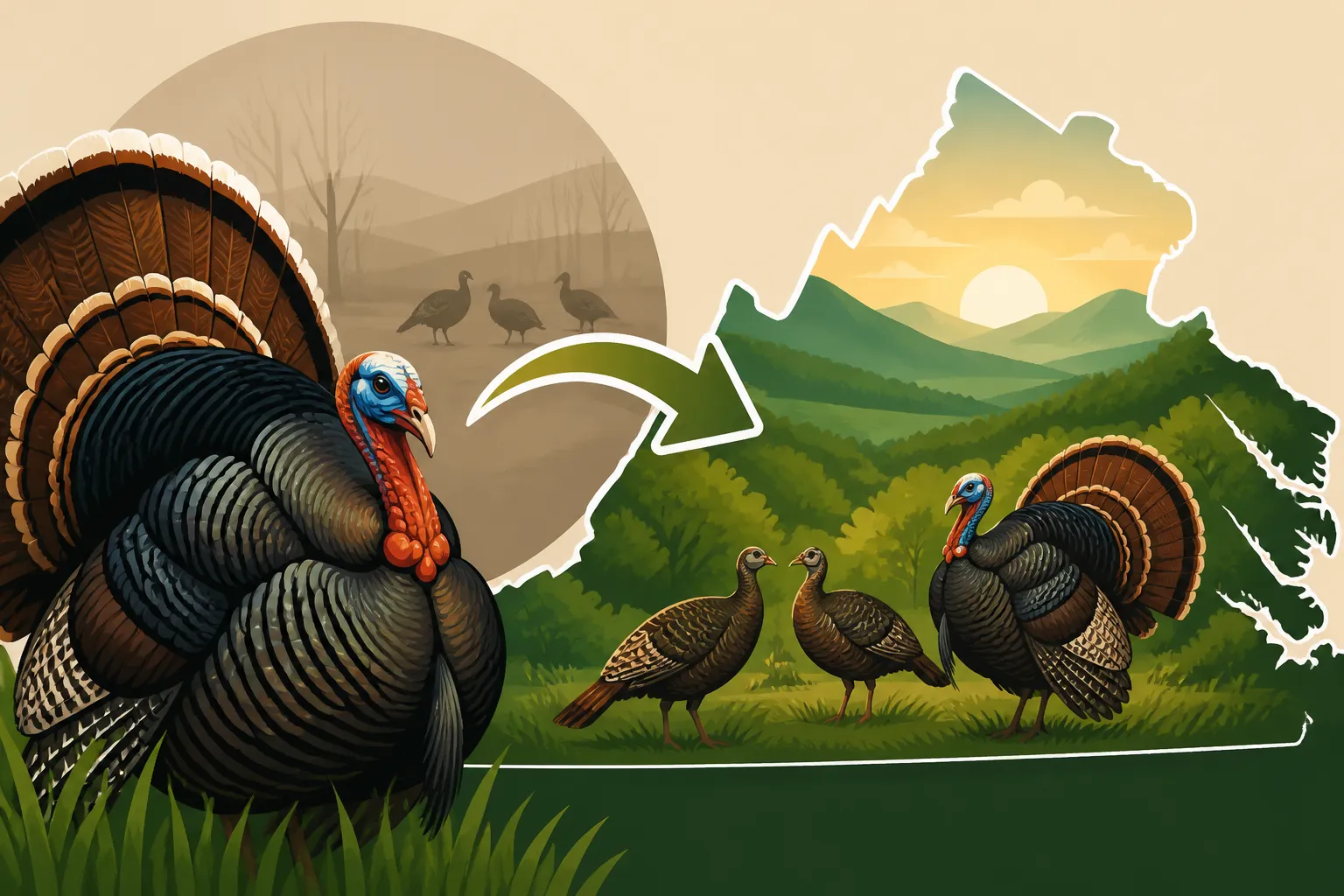
It's hard to imagine now, but there was a time when the resounding gobble of a wild turkey was a rare sound in Virginia, if heard at all. For generations of hunters and wildlife enthusiasts, the idea of pursuing a big tom in the spring woods felt like a distant dream, a ghost from a bygone era. The near disappearance of this iconic game bird from our landscapes was a stark reminder of how quickly even abundant wildlife can vanish without careful stewardship. This guide will take you on a journey through the incredible, painstaking efforts that brought wild turkeys back from the brink, transforming Virginia's forests and fields into thriving habitats once more.
The Great Silence: How Virginia's Turkeys Vanished
Before the restoration success story, there was a period of severe decline. The vast flocks that once roamed Virginia's colonial-era forests were decimated by a combination of factors, leaving only scattered, isolated populations in the most remote corners of the state. Understanding this decline is crucial to appreciating the magnitude of the comeback.
The Impact of Unregulated Hunting
In the early days of European settlement and well into the 19th century, hunting was largely unregulated, driven by necessity and, later, by market demand. Wild turkeys, being large, relatively easy to find, and excellent table fare, were a prime target. There were no bag limits, no seasons, and commercial exploitation was rampant. Market hunters would kill dozens, sometimes hundreds, of birds at a time, shipping them by rail to burgeoning city markets. This relentless pressure, combined with highly effective hunting methods, quickly pushed turkey populations into a downward spiral. Imagine whole communities relying on wild game for sustenance and income, and you can see how the pressure mounted, year after year, with little thought for the future.
Habitat Destruction and Fragmentation
Even more devastating than unregulated hunting was the widespread destruction of critical habitat. Virginia, like much of the Eastern Seaboard, underwent massive deforestation as settlers cleared land for agriculture, timber, and fuel. Old-growth forests, which provided the diverse mast crops and dense cover that wild turkeys depend on, were replaced by vast fields of tobacco and corn, or by monoculture timber plantations. The continuous, interconnected forest landscapes that allowed turkeys to thrive and move freely became fragmented islands, isolating small pockets of birds and making them more vulnerable to local extinctions. This wasn't just losing a few trees; it was fundamentally changing the ecological blueprint of the entire state, removing the very foundation upon which turkey populations had historically flourished.
Crafting the Comeback: Virginia's Restoration Blueprint
Recognizing the dire situation, conservationists and state wildlife agencies in Virginia began to lay the groundwork for a massive, unprecedented restoration effort. This wasn't a quick fix; it was a long-term strategic plan that required innovative thinking, dedicated resources, and the cooperation of countless individuals.
Early Attempts and Lessons Learned
The initial attempts at turkey restoration, starting in the early 20th century, were largely unsuccessful. These efforts often involved releasing pen-raised, farm-bred turkeys into the wild. The logic seemed sound: more birds equals more turkeys. However, these domesticated birds lacked the survival instincts of their wild counterparts. They were often unable to forage effectively, avoid predators, or adapt to the rigors of the wild. They succumbed to disease, predation, and starvation in droves, failing to establish viable breeding populations. These early failures, while disheartening, provided crucial lessons: true wildness was paramount, and simply dumping birds into the woods wouldn't work. It highlighted that successful restoration required a deep understanding of the species' ecology, not just brute force.
The Breakthrough: Trapping and Relocation Strategy
The true breakthrough came with the development of effective live-trapping and relocation techniques. By the mid-20th century, wildlife biologists realized that the key was to capture healthy, truly wild turkeys from the few remaining strongholds and move them to suitable, but unoccupied, habitats. This was a monumental shift in strategy. The Virginia Game Commission (now the Virginia Department of Wildlife Resources, or DWR) spearheaded these efforts, deploying specialized teams armed with rocket nets or cannon nets. These nets, launched over bait sites, allowed biologists to capture dozens of birds at a time without harming them. The captured turkeys were then quickly processed, checked for health, banded, and immediately transported to carefully selected release sites across the state. This method ensured that the new populations were genetically robust and equipped with the instincts needed to survive and reproduce in the wild.
The Heart of the Effort: Trapping and Relocation Logistics
The success of Virginia's turkey restoration hinged almost entirely on the efficiency and dedication of its live-trapping and relocation program. This was a labor-intensive, often challenging endeavor, but it yielded incredible results.
Selecting Release Sites and Managing Populations
Choosing the right release sites was critical. Biologists scoured maps and scouted ground, looking for areas with ideal habitat — a mix of mature hardwood forests for mast, open woodlands, fields for foraging, and dense cover for nesting and roosting. These sites also needed to be free of existing turkey populations to avoid genetic contamination and provide the best chance for the introduced birds to establish themselves without competition. The goal was to create self-sustaining populations that would eventually expand into surrounding areas. The DWR even used early forms of data analysis, similar to how modern hunters might use platforms like GoHunt to scout and understand deer movement, to identify optimal habitats and track the spread of the newly introduced flocks. This meticulous planning ensured that every relocated bird had the best possible chance to contribute to the growing population.
The Role of Rocket Nets and Dedicated Biologists
The primary tool for capturing wild turkeys was the rocket net. This ingenious device involved baiting an area with corn over several days, drawing in turkeys. Once a flock was gathered, a camouflaged net, propelled by small rockets or cannons, would be fired over the birds, safely capturing them. The process was swift and required precise timing and expertise. Teams of dedicated DWR biologists and technicians would spend countless hours in the field, often in challenging weather conditions, monitoring bait sites and waiting for the perfect moment to deploy the net. It was a true testament to their passion and commitment. These field teams were the unsung heroes, directly responsible for the capture and safe transport of thousands of turkeys over several decades, literally hand-delivering the species back into Virginia's landscape.
Habitat Renewal: The Foundation for Turkey Success
Bringing turkeys back wasn't just about moving birds; it was equally about creating and maintaining the right environment for them to thrive. Habitat management played a crucial, ongoing role in the restoration and continued health of Virginia's wild turkey populations.
Forest Management for Turkeys
Recognizing that habitat loss was a primary cause of the initial decline, significant efforts were made to improve forest health and diversity. This included encouraging land managers, both public and private, to adopt practices that benefited wild turkeys. Selective timber harvesting, for instance, helped create varied age classes of trees, providing both mature mast-producing oaks and pines for roosting, as well as younger, denser growth for nesting and brood rearing. Controlled burns were also utilized to clear out undergrowth, stimulate new growth, and improve foraging conditions by making insects and seeds more accessible. These forest management techniques, often implemented on vast tracts of public land like the George Washington National Forest and the Jefferson National Forest, were instrumental in shaping the landscape into a turkey paradise.
Creating Foraging and Brood Rearing Opportunities
Beyond dense forest, turkeys also need open areas for foraging and raising their young. Early successional habitat, characterized by young plants and abundant insects, is vital for poults (young turkeys) which rely heavily on insects for protein in their first few weeks of life. Landowners and DWR worked to create and maintain small clearings, food plots, and edge habitats. Planting specific food sources like chufa, clover, or various grains also provided supplemental foraging, especially during lean periods. These efforts ensure a year-round food supply, bolstering the turkeys' ability to survive and reproduce. Hunters often observe turkeys working these edges and openings, and understanding their preferences for such habitat is key to successful spring turkey hunting strategies.
The Collaborative Spirit: Partnerships in Conservation
The sheer scale of Virginia's turkey restoration meant it couldn't be achieved by a single agency alone. It was a massive undertaking that relied heavily on partnerships and the enthusiastic participation of various groups.
Sportsmen and Conservation Organizations
Sportsmen's groups were, and continue to be, vital partners in conservation. Organizations like the National Wild Turkey Federation (NWTF) played an enormous role, providing financial support, volunteer labor, and advocacy for turkey restoration and habitat projects. They helped fund equipment, assisted in trapping efforts, and tirelessly campaigned for sound wildlife management policies. Hunters, through their license and tag purchases, directly funded the DWR's work, including the salaries of biologists and the operational costs of the trapping programs. This symbiotic relationship between hunters and conservation is a cornerstone of the North American Model of Wildlife Conservation, demonstrating how those who enjoy the resource often become its most passionate protectors. Their passion ensures that future generations can also experience the thrill of Virginia Spring Turkey Season Rules.
Landowners and Community Involvement
Private landowners were also indispensable. Many of the successful relocation sites were on private property, and their cooperation was essential for granting access, protecting released birds, and implementing beneficial habitat practices. Community involvement, whether through local conservation groups, 4-H clubs, or simply individual citizens reporting turkey sightings, helped DWR monitor the expanding populations. This broad base of support fostered a sense of shared responsibility for the state's wildlife resources, turning what could have been a purely bureaucratic effort into a grassroots movement.
Today's Flourishing Flocks: A Testament to Success
The dedication, foresight, and hard work of countless individuals have transformed Virginia's wild turkey population from a handful of scattered birds into a thriving, huntable resource found in every county of the Commonwealth.
Population Growth and Expansion
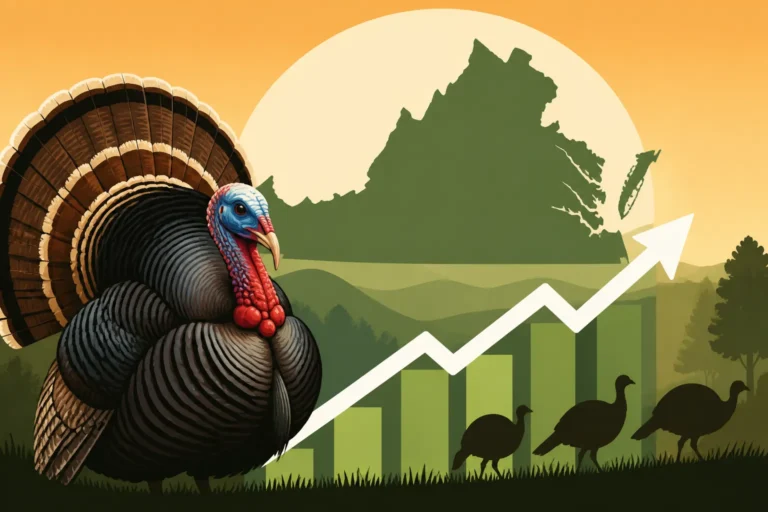
From a low point of perhaps a few thousand birds in the early 20th century, Virginia's wild turkey population has grown exponentially, now estimated to be well over 180,000 birds. This incredible Virginia Turkey Population Trends is one of the most remarkable wildlife success stories in North America. Turkeys now occupy virtually every suitable habitat across the state, from the Appalachian Mountains to the coastal plains. Hunters can now find good turkey hunting opportunities whether they are Roost Hunting Virginia Gobblers in Shenandoah County or employing Run-and-Gun Turkey Tactics on Public Land in the Piedmont. The state's diverse geography, once a challenge, now offers a mosaic of thriving turkey habitats.
Modern Management and Challenges
While the restoration itself is a triumph, ongoing management is crucial to sustain these healthy populations. The DWR continuously monitors turkey populations through brood surveys, harvest data, and research studies. Regulations are adjusted as needed to ensure sustainable hunting opportunities and population health. For example, understanding Virginia Turkey Harvest Numbers is vital for setting appropriate seasons and bag limits. Challenges remain, including habitat fragmentation due to development, predation, and localized disease outbreaks. However, with modern tools and continuous monitoring, Virginia aims to ensure that wild turkeys continue to thrive for generations to come. Hunters can even use platforms like GoHunt to track DWR regulations and see where the Best Virginia Counties for Turkeys might be, leveraging the very data collected by these management efforts.
A Legacy for Future Generations
The legacy of Virginia's wild turkey restoration is more than just a successful wildlife program; it's a powerful reminder of what dedicated conservation efforts can achieve. It demonstrates that even when a species seems lost, with enough scientific understanding, political will, and public support, it is possible to reverse declines and bring back the wildness we cherish. Every spring morning, when a gobbler's call echoes through the Virginia woods, it's a sound that carries the weight of history and the promise of a vibrant future for Wild Turkeys in Virginia. As hunters responsibly engage in the sport, making sure to follow all Virginia Turkey Checking Requirements and participating in efforts that allow for detailed data collection, they continue to be a vital part of this ongoing conservation success. Knowing that these birds were almost gone makes every successful hunt even more meaningful.
Here’s a snapshot of the wild turkey’s journey in Virginia:
| Era | Population Status | Key Factors Contributing to Status | Conservation Efforts (Virginia) | Outcome |
|---|---|---|---|---|
| Pre-1900s | Abundant, widespread | Vast forests, low human population | None (unregulated hunting) | Steady decline |
| Early 1900s | Critically low, localized | Unregulated hunting, massive deforestation | Pen-raised turkey releases | Largely unsuccessful, further decline |
| Mid-1950s – 1980s | Increasing | Live-trapping & relocation, habitat focus | DWR rocket netting, NWTF partnership | Populations establish & expand |
| 1980s – Present | Thriving, widespread | Ongoing habitat management, regulated hunting | Continuous monitoring, public land management | Stable, huntable populations statewide |
Today, if you're planning to head out for a spring hunt, you might even use resources like GoHunt to scope out areas, look at terrain, and review regulations. This modern approach is a direct beneficiary of the hard-won battles of conservationists decades ago. Just remember, these tools are built upon a foundation of science and management that saved the turkey in the first place. You can learn more about specific tactics, whether you're interested in Hunting the Morning-Only Early Turkey Period or navigating the later parts of the season.
Disclaimer
The information provided in this guide is for informational purposes only and is not intended as legal advice. Hunting regulations, seasons, and licensing requirements can change. Always consult the most current Virginia Department of Wildlife Resources (DWR) regulations before engaging in any hunting activity. Adherence to all local, state, and federal laws is the responsibility of the individual hunter.