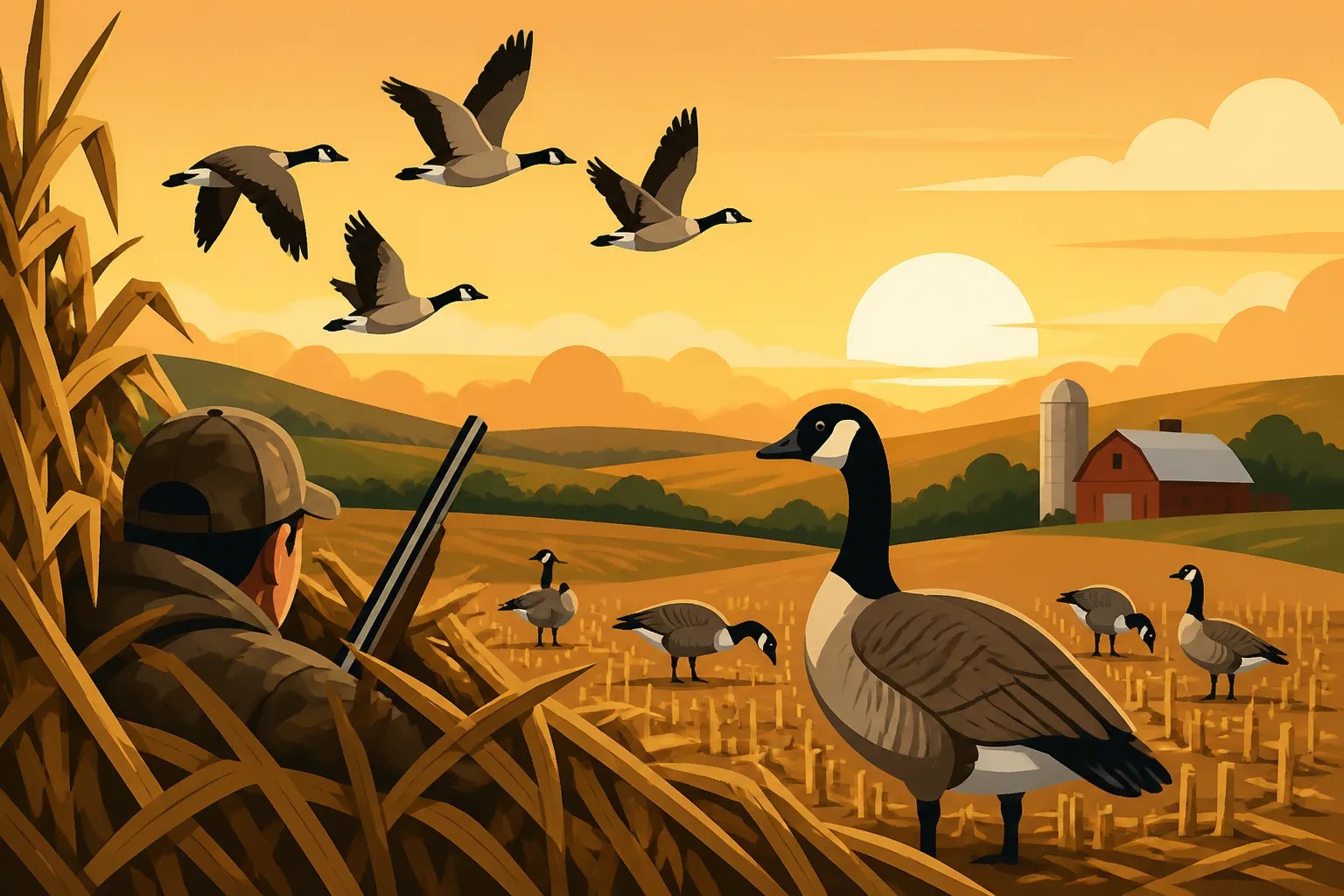
Canada Geese on Virginia Farmland
For many hunters in Virginia, the thought of waterfowl often conjures images of frigid duck blinds scattered across the vast Chesapeake Bay. Yet, a truly rewarding and often overlooked opportunity lies much closer to home, right in our expansive agricultural fields: hunting Canada geese. These intelligent, often wary birds provide a fantastic challenge and yield excellent table fare, but successfully pursuing them on farmland demands more than just pointing a shotgun; it requires a deep understanding of their habits, preferred feeding grounds, and the right strategies to outwit their famously keen eyesight. This comprehensive guide will equip you with everything you need to know to effectively and ethically hunt Canada geese across Virginia's diverse farmlands.
Understanding Virginia's Resident Canada Goose Population
The presence of Canada geese on Virginia's farmlands isn't just a seasonal phenomenon tied to migration anymore; it's increasingly about a robust resident population that has firmly established itself. These birds behave differently from their migratory cousins, and understanding these distinctions is key to successful hunting.
The Rise of Resident Geese
For decades, the Canada goose we hunted in Virginia was primarily a migratory bird, passing through on its way south along the Atlantic Flyway. However, over the last half-century, a significant shift has occurred. Resident Canada goose populations have exploded across North America, including right here in Virginia. These birds don't follow the long migration routes; instead, they breed, nest, and live year-round in our state. They've adapted incredibly well to human-modified landscapes, especially suburban ponds, golf courses, and, most importantly for hunters, agricultural areas. This means that while we still see migratory geese, a large portion of the geese you encounter in Virginia's fields are local birds, often born and raised within a few miles of where you're hunting. Their patterns are more predictable and tied to local food sources and roosting areas.
Unlike the wary travelers who might only stop for a few days, resident geese develop consistent feeding and loafing patterns. They become accustomed to specific fields, water bodies, and flight paths, which can be both a blessing and a curse for hunters. While their routines offer opportunities for patterning, their daily exposure to human activity often makes them incredibly sharp and difficult to fool. Recognizing whether you're dealing with a resident flock or a fresh batch of migratory birds can dictate your tactics, from how aggressive you are with calling to the type of decoy spread you deploy. You can learn more about how the overall waterfowl picture fits together in our guide to Virginia Waterfowl Migration Timing.
Behavior and Habitat Preferences
Resident Canada geese are masters of efficiency. Their daily routine generally revolves around securing food, water, and safe roosting areas. In Virginia's agricultural regions, this means open fields provide abundant forage, while nearby ponds, rivers, or large lakes offer secure overnight roosts and places to rest during the day. Geese are largely herbivores, and farmland is a buffet. They'll gorge on waste grain after corn or soybean harvests, clip tender winter wheat or rye sprouts, and even graze on lush pastures. Their presence in a field isn't random; it's a calculated decision based on food availability, proximity to water, and a sense of security.
These birds are incredibly social, flying in large flocks and feeding together. They often send out "sentinel" birds to keep watch while the others feed, making them notoriously hard to approach without proper concealment. Their eyesight is legendary; they can spot a hunter's head poke out from a blind or a misplaced decoy from incredible distances. They prefer open areas where they have a clear view of potential predators, which is why those vast, flat farm fields are so attractive. Wind direction is also a crucial factor in their behavior. Geese, like most large birds, prefer to land and take off into the wind, making wind direction a primary consideration when setting up your spread and positioning yourself.
Identifying Prime Farmland Goose Habitat
Finding the geese is half the battle; the other half is understanding why they're there and where they prefer to be within a given field. It's like being a detective, looking for clues the geese leave behind.
Reading the Landscape for Goose Sign
Successful farmland goose hunting starts long before you ever set up a blind. It begins with meticulous scouting and a keen eye for "goose sign." This isn't just about spotting birds in the air; it's about seeing where they've been on the ground. When geese feed, they leave behind tell-tale evidence. Fresh droppings, often resembling small green or brown pellets, are a clear indicator of recent activity. The more droppings, the more frequently and heavily the geese are using that particular spot. You'll also see areas where they've "grazed" on winter wheat or cover crops, leaving short, clipped stubble. In harvested corn or soybean fields, look for flattened areas where they've walked, picked through, and rested.
Beyond direct sign, pay attention to the overall layout of the land. Geese love large, open fields that offer unobstructed views. They'll often pick higher ground within a field, or a slight rise, giving them an even better vantage point. Proximity to water is also key; the closer the feeding field is to a major lake, river, or large pond where they roost, the more likely they are to use it. When driving around, keep your eyes peeled for concentrations of geese from a distance. Tools like GoHunt can be invaluable here, allowing you to mark specific fields on a map where you've observed birds or found significant sign, helping you build a comprehensive scouting database. This digital record can also help you predict patterns over several days or weeks.
Food Sources That Attract Geese
Virginia's agricultural landscape offers a smorgasbord for Canada geese, changing with the seasons and crop rotations. Understanding these seasonal food preferences is critical for targeting the right fields.
- Waste Grain (Corn and Soybeans): After the fall harvest, corn and soybean fields become magnets for geese. Combines aren't 100% efficient, leaving behind countless kernels and beans that are easy pickings for geese. These fields are often the primary draw from late fall through early winter. The birds will continue to work these fields until the food supply dwindles or deep snow covers it.
- Winter Wheat, Rye, and Cover Crops: As fall turns to winter, farmers plant winter wheat, rye, and other cover crops. The tender green shoots that emerge are incredibly nutritious for geese, providing a consistent food source when waste grain might be less abundant or covered by snow. Fields with actively growing green crops are prime targets, especially in the colder months.
- Pastures and Hayfields: While less common than grain fields, geese will also graze on lush pastures and cut hayfields, particularly if they are near a water source or offer open, undisturbed areas. This is often more prevalent in milder weather or early season.
- Forage Rotation: Farmers in Virginia often rotate crops. A field that was corn one year might be soybeans or wheat the next. Staying abreast of these changes, either through direct observation or by knowing local farming practices, will help you predict which fields will be hot. A good strategy involves observing geese for several days to determine consistent feeding patterns before committing to a setup. This is where applications like GoHunt can again shine, as they can sometimes help identify crop types or field boundaries, aiding in your scouting efforts.
Effective Scouting and Decoy Strategies
Putting together a successful goose hunt on farmland is a dynamic process that heavily relies on thorough scouting and intelligent decoy deployment. It's not just about throwing out a few fakes; it's about creating a scene that convinces wary geese it's safe to land.
The Importance of Pre-Season Scouting
You simply cannot overstate the importance of pre-season and in-season scouting for farmland geese. These birds are creatures of habit, but their habits can change quickly based on hunting pressure, food availability, and weather. Your goal is to identify their primary feeding fields, their flight paths between roosts and feeding areas, and their preferred landing zones within a field. This means spending hours driving back roads, glassing fields with binoculars or a spotting scope from a distance, and marking down observations. Look for fresh droppings, grazed areas, and the presence of live birds.
Scouting isn't a one-time event. What was a hot field yesterday might be devoid of geese today if they've eaten it out or been pressured. You need to be adaptable and ready to move. Use a mapping app like GoHunt to mark specific locations where you see birds, note the time of day, wind direction, and any significant features of the field. This data accumulation will help you build a reliable pattern. When you spot a feeding flock, observe their behavior. Do they land easily? Are they nervous? Where are the birds positioned for security? All these details will inform your setup. Consider a multi-day scouting approach to confirm patterns before investing in a hunt. You might find some of the techniques described in Scouting Virginia Public Land Before Season helpful, even for private land, when it comes to locating good areas.
Decoy Spreads for Different Scenarios
Decoys are your primary tool for luring geese into range, but simply scattering them randomly won't cut it. Your spread needs to look natural and inviting.
- The Feeding Flock: This is your bread and butter. Geese are highly social, and a large group of feeding birds signals safety and abundant food. Most of your spread should consist of full-body feeder decoys, mixed with a few sentry or "looker" decoys positioned at the edges to mimic birds on guard. Place the sentries on the upwind side of your spread, as geese typically land into the wind.
- The Landing Zone: Always leave a large, open landing zone upwind of your blind. Geese prefer to approach into the wind and "cup" their wings to drop into the spread. This opening should be free of decoys and obstacles, making it an obvious, inviting spot for them to commit. The "kill hole" should ideally be about 20-30 yards from your blind, giving you prime shooting opportunities.
- Decoy Quantity: While more decoys can be better, especially for attracting large migratory flocks, a well-placed spread of 2-3 dozen high-quality full-body or shell decoys can be highly effective for resident birds. Quality often trumps quantity, especially with today's ultra-realistic decoys. Consider adding motion decoys or flags to simulate movement and grab distant birds' attention.
- The "J-Hook" or "U-Shape": A popular and effective spread is the J-hook or U-shape, with the hook's opening facing directly into the wind, providing that natural landing strip. Place your blind at the base of the "J" or "U" to ensure incoming birds are looking at the decoys, not at you.
Here's a quick comparison of common decoy types:
| Decoy Type | Pros | Cons | Best Use |
|---|---|---|---|
| Full Bodies | Most realistic, great visibility | Bulky to transport, expensive | Primary feeding spread, attracting wary birds |
| Shells | Lighter than full bodies, stackable | Less realistic profile than full bodies | Supplementing full bodies, larger numbers |
| Silhouettes | Very lightweight, easy to deploy, affordable | Two-dimensional, less realistic close-up | Bulking up a spread, long-distance visibility |
| Flags | Excellent motion, grabs attention | Requires active flagging by hunter | Signaling distant birds, finishing birds |
| Socks/Windsocks | Lightweight, compact, good motion in wind | Less durable, can look unnatural in no wind | Large numbers, creating movement, portable |
Calling Techniques and Concealment
Calling is an art, not a science, and less can often be more, especially with pressured resident geese. Start with soft, subtle clucks and moans to grab their attention. As they get closer, escalate to more aggressive greeting calls, comeback calls, and insistent clucks. Watch the birds' reactions; if they start to turn or hesitate, back off the call. Overcalling can spook wary birds faster than anything. Practice regularly to develop a natural cadence and varied repertoire.
Concealment is paramount. Geese have incredible eyesight and can pick out anything unnatural in a field. Layout blinds are the go-to for field hunting, as they allow you to remain completely hidden while lying down. Brush your blind in heavily with local vegetation—corn stalks, wheat stubble, or whatever matches the field you're in. Don't leave any gaps or shiny spots. Make sure your face and hands are covered, as exposed skin can gleam in the sun and send birds flaring. Many hunters wear dark face paint or a face mask. When birds are working, remain absolutely still. The moment they spot movement, they're gone. If you're setting up in a standing cornfield, you might even consider methods like Hunting a Standing Cornfield in Farm Country for deer, but adapting the concealment principles for geese.
Navigating Regulations and Access
Understanding Virginia's hunting regulations and securing access to private farmland are critical components of a successful and legal goose hunt. Ignoring either can quickly derail your efforts and lead to legal trouble.
Virginia's Specific Goose Seasons and Limits
Virginia's hunting regulations for Canada geese can vary depending on the specific zone and the type of goose (resident vs. migratory). Generally, Virginia has an "early resident Canada goose season" that typically runs in September, followed by regular migratory seasons that usually align with the duck seasons in different zones (Coastal, Inland, West of I-95). These seasons often have different bag limits, with the early resident season usually offering a more liberal bag. For instance, the early season might allow 10-15 geese per day, while the regular season could be 3-5.
It is absolutely crucial to consult the current Virginia Department of Wildlife Resources (DWR) regulations annually, as dates, bag limits, and shooting hours can change. You'll need a valid Virginia hunting license, a Virginia Migratory Bird Hunting License, and a Federal Duck Stamp. Additionally, you must be HIP (Harvest Information Program) certified. All harvested geese must be reported through the DWR's online system or mobile app. Failing to comply with these requirements can result in fines and loss of hunting privileges. Make sure you're clear on Virginia Duck and Goose Bag Limits for the specific zone and time you're hunting. You can also review Virginia HIP Certification for Bird Hunters for details on that requirement.
Gaining Access to Private Farmland
Most prime goose hunting opportunities exist on private farmland, which means securing permission is often the biggest hurdle. This requires patience, respect, and good old-fashioned networking.
- Knocking on Doors: The most direct approach is to simply knock on farmers' doors. Do this well in advance of the season, not the morning you want to hunt. Introduce yourself, explain your intentions (e.g., that you've noticed geese feeding on their property and would like to ask permission to hunt them), and offer to help with any goose-related crop damage they might be experiencing. Be polite, dress presentably, and respect their decision if they decline.
- Build Relationships: If you gain permission, treat the farmer's land like your own, or better. Pick up all your spent shells, don't damage crops, close gates, and drive only on designated paths. Offer to share some of your harvest. A small gift (a gift basket, a homemade pie, or even a gift card to a local farm supply store) at the end of the season can go a long way in maintaining a good relationship for future years. This long-term approach is key to Getting Private Land Permission in Virginia.
- Offer Services: Some farmers welcome hunters who can help manage nuisance geese that are causing crop damage. If you're able to help alleviate pressure on their fields, it might be an easier "in."
- Hunting Clubs and Leases: In some areas, joining a local hunting club that has access to farmland can be an option. Leases are also available but can be costly and competitive. However, for serious goose hunters, they can provide consistent access.
- Always Ask, Never Assume: Even if a field looks unkempt or like "public land," it's almost always private. Trespassing is illegal and can ruin opportunities for all hunters. Always get explicit permission, and clarify exactly where you can hunt and when. A good practice is to ask for written permission or at least exchange contact information. You can find more specific advice on Hunting Small Private Tracts in Virginia and Knocking on Doors in Piedmont Farm Country.
Essential Gear for Farmland Goose Hunting
Having the right gear won't guarantee success, but it will certainly make your hunt more comfortable, safer, and ultimately more effective. Farmland goose hunting has some specific demands that differ from other types of hunting.
Shotguns, Loads, and Chokes
For Canada geese, you need a shotgun that can deliver enough power to bring down these large, resilient birds at various ranges, and most importantly, deliver a consistent pattern.
- Shotgun Gauge: A 12-gauge shotgun is the undisputed king for goose hunting. Its ability to handle heavier loads with larger shot sizes makes it ideal. Some hunters use 10-gauge, but a modern 12-gauge with magnum loads is more than sufficient.
- Ammunition: Non-toxic shot is legally required for all waterfowl hunting, including geese, across the United States. Steel shot is the most common and affordable option, but newer alternatives like bismuth, tungsten matrix, or Hevi-Shot offer superior density and performance, albeit at a higher cost. For Canada geese, especially larger resident birds, shot sizes like BB, BBB, or T are popular choices. When hunting smaller geese or ducks, you might drop down to #2 or #4 shot. Experiment with different brands and shot sizes to see what patterns best out of your specific shotgun.
- Choke: A modified or improved cylinder choke is a good starting point for geese, offering a balance of spread and density. However, many experienced goose hunters opt for a more restrictive full or extra-full choke, especially if shooting at longer ranges. This helps keep the pattern tight and delivers more pellets to the target, increasing knockdown power. Pattern your shotgun with your chosen loads and choke tubes at realistic hunting distances (30-50 yards) to understand how your gun performs.
Blinds, Clothing, and Accessories
Comfort and concealment are paramount in the goose field. Being cold, wet, or exposed will quickly ruin a hunt and send geese flaring.
- Layout Blinds: These low-profile, portable blinds allow you to lie down in the field, completely hidden, until it's time to shoot. They are designed to be brushed in with local vegetation, making them virtually invisible to overhead birds. Key features to look for include a comfortable backrest, a durable frame, and easy-open doors for quick shooting. Brands like Avery, Final Approach, and Rogers Sporting Goods offer excellent options. You can read more about various options in Layout Blinds and Marsh Boats, many of which apply to field hunting.
- Decoy Bag: You'll need a durable, spacious decoy bag or sled to transport your decoys to and from the field. Some bags have internal dividers to protect full-body decoys.
- Clothing: Layering is key for Virginia's unpredictable weather, especially in late fall and winter. Wear moisture-wicking base layers, insulating mid-layers (fleece or down), and a waterproof/windproof outer shell in camouflage patterns that match the field environment (e.g., cornfield camo, winter wheat camo). Warm, waterproof gloves or mittens and a hat are essential.
- Footwear: Insulated, waterproof boots are a must. You'll be walking through potentially muddy fields, standing in cold stubble, and possibly crossing shallow water. Brands like Muck Boot and Lacrosse offer popular, reliable options.
- Accessories:
- Calls: A good quality Canada goose call (or several) is essential. Practice regularly.
- Headlamp: For walking into and out of the field in the dark.
- Thermos: Hot coffee, tea, or soup on a cold morning can be a game-changer.
- Snacks: Long sits can make you hungry.
- Hand Warmers: Disposable or rechargeable hand warmers are a blessing on frigid days.
- First-Aid Kit: Always a good idea to have one, especially when hunting in remote areas.
- Safety Glasses and Hearing Protection: Crucial for protecting your eyes and ears during shooting.
Remember, the goal is to blend seamlessly into the environment. The more effort you put into camouflage and concealment, the more successful your hunts will be.
Disclaimer
Hunting is an inherently dangerous activity. Always prioritize safety, adhere to all local, state, and federal regulations, and practice ethical hunting principles. The information provided in this guide is for informational purposes only and should not replace official hunting regulations or professional instruction. Always handle firearms responsibly and ensure you have proper landowner permission before hunting on private property.