Best Virginia Counties for Big Bucks
For many Virginia deer hunters, the ultimate goal isn't just filling a tag, but the thrill of encountering a truly magnificent buck. It’s a frustrating reality that some areas just seem to consistently produce bigger racks, leaving others wondering where to focus their efforts. If you're tired of hearing about someone else's giant and want to understand where Virginia's top-tier whitetails roam, this guide is for you.
Unpacking Virginia's "Big Buck" Landscape
Virginia is a diverse state, from the coastal plains to the Blue Ridge Mountains, and this varied terrain directly influences our deer herd. When we talk about "big bucks," we're usually talking about deer that have reached an older age class (typically 3.5 years or older) and have access to excellent nutrition. These two factors are critical, and they aren't evenly distributed across the Commonwealth.
The Influence of Geography and Habitat
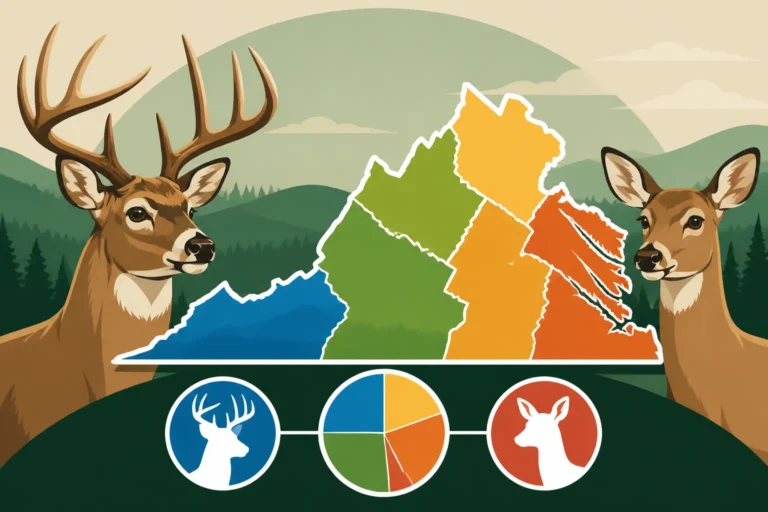
Our state is generally divided into two primary deer management regions: east of the Blue Ridge and west of the Blue Ridge. Each region has distinct characteristics that affect antler growth and deer populations. East of the Blue Ridge, particularly in the Piedmont and coastal plain, you often find more fertile soils, extensive agricultural lands, and diverse timber management practices. This means a rich smorgasbord of food sources—acorns, persimmons, soybeans, corn, and lush browse—which are essential for growing large antlers and robust body weights. Contrast this with the rugged, steep terrain of the western mountains, where food sources can be more scattered and less nutrient-dense, leading to often smaller-bodied deer and typically smaller racks, though certainly not always.
The availability of cover and sanctuary areas also plays a huge role. In areas with dense thickets, large timber blocks, and less hunting pressure, bucks have a better chance of surviving to older age classes. This is why some counties, even with heavy hunting, can still produce giants if they have enough refuge for mature deer. Think about large private land holdings, expansive river bottoms, or even overlooked pockets within public lands that are difficult to access. These are the places where bucks can truly grow up without constantly dodging hunters.
What Defines a "Big Buck" in Virginia?
When hunters talk about "big bucks," they usually mean deer with impressive antler size, not just body weight. This includes considerations like beam length, tine length, spread, and overall mass. While every hunter has their own definition, for many, a "big buck" in Virginia usually means a deer that scores well under systems like Boone and Crockett or Pope and Young, or simply one that's significantly larger than the average fork-horn or 6-point. Often, it's a deer that's 3.5 years old or older, carrying an 8-point rack or more, with good mass and decent tine length.
It’s important to remember that genetics, nutrition, and age all contribute to antler growth. A young buck with great genetics and nutrition might show good potential early on, but he truly needs time to mature to express his full potential. This means that counties with a healthy population of older age-class bucks are more likely to yield those coveted "wall-hanger" deer. The Virginia Buck Age Structure is a key factor here, and understanding it can inform where you hunt.
Top Contenders: Counties Known for Larger Racks
While you can technically kill a large buck anywhere in Virginia, some counties consistently stand out for their ability to produce bigger deer. This isn't just anecdotal; it's often supported by harvest data and the consistent presence of specific habitat characteristics. The general trend often points towards the fertile crescent of the Piedmont and certain areas within the Appalachian foothills.
Piedmont Powerhouses: Agriculture and Big Timber
The Piedmont region, stretching across the middle of the state, is often considered the prime territory for big bucks. Counties like Fauquier, Culpeper, Orange, Madison, and Greene in Northern and Central Virginia frequently appear on lists for impressive deer. These areas boast a fantastic mix of sprawling agricultural fields—think corn, soybeans, alfalfa, and winter wheat—interspersed with mature hardwood forests and plenty of dense creek bottoms. This combination provides both high-protein food sources and the security cover mature bucks need.
Further south in the Piedmont, counties such as Albemarle, Nelson, Bedford, Franklin, and Pittsylvania also show strong potential. These areas might have a bit more varied topography, but still retain that crucial blend of agriculture and dense timber. Access to private land in these regions can be challenging, but if you secure it, your chances for a trophy buck skyrocket. Even on public lands within these areas, diligent scouting and finding overlooked pockets can pay off significantly. Understanding Why the Piedmont Grows Big Bucks often comes down to this perfect storm of food and cover.
Mountain and Valley Gems: Overlooked Giants
While the mountains west of the Blue Ridge are known for tougher hunting and often smaller-bodied deer, they are absolutely capable of producing giants. The key is finding areas with less hunting pressure and good pockets of nutrition. Counties bordering the Shenandoah Valley, such as Augusta, Rockingham, and Shenandoah, often have agricultural interfaces with national forest lands. Here, bucks can grow fat on farm crops and then retreat into the vast, dense mountain timber for security. These transition zones are often hotspots.
Even deeper in the mountains, counties like Giles, Botetourt, and Craig can produce exceptional bucks, particularly on large tracts of private timber land or in remote sections of the George Washington and Jefferson National Forests. These bucks might be harder to find due to the rugged terrain, but when they reach maturity, they often have impressive mass and character. It requires a different hunting approach, often focused on Still-Hunting Jefferson Forest Ridges or finding secluded benches and saddles. Scouting is paramount in these rugged areas, as is understanding the subtle signs of deer movement.
Table: General Characteristics for Big Buck Potential in Virginia
| Characteristic | Piedmont/Eastern Foothills | Mountain/Western Valley |
|---|---|---|
| Primary Food Sources | Ag crops (corn, soy, alfalfa), acorns, persimmons, browse | Acorns, mountain laurel, diverse browse, occasional ag plots |
| Typical Terrain | Rolling hills, river bottoms, mixed forests, open fields | Steep slopes, dense timber, hollows, scattered clearings |
| Hunting Pressure | High on accessible public land, varied on private | Varied, often lower in remote areas, high near access points |
| Buck Age Structure | Generally healthier, good chance for older bucks | Can be good in remote areas, but often higher turnover |
| Antler Potential | High due to nutrition; good mass and spread | Can be high for age, but may be smaller in overall scale |
| Access | More private land, but good Public Hunting Land in Virginia options | Vast public land, but can be difficult to access |
Strategies for Targeting Mature Bucks in Virginia
Finding a big buck isn't just about picking the right county; it's about employing smart strategies that focus on the habits of mature deer. These deer are survivors, often shy, nocturnal, and masters of their environment. You need to think like an old buck to consistently put yourself in a position to encounter one.
Scouting for the Ghost: Pre-Season and In-Season Tactics
Successful big buck hunting starts long before the season opener. Early and late season scouting is crucial. Use tools like aerial maps and topo maps (GoHunt often integrates these layers, making it easier to identify key features) to identify potential bedding areas, travel corridors, and primary food sources. Look for pinch points, saddles, funnels between thick cover, and remote pockets that offer security. I always pay close attention to creek bottoms and drainages, as these often serve as natural highways for deer, especially mature bucks seeking cover or moving between feeding and bedding areas.
During the season, focus on fresh sign. Mature bucks are often solitary, so you might not see the same quantity of sign as you would for a doe group, but the quality will be different. Look for large rubs on bigger trees, heavy trails, and huge, distinct tracks. Scrapes, particularly those along a Scrape Lines Along a Logging Road, can also indicate mature buck activity. Pay attention to changes in food sources throughout the season; early on, it might be acorns, later transitioning to standing crops or cutovers. Your scouting should adapt to these shifts.
Hunting Pressure and Sanctuary Areas
One of the biggest factors influencing where mature bucks survive is hunting pressure. Counties that are heavily hunted, especially on public land, tend to have younger buck populations because older deer are simply harvested before they reach their full potential. To combat this, you need to either find large tracts of private land with quality deer management or identify "sanctuary" areas on public land that other hunters overlook. These are often difficult-to-access pockets, like steep, rugged hillsides, deep swamps, or dense briar thickets. Learning Finding Ground That Sees Fewer Hunters is a skill that takes time, but it's invaluable for big buck hunters.
Consider hunting during less popular times, like weekdays or the very end of the season. Also, think about how mature bucks react to pressure. They often become more nocturnal, moving primarily at night. This means setting up on travel routes between bedding and feeding areas, often closer to bedding, at dawn and dusk, when they might still be moving. Using a good mapping application like GoHunt can help you identify these harder-to-reach areas and understand property boundaries, which is crucial when navigating public and private interfaces.
Beyond Location: The Pillars of Antler Growth
While county selection is a good starting point, truly understanding what creates a big buck involves a deeper dive into deer biology and herd management. The biggest antlers don't just happen by chance; they're the result of a delicate balance of factors working together over time.
Age, Nutrition, and Genetics
These three elements form the trifecta of antler development. We’ve touched on age and nutrition already, but it's worth reiterating their importance. A buck needs to be allowed to live long enough to fully express his antler potential, typically 3.5 years old and preferably 4.5 or 5.5 years old. Good nutrition, meaning a consistent supply of high-quality forage rich in protein and minerals, fuels that growth. If a buck spends his life in a food-rich environment, he'll have the building blocks for impressive bone growth.
Genetics, while harder for a hunter to influence directly, also play a role. Some bucks are simply predisposed to growing larger racks than others, even with similar age and nutrition. However, a buck with "good genetics" still won't grow a giant rack if he's harvested as a yearling or lives in an area with poor food sources. So, while genetics contribute, age and nutrition are usually the more actionable factors for hunters and land managers to consider.
The Role of Deer Management Practices
Effective deer management, whether on a statewide level or a smaller private land tract, is vital for fostering a big buck population. This often involves strategies aimed at letting young bucks walk and reducing the doe population to balance the herd with the available habitat. When the doe-to-buck ratio is more balanced, bucks don't have to work as hard during the rut, meaning they can conserve energy and resources that might otherwise go into antler growth.
In Virginia, regulations such as antler point restrictions in some counties (though not widespread) and the overall East Versus West of the Blue Ridge Bag Limits help to influence buck age structure. On private land, landowners who implement voluntary antler restrictions and create food plots can dramatically improve their property's potential for big bucks. This focus on long-term herd health and habitat improvement, often guided by data from the Virginia Department of Wildlife Resources (DWR) or expert advice from platforms like GoHunt, is what truly cultivates a consistent supply of trophy animals.
Hunting the Rut for Bigger Bucks
Timing is everything, and for big buck hunters, the rut is often the holy grail. This is when mature bucks, often nocturnal and reclusive, become more active during daylight hours as they seek out does. Understanding When the Virginia Rut Peaks by Region is crucial. Generally, the peak rut in Virginia falls in mid-November, though it can vary slightly between regions and even from year to year. During this time, aggressive calling (like rattling and grunting) can be incredibly effective, as can setting up on pinch points and travel corridors where bucks will be scent-checking for does.
Hunting during the rut offers an unparalleled opportunity to encounter a mature buck that might otherwise be invisible. They drop their guard, become more focused on breeding, and often travel distances they wouldn't during other parts of the season. However, this also means competition from other hunters can be high, so combining rut tactics with scouting for overlooked areas (as discussed earlier) can give you a significant advantage. This period can also be a great time to focus on Hunting a Ridge-Top Saddle for Rutting Bucks or other natural funnels.
Disclaimer
This article is for general informational purposes only and does not constitute professional advice. Laws, prices and regulations vary by location and change over time. Consult a qualified professional for guidance on your specific situation.