When the Virginia Rut Peaks by Region
It's incredibly frustrating to spend countless hours in the stand, only to feel like you're always a step behind the deer, especially during the elusive rut. Many Virginia hunters wrestle with trying to pinpoint that magical window when bucks truly lose their minds, chasing does across the landscape. This guide is here to untangle the regional nuances of the Virginia rut, helping you understand when and why deer in different parts of our beautiful state hit their peak activity, so you can plan your hunts with more confidence.
Understanding the Rut: More Than Just a Few Days
The rut isn't a single event; it's a dynamic period driven by biology, unfolding over several weeks with distinct phases. Thinking of it as a switch that flips on and off can lead to a lot of missed opportunities and head-scratching moments in the woods.
The Biological Triggers of the Rut
At its core, the whitetail rut is governed by photoperiod, which is simply the amount of daylight in a 24-hour cycle. As the days shorten after the summer solstice, a deer's brain registers this change. This reduction in daylight triggers a cascade of hormonal shifts in both bucks and does. It's an evolutionary clock, finely tuned to ensure fawns are born at the optimal time in spring when food resources are abundant. This is why, year after year, the general timing of the rut remains remarkably consistent; it's less about the first hard frost and more about the sun's position.
While photoperiod is the primary conductor of this grand symphony, secondary factors like severe weather — think an unseasonably warm November or a sudden, dramatic cold front — can certainly influence when deer are most active within that rut window. A cold snap might push deer to move more during daylight hours, making the rut seem more intense. However, it doesn't actually shift the biological trigger for when does become receptive or when bucks are at their most hormonal. Knowing this helps us separate the consistent science from the anecdotal observations we often share around a deer camp fire.
Phases of the Rut Cycle
To truly maximize your time afield, it helps to break the rut down into phases: pre-rut, peak rut, and post-rut. The pre-rut often starts in late October, where bucks are feeling the hormonal surge and begin making scrapes and rubs, asserting dominance and scent-marking. This is a fantastic time for scouting, as these signs can tell you a lot about travel corridors and buck activity before the intense chasing begins. You'll find bucks checking these areas frequently, almost like clockwork.
The peak rut is when things really heat up. This is the period of intense chasing, breeding, and the "lockdown" phase. Bucks are actively pursuing does, sometimes running them for miles. When a buck finds a receptive doe, they might enter a lockdown period, sometimes lasting 24-48 hours, where they stay together, often bedded down in thick cover, away from other deer. This lockdown can make it seem like deer have vanished, only for activity to explode again once the doe is bred and the buck moves on to find another. This can be one of the most exciting, yet also frustrating, times to be in the woods, as deer movement can be sporadic and unpredictable from an observer's perspective.
Finally, the post-rut occurs after the majority of does have been bred, typically late November into December. Buck activity tapers off, and their focus shifts back to recovery and finding food. However, don't count out this phase entirely! Some does that weren't bred during the primary rut will come into estrus again about a month later, often drawing out the remaining bucks who are still looking for one last chance. This secondary rut can offer excellent hunting, especially if you've done your homework on late-season food sources and bedding areas where bucks are trying to regain lost weight.
Eastern Virginia: The Piedmont and Coastal Plain Rut Peak
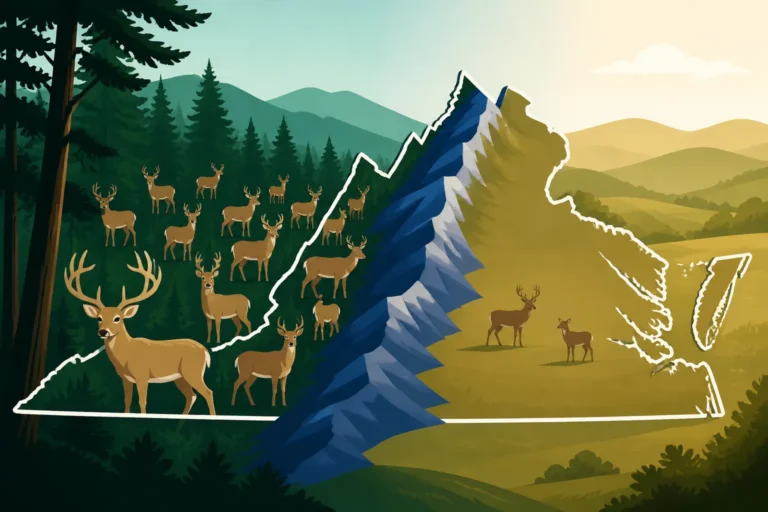
Our vast Eastern Virginia landscape, stretching from the rolling Piedmont hills to the flat Coastal Plain, offers a distinctly different rutting experience compared to the rugged mountains. The timing here, while still driven by photoperiod, can feel a bit more drawn out due to local factors.
Typical Timing in Eastern Virginia
For most of Eastern Virginia, encompassing the Piedmont and Coastal Plain, you'll generally find the peak rut activity occurring in the mid-November timeframe. This often means the second and third weeks of November are prime, though intense activity can sometimes stretch from the first week right up to Thanksgiving. While you might see some early chasing and scrape activity in late October, the really aggressive, all-day seeking and breeding usually kicks into high gear a little later than in the western parts of the state. This later peak can be great for those of us who appreciate the slightly milder November weather this region often offers, allowing for more comfortable all-day sits. If you're planning your hunts in this area, focusing your efforts around the middle of the month will put you in the best position. For more specific insights into this region, check out our guide on Hunting the Rut East of the Blue Ridge.
In areas heavily influenced by agriculture, such as those found across the Piedmont's fertile farmlands, the timing might still hold true, but the intensity and visibility of the rut can shift. Bucks might spend more time cruising field edges and woodlots, checking for does coming to feed. You might notice more activity around standing corn or soybean fields, even during daylight, as bucks patrol these food sources. The sheer abundance of food can sometimes lead to deer being less concentrated, making finding that "hot" area a bit more challenging. However, once a doe comes into estrus, the chase can be just as frenetic and unpredictable, often spilling out into the open spaces.
Factors Influencing the Eastern Rut
Several factors can influence how the rut unfolds in Eastern Virginia, making it feel subtly different from year to year, even if the biological peak remains consistent. One significant factor is deer density. In many parts of the Piedmont and Coastal Plain, deer populations are quite robust. Higher deer densities can sometimes make the rut seem more spread out. With more does available, a buck might not have to work as hard to find a receptive mate, or there might be multiple does coming into estrus at different times within a short window, leading to a prolonged period of activity rather than a single, explosive peak. This can be a double-edged sword: more opportunities, but less concentrated, intense action.
Human pressure also plays a substantial role. Eastern Virginia often has more fragmented habitat and closer proximity to human development compared to the sprawling national forests of the west. Increased hunting pressure, especially on public lands or smaller private tracts, can push much of the rutting activity into nocturnal hours. Bucks become warier and might move more under the cover of darkness, only emerging during daylight for brief periods in secluded pockets of cover. This is where diligent scouting, understanding bedding areas, and paying attention to subtle sign becomes absolutely critical. Don't be discouraged if you're not seeing chasing all day; the activity is happening, just perhaps on a different schedule.
Western Virginia: Blue Ridge and Mountain Rut Dynamics
Venturing west of the Blue Ridge, into the rugged mountains of Virginia, presents a rutting season with its own distinct flavor. The elevation, cooler temperatures, and vast expanses of forest land influence when and how the deer rut here.
Anticipating the Western Rut Peak
For hunters in Western Virginia, including the iconic Blue Ridge and the Appalachian Mountains, the rut generally kicks off a bit earlier than in the east. You can typically expect the peak breeding activity to fall between late October and early November. This means that by the first or second week of November, bucks are usually in full swing, actively seeking and breeding does. Many seasoned mountain hunters will tell you that the last week of October into the first week of November is when they start seeing the most intense daylight movement from mature bucks. The earlier, cooler temperatures in these higher elevations likely contribute to this slight shift, though again, the primary driver is still the decreasing daylight. For those who can time their hunting trips during this crucial window, the mountains can offer an unforgettable experience. Our detailed guide, Hunting the Rut West of the Blue Ridge, delves deeper into these specific timelines.
The challenging terrain of Western Virginia also shapes how the rut plays out. Bucks will often utilize the contours of the mountains to their advantage, cruising ridgelines, saddles, and benches in search of does. Understanding how deer navigate these features is paramount. During the rut, these natural funnels become superhighways for breeding activity. You'll find bucks working their way along these topographical features, scent-checking for receptive does. Identifying these key locations during your scouting trips can lead to fantastic encounters during the peak.
Mountain-Specific Rut Strategies
Hunting the rut in the mountains demands a different approach than sitting on a Piedmont field edge. Bucks are constantly on the move, and they use the elevation changes to cover ground efficiently. Learning to "read" the terrain is crucial. For instance, a saddle between two ridges acts as a natural funnel, guiding deer movement. Benches, which are flat areas on a slope, often serve as travel corridors or temporary bedding spots where bucks might pause while trailing a doe. Identifying these areas is where a good mapping tool like GoHunt can be invaluable, allowing you to pinpoint potential hotspots from home. You can mark these features on your map, then confirm them with boots on the ground.
The sheer vastness of the George Washington and Jefferson National Forests means that deer have ample room to roam, and they often use thick, remote cover for their lockdown phases. This means you need to be prepared to hike, to climb, and to stay mobile if necessary. Understanding how to interpret subtle sign, like fresh rubs or scrape lines leading into thickets, can help you narrow down where a buck might be tending a doe. For an in-depth look at deciphering terrain, take a peek at Reading a Ridge for Blue Ridge Deer or explore tactics for Hunting a Ridge-Top Saddle for Rutting Bucks. Being prepared for a long day of walking and waiting, with a sharp eye for sign, is key to success in these stunning, yet challenging, environments.
The Role of Weather and Moon Phase (Dispelling Myths)
Among hunters, few topics spark as much debate and folklore as the influence of weather and moon phase on the rut. While these factors certainly impact daily deer movement, it's crucial to understand their actual role versus the popular myths.
Separating Fact from Fiction: Weather's Impact
Many hunters swear that a cold front "kicks off" the rut, or that warm weather "shuts it down." While it's true that a sudden drop in temperature can often result in increased deer activity, it's important to differentiate between increased activity and the trigger of the rut. The rut itself, as we've discussed, is primarily initiated by the photoperiod – the shortening days. However, a sharp cold front in late October or early November can absolutely provide a powerful boost to deer movement. Deer, being warm-blooded animals, expend more energy to stay warm in colder temperatures. This often translates to more daytime feeding and, during the rut, more active seeking behavior from bucks. It's not that the cold front starts the rut, but it often makes the rut more visible to hunters.
Conversely, unseasonably warm weather during the peak rut can make it feel like the deer have vanished. In reality, they are often still rutting, but their movement patterns shift. They might become more nocturnal, moving during the cooler hours of darkness, or they might simply bed down in thicker, shadier cover during the hottest parts of the day. Consistent cold weather, on the other hand, encourages more consistent daylight movement, making the rut feel more prolonged and exciting. So, while a cold front won't shift the entire breeding window, it's definitely something to watch for, as our article on Hunting Deer After a Cold Front details. It can be the catalyst for those incredible, all-day hunts when bucks seem to be everywhere.
Moon Phase and Rutting Activity
The moon phase is another topic that generates endless discussions and theories among deer hunters. You'll hear claims that the rut peaks on the full moon, or that certain moon phases correlate with peak breeding. While it's a fascinating idea, and one that many passionately believe, scientific research generally suggests that the moon phase does not dictate the timing of the overall rut peak. Like weather, the moon can influence when deer move within a 24-hour period, but it doesn't change the biological clock that governs the annual rut.
For instance, during a bright full moon, deer might feel more comfortable moving and feeding during the night, leading to a perception of reduced daytime activity. Conversely, darker moon phases might push more of that activity into daylight hours. Many hunters use apps or calendars that predict optimal hunting times based on moon phase, and while these can be helpful for daily planning, they shouldn't be relied upon to tell you when the rut itself will peak. Deer are driven by hormones and the consistent, predictable changes in daylight hours. While you might use tools like GoHunt to track moon phases for daily planning, remember that the primary rut window remains consistent regardless of whether it's a new moon or a full moon. Focus on the time of year, regional nuances, and local sign, and the moon will simply be another factor in your daily tactical decisions.
Scouting and Adaption: Being Ready for Any Rut
The best rut strategy isn't about perfectly predicting a date on a calendar; it's about diligent scouting, understanding your specific hunting grounds, and being adaptable to changing conditions. The deer will tell you what they're doing if you know how to listen.
Pre-Rut Scouting for Peak Performance
The work for a successful rut hunt begins long before the first leaves start to fall. Pre-rut scouting is absolutely critical for identifying key areas where bucks will be active once the breeding frenzy begins. During late September and October, bucks begin to establish their dominance hierarchies and create sign. Look for fresh rubs on trees, especially larger ones, which indicate a mature buck is in the area. More importantly, keep an eye out for scrape lines—series of pawed-out areas under low-hanging branches that bucks use for scent communication. These are essentially calling cards for does, announcing a buck's presence and readiness to breed.
Identifying active scrape lines along logging roads, field edges, or natural funnels can be a game-changer. These areas are prime spots to hang trail cameras. By monitoring these cameras, you can get a better sense of which bucks are frequenting the area, at what times, and even get a peek at the local buck-to-doe ratio. Placing cameras strategically, perhaps on a major travel corridor or at the intersection of a couple of funnels, can give you invaluable intelligence. Our article on Scrape Lines Along a Logging Road offers more tips, as does Where to Hang a Camera on a Logging Road. This early season intel allows you to select your best stand locations long before the pressure of the rut builds.
Adapting Your Tactics to Current Conditions
Even if you've perfectly timed your hunting trip to coincide with the peak rut in your region, conditions on the ground can change daily, and sometimes hourly. Flexibility in your tactics is paramount. If you wake up to an unseasonably warm November morning, for instance, you might adjust your strategy to focus on shady, cool bedding areas near water sources, or sit later in the day when temperatures drop. Conversely, a sudden cold front might encourage you to sit all day, knowing that deer will be on their feet more.
Paying attention to fresh sign is your best indicator of current deer activity. Are new scrapes opening up? Are rubs fresh and numerous? Are you seeing tracks in the mud, and if so, are they fresh and indicating significant movement? Reading Virginia mud for fresh deer movement can provide real-time updates on what the deer are doing. Observing these subtle cues helps you understand if you're hitting the "hot" phase, or if the deer are still in pre-rut seeking, or perhaps in a lockdown phase. Using an app like GoHunt can help you log your observations and identify patterns over time, helping you fine-tune your strategy season after season. Remember, the deer are the ultimate teachers, and adapting to their behavior is the surest path to success.
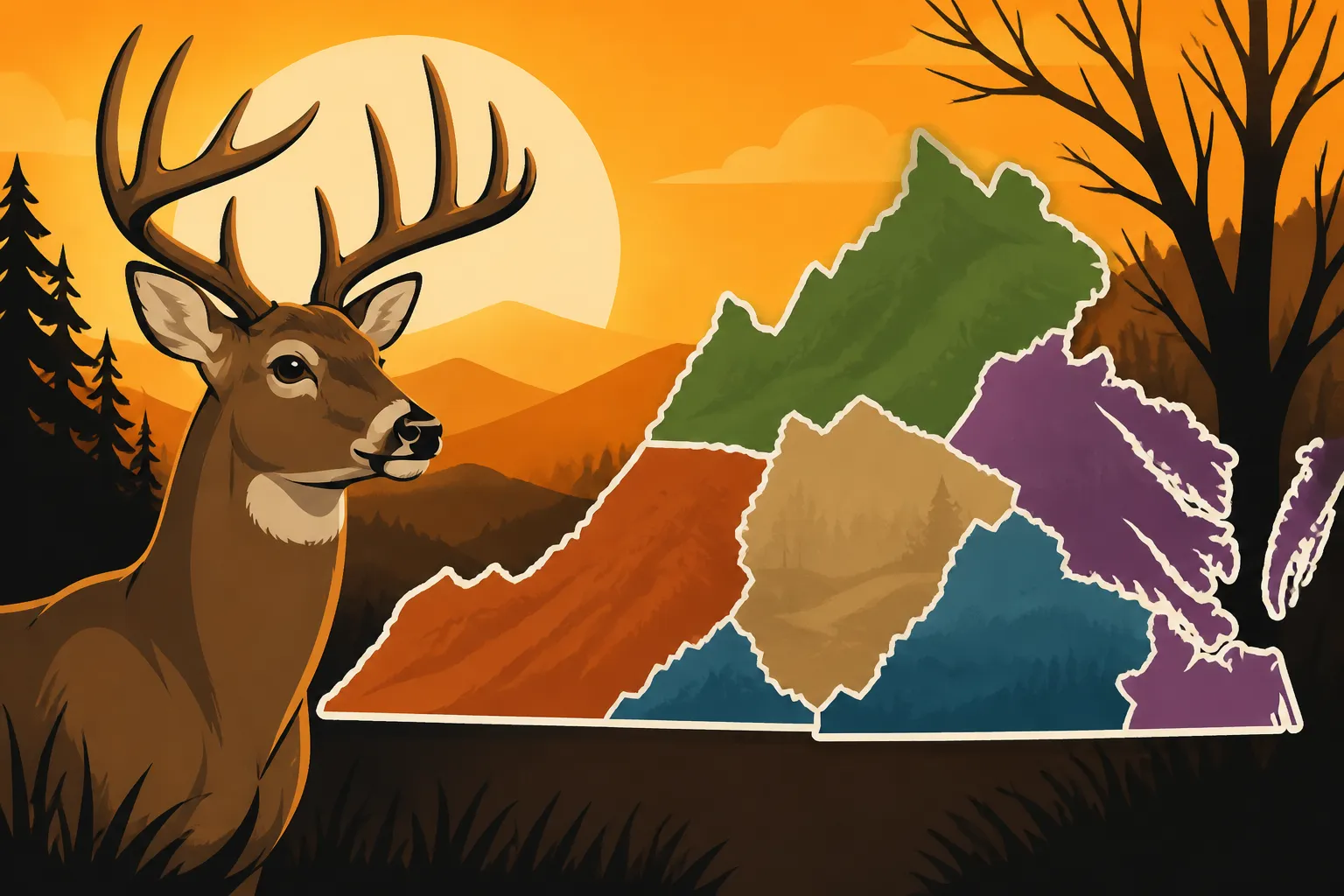
Here's a quick overview of the typical rut peaks by region in Virginia:
| Virginia Region | Typical Peak Rut Activity | Key Characteristics |
|---|---|---|
| Western Virginia | Late October – Early November | Earlier peak, often more intense, influenced by cooler mountain temps and varied terrain. Bucks use ridges and hollows. |
| Eastern Virginia | Mid-November | Slightly later peak, can feel more drawn out. Influenced by higher deer densities and agricultural food sources. |
Internal Links to Explore Further:
- Virginia Deer Season Structure Explained
- Virginia Deer Population Estimate
- Why the Piedmont Grows Older Bucks
- Virginia Buck Age Structure
Disclaimer
This article is for general informational purposes only and does not constitute professional advice. Laws, prices and regulations vary by location and change over time. Consult a qualified professional for guidance on your specific situation.