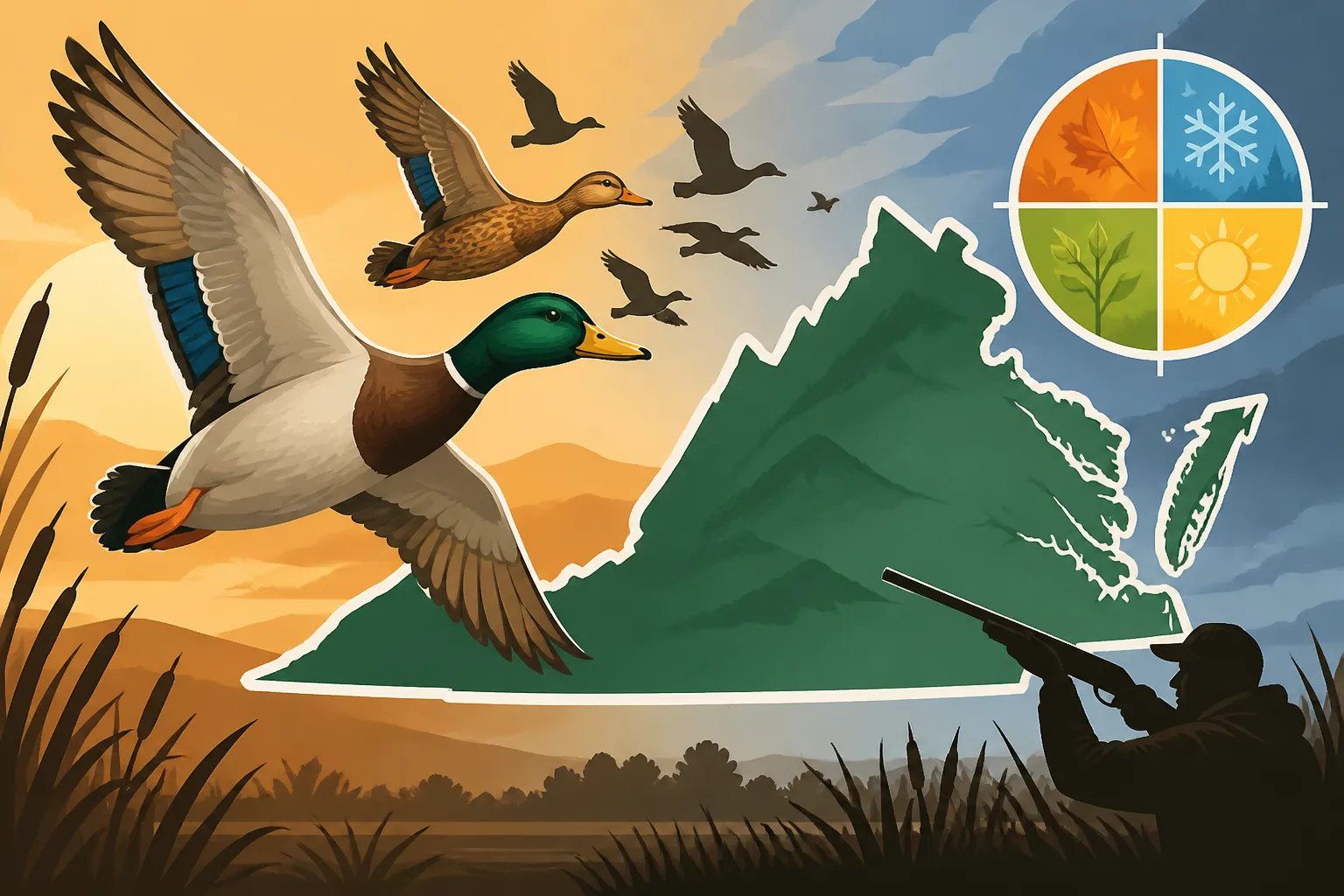
Duck Migration Timing Through Virginia
Trying to predict exactly when ducks will show up in Virginia is like trying to guess the winning lottery numbers – frustrating, often unpredictable, and rarely goes exactly as planned! You spend hours scouting, studying weather maps, and listening for distant calls, only to wonder if you’ve missed the big push or if the birds are just holding up north. It can feel like a constant battle against the elements and the whims of nature, making successful waterfowl hunting feel like a monumental task. This guide is here to demystify the complex dance of duck migration through our great Commonwealth, helping you understand the patterns, the triggers, and the local nuances so you can better time your hunts and fill your strap.
Understanding the Flyway: Virginia's Unique Position
Virginia isn't just a dot on the map for migrating waterfowl; it's a vital pit stop, a bustling hub on their epic journey south. Understanding our state's place within the larger migratory picture is the first step to unlocking more consistent success in the duck blind.
The Atlantic Flyway's Influence
Think of the Atlantic Flyway as a massive, invisible superhighway in the sky, stretching from the Arctic tundra all the way down to the Caribbean. Virginia sits squarely in the middle of this incredible migration corridor, making us a critical staging and wintering ground for countless ducks and geese. As the northern reaches freeze and food sources become scarce, these birds instinctively follow this ancient route, bringing them right to our diverse habitats. We get to witness this incredible spectacle year after year, with waves of new birds filtering in throughout the season.
The sheer variety of waterfowl we see is a testament to this flyway's importance. From the dabbling ducks like mallards and black ducks that prefer shallower, often freshwater, environments to the diving ducks like canvasbacks and scaup that thrive in open, deeper saltwater, the Atlantic Flyway funnels them all our way. Our rivers, bays, impoundments, and agricultural fields offer exactly what these weary travelers need: food, rest, and refuge. It’s a dynamic system, and knowing that we’re on such a prominent path helps us anticipate what’s coming. Many folks look at the broader picture of Virginia Waterfowl on the Atlantic Flyway to understand these larger movements.
Weather as the Ultimate Driver
While we might mark our calendars with season dates, the ducks themselves operate on a different schedule – one dictated almost entirely by the weather. Cold fronts, snow, and especially ice up north are the ultimate migration triggers. You can almost set your watch, not by the date, but by the first serious cold snap that dips well into Canada and the Great Lakes region. When those northern marshes and lakes start to skim over with ice, or deep snow covers agricultural fields, ducks get the undeniable signal: it's time to move.
A sustained deep freeze in the Dakotas or the Northeast can send thousands upon thousands of birds hurtling south in a matter of days. It’s not just a gradual trickle; it’s often a massive push. These are the days hunters dream of, when new birds seem to appear overnight. Conversely, a mild winter up north can mean birds hold tight, procrastinating their southern migration, and we see fewer new arrivals in Virginia. This is why paying close attention to long-range forecasts for states and provinces north of us is just as important as watching our local weather. Don’t just look at what’s happening in Richmond or Roanoke; keep an eye on what's developing in Ontario or Pennsylvania.
Early Season Arrivals: Teal and Wood Ducks
The early part of Virginia's duck season often kicks off with some of the fastest-flying and most colorful birds, a welcome prelude to the larger migration. These are the ducks that get us excited, shaking off the summer rust and getting our shotguns patterned.
September's Green-Winged and Blue-Winged Teal
If you're an early bird hunter, September is all about the teal. Specifically, the blue-winged teal often makes its appearance even before the official duck season opens, typically during the special early teal season. These small, acrobatic ducks are among the first to head south, sometimes showing up in Virginia as early as late August, though September is their prime time. They're on a fast track to warmer climes, often pushing well into Central and South America.
Following closely behind, and often overlapping, are the green-winged teal. These little rockets are equally fast and can offer some incredibly sporting shooting. They tend to stick around a bit longer than blue-wings, often being found in shallow marshy areas, flooded timber, and even small ponds or creeks well into October. Both species are drawn to abundant invertebrate life and seeds found in shallow water. It's a fantastic way to start the season, getting those quick-reflex shots and enjoying the mild weather before the heavy coats come out.
Wood Duck Season Opener
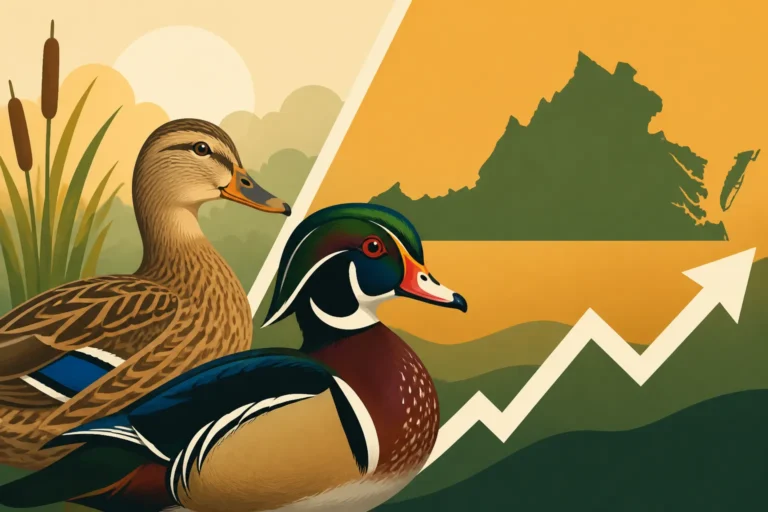
Ah, the wood duck! Virginia has a healthy population of resident wood ducks, those stunning "squealers" that grace our wooded swamps and beaver ponds. However, their numbers are significantly boosted by early migrations from the north. When the season opens, you're not just hunting our local birds; you're often encountering new arrivals that have already made part of their journey.
Wood ducks love sheltered, wooded waterways, preferring to dabble in shallow water amongst flooded trees where they can find acorns and other seeds. This makes them a prime target for hunters who enjoy Jump-Shooting Virginia Creeks for Wood Ducks or setting up in flooded timber. They're typically present in good numbers from the season opener right through the middle of the season, and you'll find them widely distributed across the state, from the Piedmont to the Eastern Shore, anywhere there's suitable wooded wetland habitat. Their unique flight pattern and sharp call make them unmistakable.
Mid-Season Push: Puddle Ducks and Early Divers
As autumn deepens and the air takes on a crisp edge, Virginia begins to see the next major influx of migrating waterfowl. This mid-season period, generally from late October through November, brings the bread and butter for many duck hunters.
Mallards, Black Ducks, and Gadwall
This is often when the action really picks up for puddle duck enthusiasts. The main waves of mallards, our quintessential duck, along with wary black ducks and the increasingly common gadwall, start arriving in earnest. These birds are often pushed south by moderate cold fronts that begin to freeze over smaller bodies of water or make food less accessible further north. They move in waves, and a well-timed cold snap can suddenly fill your favorite marsh or agricultural field.
Mallards and black ducks, in particular, are adaptable and will utilize a wide range of habitats, from large rivers and tidal marshes to flooded cornfields and even smaller farm ponds. Gadwall, often overlooked, are fantastic table fare and can be found in similar dabbling environments. Their numbers build steadily through November, and you'll notice a distinct difference in their behavior – often more cautious and pressured than the earlier teal. This is the time when you might also begin to see increasing numbers of wigeon and pintail, particularly in shallow, open water areas, browsing on aquatic vegetation. When people talk about Mallards and Divers on the Chesapeake Bay, they're often thinking of this robust mid-season activity.
Redheads, Canvasbacks, and Scaup Begin to Show
While the true diver spectacle often waits for colder temperatures, you'll start to see the vanguard of the diver migration in mid-season, especially in the larger, deeper waters of the Chesapeake Bay and its tributaries. Redheads, with their striking appearance, and the regal canvasback, known as the "king of ducks," will start to trickle in. These early arrivals are often a good sign of what's to come.
Scaup, both greater and lesser, often referred to as "bluebills," also begin to appear in increasing numbers during this time. They prefer large open waters where they can dive for mollusks and aquatic insects. These early divers are often exploring new wintering grounds, and a good spot with abundant food can hold them for a while. Keep an eye on open water areas, especially when local conditions are mild; these birds don't need a hard freeze to move if food sources are better in Virginia.
Late Season Influx: The Heart of Winter
For many seasoned Virginia waterfowlers, the late season, spanning December and January, is the peak of the migration. This is when the really serious cold sets in up north, forcing massive concentrations of ducks and geese into our comparatively milder climate.
Deep Freeze Brings the Divers
If you're a fan of diver ducks, this is your time. The deep freeze that grips areas north of Virginia, causing widespread ice formation on lakes, rivers, and even coastal bays, acts as a powerful funnel. Suddenly, millions of divers – canvasbacks, redheads, scaup, buffleheads, ringnecks, and goldeneyes – are on the move, and a significant portion of them find their way to the Chesapeake Bay and its vast network of tidal rivers. The Bay becomes a haven, offering vast expanses of open water and crucial submerged aquatic vegetation, even when inland waters are locked solid.
It's truly a sight to behold, with rafts of divers numbering in the thousands. Setting up for Hunting Chesapeake Bay Diving Ducks during this period can be a truly epic experience. These birds are tough, resilient, and often provide incredibly fast and challenging shooting. Look for them in open water, often far from shore, where they can feed and raft in safety. The colder it gets up north, the more birds you can expect to see piling into Virginia's coastal waters.
New Waves of Puddle Ducks
Don't think the late season is just for divers. Even as winter tightens its grip, fresh waves of puddle ducks can continue to arrive. These are often birds that were holding on in more northern areas that experienced a mild start to winter, or they are new birds displaced by later, more severe cold fronts. They can be incredibly wary, having run the gauntlet of hunters further north, making them a real challenge.
These late-season puddle ducks will focus heavily on reliable food sources. Think flooded agricultural fields, particularly those with standing corn or soybeans, or areas of river bottom that are still providing seeds and waste grain. They'll also seek out any open water they can find, especially if smaller ponds or marshes have frozen over, pushing them onto larger rivers or tidal areas. These birds can offer some of the most rewarding hunts of the season, requiring stealth, perfect decoy spreads, and meticulous calling. Using resources like GoHunt to analyze habitat and potential food sources in various areas can be a real game-changer when targeting these late-season birds.
Regional Migration Nuances in Virginia
Virginia is a geographically diverse state, and what holds true for duck migration in the mountains might be entirely different from what you experience on the coast. Understanding these regional distinctions is crucial for successful hunting.
Coastal vs. Inland Patterns
The contrast between Virginia's coastal waterfowl migration and its inland patterns is significant. The Chesapeake Bay, the Eastern Shore, and the major tidal rivers like the James, York, and Rappahannock are magnets for divers and sea ducks, especially during the colder months. Here, you'll find vast numbers of canvasbacks, redheads, scaup, buffleheads, and even various species of sea ducks like surf scoters and oldsquaw (long-tailed ducks) in certain areas. Tidal patterns play a huge role here, influencing feeding times and roosting habits. Hunters targeting these areas often have specific setups designed for open water or marsh hunting. Hunting the Eastern Shore Marsh offers a unique set of challenges and rewards.
Inland, however, on impoundments, smaller rivers, and flooded timber, you'll predominantly encounter puddle ducks like mallards, black ducks, wood ducks, and gadwall. While divers can be found on larger inland lakes like Smith Mountain or Buggs Island, their numbers are generally lower than on the coast. These inland birds are more influenced by local water levels, availability of agricultural waste grain, and timber mast. The hunting style shifts from large open-water rigs to more intimate setups in flooded woods or small marsh blinds. Knowing your Virginia Duck Zone Boundaries is vital, as hunting regulations can vary slightly by region.
Public Land Hotspots and Scouting
Virginia is blessed with incredible public hunting opportunities, including numerous Wildlife Management Areas (WMAs) and national wildlife refuges. These areas are strategically managed to attract and hold waterfowl, but they also experience significant hunting pressure. To be successful, scouting is paramount. Don't just show up on opening day expecting the birds to be there; go out beforehand, observe flight patterns, identify feeding areas, and note where birds are resting. This proactive approach can make all the difference.
Tools and apps like GoHunt can be incredibly valuable for scouting, allowing you to pore over aerial maps, identify potential resting or feeding areas, and mark access points even before you set foot on the ground. Beyond that, staying informed through Virginia DWR reports, local hunting forums, and talking to fellow hunters (respectfully, of course!) can give you an edge. Checking water levels in your chosen WMA is also critical, as ducks will follow the water. Scouting Virginia Public Land Before Season isn't just for deer hunters; it's essential for waterfowl, too.
Adaptability is Key: Reading the Signs
No matter how much you study migration patterns, ducks are wild animals, and their movements are influenced by a complex array of factors. The most successful waterfowl hunters aren't just knowledgeable; they're adaptable, constantly reading the signs and adjusting their strategies.
Local Conditions and Food Sources
While a brutal cold front up north will push ducks south, what makes them stay in Virginia? Local conditions and abundant, accessible food sources are the answer. Ducks are constantly assessing their environment for safety and sustenance. If your chosen hunting area has plenty of waste grain, submerged aquatic vegetation, or natural seeds, and the water isn't frozen solid, birds will often hold there. Conversely, if a local area freezes up or gets heavily pressured, they'll pick up and move to new spots, even if it's just a few miles away.
This is why understanding habitat is so important. Is it a good acorn year in the flooded timber? Has the farmer cut his cornfield yet? Are the bay grasses healthy? These local details dictate where ducks will concentrate. A field that was hot last week might be barren today if the food supply is exhausted or conditions have changed. Being able to adapt and find where the birds are is more important than where you think they should be. Knowing How Many Ducks Winter on the Chesapeake Bay highlights the massive food source available there.
Utilizing Technology and Community
In this modern age, hunters have more tools at their disposal than ever before to stay on top of migration. Don't just rely on anecdotal evidence. Keep an eye on regional weather forecasts, paying special attention to temperature drops and precipitation events to our north. Radar apps can show you large movements of birds, particularly during major pushes. Online forums and social media groups dedicated to Virginia waterfowl hunting can also be excellent sources of real-time information, offering clues about new birds showing up or specific areas holding ducks. Just remember to take all online information with a grain of salt and verify it with your own scouting!
Furthermore, consider leveraging mapping applications that can provide satellite imagery, topo maps, and even information on property boundaries (which is crucial for private land access). Apps like GoHunt are designed to give hunters comprehensive data to make informed decisions, whether it's identifying potential hunting spots or understanding habitat types. Regularly checking official Virginia DWR harvest reports, available online, can also give you historical insights into when certain species typically show up in different parts of the state. These resources, combined with diligent scouting, will make you a far more effective waterfowler.
Virginia Duck Migration Overview
The table below offers a general guide to when you might expect to see specific duck species arriving and peaking in Virginia. Remember, these are averages, and actual timing is heavily dependent on weather patterns.
| Species | Early Season (Sept-Oct) | Mid-Season (Nov) | Late Season (Dec-Jan) | Preferred Habitat |
|---|---|---|---|---|
| Blue-winged Teal | Arrival & Peak | Tapering off | Rarely seen | Shallow marshes, impoundments, small ponds |
| Green-winged Teal | Arrival & Peak | Peak | Some present | Shallow marshes, flooded timber, small ponds |
| Wood Duck | Arrival & Peak (resident + early migrants) | Strong numbers | Few present | Wooded swamps, beaver ponds, river bottoms |
| Mallard | Arrival | Arrival & Peak | Strong numbers, new pushes with cold fronts | Farm fields, shallow marshes, rivers, impoundments |
| Black Duck | Arrival | Arrival & Peak | Strong numbers, new pushes with cold fronts | Coastal marshes, tidal rivers, open water |
| Gadwall | Arrival | Arrival & Peak | Strong numbers | Shallow marshes, impoundments, open water |
| American Wigeon | Arrival | Arrival & Peak | Strong numbers | Open water, flooded fields, often grazes |
| Northern Pintail | Arrival | Arrival & Peak | Strong numbers | Shallow open water, mud flats, flooded fields |
| Canvasback | Few early arrivals | Increasing numbers | Arrival & Peak | Large open water, Chesapeake Bay, deep rivers |
| Redhead | Few early arrivals | Increasing numbers | Arrival & Peak | Large open water, Chesapeake Bay, deep rivers |
| Scaup (Bluebills) | Few early arrivals | Increasing numbers | Arrival & Peak | Large open water, Chesapeake Bay, deep rivers |
| Bufflehead | Rarely seen | Increasing numbers | Arrival & Peak | Open water, small bays, tidal creeks |
| Ring-necked Duck | Arrival | Peak | Strong numbers | Wooded swamps, larger impoundments |
| Hooded Merganser | Arrival | Arrival & Peak | Strong numbers | Wooded rivers, large impoundments |
Disclaimer
This article is for general informational purposes only and does not constitute professional advice. Laws, prices and regulations vary by location and change over time. Consult a qualified professional for guidance on your specific situation.