George Washington National Forest Hunting
Hunting in the George Washington National Forest can feel like an overwhelming endeavor, a vast sea of public land where finding a deer, bear, or turkey might seem like looking for a needle in a haystack. Many hunters, especially those new to large tracts of national forest, get intimidated by the sheer scale, dense timber, and rugged terrain, unsure where to even begin their scouting or how to approach such expansive, wild country. This comprehensive guide aims to demystify hunting the George Washington National Forest, offering practical strategies, understanding its unique challenges, and helping you navigate this incredible resource to find success.
Understanding the Scale and Scope of George Washington National Forest Hunting
The George Washington National Forest (GWNF) isn't just a big chunk of woods; it's a colossal, sprawling wildland that offers some of Virginia's most challenging yet rewarding hunting experiences. For many, the idea of hunting such an immense, rugged landscape can be daunting, but with the right approach and understanding, it can become your favorite hunting destination.
A Vast, Untamed Landscape
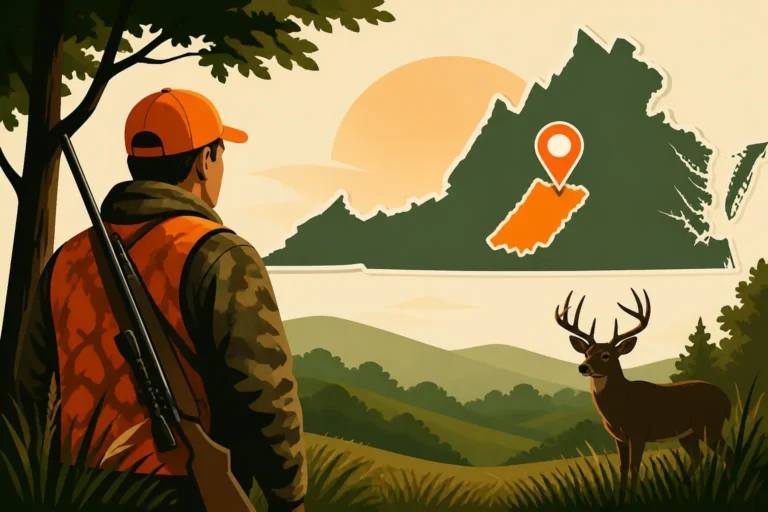
Stretching across the Appalachian Mountains of Virginia and West Virginia, the George Washington National Forest encompasses well over a million acres, a significant portion of which lies right here in the Old Dominion. Imagine deep hollows, steep ridges, old-growth timber, and winding mountain streams – this is the GWNF. It's not groomed timber company land or easy-access farm country; this is truly wild country, where a deer or bear can disappear into the folds of the landscape, and a two-mile walk feels like five. The terrain varies from steep, rocky slopes and high mountain benches to more gentle, rolling foothills, providing a diverse array of habitats for game animals.
The sheer size means that pressure, while present, can often be escaped by those willing to put in the effort. Unlike smaller public tracts, you can often find solitude here if you venture just a little further from the roads and main trails. This wilderness feel is a huge draw for many hunters who cherish the experience of being truly immersed in nature, far from the sounds of traffic and crowds. The vastness demands a different kind of hunting, one that prioritizes endurance, detailed planning, and a deep appreciation for the wild.
This massive national forest is truly a gem for hunters who crave a backcountry experience without having to travel across the country. It’s a place where you can feel the history of the mountains underfoot, and where success often feels more earned because of the effort required. It's a resource that, while demanding, offers incredible potential for those who learn its rhythms.
Key Characteristics for Hunters
When you think about hunting the GWNF, several characteristics immediately stand out. First, it's primarily a hardwood forest, dominated by various oak species, hickory, and maple, especially in the higher elevations. This means that mast crops – acorns, hickory nuts, and beechnuts – play an absolutely critical role in where deer, bear, and turkey feed and travel. A good acorn crop can concentrate animals in certain areas, while a poor one can scatter them in search of alternative food sources. Understanding the mast conditions each year is paramount.
Second, water is generally abundant, with countless springs, creeks, and rivers carving through the landscape. However, during dry spells, knowing where reliable water sources are can be a huge advantage, as animals will naturally gravitate towards them. Third, the cover can be incredibly dense in places, especially in areas with rhododendron thickets or regenerated clear-cuts, offering excellent bedding and escape cover for game. This dense cover makes visual scouting challenging and often necessitates close-quarters hunting tactics.
Finally, the elevation changes are significant and constant. You'll rarely find truly flat ground here. This means that thermals – air currents that rise with the sun and fall as it cools – are a major factor in scent control and how game animals move through the terrain. A ridge top at dawn might have thermals pulling your scent down into a hollow, only to reverse and pull it back up by mid-morning. Mastering these subtle air movements is key to consistently getting close to game in the mountains.
Navigating Regulations and Access in the GWNF
Hunting in a national forest involves a blend of state and federal regulations, which can sometimes be a little confusing if you're used to hunting purely private land or state-managed wildlife management areas. Understanding these rules and how to access the land is your first step toward a successful hunt.
Virginia DWR Rules and Federal Land
While the George Washington National Forest is federal land, all Virginia state hunting regulations apply within its boundaries. This means your Virginia Hunting Licenses and What They Cost are absolutely necessary, and you must adhere to all season dates, bag limits, and legal methods established by the Virginia Department of Wildlife Resources (DWR). For instance, the general firearms deer season, muzzleloader season, and archery season dates are all set by the DWR, as are the specific rules regarding weapon types and blaze orange requirements. It's crucial to check the current DWR hunting regulations annually, as they can change.
However, there are also some specific federal regulations or guidelines that apply to national forest land. These typically pertain to things like camping, vehicle use on forest roads, and permanent tree stands. For example, while you can typically hang a portable tree stand for the season, leaving it up year-round is generally prohibited. Additionally, baiting is not allowed on National Forest land, even if it might be legal in some private land situations elsewhere in Virginia. Always double-check the specific rules posted by the U.S. Forest Service (USFS) for the district you plan to hunt, as they can occasionally have localized restrictions in addition to the DWR rules.
Remember, Forest Service personnel and DWR conservation police officers both patrol these lands. Ignorance of the rules is never an excuse, so taking the time to review both sets of regulations before heading into the woods is a must. A simple phone call to the local Forest Service Ranger District office or a quick check of the DWR website can clear up any uncertainties and prevent an unfortunate encounter with law enforcement.
Access Points and Road Systems
Accessing the vastness of the GWNF is primarily done via a network of forest service roads, state routes that pass through it, and numerous hiking trails. Many of these forest roads are gravel and can be rough, especially after heavy rains or snow, so a vehicle with good ground clearance is often beneficial. Some roads are gated during certain times of the year, particularly during the off-season or to protect wildlife habitat, but they often open up for hunting seasons. Always pay attention to signage, as driving past a closed gate can result in fines or vehicle impoundment.
Parking areas, often just pull-offs along the forest roads, are where many hunters begin their treks. It’s rare to find designated, paved parking lots deep within the forest, so be prepared for roadside parking. The key to successful hunting in the GWNF often involves getting away from these easy access points. While some hunters will stick to within a mile of a road, the biggest rewards often lie a mile or two (or more) into the backcountry, away from the sounds and scents of vehicles. Utilizing mapping applications like onX Hunt or GoHunt can be incredibly valuable here, helping you identify legal access roads, parking areas, and, crucially, understand property boundaries if the national forest abuts private land.
Many older logging roads and fire lanes exist throughout the forest that aren't always marked on standard maps but can offer fantastic foot access into remote areas. Learning to identify these on satellite imagery or by simply walking the woods can unlock new opportunities. Just remember that these are for foot traffic only, and motorized vehicle use is strictly prohibited. Understanding the intricate web of official and unofficial trails and roads is a key skill for any successful GWNF hunter.
Special Permits and Considerations
For the most part, a standard Virginia hunting license and big game stamp (if applicable) will cover your hunting in the George Washington National Forest. However, there are a few special considerations. While many WMAs require a specific access permit, general hunting on the vast majority of GWNF land does not require an additional federal permit beyond your state license. There are, however, some designated wilderness areas within the GWNF, such as Ramsey's Draft Wilderness, where certain activities might be restricted further. Hunting is generally allowed in wilderness areas, but things like mountain biking or mechanized travel are strictly prohibited. Always be mindful of wilderness boundaries if you plan to hunt close to them.
Another consideration involves quota hunts. While rare for general hunting across the entire GWNF, some smaller, managed areas or specific wildlife openings within the national forest might occasionally be part of the DWR's quota hunt system. These are typically for specific game animals or management objectives and require an application and draw. It’s always worth checking the DWR website for any such opportunities in the specific district you plan to hunt, though these are typically more common on state wildlife management areas than across the broader national forest.
Finally, while not a "permit," if you plan on camping while hunting, be aware of the Forest Service's dispersed camping regulations. Generally, dispersed camping is allowed throughout the GWNF, often for up to 14 days, but there are rules regarding distance from roads, water sources, and developed recreation sites. Always practice Leave No Trace principles, especially when camping in remote areas, to preserve the wilderness experience for everyone.
Species and Seasons in the George Washington National Forest
The GWNF is a true multi-species hunting paradise, offering opportunities for deer, bear, turkey, and various small game. Understanding the typical behavior of these animals in a mountain environment and aligning your tactics with Virginia's diverse seasons is key to punching your tags.
Deer Hunting Strategies
Virginia's White-Tailed Deer Across Virginia thrive in the George Washington National Forest, though their density might not be as high as in agricultural areas of the Piedmont. What they lack in sheer numbers, however, they often make up for in size and wildness. These are mountain deer, hardy and wary, accustomed to navigating steep terrain and dense cover. During the archery season, focusing on mast crops, particularly white oaks, and water sources can be highly effective. Creek bottoms and benches with good acorn production are natural magnets. Early season archery can be challenging due to thick foliage and warm temperatures, but diligent scouting for fresh sign – rubs, scrapes, and tracks – will pay off. Consider setting up treestands along natural funnels, like saddles between ridges or narrow benches that deer use to travel.
When Virginia's General Firearms Deer Season rolls around, the woods fill with more hunters, but the vastness of the GWNF still allows for escape. Deer drives can be effective with a group, pushing small hollows or fingers of timber towards standers. For solo or small group hunters, still-hunting slowly and deliberately, especially into the wind or with rising thermals in the morning, is a productive tactic. Concentrate on south-facing slopes in colder weather, as these areas get more sun and can hold pockets of green browse. During the rut, Hunting a Ridge-Top Saddle for Rutting Bucks can be incredibly effective, as bucks will cruise these high points looking for does. Don't overlook benches and secondary ridges; often, the biggest bucks avoid the major, high-traffic ridges and use these quieter, overlooked travel corridors.
Later in the season, when temperatures drop and snow might cover the ground, deer will often concentrate on the thickest cover available, such as rhododendron thickets or regenerating clear-cuts. Food sources become scarcer, making any remaining mast or persistent green browse highly attractive. This is when patience and long sits in strategic locations pay dividends. Remember, these mountain deer are tough, and shot placement is critical due to the physical challenges of trailing and extracting a deer from steep terrain.
Bear Hunting Opportunities
The George Washington National Forest is a prime location for Virginia's Black Bear Population. The rugged mountains provide ideal habitat with vast stretches of undisturbed timber, abundant mast, and dense escape cover. Virginia offers both an early bear season, often with a longer archery component, and a later firearms season, which typically overlaps with deer season in many areas. During the early seasons, bears are often concentrated on soft mast like berries, and later, on hard mast like acorns and hickory nuts. Locating these food sources is paramount.
Bear hunting in the GWNF is challenging, requiring keen observation and often, a lot of hiking. Many hunters target bears by still-hunting areas with fresh sign – scat, torn-up logs, and claw marks on trees – or by setting up stands overlooking prime feeding areas. Patience is key, as bears can be highly nomadic in their search for food. Bear Hunting Virginia's Mountains and Piedmont usually involves extensive scouting for active feeding areas and understanding the annual mast crop. A year with abundant acorns will spread bears out, while a poor mast crop might concentrate them in more predictable areas.
For those who hunt with hounds, the GWNF offers excellent opportunities in areas where it is permitted. Hunters with well-trained dogs can track and tree bears in this challenging terrain, providing an exhilarating and physically demanding hunt. This method requires specialized knowledge, equipment, and a good network of fellow hound hunters. Regardless of your method, successful bear hunting in the GWNF demands physical fitness, perseverance, and a deep understanding of bear behavior and habitat.
Turkey and Small Game Potential
The spring woods of the George Washington National Forest resonate with the calls of Wild Turkeys in Virginia. These mountain gobblers are notoriously challenging, often roosting high on ridges and dropping into hollows to feed. Spring Turkey Hunting in Virginia in the GWNF typically involves a lot of walking, listening, and strategic calling. Locating a roosting gobbler at dawn and then attempting to call him off the roost or intercept him as he moves down the mountain is a classic tactic. Patience and adaptability are crucial, as mountain turkeys can be very "heany" (hen-focused) and prone to henned-up behavior.
Small game hunting, though often overshadowed by deer and bear, also offers excellent opportunities in the GWNF. Squirrel and Small Game Hunting in Virginia, particularly for gray squirrels, can be fantastic. Focus on oak and hickory ridges during the fall, when squirrels are actively feeding on nuts. A good pair of binoculars can help you spot their movements, and a .22 rifle or small gauge shotgun is ideal. Rabbit hunting can be productive in areas with thick briar patches, regenerating clear-cuts, or along logging road edges. While not as prevalent as in agricultural areas, ruffed grouse can be found in higher elevation hardwood forests, especially in areas with dense undergrowth.
For any small game, understanding the specific habitat they prefer is crucial. Squirrels are food-driven, rabbits cover-driven, and grouse prefer specific forest structures. The GWNF provides these diverse habitats in abundance, making it a great place to extend your hunting season or introduce new hunters to the sport. Don't underestimate the challenge of bagging a mountain squirrel or the thrill of a grouse flush in this wild country.
Scouting and Finding Productive Areas
One of the biggest hurdles for hunters in the George Washington National Forest is figuring out where to hunt. It's so big, so dense, and so rugged that it's easy to feel lost before you even start. Effective scouting, both from your armchair and on the ground, is absolutely non-negotiable for success here.
Topographic Maps and Aerial Imagery
Before you ever set foot in the GWNF, you should be pouring over topographic maps and aerial imagery. This is your most powerful scouting tool for understanding the lay of the land. Topo maps reveal the contours of the terrain – those tightly packed lines mean steep ground, while wider spacing indicates a more gradual slope. Look for features like saddles, benches, natural funnels (where two ridges pinch together), and drainages. These are often natural travel corridors for deer and bear. Identifying south-facing slopes is also important, as they receive more sunlight and can hold browse longer into the colder months.
Aerial imagery, available through platforms like onX Hunt or GoHunt, is invaluable for identifying changes in vegetation, dense cover, recent clear-cuts (which can offer great browse and bedding), and mature timber stands that might hold a consistent mast crop. You can spot logging roads that might not be on older topo maps, or identify areas of thick rhododendron that offer impenetrable bedding. Look for "fingers" of timber extending into open areas, or isolated patches of hardwoods that could act as bedding cover. These mapping tools also make it easy to mark potential stand locations, rub lines, or water sources for later on-the-ground verification.
Don't just look at one area; zoom out and look at the bigger picture. How does the chosen area connect to other features? Is it isolated, or part of a larger travel network? The more time you spend with these maps, the better you'll understand how animals might move through the landscape, even before you've seen a single track. This armchair scouting allows you to narrow down thousands of acres to a few square miles worth investigating on foot.
Interpreting Sign and Habitat
Once you've identified some promising areas on your maps, it's time for boots on the ground. When scouting, you're not just looking for deer; you're looking for evidence of deer, bear, or turkey activity. Fresh tracks in mud along a creek bottom, distinct rub lines on saplings, or active scrape lines along a logging road are all clear indicators of recent deer movement. Look for droppings (pellets) to gauge the size of the animal and how recent the activity was. In the mountains, finding sign can be harder due to rocky ground and leaf litter, so you have to be extra diligent.
For bears, look for overturned rocks and logs where they've dug for grubs, scat with berry seeds or nut fragments, or claw marks on mature oak trees where they've climbed for mast. Turkey hunters will look for tracks in soft soil, dusting bowls, and scratch marks in leaf litter where they've been feeding. Pay close attention to what the animals are eating. If you find an area littered with acorn caps, you know that's a current food source. If those acorns are gone, you need to scout for the next available food.
Habitat identification is also critical. Mature oaks on a bench are prime for deer and bear, while dense regenerating clear-cuts offer bedding. Thick rhododendron patches or laurel thickets are often thermal cover and excellent bedding for deer and bear, especially during cold snaps. Water sources, even small seeps or springs, can be magnets, particularly in dryer periods. The more you understand the relationship between game animals and their preferred habitat in a mountain environment, the better you'll become at pinpointing productive hunting spots.
Using Technology: onX Hunt and GoHunt
In the vast and often confusing terrain of the George Washington National Forest, modern mapping technology is a game-changer. Tools like onX Hunt and GoHunt aren't just for property lines anymore; they are comprehensive scouting and navigation systems that can drastically improve your efficiency and safety. These apps allow you to download offline maps, which is crucial because cell service is often nonexistent deep in the national forest. You can mark waypoints for fresh sign, potential stand sites, parking spots, and even game recovery locations.
The public land layers on these apps clearly delineate GWNF boundaries, helping you avoid accidental trespass onto private holdings that often border the forest. This is especially important when you're deeply focused on tracking a game animal. The topo and satellite imagery mentioned earlier are often integrated, giving you a powerful dual view of the landscape. You can use features to measure distances, calculate elevation gain, and even track your own movements, which is invaluable for learning an area and ensuring you don't get disoriented.
Furthermore, some apps offer features like current weather overlays, wind direction, and thermal mapping, helping you plan your approach based on scent control. While these are fantastic tools, remember they are just that – tools. They supplement, but don't replace, on-the-ground scouting and good old-fashioned woodsman skills. But for navigating the sheer scale and complexity of the GWNF, having an app like onX Hunt or GoHunt loaded on your phone with offline maps is almost a necessity for the modern hunter.
Hunting Tactics for Mountain Terrain
Hunting the George Washington National Forest isn't like hunting a flat woodlot or a groomed farm field. The mountains demand a different approach, one that respects the terrain and the unique challenges it presents. Mastering these tactics can turn frustration into consistent success.
Understanding Thermals and Wind
In mountain hunting, wind and thermals are arguably more critical than in any other environment. Thermals are localized air currents caused by temperature changes: as the sun rises, the ground warms, and air rises (updrafts); as the sun sets and the air cools, it sinks into the valleys (downdrafts). These thermals dictate how your scent travels. In the morning, you can expect thermals to pull your scent downhill into the hollows. By late morning, as the sun heats the slopes, thermals will typically start pulling your scent uphill. In the evening, the reverse happens, with cooling air sinking downhill again.
This constant shift means you need to hunt smarter, not harder. When approaching a morning stand, you might want to approach from above, letting your scent drift downhill and away from any animals still bedding on the slopes below. For an evening hunt, approaching from below might be better, allowing your scent to rise over any game feeding on the benches above. Always consider how these thermals will interact with the prevailing wind. A strong ridge-top wind might override thermals, but in sheltered hollows, thermals can be dominant. Constantly monitor your wind direction using a wind checker.
Many successful mountain hunters will "ridge hop" – hunting saddles and benches along a main ridge – using the shifting thermals to their advantage, often moving as the day progresses. Others might position themselves on a sidehill bench, just below a main travel corridor, knowing that their scent will usually be pulled downhill, allowing deer to pass above them undetected. Ignoring thermals in the GWNF is a sure way to consistently spook game. Understanding Wind and Thermals on a Blue Ridge Slope is a foundational skill.
Still-Hunting and Stand Placement
Given the dense cover and rugged terrain, still-hunting is an incredibly effective tactic in the GWNF. This means moving very slowly through the woods, taking one or two steps, then pausing for several minutes to scan, listen, and glass. You're not just walking; you're actively hunting every step of the way. Focus on moving quietly, picking up your feet, and avoiding crunching leaves or snapping twigs. Use your binoculars constantly to pick apart dense cover, looking for a horizontal line, a flick of an ear, or a patch of hide that doesn't quite match the forest floor.
When still-hunting, always try to move into the wind or with favorable thermals. Concentrate your efforts around known food sources, dense bedding areas, and travel corridors between the two. Follow old logging roads or faint game trails, as these often offer easier walking and are natural routes for animals. Still-Hunting Jefferson Forest Ridges also applies here, where slowly working a ridge line, pausing to glass into hollows and benches below, can be very productive.
For stand placement, think about access and exit. Can you get to and from your stand without spooking deer? Consider natural funnels: saddles, benches, creek bottoms, or the confluence of two drainages. Look for clusters of fresh sign – rubs, scrapes, heavily used trails – and position your stand downwind. On steep slopes, benches are often prime locations, as deer will use them to traverse the mountain rather than climbing straight up or down. Treestand Setups in George Washington National Forest requires thoughtful placement, often targeting a narrow window of movement. Keep your shots short in the thick timber; ethical shot distances are often much shorter here than in open country.
Dealing with Hunting Pressure
The George Washington National Forest, being public land and easily accessible in many areas, does experience hunting pressure, especially on opening day of firearms season and during the peak of the rut. You will see other hunters, and you will hear distant shots. The key is knowing how to adapt. Deer and bears in the GWNF are incredibly savvy to pressure; they will quickly adapt their movements to avoid hunters.
One of the most effective ways to deal with pressure is to simply walk further. Most hunters won't venture more than a mile or two from a road or parking area. If you're willing to put in the effort and hike three, four, or even five miles deep into the forest, your chances of encountering unpressured game increase dramatically. Use your mapping apps to find those deep, overlooked hollows and remote ridges that are a serious hike to get to. Another strategy is to hunt during weekdays, when pressure is significantly lighter than on weekends.
Deer will also use pressure to their advantage. During a deer drive on a neighboring ridge, deer will often seek refuge in the thickest, nastiest cover available, or they'll filter into an adjacent hollow. Positioning yourself on escape routes between known pressure points can be effective. Hunting during inclement weather – light rain, fog, or snow – can also reduce human activity and often gets game moving more freely. Remember that pressured deer often become nocturnal, so hunting early mornings and late evenings with careful entry and exit strategies is crucial.
Essential Gear and Safety Considerations
Hunting in the George Washington National Forest is a rugged endeavor, and your gear needs to be up to the task. Beyond your weapon, there are critical items for comfort, navigation, and, most importantly, safety in this wild environment.
Footwear and Layering for the Mountains
Your feet are your most important asset in the GWNF. Quality, broken-in hunting boots are non-negotiable. Look for boots that offer excellent ankle support for navigating uneven, rocky terrain, and good waterproofing for wet creek crossings or dewy mornings. Many hunters prefer a sturdy leather boot with a stiff sole for mountain hunting. Pack extra socks, preferably wool or synthetic, as wet feet lead to blisters and cold.
Layering your clothing is equally critical due to the wide temperature swings in the mountains. Mornings can be freezing, mid-day can be mild, and evenings can drop rapidly. Start with a moisture-wicking base layer (wool or synthetic, avoid cotton!), add an insulating mid-layer like fleece or down, and top it with a waterproof and windproof outer shell. This system allows you to add or shed layers as your activity level and the weather change, preventing you from getting too hot and sweaty (which leads to chilling later) or too cold. For long sits, consider packing an extra insulated layer. Wool Versus Synthetics in Mountain Cold is an ongoing debate, but both have their place depending on conditions.
Don't forget sturdy brush pants or chaps if you're traversing thick briars or rhododendron, and always have a blaze orange or blaze pink vest or hat visible during firearms season, as required by Virginia law. The GWNF is not a place for flimsy, ill-fitting gear; invest in quality clothing that will stand up to the abuse of mountain hunting.
Navigation and Emergency Preparedness
Getting lost in the vastness of the George Washington National Forest is a real possibility, especially in dense fog or after dark. Reliable navigation tools are paramount. Always carry a physical map and compass, and know how to use them, even if you primarily rely on a GPS unit or a smartphone app like onX Hunt. Electronic devices can fail, batteries can die, and signal can be nonexistent. A portable power bank for your phone is also a smart addition. Pre-downloading offline maps on your phone app is a must before you leave cell service.
Beyond navigation, a comprehensive emergency kit is essential. This should include:
- First-aid kit: For cuts, scrapes, blisters, and more serious injuries.
- Headlamp or flashlight: With extra batteries, for navigating in the dark.
- Fire starter: Lighter, waterproof matches, or a ferro rod.
- Emergency shelter: A lightweight tarp or emergency blanket.
- Whistle: For signaling for help.
- Extra food and water: Or a water filter/purifier.
- Knife/multi-tool: For various tasks.
- Signaling mirror: For daylight emergencies.
Always let someone know your exact hunting plans, including where you'll be, your planned route, and when you expect to return. This "tell a friend" plan is a simple but vital safety measure in remote areas. Remember, help can be hours away in deep national forest terrain, so self-sufficiency is key.
Meat Care and Extraction
After all your hard work, successfully harvesting an animal in the GWNF is a rewarding moment, but it's only half the battle. Extracting your game from steep, rugged terrain can be one of the most physically demanding parts of the hunt. If you've shot a deer deep in a hollow, you might be looking at a multi-hour drag or pack out. For larger animals like bears, it's often a bone-out and pack-out scenario. Sleds and Drags for Mountain Country can be incredibly helpful for deer, but they might not be practical in the steepest, thickest areas.
- Field Dressing: Perform a thorough field dress immediately to start the cooling process. This is especially crucial during early season hunts when temperatures are mild. Removing the entrails quickly helps prevent spoilage.
- Game Bags: Carry sturdy, breathable game bags, particularly for boned-out meat. This protects the meat from flies, dirt, and debris, and allows it to cool properly.
- Packs: A good external frame pack or a durable hunting pack designed for hauling meat is invaluable. Packs for a Jefferson Forest Day Hunt often need to be large enough to convert for hauling quarters.
- Water/Cooling: If temperatures are warm, consider packing ice or frozen water bottles in your cooler back at the truck to quickly cool the meat once you get it out. If it's cold enough, hanging quarters in the shade can work, but watch for scavengers.
Planning your extraction route before you even shoot is a smart move. Consider the easiest path, even if it's not the shortest. Remember, the effort doesn't stop when the animal is down; it's just beginning. Being prepared for a tough extraction will save you time, effort, and ensure quality meat for the table.
Respecting the Resource and Other Users
Hunting in the George Washington National Forest is a privilege, not a right. As hunters, we have a responsibility to not only respect the game we pursue but also the land itself and our fellow outdoor enthusiasts. Our actions reflect on the entire hunting community.
Leave No Trace Principles
The George Washington National Forest is a wild and beautiful place, and it's up to all of us to keep it that way. Adhering to Leave No Trace principles is fundamental. This means:
- Plan Ahead and Prepare: Research the area, pack out what you pack in.
- Travel and Camp on Durable Surfaces: Stick to existing roads and trails.
- Dispose of Waste Properly: Pack out all trash, including spent casings, food wrappers, and anything else you brought in. Do not leave gut piles near trails or water sources.
- Leave What You Find: Don't disturb historical artifacts or natural features.
- Minimize Campfire Impacts: Use established fire rings where allowed, keep fires small, and ensure they are completely out before leaving.
- Respect Wildlife: Keep your distance and don't disturb animals.
- Be Considerate of Other Visitors: More on this below.
Leaving a clean camp, not littering, and ensuring that any stand locations are removed at the end of the season all contribute to maintaining the pristine nature of the GWNF for future generations. Our goal should be to leave the woods better than we found them.
Sharing the Woods
The George Washington National Forest is not exclusively for hunters. Hikers, campers, mountain bikers, bird watchers, and other outdoor enthusiasts also use and enjoy these lands. As hunters, it’s important to be respectful and considerate of all users. This means:
- Be Visible: Always wear blaze orange or blaze pink during firearms season, even if you are an archery hunter. This is not only a safety requirement but a courtesy to non-hunters who may not be aware of hunting seasons.
- Communicate: If you encounter other users, a friendly nod or a brief, polite exchange can go a long way. Let them know you're hunting, and perhaps offer a suggestion for an alternative trail if you're in an active area.
- Control Your Dogs: If hunting with dogs, ensure they are under control and not harassing other users or wildlife.
- Avoid Disturbing Others: Try to avoid calling or making loud noises directly next to a designated camping area or popular hiking trail.
- Respect Quiet Enjoyment: Everyone comes to the forest for their own reasons. Understand that some users seek solitude and quiet, and act accordingly.
A positive interaction with a non-hunter can do more to promote a positive image of hunting than any public relations campaign. We are all stewards of this incredible natural resource, and by sharing it respectfully, we ensure continued access and support for hunting in Virginia.
George Washington National Forest Hunting Overview
To summarize some of the key points for hunting various species in the George Washington National Forest:
| Aspect | White-Tailed Deer | Black Bear | Wild Turkey | Small Game (Squirrel/Rabbit) |
|---|---|---|---|---|
| Primary Habitat | Hardwood ridges, hollows, clear-cuts, benches | Dense timber, mast-rich areas, thickets | Oak ridges, creek bottoms, open timber | Oak/Hickory ridges (squirrel), thickets/briars (rabbit) |
| Key Food Source | Acorns, browse, some soft mast | Acorns, berries, grubs, carrion | Acorns, insects, green browse | Nuts (squirrel), green plants (rabbit) |
| Best Tactics | Still-hunting, stand placement (saddles/benches) | Scouting for mast, still-hunting, hound hunting | Calling, run-and-gun, roost hunting | Still-hunting, jump-shooting, dogs |
| Season Focus | Archery (mast/funnels), Firearms (rut/late season) | Early (soft mast), Late (hard mast/denning) | Spring (gobbling activity), Fall (flocking) | Fall (active feeding), Winter (thick cover) |
| Major Challenge | Pressure, rugged terrain, finding concentrations | Locating nomadic bears, physical demands | Wary birds, dense cover, unpredictable movement | Locating concentrations, thick cover |
| Essential Gear | Topo maps/GPS, sturdy boots, layers, game bags | High-power optics, robust pack, first aid | Locator calls, chest vest, small gauge shotgun | Small caliber rifle/shotgun, comfortable boots |
Disclaimer
This article is for general informational purposes only and does not constitute professional advice. Laws, prices and regulations vary by location and change over time. Consult a qualified professional for guidance on your specific situation.