Heaviest Bears Killed in Virginia
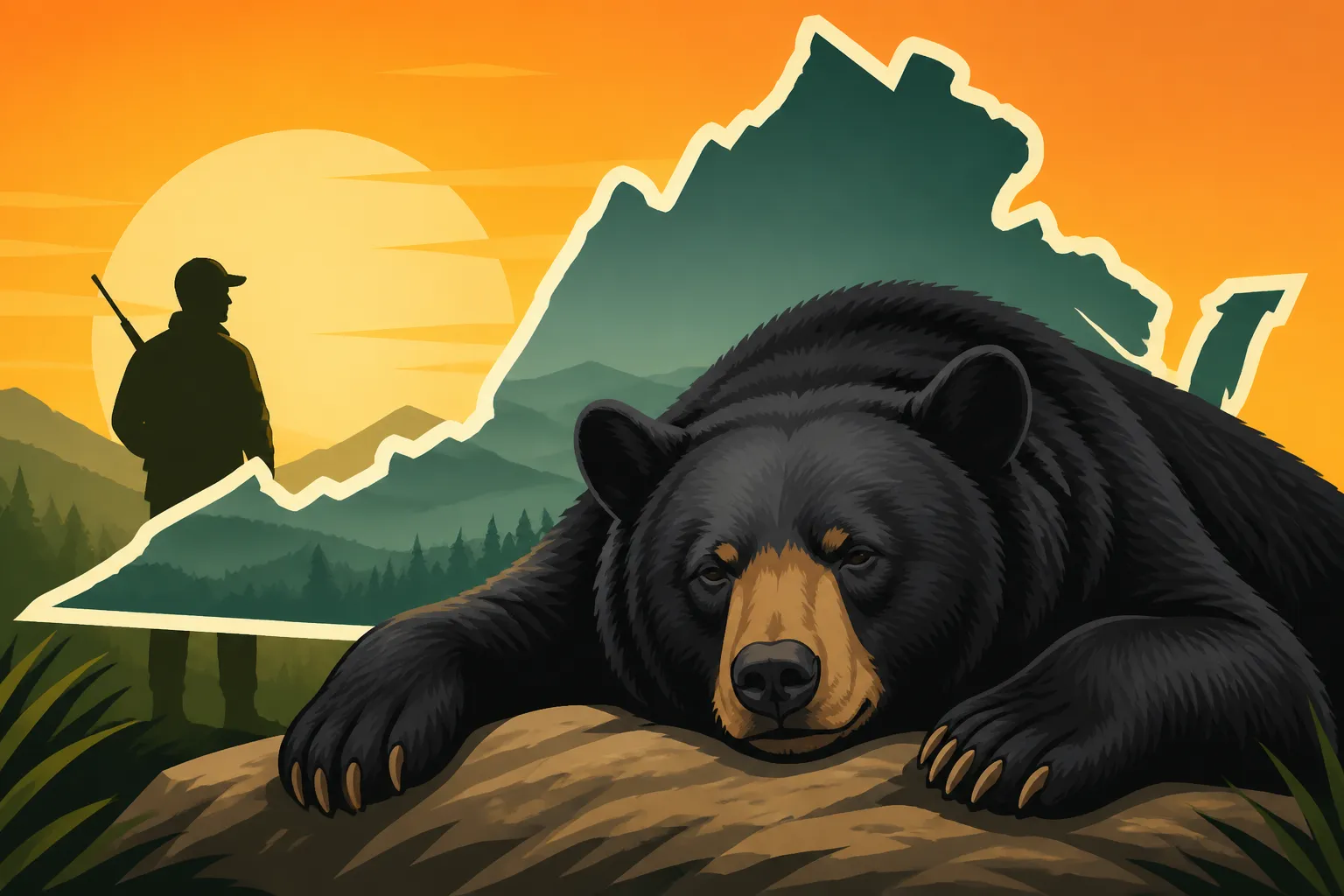
Many of us Virginia hunters dream of the day we might encounter a truly massive black bear, the kind that makes your heart pound just thinking about it. We see photos, hear stories, and wonder just what it takes to find and harvest one of these impressive animals in the Commonwealth. It's a challenging endeavor, one that requires patience, knowledge, and often a bit of luck. This guide isn't about bragging rights, but about understanding the factors that contribute to a bear's size in Virginia, where these giants might roam, and what you can learn from past impressive harvests to increase your own odds of encountering a truly heavy bear.
Understanding Virginia's Black Bear Population Growth
For generations, the black bear was a much rarer sight in Virginia, primarily relegated to the deepest recesses of our western mountains. But thankfully, those days are largely behind us. The Virginia Department of Wildlife Resources (DWR) has done an incredible job over the decades, coupled with evolving habitat and responsible hunting management, to see our bear population flourish. This resurgence means more opportunities for hunters, and crucially, more chances for bears to reach older ages and impressive sizes.
The Resurgence of a Majestic Species
It wasn't that long ago that a bear sighting in many parts of Virginia was considered an anomaly, a rare glimpse of wilderness spirit. Today, however, our black bear population is thriving, expanding its range significantly from its historical mountain strongholds. This recovery is a testament to sound wildlife management practices and an increasing understanding of bear ecology. The restoration efforts didn't just focus on sheer numbers, but also on creating healthy, viable populations that can sustain themselves and, importantly for us hunters, produce magnificent, mature animals. This growth is why stories of truly massive bears are becoming more frequent, igniting the passion in many of us to pursue these incredible creatures. You can learn more about this success story in our detailed article on Virginia's Black Bear Population.
This expansion hasn't been without its challenges, of course. As bears move into new territories, including more suburban and agricultural areas, their interactions with humans increase. But from a hunting perspective, it means that the potential for encountering a substantial bear is no longer confined solely to the rugged Appalachian peaks. It opens up new strategies and scouting opportunities for those of us who appreciate the pursuit of these animals. It's a dynamic situation, constantly evolving, but one that certainly favors the growth of large, healthy bears across broader swaths of the state.
Where Virginia's Bears Roam Today
While the Blue Ridge and Allegheny Mountains remain iconic bear country, our furry friends are now found in impressive numbers across the Piedmont and even venturing into the coastal plain. This wider distribution means that a "big bear" isn't exclusively a mountain phenomenon anymore. In fact, some of the heaviest bears recorded have come from areas with rich agricultural resources, providing an abundance of high-calorie foods. If you're wondering Where Virginia Black Bears Live Today, you might be surprised by how widespread they truly are.
Think about the patchwork of timber, old fields, and agricultural crops in the Piedmont. These areas offer a buffet for bears, allowing them to pack on significant weight rapidly, especially during the fall mast crop season. A bear that can consistently access cornfields, soybean fields, and a variety of hard mast like acorns and hickory nuts will naturally grow larger than one relying solely on sparser mountain resources. This diversity of habitat is a key driver behind the potential for truly massive bears in different regions of the Commonwealth.
For hunters, this means your scouting efforts need to adapt. While the mountains offer classic bear hunting terrain with vast tracts of public land like the George Washington and Jefferson National Forests, the Piedmont might require more emphasis on obtaining private land access or identifying key transition zones where bears move between cover and food sources. Tools like GoHunt can be invaluable for pinpointing these areas, helping you understand land ownership and topographical features that might concentrate bear activity, especially where agriculture meets dense cover.
What Makes a Bear "Heavy" in Virginia?
When we talk about the "heaviest bears," we're not just throwing out numbers. We're talking about a culmination of factors that allow a bear to reach its genetic potential for size and weight. It's a combination of age, access to high-quality food, and a bit of genetic lottery that produces those truly impressive specimens that become the envy of every hunter.
Factors Influencing Bear Size and Weight
The primary drivers for a bear's size are its age, diet, and genetics. An older bear, simply put, has had more time to grow. Most of the truly massive bears taken in Virginia are mature boars (males) that are several years old, often eight years or more. These animals have survived multiple hunting seasons and natural challenges, proving their resilience. Good diet is crucial; a bear that lives in an area with a consistent and abundant food supply – acorns, hickory nuts, corn, berries, and even the occasional carrion – will put on weight much faster and reach a larger size than one struggling to find sustenance. Genetics also play a role; just like humans, some bears are predisposed to be larger than others.
Consider a bear living in a prime agricultural region like parts of the Shenandoah Valley or the central Piedmont, where cornfields and oak stands are plentiful. This bear has a distinct advantage over one scraping by in a high-elevation mountain laurel thicket. The consistent, calorie-dense diet allows for sustained growth, often leading to a much heavier animal. These bears often have less ground to cover to find food, conserving energy that can be put towards growth. For hunters focused on finding these monsters, understanding these dietary patterns and habitat preferences is paramount.
Weather patterns also play a subtle, but important role. Years with excellent mast crops (like abundant acorns and hickory nuts) often lead to bears going into hibernation in superb condition, which can set them up for even more growth the following year. Conversely, a poor mast year can mean bears emerge from their dens thinner and have to work harder to regain weight, potentially slowing their growth trajectory. It's a complex interplay of nature's bounty and a bear's ability to capitalize on it.
The Challenge of Accurately Weighing a Harvested Bear
Getting an accurate weight on a harvested black bear is often easier said than done, especially in the field. Few hunters carry scales capable of measuring hundreds of pounds, and even if they do, hanging a bear in rugged terrain presents its own set of logistical hurdles. Many "field dressed" weights are reported, meaning the internal organs have been removed, which significantly reduces the total weight. To get a true live weight, a bear needs to be weighed intact, usually at a certified weigh station or by a DWR biologist. This is why many of the biggest bears often involve an extraordinary effort from the hunter to get the animal to a location where it can be properly weighed and recorded.
Imagine harvesting a bear deep in a mountain hollow during a hunt like Hunting Mountain Bears in November. The sheer effort of moving that animal, even field dressed, can be immense. Trying to get an accurate live weight might mean dragging it miles out to a truck and then to a DWR check station before processing. This physical challenge is part of the legend surrounding truly enormous bears. Hunters often rely on heavy-duty scales, sometimes borrowing equipment from local feed stores or agricultural businesses, to get that official number.
The distinction between "live weight" and "field dressed weight" is critical when comparing impressive harvests. A 500-pound field-dressed bear would have been well over 600 pounds alive, a true behemoth. Always be sure to clarify which weight is being discussed when you hear stories of monster bears, as it makes a huge difference in the actual size of the animal.
Notable Bear Harvests and What We Learn From Them
Virginia has a rich history of impressive bear harvests, with many hunters sharing tales of incredible encounters with truly massive animals. While specific records can change, the trends in where and how these large bears are taken offer valuable insights.
Tales of Legendary Virginia Bears
Stories abound of bears tipping the scales at extraordinary numbers. While official state records focus on skull measurements for Boone and Crockett and Pope and Young, public fascination often gravitates towards sheer weight. Many local legends tell of bears exceeding 600 pounds live weight, with some even pushing into the 700-pound range. These aren't your average bears; these are typically old, dominant boars that have grown to immense proportions. They are often taken during late-season hunts when bears are at their heaviest, having gorged on fall mast crops in preparation for hibernation.
One common thread in these stories is the sheer determination of the hunter and often, the help of a solid team to get the animal out of the woods. A 600-pound bear is no small feat to retrieve, especially from challenging terrain. These harvests often become community events, with local DWR offices and butcher shops sharing in the excitement of such a magnificent animal. It speaks to the health of our bear population that these giants are not just historical footnotes but continue to be taken by lucky and persistent hunters.
The lessons from these legendary bears often boil down to two things: location and patience. The hunters who harvest these animals are usually spending time in areas known for high bear densities and excellent food sources, and they are willing to put in the hours, often in less-than-ideal weather, waiting for that one opportunity. They understand Virginia Bear Season Rules and plan their hunts accordingly, often focusing on those peak times when big bears are most active and at their heaviest.
Regional Differences in Bear Size
While the mountains historically held the largest number of bears, the Piedmont region has increasingly produced some of the heaviest individuals. This isn't to say mountain bears aren't big, but the abundant food sources in agricultural areas can supercharge a bear's growth. A bear that consistently raids cornfields or has access to vast oak flats in the Piedmont can reach a larger size faster than one in a less food-rich mountain environment.
| Region | Typical Bear Weight (Field Dressed) | Potential for "Heavy" Bears | Primary Food Sources | Hunting Style Considerations |
|---|---|---|---|---|
| Mountains | 150-350 lbs | High, especially older boars | Acorns, berries, insects, roots, some carrion | Spot-and-stalk, still-hunting, drives, dog hunting (where allowed) |
| Piedmont | 200-450 lbs+ | Very High | Agricultural crops (corn, soybeans), acorns, fruit trees | Stand hunting over food sources, still-hunting woodlots, private land access |
| Coastal Plain | 100-250 lbs | Moderate | Berries, swamp plants, some agricultural encroachment | Stand hunting, still-hunting, often more challenging to find density |
This table offers a generalization, of course. Exceptional bears can come from anywhere. However, the consistent availability of high-calorie foods in the Piedmont often gives bears there an edge in putting on serious bulk. When you're scouting, whether with maps from GoHunt or on foot, consider the food sources available in your chosen area. A dense stand of oaks with a good mast crop or proximity to agricultural fields can be a big indicator of potential for a heavy bear.
Hunter Strategies for Targeting Large Bears
Targeting truly heavy bears requires a deliberate approach. These aren't young, naive animals; they've survived for years and are often incredibly wary. One common strategy is focusing on areas with known abundant food sources, particularly during the late fall when bears are at their absolute heaviest. This might mean identifying specific oak ridges with heavy acorn crops in the mountains or securing access to private land bordering corn and soybean fields in the Piedmont. Scouting with game cameras can reveal not only the presence of bears but also their travel patterns and potential size.
Patience is perhaps the most critical virtue. Unlike deer, bears often operate on less predictable schedules, and a true giant might only make an appearance during brief windows of daylight. Long hours on a stand, especially in areas where you know a big bear is present, can pay off. When considering your setup, think about Treestand Setups in George Washington National Forest if you're in the mountains, or how to properly brush in a ground blind on a field edge in the Piedmont. Understanding bear behavior, their scenting abilities, and their preferred travel corridors is crucial.
Another effective strategy, where permitted, involves using hounds. In some parts of Virginia, bear hunting with hounds is a time-honored tradition. While controversial to some, it's undeniably an effective method for locating and harvesting large, elusive bears that might otherwise never be seen by still-hunters. The dogs can track bears across vast distances and through thick cover, pushing them to a point where a hunter can get a clean shot. Regardless of your chosen method, ethical hunting practices and clean Shot Placement on a Virginia Black Bear are always paramount.
Estimating Weight and Field Dressing for Record Books
For many hunters, knowing the true weight of their trophy bear is a point of pride and a way to truly appreciate the magnitude of the animal. While not everyone is chasing a record, understanding how to estimate and properly prepare a bear for weighing can be helpful.
Field Estimation Techniques
Out in the field, without a proper scale, estimating a bear's weight is often a matter of educated guesswork based on length, girth, and overall appearance. Experienced bear hunters can often get surprisingly close. A bear's length from nose to tail, and its chest girth, are common measurements used for estimation. Bears that are especially broad across the shoulders and deep through the chest often indicate significant weight. A good rule of thumb is that a mature boar will generally look blockier and have a thicker neck and head compared to a younger bear or a sow.
One simple, albeit informal, method is to compare the bear to yourself. If the bear laid flat on its back is wider than your chest, you've likely got a substantial animal. If its head looks disproportionately large for its body, it's often an older, heavier bear. These are rough estimates, of course, but they can give you a good sense of whether you've got a truly impressive animal on your hands. Always remember that pictures can sometimes be deceiving due to perspective, so in-person comparison, however challenging, is the best field estimation.
Tools like a flexible tape measure, often carried by hunters for antler measurements, can be quickly adapted for a bear's girth. Wrapping it around the thickest part of the chest will give you a dimension that, when combined with approximate length, can be cross-referenced with online charts or experienced hunter's intuition to get a ballpark figure. But let's be realistic, the true joy is in the hunt, and the weight is a bonus!
Proper Procedures for Official Records
If you believe you've harvested a truly massive bear and want an official weight, you need to be prepared. The most accurate way is to get a certified live weight. This means transporting the entire, intact bear to an official weigh station, often at a DWR office or a designated check station, or a certified agricultural scale. If a live weight isn't possible, a field-dressed weight is the next best, but it must be clearly noted as such, along with the estimated loss from the removed organs.
It’s crucial to follow all DWR regulations for checking and reporting your bear. This typically involves reporting your harvest through the Go Outdoors Virginia system, either online or via the mobile app. For large bears, especially potential record-breakers, DWR staff might want to inspect the animal, take specific measurements, and collect biological samples for research. This data helps them manage the bear population, ensuring its health and continued growth for future generations. Don't be shy about asking for help if you've got a truly large animal; DWR personnel are usually eager to assist with these notable harvests.
Remember, proper handling of the carcass is also important, especially if you plan to get an official weight or submit for a record. Keeping the bear cool and clean is paramount to preserving the meat and ensuring accurate measurements. Read up on Handling a Bear After the Shot to make sure you're prepared for the recovery and transportation of a large animal.
The Importance of Bear Checking
Every bear harvested in Virginia must be checked, and this isn't just a bureaucratic hoop to jump through. It's vital for wildlife management. The data collected from checked bears, including weight, sex, and age (determined by a tooth sample), helps the DWR monitor the health and dynamics of the state's bear population. When hunters report their harvests accurately, it provides biologists with crucial information about population trends, success rates, and the impact of season structures.
This data allows the DWR to make informed decisions about future hunting seasons, bag limits, and management strategies, ensuring a sustainable and thriving bear population for years to come. So, while you might be focused on the excitement of your individual harvest, your act of reporting contributes to the bigger picture of conservation. Even if your bear isn't the "heaviest," its data point is still important. Make sure you understand all of the Virginia Bear Checking Requirements before you head afield.
Think of it as contributing to a communal knowledge base. Each check station visit, each detail you provide, adds to the scientific understanding of Virginia's bears. It’s part of our responsibility as ethical hunters to participate in this process, ensuring that the legacy of black bear hunting in the Commonwealth continues strong.
Disclaimer
This article is for general informational purposes only and does not constitute professional advice. Laws, prices and regulations vary by location and change over time. Consult a qualified professional for guidance on your specific situation.