Reading Cuttings Under an Oak
It's incredibly frustrating, isn't it? You spend hours scouting, walking through the woods, seeing bits and pieces of deer sign, but you're never quite sure if you're actually on the right track, or if the deer were just passing through. Knowing where deer are consistently feeding is a game-changer, and one of the most reliable ways to figure that out, especially in Virginia's vast woodlands, is by learning to read the subtle clues left behind under oak trees. This guide will walk you through exactly how to identify, interpret, and leverage acorn cuttings to pinpoint active deer feeding zones and boost your hunting success.
The Secret Language of Acorn Cuttings and Deer Feeding Habits
There's a reason why oak trees are often considered the holy grail for deer hunters: acorns. These little powerhouses are much more than just a snack; they're a vital, high-energy food source that can dictate deer movement for weeks, sometimes even months, during the hunting season. Learning to understand why deer prioritize them and how different oak species play into the puzzle is your first step to unlocking this secret language.
Why Deer Love Acorns So Much
Imagine finding a buffet packed with all your favorite, most nutritious foods. That's essentially what an oak tree heavy with acorns represents to a deer. Acorns are incredibly rich in carbohydrates, fats, and protein, providing a dense caloric punch that deer need to build fat reserves for the lean winter months and to fuel the intense energy demands of the rut. This nutritional value makes them far superior to many other fall food sources, like browse or even some agricultural crops, causing deer to often abandon other areas once a good acorn crop begins to drop.
For instance, a deer that’s been browsing on woody stems all summer will suddenly shift its entire pattern when those first white oak acorns hit the ground. They’re simply that appealing and that important for their survival and health. If you've ever scouted a field edge that was hot in early September, only to find it completely deserted by mid-October, chances are the acorns started dropping, pulling all the deer into the timber.
Understanding the Different Types of Oak Trees
Not all acorns are created equal, and understanding the subtle differences between Virginia's various oak species can give you a significant advantage. Broadly, we categorize them into two groups: white oaks and red oaks.
White oaks, like the classic white oak, chestnut oak, and swamp white oak, produce acorns that are generally lower in tannin, making them sweeter and more palatable to deer. These acorns typically drop earlier in the fall, often starting in late August through September and into early October. When white oak acorns are raining down, deer will prioritize them almost exclusively. This makes finding a productive white oak ridge an absolute goldmine during the early archery and muzzleloader seasons. If you're looking for that early season advantage, focusing your Bowhunting Virginia's Statewide Archery Season efforts on these trees can be incredibly rewarding.
Red oaks, including species like the northern red oak, scarlet oak, black oak, and pin oak, produce acorns with higher tannin levels, giving them a more bitter taste. While deer still eat them, they usually prefer white oaks first. However, red oak acorns often drop later in the fall and into early winter, and critically, they also tend to persist on the ground longer without sprouting. This means that after the white oak buffet is gone, red oak acorns become a crucial late-season food source, carrying deer through much of the Virginia's General Firearms Deer Season and even into January. A savvy hunter knows to shift their focus from white oak ridges to red oak flats as the season progresses.
Identifying Fresh Acorn Cuttings and What They Tell You
So, you're standing under an oak tree, the ground is littered with acorns, but how do you know if deer are actually using it, and more importantly, how recently? This is where learning to read the "cuttings" comes in. It's like being a detective, looking for specific evidence to build your case about deer activity.
Distinguishing Deer Cuttings from Other Critters
This is probably the most critical skill to develop. Many animals love acorns, and it's easy to get fooled by squirrel or mouse activity. Deer, however, leave a very distinctive signature.
- Deer Cuttings: A deer will typically bite off the cap of the acorn and then bite the meat out of the shell. Their incisors (front teeth) leave a clean, crescent-shaped cut on the acorn, often around the cap or where the nut was bitten in half. You'll find the shell neatly cracked or split, with the meaty interior gone. The edges of the shell pieces will often appear clean and sharp, without the ragged, splintered look that a rodent might leave. Sometimes, you’ll find entire acorns with just the cap neatly popped off, the meat expertly removed.
- Squirrel Cuttings: Squirrels are notorious acorn hoarders and eaters. They'll gnaw at the acorn shell, leaving jagged, splintered edges, especially around a small entry hole. They don't have the broad, flat incisors of a deer, so their work is more like meticulous chiseling. You'll often find small, ragged shell fragments and sometimes the entire acorn shell with a small, circular hole where they extracted the nut. They'll also carry acorns away to bury them, so you might see piles of cuttings near stumps or logs where they've shelled them.
- Turkey Cuttings: Wild turkeys will swallow smaller acorns whole, or peck at larger ones. You won't typically find "cuttings" in the traditional sense from turkeys, but rather scattered, broken pieces or empty shells that have been cracked open by their strong beaks. Their method is more about smashing and swallowing than biting.
- Mouse/Vole Cuttings: These tiny critters leave very small, finely gnawed holes, often perfectly round, on the acorn shell. The edges will be smooth, almost like they used a tiny drill bit. They'll typically eat the nut from the inside out, leaving the intact shell with a precise hole.
When you're out there, crouch down and really examine the pieces. Look for those distinct, clean, crescent-shaped cuts that signify a deer has been dining. If you're seeing a bunch of splintered, tiny fragments, it's likely squirrels or other rodents. A great way to confirm deer activity is to look for other sign in the immediate vicinity – perhaps a fresh track in soft earth nearby, or droppings.
Interpreting Freshness and Activity Levels
Finding deer cuttings is one thing; understanding when those deer were there is another. Freshness is key to predicting current deer movement.
- Color and Moisture: Fresh acorn cuttings will still have some moisture in them, especially if they're from white oak acorns which decay quickly. The inside of the shell might still look somewhat light-colored or even slightly green, depending on how recently it was consumed. As cuttings age, they dry out, turn dark brown or black, and become brittle. If you see a pile of bright, light-colored cuttings, you know deer have been there very recently.
- Quantity and Distribution: A few scattered old cuttings might mean incidental use, but a concentrated patch of fresh cuttings, especially under a prime oak, is a sign of heavy, consistent feeding. If you find multiple trees in a given area with fresh cuttings, you’ve found a hotspot.
- Associated Sign: Combine your acorn cutting observations with other clues. Are there fresh tracks leading to and from the tree? Are there fresh deer droppings that are moist and dark? Are there rubs or scrapes nearby? All of these together paint a complete picture of recent, heavy deer activity. If you're seeing a lot of these signs, it's time to start thinking about where to set up for a potential encounter. You can learn more about finding these clues by reading up on Scouting Virginia Public Land Before Season.
A good practice is to clear a small patch of ground under an oak you're monitoring. Rake away all the old leaves and acorns. Check it a day or two later. Any new acorns or cuttings will be instantly noticeable, giving you an undeniable read on current activity. This method is incredibly effective for finding those active feed trees.
Using Cuttings to Plan Your Hunt and Pinpoint Stand Locations
Now that you can confidently identify and interpret acorn cuttings, it's time to translate that knowledge into actionable hunting strategy. This isn't just about finding a good tree; it's about understanding the entire pattern of deer movement around that tree.
Connecting Cuttings to Travel Corridors and Bedding Areas
Finding a pile of fresh acorn cuttings tells you where deer are eating, but they aren't eating there 24/7. Deer have distinct patterns: they feed, they bed, they travel. Your job is to connect those dots.
Once you've located a productive oak with fresh cuttings, start looking for trails. Deer will create distinct paths leading from these feeding areas to their bedding cover. This bedding cover could be anything from a thick stand of pines, a dense clear-cut, a steep hillside, or even a swampy bottomland. Often, these trails will follow the path of least resistance – along creek bottoms, over saddles in ridges, or through natural funnels between different habitat types. Use a mapping app like GoHunt to visualize the terrain and identify potential travel corridors and bedding thickets relative to your acorn hotspot. A feature like the GoHunt property lines and topo maps can really help you visualize these connections.
For example, if you find a white oak dropping heavily on a ridge top in the Jefferson National Forest, look for trails leading down into a laurel thicket on one side or a deeper hollow on the other. Deer might be bedding in that thicket during the day and emerging in the late afternoon to feed. Conversely, if you find red oak cuttings on a flat, look for trails leading to nearby agricultural fields where deer might be feeding at night, or back into a dense pine plantation for daytime bedding. Understanding Where George Washington Forest Bucks Bed or Hunting a Funnel Between Two Hollows can significantly improve your chances.
Setting Up for Success Near Productive Oaks
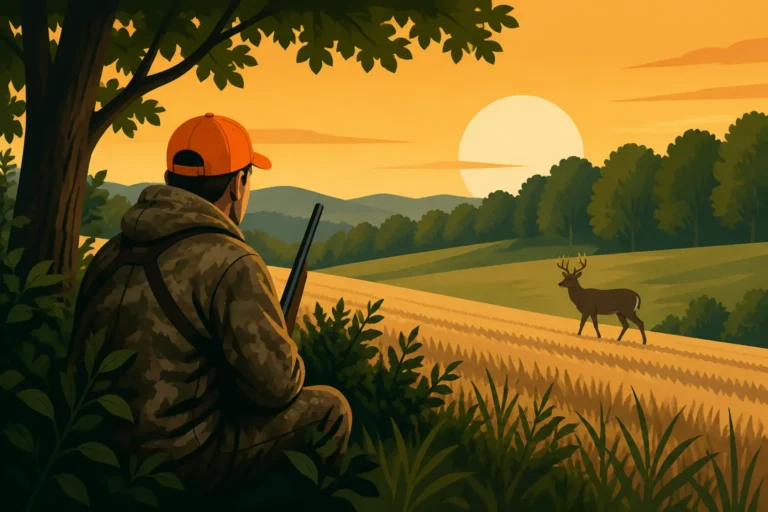
Your stand placement is absolutely critical once you've identified a primary feeding oak. The goal is to intercept deer as they move to or from the feeding area, or while they are actively feeding, without alerting them to your presence.
- Wind Direction is Paramount: This cannot be stressed enough. Always approach and set up with the wind in your favor, blowing your scent away from where you expect the deer to approach or be feeding. A consistent crosswind that carries your scent parallel to a trail is often ideal. If the wind isn't right for a particular tree, don't hunt it that day, no matter how good the sign.
- Approach and Exit Routes: Plan your entry and exit to be as stealthy as possible, minimizing disturbance. This means avoiding walking through known bedding areas or directly across major deer trails. If you can use a creek, a ditch, or a dense fencerow for cover on your way in, do it. Your entry and exit can make or break a hunt, especially on public land where deer are more pressured. Consider reading up on Entry Routes Through Standing Soybeans for private land tactics, which can offer similar lessons for subtle public land movements.
- Stand Placement: Don't necessarily set your stand right over the heaviest concentration of cuttings. Instead, look for a tree that allows you to see the feeding area, but more importantly, allows you to catch deer as they are approaching the area. This might be 20-40 yards downwind of the oak, or along a primary trail leading to it. Also, consider the angle of the sun and the natural cover around your stand. A little extra effort to trim shooting lanes and ensure good concealment can pay huge dividends. You're trying to replicate a natural scene as much as possible. For specific setups, looking into Hanging a Stand on a Jefferson Forest Ridge can provide excellent insights.
Beyond Acorns: Other Food Sources and Scouting Tools
While acorns are often king, especially in Virginia's diverse landscape, they aren't the only food source. A holistic approach to scouting considers acorns as part of a larger picture, and modern tools can significantly enhance your ability to piece that picture together.
Complementary Sign: Rubs, Scrapes, and Tracks
Acorn cuttings tell you where deer are eating, but other sign can tell you who is eating there, and what else they're up to.
- Rubs: These are sections of tree bark that a buck has scraped off with his antlers. Fresh rubs, especially large ones, indicate a buck is in the area and actively marking his territory. If you find fresh rubs leading to or from an oak with fresh cuttings, you know you've got a buck on that feeding pattern. More significant rubs often mean bigger bucks.
- Scrapes: Scrapes are patches of bare earth pawed out by a buck, usually with an overhanging branch (licking branch) above them that he'll rub his preorbital glands on. Scrapes are communication hubs for deer. Fresh scrapes near an acorn-laden oak mean bucks are frequenting the area, not just to eat, but to check for does. During the peak of the rut, these can be dynamite spots. Keep an eye out for Scrape Lines Along a Logging Road near your best oak stands.
- Tracks: Fresh deer tracks in soft dirt or mud confirm recent presence. Look for size and direction of travel. Larger, deeper tracks might indicate a mature buck. Tracks leading directly to an oak with fresh cuttings confirm the connection.
- Droppings: Fresh droppings are invaluable. They not only tell you deer are there but can also give clues about their diet. Soft, clumpy, dark droppings usually indicate a diet of browse and forbs, while harder, pelletized droppings suggest a more fibrous diet, common in late season. The freshness (moistness and color) tells you how recently the deer passed through.
By combining the evidence of fresh acorn cuttings with these other forms of deer sign, you can develop a comprehensive understanding of deer activity in an area. It's like having multiple witnesses corroborating the same story.
Leveraging Technology for Optimal Scouting
Modern technology has revolutionized how we scout, and it complements traditional woodsman skills perfectly. Using a robust mapping application can help you scout more efficiently and effectively.
Many hunters swear by tools like GoHunt, which provides detailed satellite imagery, topographic maps, and public/private land boundaries. Before you even step foot in the woods, you can use a program like GoHunt on your phone or computer to identify potential oak stands (look for clusters of dark green canopy, often on ridge lines or along creek bottoms). You can also mark potential bedding areas, water sources, and natural funnels. This digital scouting saves valuable time and helps you focus your efforts when you do hit the field.
Once you’re in the woods, the GPS features of an app like GoHunt allow you to accurately mark every fresh cutting, rub, scrape, and track you find. This creates a digital breadcrumb trail of deer activity, helping you visualize patterns and pinpoint the best stand locations. You can track your movements, mark access points, and ensure you're always aware of property lines. Imagine being able to see all your scouted sign on one map – it's incredibly powerful. You can also use it to study Wind and Thermals on a Blue Ridge Slope to plan your approach.
Remember, technology is a tool, not a replacement for boots-on-the-ground scouting. It's about combining the best of both worlds: using the digital maps to get a head start, and then confirming and refining your strategy with the detailed, fresh information you gather from reading the woods, including those crucial acorn cuttings.
Comparing Acorn Cuttings and Related Sign
To help you distinguish between different signs and prioritize your scouting efforts, here's a quick comparison table:
| Sign Type | What it Looks Like | What it Tells You | Best Time to Find | Hunting Strategy Implications |
|---|---|---|---|---|
| Deer Cuttings | Clean, crescent-shaped cuts; cracked shells; no gnawing | Deer are actively feeding on acorns. | Early Fall to Late Winter, after acorn drop | Pinpoint feeding areas; set up downwind of active oaks. |
| Squirrel Cuttings | Jagged, splintered edges; small gnawed holes; small fragments | Squirrels are abundant; often near stumps/logs for shelling. | Year-round, especially Fall and Winter | Indicates general woodland activity, but not specific deer use. |
| Deer Tracks | Hoof prints in soft ground/mud; size indicates animal | Deer recently passed through; direction of travel. | Always, especially after rain or in muddy areas | Identify travel corridors between bedding and feeding. |
| Deer Droppings | Piles of pellets or clumps; color & moisture indicate freshness | Deer presence; recent activity; diet insights. | Always, fresher is better | Confirm deer are frequenting an area; gauge time spent. |
| Rubs | Scraped bark on trees; higher rubs for larger bucks | Buck activity; territory marking. | Pre-rut and Rut (Sept-Nov) | Indicates a buck's travel route; set up near fresh rubs. |
| Scrapes | Pawed-out bare ground, licking branch above | Communication hub; buck and doe activity. | Pre-rut and Rut (Sept-Nov) | High traffic areas; potential daylight buck visits. |
This combination of observation and technology can turn an average hunting trip into an extraordinary one. The ability to read the ground, understand the deer's diet, and predict their movements based on subtle signs like acorn cuttings is truly a mark of a seasoned hunter. It helps you anticipate their next move and be in the right place at the right time. Plus, it's just plain fun to learn the stories the woods are telling you, even if that story is just "there's a big deer, and he loves acorns, right here."
Disclaimer
Hunting is an inherently dangerous activity. Always prioritize safety, follow all Virginia Department of Wildlife Resources (DWR) regulations, and obtain the necessary licenses and permits. The information provided here is for educational purposes and should not replace professional guidance or personal judgment. Be aware of your surroundings, hunt ethically, and respect wildlife and private property.