Virginia Bald Eagle Recovery Near the Bay
There was a time, not so long ago, when the sight of a bald eagle soaring majestically over Virginia's waterways, particularly near our beloved Chesapeake Bay, was a rare and heart-wrenching occurrence. For generations, this iconic symbol of American wilderness seemed destined to fade into memory, a casualty of a changing world. But if you spend any time near the great rivers and estuaries of the Old Dominion today, you'll know that story has a truly inspiring second act. This guide dives deep into the incredible journey of the bald eagle's recovery, focusing on the vibrant resurgence near the Chesapeake Bay, and what this means for the health of our shared wild spaces.
The Vanishing Act: Why Virginia's Eagles Almost Disappeared
It’s hard to imagine now, with eagles seemingly everywhere, but there was a period when these magnificent birds were teetering on the brink. The reasons were complex, a perfect storm of environmental change and human impact that gradually chipped away at their populations. For many of us who grew up hearing tales of a healthier ecosystem, the idea of an eagle-less sky felt like a scar on the landscape.
The Silent Spring and Pesticide Peril
Perhaps the most devastating blow to bald eagle populations, not just in Virginia but across North America, came in the form of widespread chemical contamination, particularly from the pesticide DDT. This isn't just a dry scientific fact; it was an ecological disaster playing out in slow motion. DDT, sprayed liberally to control agricultural pests and mosquitoes, would wash into our rivers and eventually make its way into the Bay. It accumulated in the fatty tissues of small fish, which were then eaten by larger fish, and finally consumed by apex predators like the bald eagle.
The eagles themselves didn't necessarily die directly from DDT poisoning in large numbers, but the chemical wreaked havoc on their reproductive systems. It caused their eggshells to become dangerously thin, so fragile that they would often crack under the weight of the incubating parent bird. Imagine the despair of nesting eagles, year after year, watching their efforts crumble, literally, beneath them. Nest after nest failed, and without successful reproduction, the population plummeted. The silence in the spring, where once the squawks of nesting eagles would echo, was truly deafening to those who understood its cause.
Habitat Loss and Human Pressure
Beyond the chemical assault, bald eagles faced relentless pressure from habitat loss and direct human persecution. As Virginia’s population grew and development expanded, particularly along the fertile riverbanks and coastal areas that eagles favored, prime nesting and feeding territories were converted for human use. Forests were cleared, shorelines developed, and the quiet solitude that these birds require for successful breeding became increasingly scarce.
Historically, eagles were also victims of misunderstanding and misplaced fear. They were often shot by farmers or fishermen who wrongly believed the birds posed a significant threat to livestock or fish stocks. While eagles are indeed formidable predators, their primary diet consists of fish and carrion, not typically farm animals. Before robust environmental protections were in place, there was little recourse against such actions, and these majestic birds paid a heavy price. The combination of losing their homes, facing direct threats, and struggling to reproduce created a bleak outlook for Virginia's bald eagles.
A Determined Effort: Turning the Tide for the National Bird
The path to recovery for the bald eagle was not a quick fix; it was a testament to sustained conservation efforts, scientific understanding, and a collective commitment to righting past wrongs. Many Virginians, from dedicated biologists to passionate volunteers, played a part in bringing our national bird back from the brink. It's an inspiring story that shows what's possible when we put our minds and resources toward protecting wildlife.
Banning DDT and Protective Legislation
The critical turning point for bald eagles, and many other bird species, came with the banning of DDT in the United States in 1972. This decisive action, spurred by growing scientific evidence and public awareness thanks to works like Rachel Carson's Silent Spring, removed the primary chemical culprit that was crippling their reproduction. It wasn't an instant fix, as the chemical lingered in the environment for years, but it stopped the bleeding.
Complementing the DDT ban was robust protective legislation. The Bald and Golden Eagle Protection Act, already in place, made it illegal to harm, kill, or possess bald eagles or their parts. Crucially, the listing of the bald eagle as an endangered species under the Endangered Species Act (ESA) provided an unprecedented level of federal protection. This meant that federal agencies had to consider the eagle's well-being in all their actions, and it unlocked funding and resources specifically for recovery efforts. For habitat managers, understanding these legal frameworks is crucial, and resources like GoHunt can sometimes aid in identifying critical conservation areas or understanding regulatory boundaries on public lands, though eagle management is distinct from hunting.
Dedicated Conservation Programs
With legal protections in place, state agencies like the Virginia Department of Wildlife Resources (DWR) and federal partners, alongside non-profit organizations, launched intensive conservation programs. These weren't just about passive protection; they were active, hands-on interventions.
One of the most impactful strategies was "hacking," a technique that involved placing young eagle chicks from healthy populations or captive breeding programs into artificial nests in areas where eagles had disappeared. These chicks were fed by humans but had no direct contact, allowing them to imprint on the new location and, hopefully, return there to breed as adults. Imagine the delicate work involved, carefully raising these young birds with minimal human interaction, all with the hope that they would one day contribute to a wild, thriving population.
Extensive monitoring programs were also established. Biologists meticulously tracked nesting pairs, counted fledglings, and sampled tissues to monitor contaminant levels. This data was vital for understanding the recovery's progress and identifying new challenges. Virginia Wildlife Disease Monitoring plays an ongoing role in ensuring the health of all species, including these magnificent raptors. Volunteers also contributed countless hours, observing nests, reporting sightings, and helping to educate the public about the importance of eagle conservation. These combined efforts slowly but surely began to heal the scars of the past.
The Chesapeake's Comeback: Eagles Soaring High Once More
The Chesapeake Bay, with its vast network of rivers, estuaries, and abundant fish populations, has always been prime eagle habitat. It's here that the fruits of decades of labor are perhaps most dramatically evident, turning a story of despair into one of triumph.
Nesting Success and Population Growth
Today, the Chesapeake Bay region is a stronghold for bald eagles, boasting one of the densest populations on the East Coast. The sheer number of active nests has exploded, moving from just a handful in the 1970s to hundreds across Virginia's Bay tributaries. You can now see them almost anywhere along the James, the Rappahannock, the York, and their countless smaller branches.
What's truly remarkable is the consistent nesting success. With the threat of thin eggshells largely behind them, pairs are now regularly producing healthy clutches of chicks. It's not uncommon to see several fledglings practicing their flight maneuvers near a nest tree in late summer. This robust reproduction has fueled a steady population increase, allowing eagles to expand into new territories, even some areas they haven't occupied in generations. This comeback story is a powerful indicator of a healthier, more resilient Bay ecosystem overall.
Observing Eagles in Virginia's Bay Region
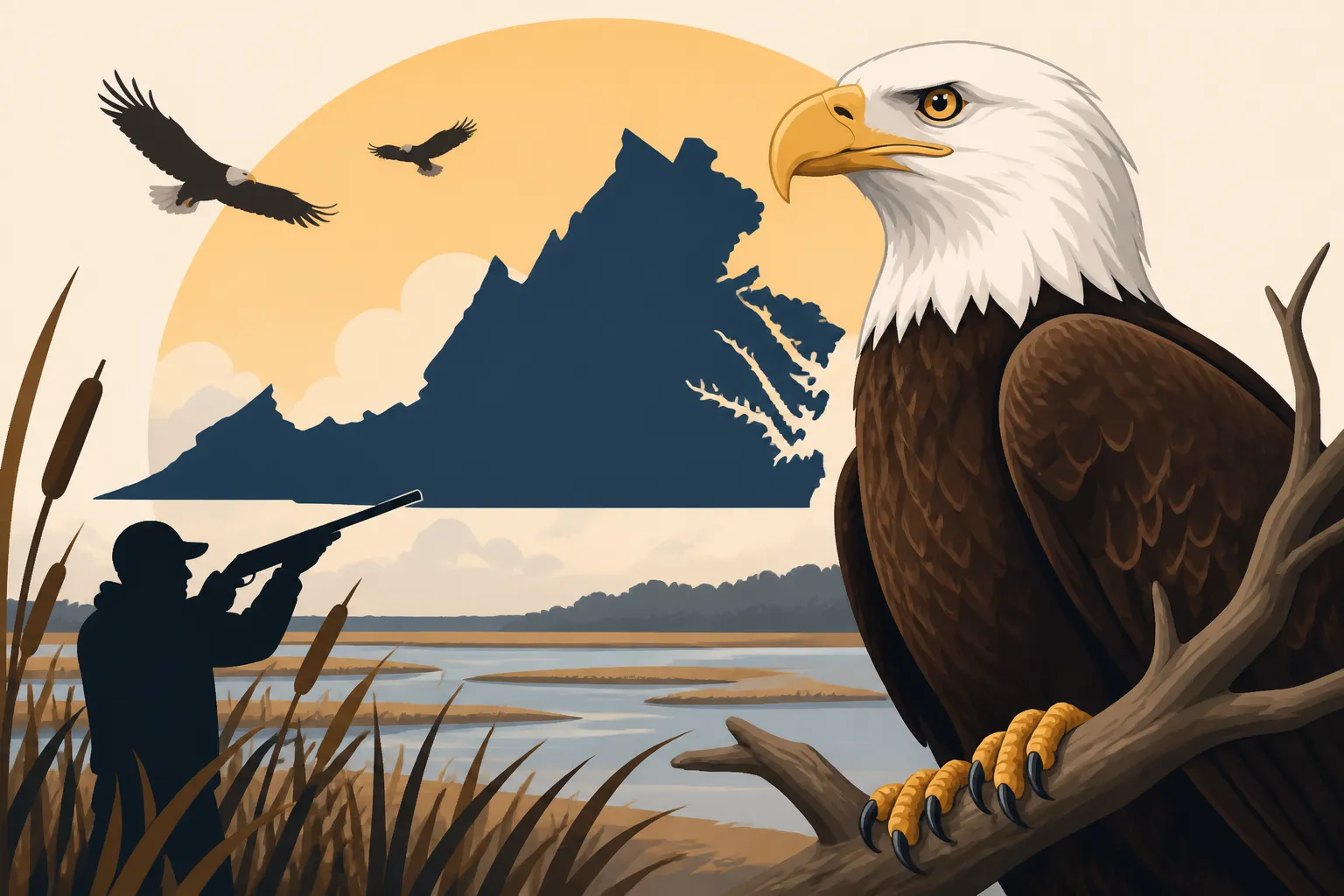
For anyone who spends time outdoors in Virginia, especially near water, encounters with bald eagles have become a regular and treasured experience. Waterfowl hunters, for instance, often report seeing eagles perched commandingly near their blinds, watching the ducks and geese. It's a truly humbling sight, a reminder of the wildness that still thrives. For those exploring Virginia Waterfowl on the Atlantic Flyway, eagles are now an almost guaranteed sighting.
If you want to intentionally seek out eagles, focus your efforts along major river systems and their confluences with the Bay. Areas like the James River National Wildlife Refuge, the Rappahannock River Valley National Wildlife Refuge, and numerous state parks and wildlife management areas offer excellent viewing opportunities. Even from a boat while Waterfowl Hunting the Chesapeake Bay or exploring a marsh, you're likely to see them. Early mornings and late afternoons often provide the best chances to see them actively hunting or perched, surveying their domain. Using a scouting tool like GoHunt, while primarily for hunting, can help you identify public lands and waterways where these birds might be present, allowing you to appreciate the broader natural environment you're immersed in.
Eagles and the Virginia Outdoors: A Healthy Ecosystem Indicator
The bald eagle's recovery is more than just a feel-good story about one species; it's a profound indicator of broader ecological health and a symbol of successful conservation efforts that benefit countless other species, including many that are critical to Virginia's hunting heritage.
What Their Presence Means for Wildlife
When bald eagles thrive, it's a strong sign that the aquatic and terrestrial ecosystems they depend on are also functioning well. Their diet largely consists of fish, so a healthy eagle population suggests robust fish stocks and relatively clean waters. They also scavenge carrion, acting as nature's clean-up crew, which helps prevent the spread of disease among other wildlife. Consider the incredible biodiversity supported by the Chesapeake Bay and its tributaries, from various species of ducks that winter in the area to the fish that populate the shallows. When eagles are plentiful, it often means their prey base is also healthy.
Furthermore, eagles are top predators, and their presence at the apex of the food web signifies balance. It means there's enough food throughout the system to support these large, energy-intensive birds. It's a beautiful example of how protecting one species can have a ripple effect, strengthening the entire ecosystem. Hunters often understand these connections deeply, recognizing that a healthy population of one species, like deer or turkey, relies on a diverse and vibrant habitat.
Coexisting with Apex Predators
For hunters and outdoor enthusiasts in Virginia, the resurgence of bald eagles has added an incredible dimension to time spent afield. No matter if you're Hunting the Eastern Shore Marsh or sitting in a treestand along a Piedmont river, seeing an eagle overhead is a moment to pause and appreciate. It elevates the experience, connecting us to a larger, wilder narrative.
The presence of these majestic raptors serves as a constant, visible reminder of the importance of conservation and responsible stewardship of our natural resources. It encourages us to think about how our actions, from managing timber to controlling pollution, impact the entire ecosystem. Even when using digital tools like GoHunt to scout Virginia Wildlife Management Areas or pinpoint specific terrain features, observing an eagle can shift our perspective from pure strategy to profound appreciation. Their return underscores that successful wildlife management is about more than just game species; it's about the entire tapestry of life.
Here’s a snapshot comparing the challenging past with the hopeful present for bald eagles in Virginia:
| Aspect | Past (Mid-20th Century) | Present (Early 21st Century) |
|---|---|---|
| Population Status | Critically endangered; few breeding pairs in Virginia. | Thriving and robust; hundreds of active nests. |
| Primary Threat | DDT poisoning, habitat loss, direct persecution. | Habitat development, occasional lead poisoning (from carrion), human disturbance. |
| Reproductive Success | Very low; thin eggshells led to widespread nest failure. | High and consistent; healthy fledging rates. |
| Habitat Availability | Shrinking due to development and pollution. | Protected areas, cleaner waters, adapted to diverse landscapes. |
| Public Perception | Often seen as a nuisance or endangered relic. | Revered as a conservation success story and national symbol. |
| Conservation Effort | Initial awareness, later bans and protective acts. | Ongoing monitoring, habitat protection, public education. |
The bald eagle's journey from the brink of extinction to a vibrant presence over Virginia’s Chesapeake Bay is one of the most remarkable conservation stories of our time. It’s a testament to what we can achieve when we recognize our mistakes, implement science-based solutions, and work together to protect the natural world that sustains us all. Every time you see one soaring high above, remember the incredible effort it took to bring them back, and feel a renewed sense of connection to the wild heart of Virginia.
Disclaimer
This article is for general informational purposes only and does not constitute professional advice. Laws, prices and regulations vary by location and change over time. Consult a qualified professional for guidance on your specific situation.