Virginia Urban Archery Zone Boundaries
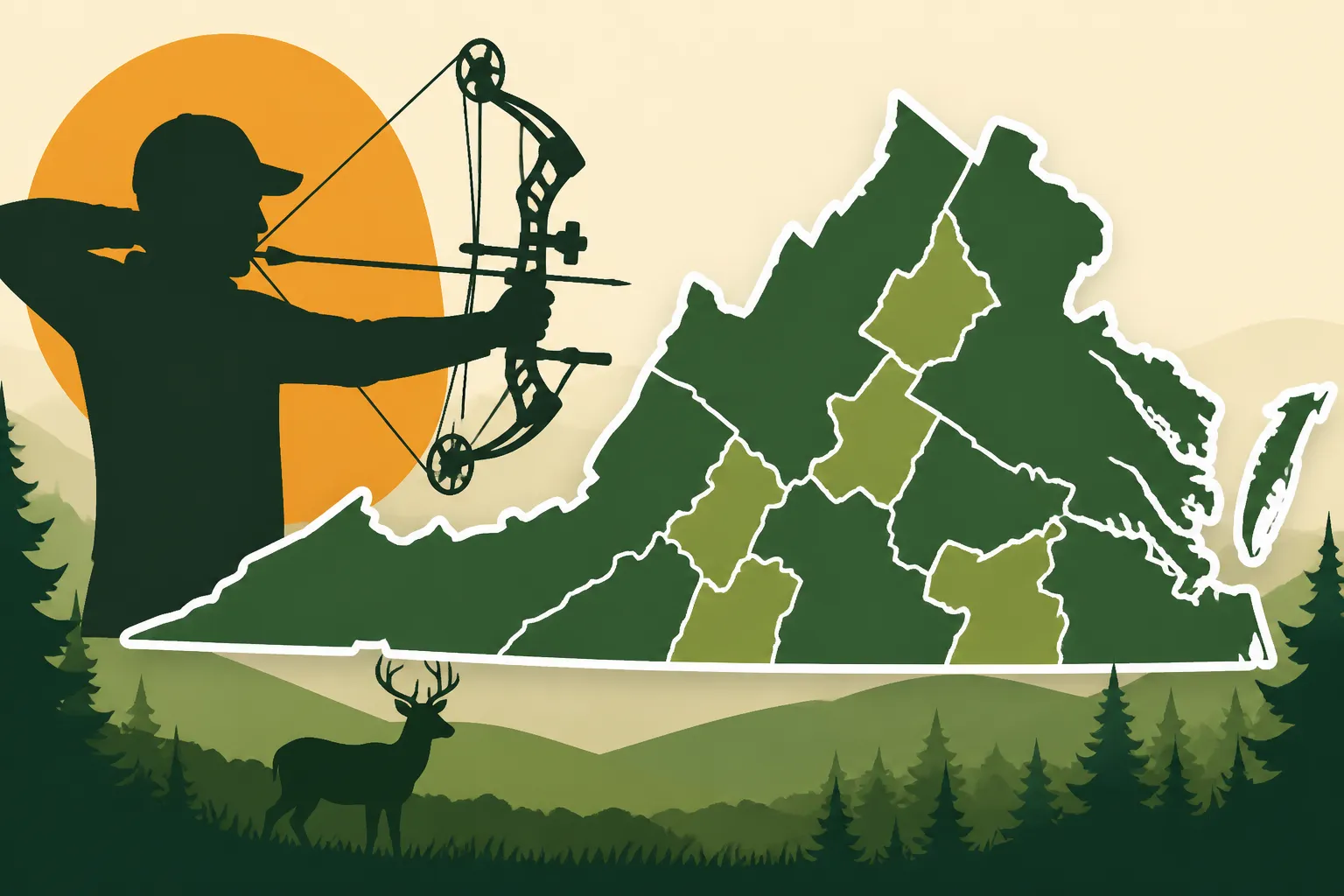
For many Virginia hunters, the idea of an urban archery season can feel like navigating a maze blindfolded. You hear about these special opportunities to hunt deer closer to home, often outside the traditional firearms seasons, but the biggest hurdle is always the same: figuring out exactly where these "urban archery zones" actually start and stop. It’s frustrating to feel like you’re constantly guessing, or worse, risking a violation because the lines on a map aren't clear. This guide is here to unravel that confusion, helping you understand the intricacies of Virginia's urban archery zone boundaries and how to confidently identify and hunt within them.
What Exactly is an Urban Archery Season in Virginia?
Virginia’s urban archery season isn't just about bowhunting in a city park; it’s a specific, extended period designed to address deer overpopulation in highly developed areas. Think of it as a specialized tool in the wildlife management toolkit, allowing hunters to help manage deer herds in places where traditional firearms hunting might be impractical or even unsafe due to population density. The season typically runs before the statewide archery season begins and often extends well beyond the general firearms close, offering unique opportunities.
Purpose and Philosophy Behind Urban Archery
The primary purpose of the urban archery season is deer population control. In many suburban and urban environments, deer thrive due to abundant food sources (hello, landscaping!) and a lack of natural predators. This can lead to increased deer-vehicle collisions, damage to property and agriculture, and a higher risk of deer-borne diseases. By allowing archery hunting in these specific zones, the Virginia Department of Wildlife Resources (DWR) provides an effective, quiet, and discreet method for reducing deer numbers. It’s a crucial strategy for maintaining ecological balance and mitigating conflicts between deer and human populations, especially in areas where public safety concerns might limit other hunting methods.
Commonalities Across Designated Urban Archery Zones
While each specific urban archery zone has its unique boundary lines, there are common threads that tie them all together across the Commonwealth. Firstly, they are always archery-only zones, meaning no firearms are permitted for deer hunting during this special season. Secondly, these zones are typically situated within or immediately adjacent to established population centers—cities, towns, and heavily populated counties. They often encompass a mix of private land, where obtaining permission is paramount, and sometimes even smaller public parcels or greenways where hunting is permitted under strict DWR guidelines and often a quota system. The season dates are standardized for urban archery across all designated zones, making it easier to remember when the opportunity opens and closes, regardless of your specific location. Virginia Urban Archery Season Rules further details these overarching regulations.
Understanding the Legal Framework for Urban Archery Zones
The designation of an urban archery zone isn't a casual decision; it's a careful process involving local government input and DWR approval. These zones are not blanket rules over entire counties or cities, but rather precisely defined areas within them, often based on specific criteria like population density, land use patterns, and local deer impact reports. Misunderstanding these legal boundaries is one of the quickest ways to find yourself in a bind, which is why a thorough grasp of the framework is so important.
DWR’s Designation Process and Criteria
The Virginia Department of Wildlife Resources plays a central role in establishing and overseeing urban archery zones. The process usually begins with a request from a local government entity—a county, city, or town—that has identified a significant deer management issue within its jurisdiction. DWR then assesses the proposed area based on various criteria. These can include:
- Population Density: The area must meet certain thresholds for human population and development.
- Deer Population Data: Evidence of high deer numbers, increased vehicle collisions, or significant landscape damage.
- Public Support: Local community interest and support for an urban archery program.
- Feasibility: Assessing whether archery hunting can be conducted safely and effectively within the proposed boundaries, considering factors like parcel size and proximity to non-hunting areas.
Once approved, the DWR formally designates the zone and outlines the specific regulations. This careful process ensures that urban archery hunting is implemented only where it's truly needed and can be carried out responsibly.
Local Ordinances and City/County Specific Rules
While DWR sets the statewide framework for urban archery, individual cities and counties can, and often do, have their own supplementary ordinances that impact hunting within these zones. It’s a common frustration: you've checked the DWR regulations, but then find out your specific city has additional rules on discharge setbacks, tree stand placement on municipal land, or even noise restrictions that could affect calling. For example, some localities might require specific permits even for private land hunting, or have more stringent requirements for written permission. You might also encounter local rules about retrieving game from private land, even if you’ve made a legal kill. Always remember that local laws can be more restrictive than state laws, but never less. Before you even think about hanging a stand, a quick call to the local sheriff's office or city/county administrator's office can save a lot of headaches. Virginia Trespass and Permission Law is a good starting point for understanding basic landowner rights, but local ordinances can add layers of complexity.
Navigating Specific Urban Archery Zone Boundaries
Identifying the exact lines on the ground that delineate an urban archery zone is perhaps the most critical step for any hunter looking to participate. It's not always as simple as a city limits sign; these boundaries can follow natural features, property lines, or even specific road networks, making precise identification a real challenge without the right tools.
Leveraging Digital Mapping Tools
In the modern hunting world, digital mapping tools are an absolute game-changer, especially when dealing with complex boundaries like those found in urban archery zones. Services like onX Hunt and GoHunt have become indispensable for this exact reason. These platforms overlay property lines, public land boundaries, and often specific hunting zone designations onto high-resolution satellite imagery. With an app like onX Hunt on your phone, you can zoom in on your potential hunting spot, see the property owner's name, and, crucially, visually confirm if you are indeed within the DWR-designated urban archery boundary. It takes the guesswork out of "am I in the right place?" by providing real-time GPS verification right in your pocket. Before hitting the woods, spending time digitally scouting these boundaries at home is paramount. You can mark potential stand locations, identify access points, and trace the exact perimeter of the zone to ensure you're always on the right side of the law. Scouting With the Virginia DWR App can also be a complementary tool, offering official DWR resources that might confirm these zones.
Understanding Physical Boundary Markers and Reference Points
While digital maps are excellent, they are just tools. It's also vital to understand how these boundaries manifest on the ground. Sometimes, a DWR-designated urban archery zone will follow easily identifiable physical features: a major river, a specific highway, or a powerline cut. Other times, it might follow obscure property lines, which can be much harder to discern without a deed map or the aforementioned digital tools. Always cross-reference your digital findings with known physical reference points. For instance, if the boundary states it follows "Route 60 West from the intersection of Route 10," then you need to know exactly where that intersection is and which side of Route 60 is included. If you're on private land, the landowner might be able to show you their property survey markers. Pay attention to signage, though official urban archery zone signs are rare for the boundaries themselves, focusing more on access points for public parcels. When Reading Aerial Photos for Piedmont Deer, remember these distinct physical features can often indicate where one zone ends and another begins.
Identifying Your Hunting Parcel within an Urban Archery Zone
Once you understand the general urban archery zone boundaries, the next step is narrowing down your specific hunting parcel. This often involves a mix of research, respectful outreach, and careful planning, particularly when dealing with the patchwork of private and public lands characteristic of these areas.
Researching Specific Addresses and Land Use
Before even thinking about a knock on a door or scouting a piece of woods, take some time to research the specific parcels you're interested in. County and city GIS (Geographic Information System) websites are invaluable for this. You can typically type in an address or zoom into a map to find property owner information, parcel boundaries, and sometimes even recent sales data. This research helps you confirm two things: first, that the land is indeed within the urban archery zone, and second, who actually owns the property. You might discover that a seemingly wild patch of woods is actually a residential lot, or part of a larger planned development. Understanding the land use—is it residential, commercial, or agricultural?—will also inform your approach to asking for permission and understanding potential hunting challenges. A deep dive into these details upfront saves a lot of wasted time and awkward conversations later on.
Engaging Landowners for Access in Urban Areas
Ah, the art of asking for permission! In urban archery zones, securing private land access is often the key to unlocking prime hunting opportunities. Many of these zones are predominantly private land, meaning your success hinges on building relationships with landowners. When you approach a homeowner or property manager, be prepared, polite, and professional. Explain clearly that you are interested in participating in the urban archery season, highlighting its purpose (deer management) and your commitment to safety and respect for their property. Bring a copy of your hunting license and proof of hunter education. Offer to share venison. Be ready to discuss liability concerns (though Virginia's landowner liability laws are generally favorable to landowners granting recreational access). Emphasize the quiet nature of archery hunting and your commitment to discreet operations. Remember, a "no" isn't a personal rejection; it's often a homeowner's legitimate concern. Persistence, coupled with respect and a clear demonstration of responsibility, can go a long way. This is especially true for Getting Landowner Access in an Urban Archery Zone where neighbors are often in close proximity.
Distinguishing Public vs. Private Hunting Opportunities
Not all urban archery zones are entirely private. Some may include smaller state-owned parcels, DWR wildlife management areas (WMAs), or even municipal lands like nature preserves or park systems where specific hunting seasons are permitted. The key here is due diligence. Don’t assume that because a piece of woods looks wild and unmanaged, it’s fair game. Public lands, even small ones, will have explicit regulations regarding hunting access. These might include quota hunts, sign-in requirements, or specific usage restrictions. Always consult the DWR's official website and local municipal park rules for any public land you plan to hunt within an urban archery zone. On the flip side, clearly distinguishing public from private land is also crucial. Crossing property lines onto private land without permission is trespassing, a serious offense. This is another area where digital mapping apps like onX Hunt are invaluable, as they clearly differentiate public and private parcels, often with color-coded overlays, ensuring you always know where you stand.
Special Considerations and Common Pitfalls
Hunting in an urban archery zone presents a unique set of challenges that go beyond typical backcountry hunting. You're operating in close proximity to non-hunters, homes, and public spaces, which means every decision you make is magnified. Being aware of these special considerations is vital for a safe, ethical, and successful hunt.
Adhering to Safety Perimeters and Setback Rules
Safety is paramount, especially when hunting close to residential areas. Virginia law has specific firearms discharge setback rules, but while urban archery doesn't involve bullets traveling miles, it's still crucial to understand the spirit of these rules and apply them to archery. Even if not legally mandated for bows, common sense dictates a safe distance from dwellings, schools, and occupied buildings. Many local ordinances will have their own specific setback requirements for archery equipment, so always check. Your arrow still travels, and a broadhead is still incredibly dangerous. Always know what is beyond your target, and never take a shot unless you are absolutely certain of a safe backdrop and clear trajectory. This means being intimately familiar with the layout of the property, the neighbors, and any potential foot traffic. A misjudged shot in a remote forest is a problem; a misjudged shot near a subdivision is a crisis that can jeopardize the future of urban archery for everyone.
Understanding Public Perception and Neighbor Relations
One of the biggest differences between hunting in the vast George Washington National Forest and an urban archery zone is public perception. While you might be legally hunting, not everyone in a suburban neighborhood understands or approves of hunting, especially in their backyard. This means acting as an ambassador for hunters, even when you don't feel like it. Be discreet. Park your vehicle respectfully. Minimize visible gear when traveling to and from your stand. If you encounter a curious or concerned neighbor, be polite, explain what you're doing (within reason), and emphasize the safety and management aspects of your hunt. A bad interaction can quickly turn into complaints to local authorities or even attempts to have the urban archery season restricted or eliminated. Your actions reflect on every other hunter, so operating with integrity and a low profile is essential for the long-term viability of Urban Archery Hunting in Virginia Cities.
Managing Game Retrieval in Densely Populated Areas
Tracking and retrieving a downed deer is already one of the most challenging aspects of hunting, but in an urban archery zone, it adds another layer of complexity. What if the deer runs onto a neighbor's property where you don't have permission? Or worse, into a busy street or public park? You must have a plan for game retrieval before you even take a shot. This might involve discussing these scenarios with the landowner beforehand and getting contingent permission for tracking. It also means only taking high-percentage shots to minimize tracking distances. If a deer runs onto property where you don't have permission, you cannot legally pursue it without first obtaining permission from that landowner. This is where those respectful neighbor relations become priceless. Having a conversation with adjacent property owners before the season, explaining the possibility of a deer crossing property lines, can make a difficult situation much smoother. Remember that Tracking a Deer Through Virginia Leaf Litter in a dense urban setting requires even more caution and discretion.
Maximizing Your Success in Urban Archery Zones
Hunting within urban archery zones requires a slightly different approach than hunting sprawling public land. It demands keen observation, adaptability, and a strong emphasis on stealth and minimal disturbance. Success here isn't just about bagging a deer; it's about doing so responsibly and effectively within a unique environment.
Pre-Season Scouting and Trail Camera Strategies
Effective scouting is always crucial, but it takes on a hyper-local importance in urban archery zones. Deer patterns can be incredibly tight, dictated by small woodlots, green spaces, and even residential landscaping. Spend time walking the edges of your permitted property, looking for rub lines, scrape lines, and bedding areas. Identify pinch points between houses, creek bottoms, or fencerows where deer are funneled. Pay close attention to food sources, which often include ornamental plants, fruit trees in backyards, and small agricultural plots.
Trail cameras can be incredibly effective here, but use them discreetly and only on land where you have explicit permission. You don't want to alarm neighbors with cameras facing their property. Position them to monitor game trails or potential feeding areas, and remember to check them often without creating too much disturbance. Because urban deer often have smaller home ranges, a few well-placed cameras can give you a very accurate picture of their daily movements. Knowing Where to Hang a Camera on a Logging Road might be helpful for more rural areas, but in urban settings, focus on natural funnels and transition areas within your specific parcel.
Strategic Stand Placement and Entry/Exit Routes
Stand placement in urban settings is a delicate balance between visibility, safety, and discretion. You need to be in a position for an ethical shot, but also mindful of sightlines from neighboring properties. Often, thicker cover on the edge of a woodlot, or a dense fencerow, provides excellent concealment. Consider terrain features that might block views from homes or roads. Ensure your shooting lanes are clear, but avoid over-trimming, which can draw unwanted attention.
Entry and exit routes are equally critical. Urban deer are accustomed to human activity, but they are still wary. Avoid walking across open lawns or in full view of houses. Utilize natural cover, creek beds, or dense brush to sneak into and out of your stand. Plan routes that minimize noise and disturbance, especially in the early morning or late evening when you're most likely to encounter deer. Your goal is to be a phantom in the woods, leaving no trace and causing no concern for neighbors. Remember that Scent Control Gear for Urban Archery Hunts becomes even more crucial when operating in close proximity to human dwellings and their associated odors.
Ethical Considerations and Respect for the Resource
Hunting in an urban environment carries an even higher ethical burden than hunting in remote wilderness. Every action you take, from your shot placement to how you retrieve and process your deer, must uphold the highest standards of sportsmanship and respect. The close proximity to non-hunting residents means you are under more scrutiny, whether you realize it or not. This means prioritizing a clean, ethical kill above all else. Pass on questionable shots that might lead to a long track or a wounded animal.
Respect for the resource extends to how you handle a successful harvest. Field dressing should be done as discreetly as possible, and the deer transported in a way that minimizes public visibility. Consider breaking down the animal into game bags at the kill site if transport is tricky or if you anticipate curious onlookers. Remember that urban archery zones exist as a privilege, granted for a specific management purpose. Upholding ethical standards ensures this privilege continues for future generations of hunters.
Practical Tips for Confirming Urban Archery Boundaries
Let's distill some actionable steps for confidently identifying those tricky urban archery zone boundaries.
- Start with the DWR Website: Your first stop for official information on Virginia's urban archery zones should always be the Virginia Department of Wildlife Resources (DWR) website. They provide the definitive list of designated cities and counties, along with the season dates and core regulations.
- Consult Local Government Resources: Once you know your specific city or county is designated, dive into their local government website. Look for GIS mapping tools, zoning ordinances, and specific hunting regulations. These often have maps that show parcel lines and designated areas within their jurisdiction.
- Utilize Advanced Mapping Apps: Digital tools like onX Hunt and GoHunt are invaluable. Download the app, subscribe to the Virginia state layer, and familiarize yourself with its features. You can often see property boundaries, landowner names, and even DWR-specific overlays that clarify urban archery zones. Always download offline maps for areas with spotty cell service.
- Don't Be Afraid to Call: If in doubt, a quick, polite phone call can clear up a lot of confusion. Call the DWR regional office, the county administrator’s office, or the local sheriff’s department. They are the authorities and can provide the most accurate, up-to-date information on boundaries and local rules.
- Visual Confirmation on the Ground: While maps are great, always cross-reference with what you see. Are there major roads, rivers, or power lines that match the boundary descriptions? Is the property visibly developed or wild? This ground-truthing reinforces your map-based research.
Here's a quick reference table to help visualize how these layers of information fit together:
| Information Source | Type of Data Provided | Best For | Key Action |
|---|---|---|---|
| VA DWR Website | Official zone designations, statewide rules, season dates | Confirming if a county/city is a zone | Start here to confirm general eligibility. |
| Local Government GIS/Maps | Detailed municipal boundaries, property lines, zoning | Identifying precise local zone perimeters within a city/county | Verify specific street/parcel inclusions/exclusions. |
| Digital Mapping Apps | GPS-enabled overlays of property lines, public/private land, DWR data | Pinpointing your exact location relative to boundaries in the field | Use for real-time verification and pre-season scouting. |
| Local Ordinances | Specific city/county hunting rules (setbacks, permits) | Understanding local restrictions beyond state law | Check for additional rules that could affect your hunt. |
| Direct Contact (DWR/Local Officials) | Clarification on ambiguous boundaries, specific questions | Resolving any lingering doubts or complex boundary situations | Call if maps or written rules are unclear for your exact spot. |
Ultimately, hunting in Virginia's urban archery zones offers a fantastic opportunity to extend your time afield and contribute to important wildlife management efforts. By diligently understanding and confirming these vital boundaries, you can ensure a safe, legal, and rewarding hunting experience. Virginia Deer Season Structure Explained covers how urban archery fits into the broader hunting calendar, offering context to these unique seasons.
Disclaimer
This article is for general informational purposes only and does not constitute professional advice. Laws, prices and regulations vary by location and change over time. Consult a qualified professional for guidance on your specific situation.