Finding Access Near Lynchburg
Finding quality hunting ground near a growing city like Lynchburg can often feel like searching for a needle in a haystack. The rolling hills and river bottoms surrounding Lynchburg hold plenty of game, but navigating public land access or the tricky waters of private land permission can leave even seasoned hunters scratching their heads. This guide is designed to cut through that frustration, offering practical advice and strategies for locating accessible hunting spots in and around the Lynchburg area.
Unlocking Public Hunting Opportunities Near Lynchburg
While much of the land directly adjacent to Lynchburg is privately owned, Virginia is blessed with a significant amount of public hunting ground within a reasonable drive. Knowing where to look and understanding the nuances of these areas is your first step to a successful season. It's not always easy, but the rewards of public land hunting are immense.
Virginia Wildlife Management Areas within Reach
Wildlife Management Areas (WMAs) are crown jewels for public land hunters in Virginia, offering managed habitat and regulated seasons. While none are directly in Lynchburg, several are close enough for day trips or weekend hunts. These areas are specifically maintained to benefit wildlife, often meaning better habitat and higher game concentrations than unmanaged public lands. You'll often find a mix of timber, open fields, and water sources designed to attract and hold deer, turkey, and small game.
One of the closest and most popular WMAs accessible from Lynchburg is the James River Wildlife Management Area, located along the James River in Amherst County. This WMA offers diverse habitat, from hardwood bottoms to pine stands, and is known for deer, turkey, and waterfowl opportunities. Another excellent option, though a bit further east, is the Amelia Wildlife Management Area, which provides extensive hunting for deer, turkey, and small game on its managed fields and timber. When planning a hunt on a WMA, always check the Virginia Department of Wildlife Resources (DWR) website for specific regulations, as some WMAs have unique rules or special draw hunts. You'll likely need a WMA Access Permit in addition to your regular hunting license, which helps fund the management of these vital areas.
Hunting the Vast Jefferson National Forest
For those willing to stretch their legs and embrace more rugged terrain, the George Washington and Jefferson National Forests offer an immense amount of public hunting land, with significant portions of the Jefferson National Forest being quite accessible from Lynchburg. These national forests represent a different type of public land experience compared to WMAs. They are generally less intensively managed for game specifically but offer vast, undeveloped wilderness areas where deer, bear, and turkey thrive in their natural habitats.
The eastern slopes of the Blue Ridge Mountains, which are part of the Jefferson National Forest, are practically in Lynchburg's backyard. Here, you'll find challenging but rewarding hunting. Look for remote hollows, ridge-top saddles, and old logging roads that receive less pressure. Tactics like Hunting Jefferson Forest Ridges can be particularly effective. Scouting these expansive areas is key; don't expect to just show up and find game. Utilize topographical maps and satellite imagery (tools like onX Hunt can be invaluable here) to identify potential bedding areas, travel corridors, and food sources. Understanding Wind and Thermals on a Blue Ridge Slope will also be crucial for success in this mountain environment. Remember, national forest hunting often means packing in and out all your gear, and sometimes packing out your game over difficult terrain.
Navigating Private Land Access Challenges
While public land offers a solid starting point, gaining access to private land often provides less pressure and higher quality hunting experiences, especially for deer. However, securing permission near a populated area like Lynchburg can be a real challenge. It requires a different set of skills: patience, politeness, and persistence.
Knocking on Doors and Building Relationships
The traditional method of "door-knocking" remains one of the most effective ways to secure private land access. This isn't just about asking to hunt; it's about building a relationship with the landowner. Start by identifying properties that look promising, perhaps those with a mix of timber and agriculture, or those that seem to be under-hunted. Farmers and rural landowners are often dealing with deer damage to crops or gardens, and offering to help manage their deer population can be a huge incentive.
When you approach a landowner, be respectful, well-dressed, and have a clear, concise request. Introduce yourself, explain your intentions, and assure them of your responsible hunting practices. Offer to share some of your harvest, or perhaps help with small chores around the property. Many landowners appreciate knowing who is on their land and that they can trust them. Patience is vital; you might get many "no's" before you get a "yes." Also, a "no" today doesn't mean a "no" forever. Conditions change, and maintaining a friendly presence in the community can eventually pay off. Always make sure you understand Do You Need Written Permission in Virginia? before heading into the field.
Lease Agreements and Hunting Clubs
For those looking for more consistent, long-term access, joining a hunting club or securing a private land lease can be a viable option. Near Lynchburg, you'll find various hunting clubs that lease substantial tracts of land, often with established food plots, stands, and amenities. While this usually comes with a financial commitment, it can provide exclusive access to well-managed properties.
Leasing land directly from a landowner is another option, though it can be harder to find individual tracts available for lease near urban centers. These arrangements often involve a formal contract, outlining the terms, hunting methods allowed, and duration of the lease. Before entering any agreement, thoroughly understand the property boundaries, any shared access, and who is responsible for maintenance. Both options offer predictable access and often lead to better hunting success due to reduced pressure and habitat management. Finding a Virginia Hunting Lease can sometimes happen through word of mouth, local agricultural associations, or online platforms specializing in hunting land.
Essential Tools and Strategies for Finding Hunting Access
In today's hunting world, technology and smart scouting are just as important as knowing your way around a compass. Especially when trying to find hunting access near a populated area like Lynchburg, you need every advantage you can get.
Leveraging Mapping Applications
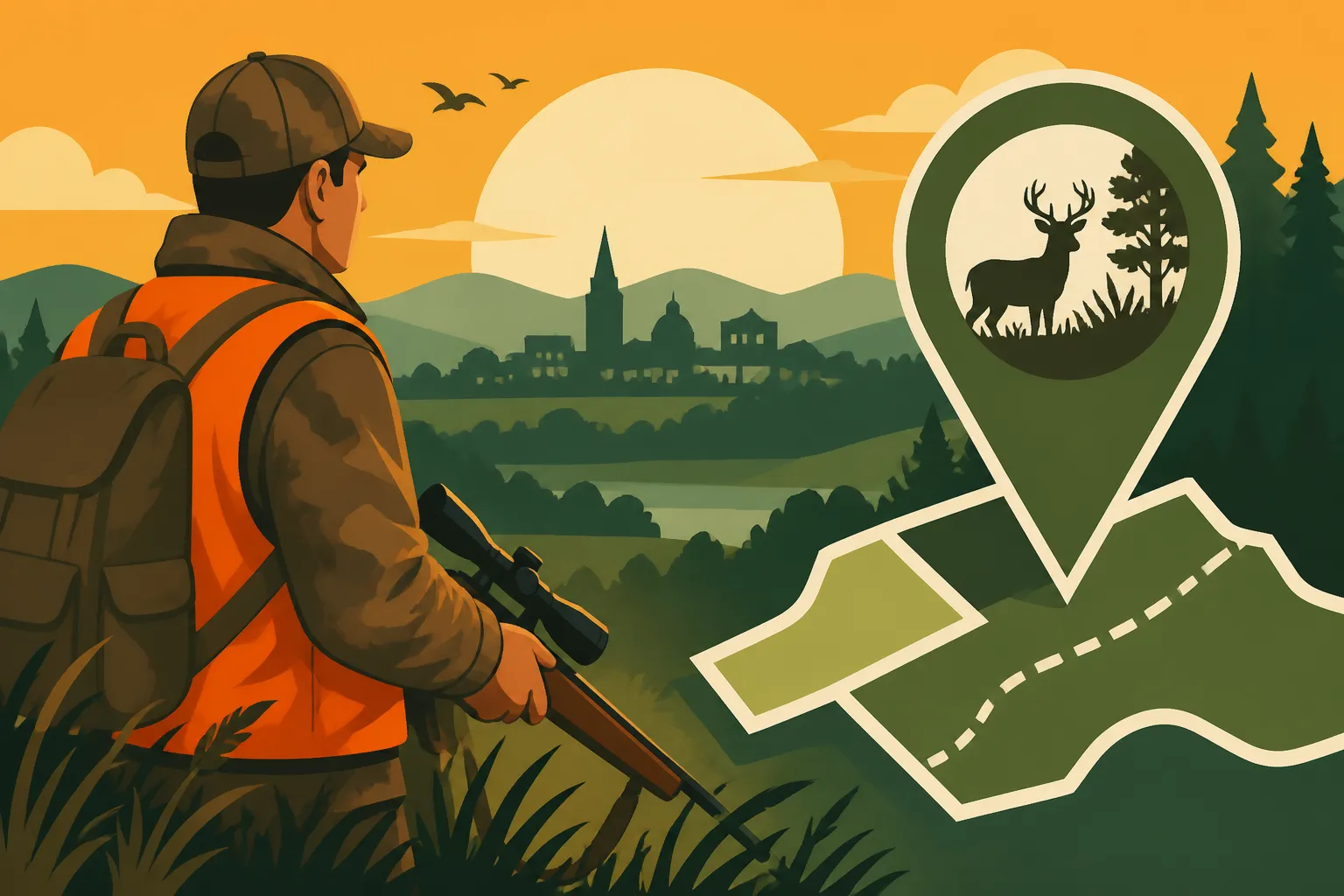
Modern mapping applications have revolutionized how hunters find and manage access, particularly for public and private land. Tools like onX Hunt and GoHunt allow you to view detailed satellite imagery, topographic maps, and crucially, property lines with landowner information. This is a game-changer for identifying public land boundaries, understanding access points, and pinpointing private landowners to approach.
For instance, with onX Hunt, you can overlay public land boundaries onto satellite imagery, helping you quickly discern where national forest land ends and private property begins. When eyeing a promising block of private timber adjacent to a public area, you can easily find the landowner's name and address, making your door-knocking efforts far more efficient and targeted. These apps also let you drop pins for potential stand locations, mark sign, and track your movements, making scouting and in-season navigation much easier. Scouting Virginia Public Land Before Season becomes a much more informed process when you can analyze terrain features and property ownership from your couch before ever stepping foot in the woods.
Pre-Season Scouting and Community Engagement
Regardless of whether you're targeting public or private land, pre-season scouting is paramount. For public land, this means physically exploring areas you've identified on your maps, looking for fresh sign, rubs, scrapes, and bedding areas. Pay attention to natural funnels and pinch points that deer use. Reading Aerial Photos for Piedmont Deer can give you a head start, but boots on the ground confirm those theories.
For private land, scouting often goes hand-in-hand with building community relationships. Attending local festivals, visiting feed stores, or even just chatting with folks at rural gas stations can provide invaluable leads. Locals know who owns what land, who might be open to hunters, and where the game typically hangs out. Being an active, positive presence in the rural communities surrounding Lynchburg not only expands your network but also builds trust, which is currency when seeking hunting permission. Sometimes, simply offering to help a farmer with a small task can open doors you never expected.
Understanding Local Regulations and Special Zones
Hunting near a city like Lynchburg brings with it a specific set of regulations and considerations that hunters must be aware of. Virginia's hunting laws are comprehensive, and local ordinances can add another layer of complexity, especially when it comes to firearms discharge or specific hunting methods.
Navigating Urban Archery Zones
Lynchburg, like many Virginia cities, participates in the Urban Archery Season. This special season typically runs before and after the general statewide archery season, often extending into January. It's specifically designed to help manage deer populations within city limits and densely populated suburban areas where firearm hunting isn't feasible or safe. Virginia Urban Archery Opening Day offers extended opportunities.
Hunting in an Urban Archery Zone comes with very specific rules. You'll need to confirm if your target area is indeed designated as an Urban Archery Zone by the DWR and the city of Lynchburg. Often, specific permits from the locality are required in addition to your state hunting license. Landowners must grant explicit permission, and strict setbacks from dwellings, roads, and property lines are enforced. It's a fantastic opportunity to hunt close to home, but due diligence on all local ordinances is crucial. Hunting a Virginia Urban Archery Zone can be incredibly rewarding, but it demands meticulous planning and adherence to safety.
Local Ordinances and Safety Considerations
Beyond state regulations, hunters operating near Lynchburg must be mindful of local county and city ordinances regarding firearms, archery equipment, and hunting activities. These can vary significantly from one jurisdiction to another, even for adjacent properties. For example, some counties might have stricter rules on discharging firearms near occupied dwellings or roads than the state minimum. Always check with the local sheriff's office or city administrative offices for any additional restrictions that might apply to your specific hunting location.
Safety is paramount, especially in areas with increased human population density. Always know your target and what lies beyond it. Use maps to identify nearby houses, trails, or roads that might not be visible from your stand. Blaze orange requirements are designed for hunter safety, and adhering to them is non-negotiable during applicable seasons. Even when not legally required (like during certain archery seasons), wearing a blaze orange vest when walking in and out of your hunting spot can significantly increase your visibility to other outdoor enthusiasts or landowners. Being a visible, responsible hunter helps maintain a positive image for our sport in these more populated areas.
| Public Land Type | Typical Accessibility Near Lynchburg | Key Characteristics | Best for (Primary Game) | Challenges |
|---|---|---|---|---|
| Wildlife Management Areas (WMAs) | Moderate (30-60 min drive) | Managed habitat, diverse cover, often has fields & water, WMA permit needed | Deer, Turkey, Small Game, Waterfowl | Can experience high pressure, specific WMA rules apply |
| Jefferson National Forest | High (adjacent to Lynchburg) | Vast, rugged, natural habitat, less managed, remote opportunities | Deer, Bear, Turkey | Difficult terrain, extensive scouting required, less game density |
| Urban Archery Zones | High (within city limits) | Private land only, specific extended season, strict local rules | Deer (antlerless often emphasized) | Permission difficult, intense regulations, high visibility |
Making the Most of Limited Access and Resources
Let's face it, not everyone has unlimited time or resources to find the perfect hunting spot. For hunters near Lynchburg, it often comes down to making the most of what's available and adapting your strategies to fit tighter constraints. This might mean unconventional approaches or a renewed focus on fundamental skills.
Small Tract Hunting Strategies
Many of the private land opportunities near Lynchburg might be smaller woodlots, creek bottoms, or field edges rather than vast, unbroken tracts. Don't discount these smaller parcels! Deer, especially mature bucks, often use small, overlooked pockets of cover as sanctuaries, particularly if they are surrounded by residential areas or heavy human activity. These spots can offer incredible hunting if approached correctly.
When hunting small tracts, scent control is even more critical. Your entry and exit routes must be meticulously planned to avoid alerting game. Consider Working a Creek Bottom for Late-Season Deer or Hunting a Clear-Cut Regrowth Edge as examples. Ground blinds can be highly effective in these smaller areas, allowing you to set up quickly and adapt to changing conditions without disturbing the area as much as a fixed stand. Focus on ambush points like natural funnels between bedding and feeding areas, or transition zones. Remember, deer might only pass through these small parcels for short periods, so your timing needs to be precise.
Building a Local Hunting Network
Perhaps one of the most underrated strategies for finding access near a city is to build a strong local network of fellow hunters and landowners. Word of mouth is incredibly powerful in rural communities. By connecting with others who share your passion, you might learn about new public land opportunities, discover landowners who are open to hunters, or even find hunting club openings.
Participate in local conservation efforts, attend DWR public meetings, or simply strike up conversations at sporting goods stores. These connections can lead to unexpected opportunities, whether it's an invitation to hunt a small private parcel, tips on less-pressured public land, or a chance to join a deer drive on a larger tract. Remember, these networks are built on trust and reciprocity, so always be willing to share knowledge, help out, and maintain good ethical hunting practices. It’s also a great way to stay informed about local deer herd health, acorn crop predictions, or Why the Piedmont Grows Older Bucks.
Disclaimer
This article is for general informational purposes only and does not constitute professional advice. Laws, prices and regulations vary by location and change over time. Consult a qualified professional for guidance on your specific situation.