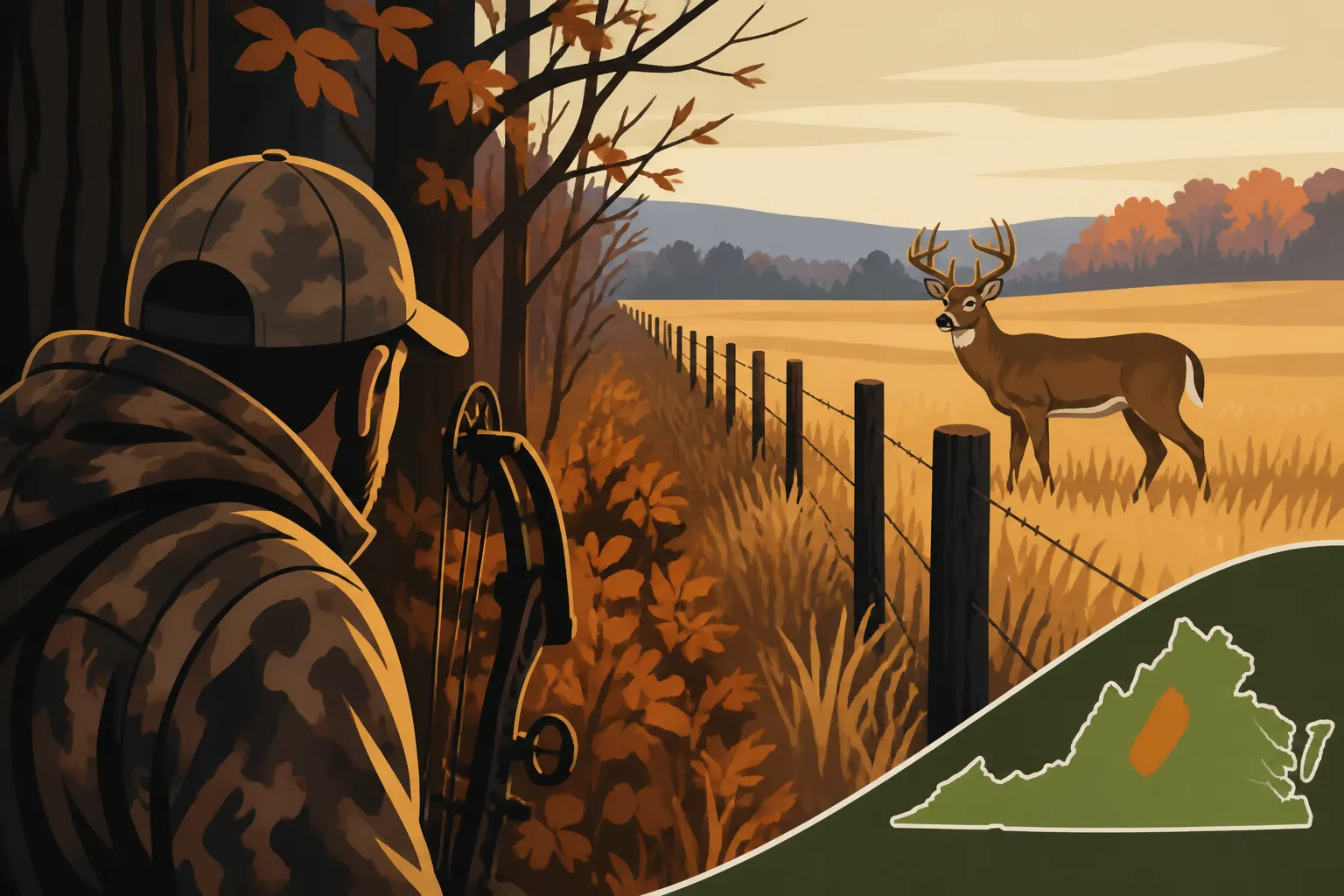
Working a Fencerow for Late-Season Deer
The late season in Virginia can feel like a whole different ballgame compared to the early months. Deer are hyper-aware, food sources are dwindling, and the chill of winter makes many hunters question their resolve. But don't despair – those neglected fencerows that might have seemed insignificant earlier in the year can transform into absolute deer magnets when the chips are down, offering crucial cover, food, and safe travel corridors. This guide will walk you through exactly how to identify, scout, and effectively hunt these often-overlooked late-season havens, giving you a real advantage when other spots run dry.
Why Fencerows Are Late-Season Deer Magnets
When the leaves are off the trees and snow blankets the ground, a deer's priorities shift dramatically. Survival becomes the number one goal, and that means finding secure cover, consistent food, and safe ways to move between the two. Fencerows, those often-wild strips of tangled vegetation marking property lines or old field divisions, offer all three in spades.
The Allure of Natural Cover and Security
In December and January, thermal cover is gold for deer. A mature hardwood forest, while beautiful, doesn't offer much protection from biting winds or falling snow once the canopy is bare. Fencerows, however, are usually dense, diverse strips of vegetation, often packed with evergreens like cedars, hollies, and pines, alongside thick undergrowth of multiflora rose, greenbrier, and honeysuckle. This creates a thick, multi-layered barrier that traps warmth and blocks wind, providing deer with a comfortable place to bed down out of the elements.
Imagine a frigid January morning, the wind whipping across a wide-open field. A deer caught out in that would be expending precious energy just to stay warm. But tucked away in a dense fencerow, especially one with a southern exposure that catches the low winter sun, they can conserve energy. This makes them less likely to move during daylight hours unless pressured, but also means they are in those fencerows, waiting for the cover of darkness or a perceived opportunity to feed. This type of habitat also provides visual security, allowing deer to move between larger woodlots, bedding areas, and feeding grounds without feeling exposed to predators, including us hunters. They feel safe when they can duck into that tangled mess and disappear instantly.
Hidden Food Sources and Browse
Beyond thermal cover, fencerows often hold overlooked food sources that become incredibly important in the lean months. While the acorn crop might be long gone from the main timber stands, certain oak species, especially pin oaks or willow oaks, might still hold onto some acorns within the protected confines of a fencerow. You might also find scattered persimmon trees or wild grapevines, whose fruits become critical late-season calories.
However, the real secret weapon of many fencerows is the persistent browse. Plants like honeysuckle, multiflora rose, greenbrier, and young cedar or pine growth offer palatable forage that remains available even under a blanket of snow. Deer will actively seek out these browse lines, nibbling on tender shoots and leaves. If a fencerow runs adjacent to an agricultural field that held corn or soybeans, deer will also use the safety of the fencerow to stage before slipping into the field to pick through fallen grain. Even small amounts of leftover crops can be a huge draw, and deer will work hard to get at them under the cover of the fencerow. When you're Hunting After a Cold Front, these calorie-rich pockets become even more vital for deer trying to recover.
Natural Travel Corridors and Funnels
Perhaps the most critical function of a fencerow in the late season is its role as a natural travel corridor and funnel. These linear strips of cover often connect larger woodlots, isolated timber pockets, or bedding areas to feeding grounds. Deer, being creatures of habit and security, will almost always choose to travel under the protection of a fencerow rather than expose themselves in an open field or thin woods.
Think of it like a natural highway system for deer. A fencerow running between a thick cedar swamp (bedding) and a harvested cornfield (feeding) becomes a high-traffic zone, especially during low-light hours. They are also natural funnels, forcing deer movement into predictable pathways. If a fencerow narrows down or crosses a drain, it creates a pinch point where deer are almost guaranteed to pass through. Understanding these natural travel routes is paramount for effective stand placement or still-hunting. Many hunters neglect these seemingly small features, but a tool like the GoHunt app can really highlight these linear features on an aerial map, helping you identify potential travel routes between larger blocks of cover or food sources before you even set foot in the woods. This is an excellent way to apply concepts from Scouting Virginia Public Land Before Season to a very specific habitat type.
Deciphering Deer Sign in Fencerow Environments
Just like any other hunting ground, reading the sign is crucial when you're focusing on fencerows. However, the nature of these narrow, tangled habitats means the sign can be concentrated and sometimes a bit harder to interpret at first glance. You'll need to look closely for the subtle clues deer leave behind.
Tracks, Trails, and Well-Worn Paths
The most obvious and often most telling sign in a fencerow will be tracks and trails. Because fencerows are linear and often have softer ground from accumulated leaves or moisture, deer tend to create well-defined paths. Look for multiple sets of tracks, indicating consistent travel. After a fresh snow, these paths become illuminated, clearly showing the direction and frequency of deer movement. Pay close attention to where these trails enter and exit the fencerow. Do they lead into a field? Into a dense woodlot? These entry and exit points are critical ambush locations.
Also, notice the size and freshness of the tracks. Large, deep tracks could indicate a mature buck. Tracks that are clear and sharp, especially with crisp edges after a thaw or rain, mean very recent activity. You might even see where a deer paused to browse, leaving distinct footprints in a particular spot. In a fencerow running along a field edge, you'll often see distinct trails where deer skirt the edge of the field under the cover of the fencerow, providing a perfect opportunity for observation from a well-placed blind or stand.
Rubs, Scrapes, and Residual Rut Activity
While the primary rut might be a distant memory in the late season, it's not uncommon to find residual sign. Bucks, especially mature ones, will often revisit scrapes or make new rubs out of frustration or to mark their territory, even in December or January. In fencerows, these rubs and scrapes tend to be concentrated. Look for rubs on small saplings or brushy growth within the fencerow itself. These indicate a buck moving along that specific line. A small mock scrape might even pull a curious buck to investigate, though this is less common than during the peak rut.
These rub lines aren't just from recent activity; they can also be indicators of consistent travel patterns over time. A cluster of old rubs tells you that bucks frequently use this fencerow as a travel corridor. While you're not likely to call a buck in with aggressive Rattling and Grunting in Virginia in late season, understanding these travel patterns from previous sign helps confirm the fencerow's value as a deer highway.
Bedding Areas and Daylighting Deer
Fencerows are prime spots for late-season bedding, especially in areas with dense cover. Deer will often bed right inside the thickest part of a fencerow, particularly where it offers protection from the wind or direct sunlight. Look for flattened grass or leaves, often with fresh droppings or urine nearby. On a cold, sunny day, deer will seek out the south-facing side of a fencerow to soak up what little warmth the sun provides.
Identifying these bedding areas is key, but you must approach them with extreme caution. Bumping deer out of their late-season beds can make them even more nocturnal and wary. Instead, try to locate these beds from a distance using binoculars or by circling downwind and outside the fencerow without disturbing it. Understanding where deer are bedding during daylight hours will allow you to plan your approach and stand placement to intercept them as they leave for feeding or as they move between different cover types. When Reading Aerial Photos for Piedmont Deer, look for isolated, dense linear features—these are often prime fencerow bedding spots.
Strategic Hunting Approaches for Virginia Fencerows
Hunting fencerows effectively in the late season requires a nuanced approach, combining stealth, careful planning, and sometimes, the willingness to adapt your methods. These aren't always easy places to hunt due to their linear nature and often limited sightlines, but with the right strategy, they can be incredibly productive.
Stealthy Still-Hunting and Ground Ambush
One of the most effective ways to hunt fencerows is by still-hunting them slowly and deliberately. This method involves moving at a snail's pace, taking a few steps, then stopping to scan for movement. Use the dense vegetation of the fencerow itself as your cover, blending into the shadows and tangles. You'll want to move into the wind, or at least with a crosswind, to minimize your scent dispersal. Because fencerows are often narrow, your shooting lanes might be limited, so practicing quick, quiet shot acquisition is important.
Alternatively, you can set up a ground ambush. This works particularly well if you've identified a specific pinch point, a well-used trail crossing, or an entry/exit point to a feeding area within the fencerow. A portable ground blind can be an excellent option for staying hidden, especially if the fencerow lacks suitable trees for a treestand. When Using a Ground Blind on Virginia Public Land, remember to brush it in thoroughly to break up its outline. The key with a ground ambush is patience and scent control, as deer will be passing very close to your position.
Precision Stand Placement for Overlooking Travel
If you prefer elevated hunting, careful stand placement is critical. Look for a robust tree within or immediately adjacent to the fencerow that offers a good vantage point over a main deer trail or a crossing. You'll want to choose a spot that gives you decent shooting lanes without compromising your cover. In late season, with less foliage, your silhouette can be easily picked out, so a leafy camouflage pattern and careful positioning are essential.
Consider the prevailing wind direction and how it might swirl along the linear feature of the fencerow. Deer often travel with the wind in their face, using their noses to detect danger ahead. This means you'll typically want to set your stand downwind of their expected approach, or at least on a crosswind to minimize detection. Pay attention to how the fencerow interacts with terrain features. A stand overlooking a fencerow that funnels deer down into a creek bottom or up over a small rise can be incredibly effective. Remember to plan your entry and exit routes meticulously to avoid disturbing the fencerow before or after your hunt. Consider trying a Cold-Weather Sitting Strategy in the Mountains and adapting it to a fencerow setup for extended comfort and patience.
Executing Effective Deer Drives in Narrow Cover
Fencerows are absolutely ideal for small-group deer drives, especially when deer are holding tight in thick cover. If you have two to four hunters, you can often push deer out of a long fencerow and towards waiting blockers. The linear nature of a fencerow funnels deer into predictable escape routes, making drives more manageable and safer than in large timber blocks.
Here's how it generally works:
- Blockers (Standers): Position one or two hunters quietly at the downwind end of the fencerow, or at a logical escape point where the fencerow empties into a larger woodlot or crosses a critical travel corridor. These hunters should be hidden and ready for deer to come through.
- Pushers (Drivers): One or two hunters will slowly and quietly walk into the wind along the fencerow, working their way towards the blockers. The goal isn't to run deer out but to simply move them along. The pushers should keep an eye out for deer trying to slip out the sides or double back.
Communication is key for safety and success. Discuss your plan thoroughly before starting. Drives like these are a classic strategy for Deer Drives With Three or Four Hunters, and fencerows offer a perfect contained environment to execute them.
Essential Gear and Tactics for Fencerow Success
Hunting fencerows in the late season requires a few specific considerations regarding your gear and tactics. Deer are at their wariest, and the conditions can be unforgiving, so being prepared can make all the difference.
Optics for Spotting Movement in Dense Cover
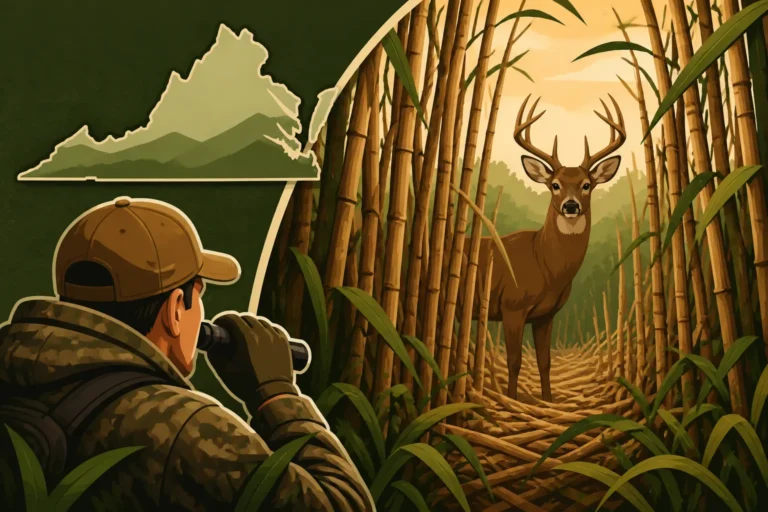
Good binoculars are non-negotiable when hunting fencerows. The dense, tangled nature of these strips means that a deer can be standing just a few yards away, perfectly camouflaged. You need quality optics to pick apart the shadows and vegetation, looking for the tell-tale horizontal line of a deer's back, a flick of an ear, or a patch of hide. An 8x or 10x magnification is usually ideal, offering a good balance of power and field of view. Scan slowly, section by section, paying close attention to any breaks in the pattern.
A rangefinder is also extremely useful, especially if you're planning to take a shot with a bow or muzzleloader where precise distance is crucial. In thick cover, judging distance can be difficult, and a quick range can confirm your shot before the deer moves off. While thermal and night vision devices are restricted for actual hunting of big game in Virginia, they can be valuable for scouting before or after legal shooting hours, helping you understand how deer utilize the fencerow without disturbing them. Companies like GoHunt provide mapping layers that can help you mark these observations and plan your hunts more effectively.
Scent Control and Quiet Movement
Deer in the late season have survived months of hunting pressure; they are masters of detection. Your scent signature is your biggest enemy. Employing a thorough scent control regimen is paramount. This includes showering with scent-free soap, washing your hunting clothes in scent-free detergent, and storing them in airtight containers. Dress in layers that allow you to manage your body temperature, preventing excessive sweating on your walk in, which can spread human odor.
When moving through or setting up in a fencerow, silence is golden. Avoid rustling leaves, breaking twigs, or scraping against branches. Choose quiet footwear that provides good traction but minimal noise. If still-hunting, take short steps, lift your feet, and place them down gently. If you are going to be sitting in a stand, pack your gear efficiently to avoid fumbling and making noise. For hunters concerned about close encounters, especially in more suburban or urban settings, incorporating Scent Control Gear for Urban Archery Hunts will serve you well in any fencerow situation.
Calls and Decoys for Drawing Attention
In the late season, aggressive calling or using elaborate decoy setups is generally less effective in fencerows. Bucks are no longer as focused on breeding, and deer are primarily concerned with survival. A loud grunt or a rattling sequence might just spook an already wary deer.
However, a subtle, soft doe bleat or a quiet grunt can sometimes elicit a response from a curious buck or a doe searching for company. Use these calls sparingly and softly. As for decoys, the dense vegetation of most fencerows makes them impractical. There's usually not enough open space for a decoy to be seen effectively, and setting one up would likely involve too much noise and disturbance. Your best bet is to rely on stealth, patience, and precise shot placement once you've located a deer.
Comparison of Fencerow Hunting Methods
| Method | Best for | Ideal Conditions | Pros | Cons |
|---|---|---|---|---|
| Still-Hunting | Active hunters | Cold, calm days; light snow; dense fencerow | Highly adaptable; covers ground; engaging | Requires extreme patience; limited sightlines |
| Ground Ambush | Known travel routes | Well-defined pinch points; near feeding areas | Excellent concealment; versatile location | Limited field of view; scent control critical |
| Treestand Sit | Overlooking crossings | Good tree cover; consistent wind; open adjacent fields | Elevated view; scent dispersal improved | Requires suitable tree; fixed location |
| Small Drive | Pushing thick cover | Small groups (2-4 hunters); predictable escape routes | Flushes deer from cover; efficient | Requires coordination; safety concerns |
Remember that each method has its place, and often, combining elements or adapting on the fly based on deer behavior and conditions will yield the best results. Always be prepared for the cold; layers of wool and synthetics, along with insulated boots, are essential for comfort and staying out longer. And after a successful hunt, knowing how to properly field dress your deer, especially in cold weather, is important for meat care. Check out Field Dressing a Deer in Cold Weather for tips on preserving your hard-earned venison.
Disclaimer
Hunting is an inherently dangerous activity. Always prioritize safety, understand and follow all Virginia Department of Wildlife Resources (DWR) regulations, and obtain proper licenses and permits. This guide is for informational purposes only and does not substitute for professional instruction or adherence to local laws. Ensure you have landowner permission if hunting private land.