Bowhunting Virginia’s Statewide Archery Season
The quiet solitude of the woods, the crisp morning air, and the intense focus required to connect with a deer using only your bow – it's a feeling unmatched by any other hunting method. But let's be honest, bowhunting in Virginia, especially during the statewide archery season, comes with its own set of challenges, from understanding the ever-changing regulations to perfecting your shot in real-world scenarios. This comprehensive guide is here to demystify the process, offering seasoned advice and practical tips to help you make the most of your Virginia bowhunting experience.
Understanding Virginia's Statewide Archery Season Framework
For many of us, the statewide archery season is the true start of deer hunting in Virginia. It's a time when we can get out into the woods before the general firearms season crowds descend, offering a unique opportunity to interact with deer in their natural, less pressured state. But before you even think about nocking an arrow, you absolutely need to grasp the rules of the game. Virginia's hunting regulations can feel like a labyrinth sometimes, with different dates, zones, and tag requirements that change year to year. Getting this right isn't just about avoiding a ticket; it's about respecting the resource and ensuring a safe, ethical hunt.
Key Dates and Regulations
The statewide archery season generally kicks off in early October, running through late November or early December, often leading directly into the muzzleloader and general firearms seasons. This early start means you're often hunting in warmer weather than later seasons, which impacts everything from what you wear to how quickly you need to process your deer. It's crucial to consult the Virginia Department of Wildlife Resources (DWR) regulations each year, as specific dates can shift. For instance, while the main season is statewide, some counties might have specific restrictions or urban archery seasons that run concurrent or have their own unique rules. You can find the exact details for the year in the DWR digest or on their website, often updated by late summer. Knowing these dates like the back of your hand is your first step to a successful season.
One common frustration is keeping up with the nuances. For example, did you know that certain areas might have special extended archery opportunities, or that particular Sundays could be open for archery hunting on private land? These aren't minor details; they can be game-changers for those of us with limited time off work. Always double-check county-specific rules, especially if you hunt near urban centers. The ability to hunt on a Sunday, even if limited, could give you a much-needed extra day in the field, making a significant difference in your chances of success. Understanding Virginia Statewide Archery Season Dates is paramount, as misinterpreting these can ruin an otherwise perfect hunt.
Licensing Requirements for Bowhunters
To legally bowhunt deer in Virginia, you'll need a valid Virginia hunting license, along with a big game license. If you're a Virginia resident, these are typically bundled, but non-residents need to pay close attention to the specific licenses required. It's not just a matter of having a piece of paper; it’s about understanding the different tiers. Are you planning to hunt only deer, or do you want to pursue other game as well? There are often combination licenses that cover multiple species, which can be more cost-effective if you plan on a diverse hunting season. Remember, your license year runs from July 1st to June 30th, so always ensure your license is current before heading afield.
Beyond the basic licenses, there might be additional stamps or permits depending on what you hunt and where. For instance, if you plan to hunt on certain Wildlife Management Areas (WMAs), an access permit might be required. While these are often more relevant to other species or methods, it's always wise to check if your intended hunting grounds have any special requirements. The DWR has made it easier than ever to purchase and carry your license digitally through their Go Outdoors Virginia platform, but always have a backup plan, like a screenshot, in case cell service is spotty in your hunting area. For a full breakdown of costs and options, check out Virginia Hunting Licenses and What They Cost.
Deer Limits and Reporting
Virginia has a somewhat complex system of deer limits, primarily divided into two regions: East of the Blue Ridge and West of the Blue Ridge. Generally, hunters in the Eastern Region have a more generous antlerless bag limit, reflecting higher deer densities, while the Western Region tends to be more restrictive. Both regions have an antlered buck limit, often two per license year, with specific rules about how many does you must take before harvesting a third antlered deer in certain zones. As a bowhunter, you have the advantage of taking antlerless deer during the entire season, which is a fantastic opportunity to fill your freezer and help with deer management.
It's absolutely critical to understand the regulations for your specific hunting zone. A common mistake is assuming that statewide means uniform limits, but that's simply not the case in Virginia. Always consult the DWR's county-specific information. Once you've harvested a deer, the reporting requirements are non-negotiable. You must report your kill through the DWR's online system, mobile app, or by phone within a specified timeframe, usually by midnight of the day of the kill. This data is vital for wildlife biologists to manage the deer herd effectively, so consider it part of your responsibility as a hunter. Failure to report can result in fines and even license suspension. For detailed information on specific limits and reporting, you can look up East Versus West of the Blue Ridge Bag Limits and Virginia Deer Reporting Requirements.
Essential Gear for Virginia Bowhunting Success
Let's face it, bowhunting is gear-intensive, and having the right equipment can make or break your season. It's not about having the most expensive stuff, but about having reliable, well-maintained gear that you trust implicitly. From your bow to your boots, every piece plays a role in your ability to be effective, ethical, and comfortable in the Virginia woods. Neglecting any aspect can lead to frustration, missed opportunities, or worse, an unrecovered animal. Investing time in selecting and preparing your gear is just as important as your scouting efforts.
Bow and Arrow Setup Considerations
Your bow is, naturally, the heart of your bowhunting setup. Whether you shoot a compound, recurve, or longbow, it needs to be perfectly tuned and matched to your arrows. For Virginia deer, most compound bowhunters are looking for a draw weight between 45-70 pounds, allowing for sufficient kinetic energy to ensure a clean pass-through. Arrow selection is equally critical; you need arrows that are spined correctly for your bow's draw weight and length, tipped with razor-sharp broadheads. Fixed-blade broadheads are reliable and robust, while mechanical broadheads can offer a larger cutting diameter upon impact, but might require more energy to deploy effectively. Practice with your chosen broadheads before the season. They often fly differently than field points, and you need to be confident in their trajectory.
Beyond the bow itself, consider your accessories. A good sight with bright pins for low-light conditions, a dependable arrow rest, and a quiet, stable quiver are all essential. Many Virginia bowhunters also find a quality stabilizer beneficial for improving accuracy and reducing bow torque. Remember, archery season often begins when it's still relatively warm, so ensure your bowstring and cables are in good condition and won't stretch or snap under pressure. For a deeper dive into choosing your setup, consider checking out Bow Draw Weight for Virginia Whitetails and Fixed Versus Mechanical Broadheads.
Optics and Rangefinding for Archery
In bowhunting, judging distance accurately is paramount. A few yards off can mean the difference between a clean kill and a frustrating miss. This is where a quality rangefinder becomes an indispensable tool. Look for one that's fast, accurate, and easy to use with one hand. Many modern rangefinders also offer angle compensation, which is incredibly helpful when shooting from a treestand or up/down steep terrain, as it calculates the "true" horizontal distance to the target. Without a rangefinder, you're guessing, and guessing is the enemy of ethical bowhunting.
Beyond rangefinding, a good pair of binoculars is essential for scouting and identifying deer. An 8x or 10x magnification is usually perfect for the relatively close-range encounters typical of bowhunting in dense Virginia woods. They allow you to discreetly observe deer movement, identify legal bucks, and confirm shot opportunities without alarming game. When choosing binoculars, prioritize clarity, light gathering capabilities for those crucial dawn and dusk hours, and durability. You don't need giant, heavy optics; something compact and waterproof is ideal for still-hunting or sitting in a stand. If you're hunting dense areas, Rangefinders Under 100 Yards might be a good specific resource.
Treestands, Saddles, and Ground Blinds
Your choice of elevated position or concealment method is crucial for bowhunting success. Treestands offer a clear line of sight, elevate your scent, and get you above a deer's primary line of vision. Virginia's varied terrain means you'll encounter everything from tall, straight pines perfect for climbers to gnarly oaks requiring hang-on stands with climbing sticks. Always prioritize safety: use a full-body harness and a lifeline every single time you leave the ground. Saddle hunting has also gained immense popularity in Virginia, offering unmatched mobility and concealment, especially on public land where you might need to move quickly and quietly. The ability to shoot 360 degrees can be a huge advantage.
For those preferring to stay on terra firma, ground blinds can be incredibly effective, particularly on field edges or in areas with limited suitable trees. Modern pop-up blinds offer excellent concealment and scent control, but remember to brush them in thoroughly to help them blend into the natural environment. Whether you choose a treestand, saddle, or ground blind, practice shooting from your chosen setup before opening day. Different angles and confined spaces can affect your shot. Remember to respect public land rules regarding stand placement and removal dates. Learn more about Treestand Setups in George Washington National Forest or Saddle Hunting in Virginia Hardwoods for specific applications.
Scouting and Locating Deer Before the Shot
You've heard it a million times: you can't shoot a deer if you don't know where it is. Scouting isn't just something you do a week before the season; it's a year-round commitment for serious bowhunters. Virginia's deer are creatures of habit, but their habits shift with food sources, pressure, and the changing seasons. Effective scouting is about piecing together the puzzle of their movement, identifying key pinch points, and understanding how they use the landscape you're hunting. It’s a lot of work, but the rewards are immeasurable.
Pre-Season Reconnaissance on Public and Private Land
Summer is for scouting. Before the leaves fully drop and the season begins, dedicate significant time to walking your intended hunting grounds. Look for old rubs from the previous year, established trails, and potential food sources. In Virginia, that could mean mast crops like acorns (white oaks, then red oaks later), persimmons, or agricultural fields like corn, soybeans, and alfalfa. Early season bowhunting often revolves around these food sources. Pay attention to water sources too, especially during warm early season days.
When scouting public land, be prepared for longer walks and more competition. Focus on finding areas that are difficult for others to access, as these often hold less pressured deer. On private land, you might have more flexibility to use trail cameras, which are invaluable for identifying specific deer, their travel patterns, and when they're most active. Always make notes, whether on a physical map or a digital mapping app. Map out potential stand locations, entry and exit routes, and predicted wind directions for those spots. A thorough pre-season scouting effort is the bedrock of a successful hunt. For tips on where to start, check out Scouting Virginia Public Land Before Season.
Reading Deer Sign: Rubs, Scrapes, and Trails
Deer leave a wealth of clues that tell a story about their lives and movements. Interpreting these signs correctly is like reading a secret language of the woods. Trails are obvious, showing common travel corridors between bedding areas, food, and water. Look for well-worn trails, especially those that funnel through thick cover or across saddles. Rubs – where bucks rub their antlers on saplings and small trees – indicate a buck's presence and aggression. While early-season rubs might not be as prevalent as during the rut, finding fresh ones can pinpoint where bucks are actively moving.
Scrapes are perhaps the most exciting sign for a bowhunter. These are patches of bare earth where bucks paw the ground, often under an overhanging branch (a "licking branch") which they rub with their preorbital glands. Scrapes are communication hubs, attracting other deer. While scrapes are most active during the pre-rut and rut, finding an early-season scrape can indicate a buck establishing his territory. Don't forget to look for droppings and bedding areas, too. Fresh droppings tell you deer are currently in the area, and bedding areas (often thick cover on south-facing slopes in winter, or shaded, cool spots in summer/early fall) show you where they rest.
Leveraging Technology for Scouting
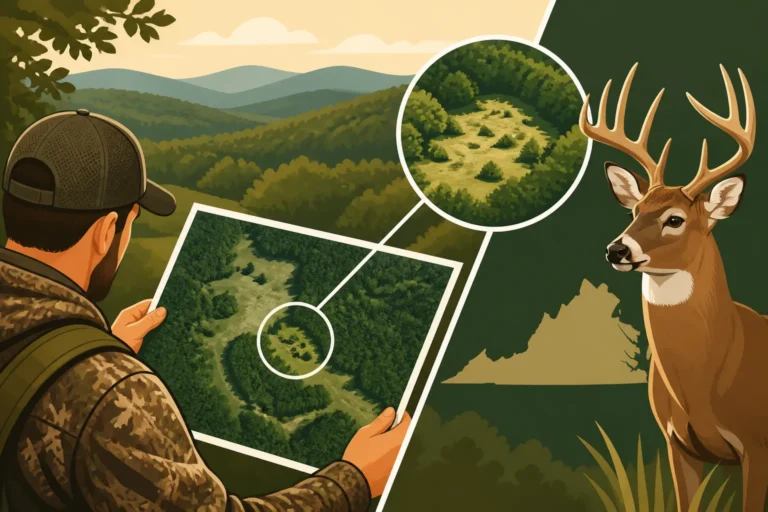
In today's bowhunting world, technology is your friend, not a crutch. Digital mapping applications like GoHunt, OnX Hunt, or BaseMap have revolutionized how we scout and navigate the woods. These apps provide detailed aerial imagery, topographical maps, property boundaries, and public/private land ownership layers directly on your phone or GPS device. You can mark waypoints for rubs, scrapes, bedding areas, stand locations, and even your entry/exit routes, making it easy to review your scouting data and plan your hunts from home. This is where a tool like GoHunt truly shines, allowing you to pour over satellite imagery and topo lines, identifying potential pinch points or overlooked thickets without ever stepping foot in the woods first.
Trail cameras are another invaluable technological tool, especially on private land or less pressured public land where rules permit. Strategically placing trail cameras along established trails, near food sources, or over mock scrapes can provide real-time intelligence on deer activity, buck size, and movement patterns. They help you determine when deer are moving (dawn, dusk, midday) and which deer are using a particular area. Just remember to check your local DWR regulations regarding trail camera use on public lands, as rules can vary. Combining digital maps with trail camera data gives you a powerful advantage in predicting deer movement.
Mastering Archery Tactics in Virginia's Diverse Terrain
Virginia is a state of incredible topographical diversity, from the towering peaks of the Blue Ridge and Allegheny Mountains to the rolling hills of the Piedmont and the flat, marshy lowlands of the Tidewater. Each region presents its own unique challenges and opportunities for the bowhunter. What works in one area might be entirely ineffective in another. Adapting your tactics to the specific terrain and habitat you're hunting is a hallmark of an experienced Virginia bowhunter.
Still-Hunting and Stalking in the Mountains
Bowhunting in Virginia's mountains – think the George Washington and Jefferson National Forests – is a physically demanding but incredibly rewarding experience. The steep slopes, dense rhododendron thickets, and expansive timber can make traditional stand hunting challenging due to unpredictable wind thermals and vast acreages. This is where still-hunting and stalking truly shine. Still-hunting involves moving slowly and deliberately through the woods, taking a few steps, pausing for several minutes to observe, and then repeating the process. It's an active form of hunting that requires immense patience and sharp senses.
Focus on terrain features like ridge lines, saddles, and benches, which deer naturally use for travel. As the season progresses and leaves fall, visibility improves, making still-hunting more feasible. Pay close attention to wind direction, as thermals in the mountains often rise in the morning and fall in the evening. When stalking, be prepared for close encounters and quick shots. Wear quiet clothing, move slowly, and use cover to your advantage. Finding specific areas like Still-Hunting Jefferson Forest Ridges can offer great insights into how to approach this challenging but rewarding method.
Hunting Piedmont Field Edges and Woodlots
The Piedmont region, with its mix of agricultural fields, mature timber, and scattered woodlots, offers a different bowhunting scenario. Deer here are often patterned around food sources, making field edges and transition areas prime spots. Early in the archery season, standing crops like soybeans or corn can be magnets for deer, providing both food and cover. Setting up a stand or ground blind on a field edge, or along a travel corridor leading to a field, can be highly effective.
Woodlots nestled within agricultural country are also key. Deer will often bed in these smaller wooded parcels during the day, venturing out to feed in the evenings. Identifying funnels – narrow strips of cover, hedgerows, or creek bottoms – that connect these bedding areas to feeding grounds is critical. Pay attention to changes in terrain, even subtle ones, like a slight dip or a fencerow, as these can concentrate deer movement. Using a ground blind on a Piedmont field edge can be a great tactic, especially with proper brushing in. For specific tactics, consider Setting Up on a Piedmont Field Edge.
Adapting to Tidewater Swamp and River Bottoms
Down in the Tidewater region, bowhunting takes on another character entirely. Think cypress swamps, river bottoms, and dense, often wet, lowland forests. Deer in these areas are masters of navigating water and thick cover. Access can be a challenge, often requiring waders, a canoe, or even a small boat. Hunting these areas demands a different approach, one focused on understanding how deer move through the water and dense vegetation.
Look for high ground within the swamps, small islands, or natural ridges that stay dry. These often serve as bedding areas or travel corridors. Oak flats near river systems can be excellent, especially during acorn drops. Stand placement might involve getting into trees that are surrounded by water, or setting up on narrow strips of dry land. Scent control is still important, but the prevailing winds are often more consistent than in the mountains. This type of hunting can be incredibly productive, as these areas often receive less hunting pressure due to the difficulty of access. Finding those hidden pockets of dry land where deer feel secure is the key to unlocking success in these challenging environments.
Ethical Shot Placement and Tracking Best Practices
As bowhunters, our responsibility to make a clean, ethical kill is paramount. Unlike rifle hunting where a larger wound channel might forgive minor errors, bowhunting demands precision. Knowing deer anatomy, understanding shot angles, and having a solid tracking plan are not just good practices; they are moral obligations. A poorly placed arrow can lead to a long, frustrating, and often unsuccessful recovery, causing undue suffering to the animal.
Anatomy and Shot Angles for Bowhunting Deer
Before you even draw your bow, you need to visualize the deer's vitals. The ideal shot for a broadside deer is through the "crease" behind the shoulder, aiming for the lungs and heart. This offers the largest margin of error and typically results in a quick, ethical kill. Avoid the shoulder blade, which is dense bone and can stop an arrow. For an angled shot, like quartering away, aim for the opposite front leg pocket, which will ensure your arrow passes through the vitals. Never take a straight-on frontal shot or a straight-on rear shot; these offer minimal vital exposure and high risk of non-lethal wounding.
Practice shooting at a 3D target that simulates real deer anatomy. Understand how a deer's vitals shift with different body positions – head down, standing alert, walking. Your shot placement should be instinctive under pressure. Know your personal limitations, both in terms of distance and shot angle. If a shot doesn't feel right, don't take it. There will always be another opportunity. Remember, a deer can duck or jump the string in the split second between your shot and the arrow's arrival, so a perfectly still, broadside animal is the ideal target.
Immediate After-Shot Protocol
The moment your arrow hits its mark, a crucial phase begins. Your immediate reaction can significantly impact recovery success. The most important rule? Stay calm. Resist the urge to immediately jump down and pursue the animal. Give the deer time to bleed out and lie down. The recommended wait time varies depending on the shot:
- Heart/Lung Shot: Wait 30 minutes to 1 hour. This allows the deer to expire and reduces the chance of bumping it.
- Liver Shot: Wait 4-6 hours, or even longer (overnight if shot in the evening). A liver shot is lethal but slower.
- Gut Shot: Wait 6-8 hours, preferably overnight. This is the toughest shot to recover from, and disturbing the deer too soon will make it run further and harder.
While waiting, mentally replay the shot. Where did the arrow hit? What was the deer's reaction? Did you see or hear it crash? Note the exact spot where the deer was standing when you shot, and the direction it ran. Use landmarks to mark the last place you saw it. If you have hunting partners, discuss the details to piece together the most accurate picture possible. Don't rush; patience here pays dividends.
Effective Blood Trailing and Recovery Techniques
After your waiting period, begin your blood trail search methodically. Mark the spot where you shot, and then the first sign of blood you find. Use flagging tape (removable, of course!) or toilet paper to mark every speck of blood, even tiny ones, and the direction of travel. This allows you to backtrack if you lose the trail and helps keep you oriented. Look for more than just blood: disturbed leaves, broken twigs, and even tracks can help guide you. If you lose the trail, circle widely in the direction of travel, looking for new signs.
If the blood trail is sparse or disappears, get on your hands and knees. Sometimes, the smallest drops can lead you to the next sign. Consider the deer's likely behavior: wounded deer often seek the path of least resistance or the thickest cover. If darkness falls before you've found the deer, it can be incredibly disheartening. But don't give up. For tips on how to approach this, refer to Blood Trailing After Dark in Virginia. A good flashlight or headlamp with different light settings (a red or green light can sometimes make blood stand out better) is essential. If you're still struggling, consider calling in a tracking dog; many services are available in Virginia that specialize in recovering wounded game.
Overcoming Common Bowhunting Challenges
Bowhunting is a game of patience, skill, and often, resilience. It's rare for everything to go perfectly, and overcoming challenges is a core part of the experience. From dealing with other hunters to navigating unpredictable weather, a successful Virginia bowhunter needs to be adaptable and mentally tough. Anticipating these hurdles and having a plan to deal with them will significantly improve your odds.
Dealing with Hunting Pressure and Spooked Deer
Virginia's statewide archery season, especially on public land, can see significant hunting pressure, particularly on weekends. Deer quickly learn to associate human presence with danger, becoming more nocturnal and seeking refuge in thick, inaccessible cover. This is a common frustration for many bowhunters. To counter this, you need to think like a pressured deer. Focus on finding those overlooked pockets of cover, often close to roads but just far enough into the nastiest terrain that most hunters won't venture. Look for steep ravines, dense swamps, or thick clear-cuts where deer feel safe.
Consider hunting during weekdays if possible, when pressure is significantly reduced. Adjust your hunting times: instead of just morning and evening, consider midday sits, as deer might move between bedding areas during the quietest parts of the day. Perfect your entry and exit routes, minimizing noise and scent. Use terrain features, creek beds, or dense vegetation to hide your approach. And if you find a highly pressured area, don't be afraid to move. There's plenty of public land in Virginia, and finding ground others walk past could be your key to success.
Weather Adaptations for Virginia Archery Season
Virginia weather can be notoriously fickle, especially in the fall. Early archery season can be surprisingly warm, sometimes even hot, making scent control a major challenge and demanding quick action on field-dressed game. As the season progresses into November, you can experience everything from mild, sunny days to cold rain, high winds, or even early snow. Being prepared for all conditions is essential for comfort and effectiveness.
For warm weather, focus on moisture-wicking base layers, light outer clothing, and impeccable scent control. Use scent-eliminating sprays, wash your clothes in scent-free detergent, and store them in airtight bags. For cold, wet weather, layering is your best friend. Start with a wicking base layer, add insulating layers (fleece or wool), and finish with a waterproof/windproof outer shell. Bring hand warmers, wear a good insulated hat, and use quality waterproof boots. A cold hunter is an uncomfortable and often ineffective hunter. Remember to protect your gear from the elements too; a wet bowstring or scope can quickly ruin a hunt. For advice on staying warm, look at Cold-Weather Sitting Strategy in the Mountains.
Mentally Preparing for the Shot and the Season
Bowhunting is as much a mental game as it is a physical one. Buck fever is real, and it can turn a perfect shot opportunity into a frustrating miss in a split second. Mental preparation begins long before the season. Practice shooting under pressure, perhaps by simulating hunting scenarios or shooting after a brisk walk to get your heart rate up. Visualize success: picture yourself making a perfect shot, observing the deer's reaction, and calmly waiting before tracking.
Beyond the shot, the entire season can be a grind. Days of no sightings, changing weather, and missed opportunities can take a toll on your morale. Embrace the process, enjoy the time in nature, and celebrate the small victories, like a successful scouting trip or a close encounter. Don't let frustration lead to poor decisions or unethical shots. Stay patient, stay persistent, and remember why you love bowhunting. The challenge is what makes the reward so sweet.
Post-Harvest Care and Venison Processing
Congratulations, you've harvested a deer with your bow! This is the culmination of all your hard work, patience, and skill. But the work isn't over. Proper post-harvest care is crucial to ensuring you get the best possible table fare from your deer. Neglecting these steps can lead to spoiled meat, a heartbreaking waste of a valuable resource, and a disservice to the animal. Handling venison correctly is an essential part of the ethical hunting process.
Field Dressing and Initial Meat Care in the Field
As soon as you find your deer, the clock starts ticking, especially during the warmer early archery season. Rapid cooling of the carcass is paramount. Field dressing – removing the internal organs – is the first critical step. This quickly removes a significant source of heat and bacteria from the body cavity. Be clean, be efficient, and avoid puncturing the gut if possible. Once field-dressed, prop open the body cavity with a stick to allow air circulation.
If it's a warm day, consider immediately packing the cavity with ice or snow (if available) to accelerate cooling. If you have a long drag or carry ahead, especially in remote areas, you might consider the "gutless method" where you bone out the deer in the field, leaving the gut pile behind, and pack out the quarters and backstraps in game bags. This dramatically reduces weight and helps cool the meat faster. For tips on handling game in warm weather, check out Coolers and Game Bags for Early Archery. Having a sharp, reliable field dressing knife is essential.
Transporting Your Harvest and Reporting
Once field-dressed and cooled as much as possible, you need to get your deer out of the woods and home. For many Virginia bowhunters, this means a long drag out of public land or a quick haul on a deer cart across a private farm. If dragging, consider using a deer sled or a specialized game cart to make the job easier and cleaner, especially over long distances or rough terrain. If you're hunting in particularly rugged mountain country, a pack frame might be necessary for boned-out meat.
Upon arrival at your vehicle or home, make sure your deer is properly tagged with your harvest information as required by DWR. Remember that critical reporting step! You must report your deer within the specified timeframe, typically by midnight on the day of the kill. This can be done online, via the DWR mobile app, or by phone. This reporting ensures that the DWR has accurate data on harvest numbers, which helps them manage the herd for future generations of hunters.
Butchering and Preserving Your Hard-Earned Venison
Now for the best part: turning your harvest into delicious, healthy food! You have a few options for butchering. You can take your deer to a local deer processor, many of whom offer a variety of cuts, sausages, and specialty items. This is a convenient option if you're short on time or don't have the space or equipment. If you prefer to do it yourself, dedicate a clean, cool space. A garage or a dedicated butchering area is ideal. You'll need sharp knives, a cutting board, and vacuum sealer or freezer paper.
Break the deer down into primals, then into individual cuts like roasts, steaks, and grind meat. Proper packaging is key to preventing freezer burn. Vacuum sealing is the gold standard for preserving venison quality for long periods. Label all your packages with the cut and date. Enjoy the fruits of your labor throughout the year! From backstrap steaks to delicious venison chili, your freezer will be stocked with lean, organic protein.
| Season Phase | Key Focus & Tactics | Essential Gear (Bowhunting) | Important Considerations |
|---|---|---|---|
| Early Archery | Food sources (acorns, persimmons, agriculture), water | Scent control, light layers, rangefinder | Warm weather, quick field dressing, hydrate |
| Mid-Season | Transition areas, beginning of scrapes/rubs, bedding | Treestand/saddle, binoculars, quiet clothing | Variable weather, increased deer movement |
| Late Archery | Secondary rut, secure bedding, limited food sources | Warm layers, insulated boots, calls (grunt/rattle) | Colder weather, deer often pressured, look for new sign |
Disclaimer
Hunting is an activity with inherent risks. This guide provides general information and recommendations for bowhunting in Virginia's statewide archery season. Regulations and conditions can change. Always consult the most current Virginia Department of Wildlife Resources (DWR) regulations before engaging in any hunting activity. Safety should always be your top priority. Ensure you are properly trained, licensed, and adhere to all local, state, and federal laws. The author and publisher are not responsible for any accidents, injuries, or legal issues that may arise from the use of this information.