Pulaski County Public Land for Deer
Hunting public land for deer in a county like Pulaski can feel like a real puzzle, with sprawling private tracts and often fragmented public access points. It’s easy to get discouraged when you’re scouting, wondering if you'll ever find a spot that consistently holds deer away from the crowds. But trust me, with the right knowledge and a bit of persistence, Pulaski County offers some fantastic opportunities for dedicated deer hunters. This guide is designed to help you pinpoint those productive public areas and employ strategies that actually work in this corner of the Old Dominion.
Understanding Pulaski County's Deer Habitat and Public Access
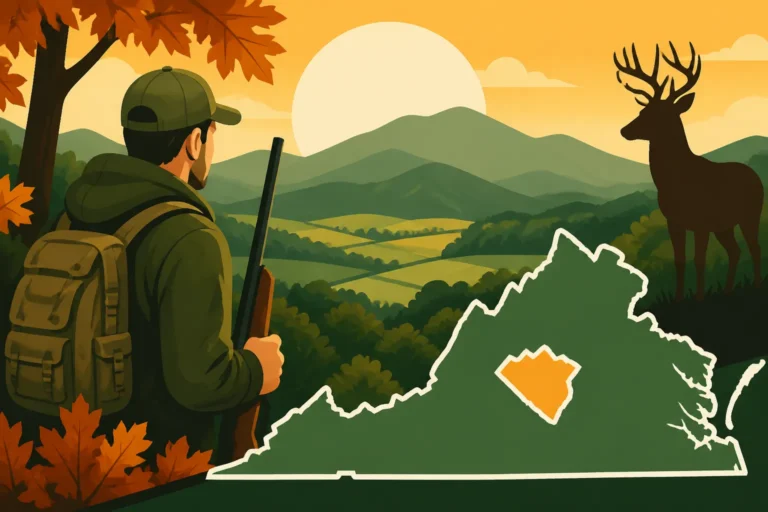
Pulaski County, nestled in Virginia's scenic Southwest, presents a unique blend of geography that influences deer movement and hunting strategies. You've got rolling hills, dense timber, agricultural fringes, and the New River winding through it all. This varied terrain means deer behavior isn't uniform; what works on a ridge top might be useless in a bottomland. The biggest challenge for many public land hunters is simply finding enough contiguous public land to hunt effectively, without constantly worrying about crossing property lines.
Geographic Features and Deer Behavior
The landscape in Pulaski County plays a huge role in how deer live and move. On the western side, you start to see more mountainous terrain, typical of the Jefferson National Forest areas that border the county. Here, deer will key into elevation changes, benches, saddles, and thick bedding cover on steep slopes. Food sources will shift seasonally, from acorns and other mast crops in the fall to browse in the winter. As you move east, the land can flatten out more, becoming a mix of smaller woodlots, creek bottoms, and agricultural fields. In these areas, deer often use fencerows, small drainages, and thickets along field edges as travel corridors and bedding cover. Understanding these subtle shifts is your first step to success. Deer are creatures of habit, and their habits are dictated by their surroundings.
The Mix of Public and Private Land
One of the real frustrations of hunting many Virginia counties, including Pulaski, is the checkerboard pattern of public and private land. You might find a promising patch of public woods, only to discover it's surrounded by posted property, limiting your access or how far you can track a deer. This is where diligent scouting and good mapping tools come into play. A landowner may have timbered a parcel, creating thick new growth that deer love, but if it's not accessible, it does you no good. Knowing where these boundaries lie is absolutely critical. Virginia Trespass and Permission Law is something every hunter should be familiar with before heading afield.
Key Public Hunting Areas in Pulaski County
While Pulaski County doesn't boast massive, unbroken swaths of public land like some mountain counties, it does offer access through various channels. Your primary targets will be portions of the Jefferson National Forest and any state Wildlife Management Areas (WMAs) that might be within or bordering the county. It's often about finding those hidden corners that other hunters overlook.
Jefferson National Forest Tracts
The Jefferson National Forest offers the largest chunks of public land in or around Pulaski. While not all of Pulaski County falls directly within the national forest boundaries, adjacent counties like Bland, Wythe, and Montgomery certainly do, offering more extensive wilderness hunting. For areas within Pulaski that might be part of the Jefferson, you're often looking at more fragmented sections or land that might be a bit of a drive. These areas are characterized by mature timber, steep ridges, and deep hollows.
Deer in the national forest rely heavily on natural food sources like acorns, hickory nuts, and various browse. During the rut, bucks will often cruise ridge tops and saddles looking for does. Hunting West of the Blue Ridge often means dealing with significant elevation changes and tough access, so be prepared for a real workout. Always check the specific ranger district maps, which you can often find online or at local DWR offices, to confirm public access points and boundaries.
State Wildlife Management Areas (WMAs)
Virginia's Department of Wildlife Resources (DWR) manages a network of Wildlife Management Areas (WMAs) across the state. While Pulaski County itself may not have a major WMA, several are located within reasonable driving distance in neighboring counties, such as the Claytor Lake WMA (partially in Pulaski, but often focused on water access) or areas in Montgomery County. WMAs are typically managed for wildlife habitat, often resulting in good deer populations. They might feature a mix of timber, old fields, and planted food plots.
Access to WMAs often requires a valid Virginia hunting license and sometimes a separate WMA access permit. It's crucial to check the DWR website or the Go Outdoors Virginia portal for specific WMA regulations, as they can sometimes differ from statewide rules regarding hunter orange, special seasons, or allowable weapons. These areas can be popular, especially during opening weekends, so Hunting Pressure on Virginia Public Land is a definite consideration.
Here’s a quick overview of public land considerations:
| Feature | Jefferson National Forest | Wildlife Management Area (WMA) |
|---|---|---|
| Typical Size | Very large, contiguous tracts | Smaller to medium-sized, managed plots |
| Terrain | Often steep, rugged, mature timber, deep hollows | Varied: timber, fields, brush, often less extreme topography |
| Deer Density | Can be lower overall, but pockets of high density | Often higher due to active habitat management |
| Hunter Pressure | Varies; can be very low in remote areas, moderate at access points | Can be high, especially early season and weekends |
| Key Challenge | Access, steep terrain, finding concentrated deer | Hunter competition, smaller area to roam |
| Food Sources | Natural mast (acorns), browse | Natural mast, browse, planted food plots, agricultural edges |
| Permits | General hunting license | General hunting license, sometimes WMA access permit |
Effective Deer Hunting Strategies for Pulaski's Public Lands
Hunting public land in Pulaski County requires a blend of adaptability and perseverance. You can't just walk into the first woods you see and expect success. It demands thoughtful scouting, smart stand placement, and often, a willingness to work harder than the next guy.
Strategic Scouting and Stand Placement
Before the season even begins, you need to be out there, putting boots on the ground. This is where tools like onX Hunt or GoHunt truly shine. They allow you to study satellite imagery, identify property lines, and mark potential hotspots from your couch. Look for pinch points, saddles, benches, and thick cover that deer will use for bedding or travel. Scouting Virginia Public Land Before Season is invaluable.
When you're actually in the woods, focus on finding fresh sign: rubs, scrapes, tracks, and droppings. In the national forest, look for heavily used trails along contours or leading up to a ridge-top saddle. For WMAs, scout the edges of thickets, old clear-cuts, or transition zones between different habitat types. Pay close attention to wind direction and thermals, especially in hilly terrain. A good stand location isn't just about where you see deer sign, but where you can approach undetected and have the wind in your favor. Reading a Ridge for Blue Ridge Deer is a critical skill here.
Adapting to Different Seasons
Deer behavior changes drastically throughout the hunting season, and your tactics need to change with it.
- Early Archery Season: During September and early October, deer are still often on a fairly consistent pattern, moving between bedding areas and food sources. Focus on food plots (if available on WMAs), transition lines, or oak flats where acorns are dropping. Because it's often warmer, thermal hubs and cool creek bottoms can be productive. Scent control is paramount.
- The Rut: Late October through November is prime time. Bucks are on the move, looking for does. Focus on travel corridors, ridge saddles, and thick bedding areas where does congregate. Rattling and grunting can be very effective during this period. Hunting the Rut West of the Blue Ridge will often involve covering a lot of ground.
- Late Season (Muzzleloader/Firearms): Once gun seasons have opened and the primary rut winds down, deer become warier. They'll often shift to thick cover during the day and only move to food sources under the cover of darkness. Focus on overlooked thickets, deep hollows, or Late-Season Food Sources for Virginia Whitetails like standing corn or persistent browse. Cold-weather sitting strategy becomes key.
Minimizing Hunter Pressure Impact
Public lands can draw a crowd, especially on opening days or during peak rut. To consistently find deer, you need to be willing to go where others won't. This often means walking further, climbing steeper, or tackling thicker cover.
- Walk Deeper: Many hunters won't venture more than a quarter-mile from the road. Go a half-mile, a mile, or even further. The deer will be there.
- Hunt Mid-Week: If your schedule allows, hunting on weekdays can drastically reduce the number of other hunters you encounter.
- Find Overlooked Cover: Look for areas that are difficult to access, either due to topography (steep ravines, dense laurel thickets) or natural barriers (creeks, swamps). Deer will often use these as refuges. Don't be afraid to put on your rubber boots and get a little wet.
- Utilize Ground Blinds: In areas with heavy pressure, deer often become very sensitive to vertical human forms in trees. Using a Ground Blind on Virginia Public Land can allow you to hunt thick cover more effectively without skyline yourself.
Planning Your Hunt and Overcoming Challenges
A successful public land hunt in Pulaski County isn't just about knowing where to go or what tactics to use; it's about meticulous planning and being prepared for the unexpected. From legal requirements to post-shot recovery, every step needs consideration.
Navigating Regulations and Reporting
Virginia has specific regulations that hunters must follow, and these can sometimes vary slightly by county or management area. Always review the Virginia DWR regulations summary before your hunt. This includes understanding Virginia Big Game License Requirements, blaze orange rules (How Much Blaze Orange Virginia Requires), and weapon restrictions.
Once you've harvested a deer, proper reporting is mandatory. You can typically report your deer through the DWR mobile app or online portal. The Virginia Deer Reporting Deadline is usually within 24 hours of harvest. This data is crucial for wildlife management, so doing your part helps everyone.
Gear Up for the Terrain
The varied terrain of Pulaski County demands appropriate gear. You’ll be doing a lot of walking, often uphill and through dense brush.
- Boots: Invest in comfortable, waterproof hiking boots with good ankle support. If you're near water, consider rubber boots.
- Layers: Virginia weather can be unpredictable. Dress in layers that you can add or shed as temperatures change. Wool or synthetic base layers are key for moisture wicking. Clothing for a Virginia Late Season will be different than early archery, so plan accordingly.
- Navigation: While you might think you know the area, a reliable GPS unit or a mapping app like onX Hunt or GoHunt on your phone is non-negotiable. Not only will it help you navigate, but it also clearly shows property lines, preventing accidental trespass. Always carry a physical map and compass as a backup, especially in areas with spotty cell service.
- Pack: A comfortable daypack is essential to carry water, snacks, first-aid, field dressing tools, and any extra layers. If you're hunting remote areas, consider a frame pack for potentially packing out meat.
Recovering Your Deer
Getting a deer on public land is only half the battle; recovering it can be the biggest challenge, especially in steep or thick terrain.
- Blood Trailing: Mark the location of the shot and the last place you saw the deer. Take your time, look for blood on both sides of the trail, and mark the blood trail frequently with flagging tape or toilet paper. If the trail goes cold, expand your search in circles.
- Asking for Help: If you’re struggling to find a deer, especially as darkness approaches, don't hesitate to call for help from a hunting buddy. If you’re alone and the situation is dire, you might even consider contacting local authorities for advice, although they are not typically equipped for tracking.
- Dragging and Hauling: A deer sled or a game cart can be a lifesaver for getting a deer out of the woods, especially in rough terrain. Know your physical limits; sometimes, boning out a deer and making multiple trips is the safest and most efficient method. Dragging a Deer Out of a Mountain Hollow is no easy feat and requires careful planning.
By meticulously planning your trips, understanding the unique characteristics of Pulaski County's public hunting areas, and committing to smart, adaptable strategies, you can significantly increase your odds of success. Good luck out there, and hunt safe!
Disclaimer
This article is for general informational purposes only and does not constitute professional advice. Laws, prices and regulations vary by location and change over time. Consult a qualified professional for guidance on your specific situation.