Turkey Calls Worth Carrying in Virginia
There's nothing quite like the sound of a gobbler hammering back at your call, especially when you've put in the legwork to find him. But let's be honest, standing in the Virginia woods, trying to coax a wary tom into range, can sometimes feel like you're speaking a foreign language. Hunters often get frustrated when their favorite call just isn't cutting it, or they wonder if they're even carrying the right tools for the diverse landscapes and pressured birds we encounter here. This guide is all about helping you understand the different types of turkey calls, when and where to use them in Virginia, and how to build a calling arsenal that will have you sounding more like a real hen and less like a confused woodpecker, giving you the confidence to talk to even the toughest gobblers.
Why Call Selection Matters So Much in Virginia
Hunting turkeys in Virginia isn't a one-size-fits-all endeavor. We've got everything from vast national forests and rugged mountain terrain to rolling Piedmont farmlands and dense tidewater swamps. Each of these environments, coupled with the behavior of our local birds, demands a thoughtful approach to what calls you carry and how you use them. It's not just about making noise; it's about making the right noise at the right time, in the right place.
Navigating Diverse Habitats
Think about it: the echoing ravines of the George Washington National Forest or the deep hollows of the Jefferson National Forest are vastly different from the open crop fields and hardwood bottoms of the Piedmont. A call that carries well across a wide-open field might sound completely out of place and too harsh in a tight, brushy creek bottom. Conversely, a soft, subtle call that works wonders in thick cover might never be heard by a gobbler strutting a half-mile away across a Shenandoah Valley pasture.
Your call selection needs to reflect these environmental nuances. In vast, open areas, you often need calls with more volume and projection to get a response from distant birds. But once a gobbler closes the distance and you're in tighter quarters, subtlety becomes your best friend. The type of cover also dictates how sound travels and how a turkey perceives your calls. Dense pines absorb sound differently than open hardwoods. Recognizing this is the first step to becoming a more effective caller in Virginia's varied landscapes.
Dealing with Pressured Birds
Let's face it, Virginia's turkeys are smart, and many of them have been "schooled" by hunters for years. Especially on public lands or properties with consistent hunting pressure, those gobblers aren't falling for every yelp or cut they hear. They become call-shy, wary of anything that sounds too aggressive, too perfect, or too repetitive. This pressure changes the game entirely. A loud, excited calling sequence that might work on an unpressured bird in a remote area could send a wary tom running in a heavily hunted county.
To combat this, you need a diverse set of calls that allow you to vary your pitch, tone, and volume dramatically. Sometimes, a very soft, unassuming purr or cluck is far more effective than an aggressive cutting sequence. Other times, a different voice from a different call medium can break through a gobbler's skepticism. The ability to switch between calls and calling styles is crucial for keeping these smart old toms guessing and convincing them that you're just another hen going about her business, not a hunter with a shotgun. This also ties into Decoy Placement for Pressured Virginia Birds, as the visual aspect can often complement nuanced calling.
Reading the Virginia Gobbler's Mood
Every gobbler has a personality, and their mood can change by the hour, or even by the minute. Sometimes they're hot and heavy, ready to come running to anything that sounds like a hen. Other times, they're henned-up, wary, or simply not interested in striking up a conversation. Your calling strategy needs to adapt to what the bird is telling you. A silent gobbler might just need a soft tree yelp to confirm your presence at first light, while a bird that's gobbling his head off might respond best to an aggressive series of cuts and yelps.
A good turkey hunter isn't just a good caller; they're a good listener. Are his gobblers responding weakly? Are they only gobbling on the roost and then shutting down? Are they answering your calls but not moving? These are all clues that tell you how to adjust your calling. Having a variety of calls that can produce soft, subtle sounds, as well as loud, aggressive ones, gives you the flexibility to match the gobbler's demeanor. Sometimes, even the absence of calling, combined with scouting techniques you might find in Scouting Virginia Public Land Before Season, can be the most effective strategy.
The Essential Turkey Calls for Virginia Hunters
When you're building your turkey vest arsenal for Virginia, there are a few core calls that every hunter should consider. These aren't just "nice-to-haves"; they're foundational tools that offer versatility and effectiveness across a wide range of hunting situations. Mastering these will give you a solid base from which to build more advanced techniques.
Mouth Diaphragm Calls: The Versatile Workhorse
Ah, the mouth diaphragm call. If you only carry one type of call, for many, this is it. These calls, often referred to as "diaphragm" or "mouth yelpers," are small, lightweight, and fit right in your mouth, leaving your hands free to hold your gun or bow. This hands-free advantage is huge, especially when that gobbler finally commits and is closing in. No fumbling with a pot call or box call, just pure focus on the shot.
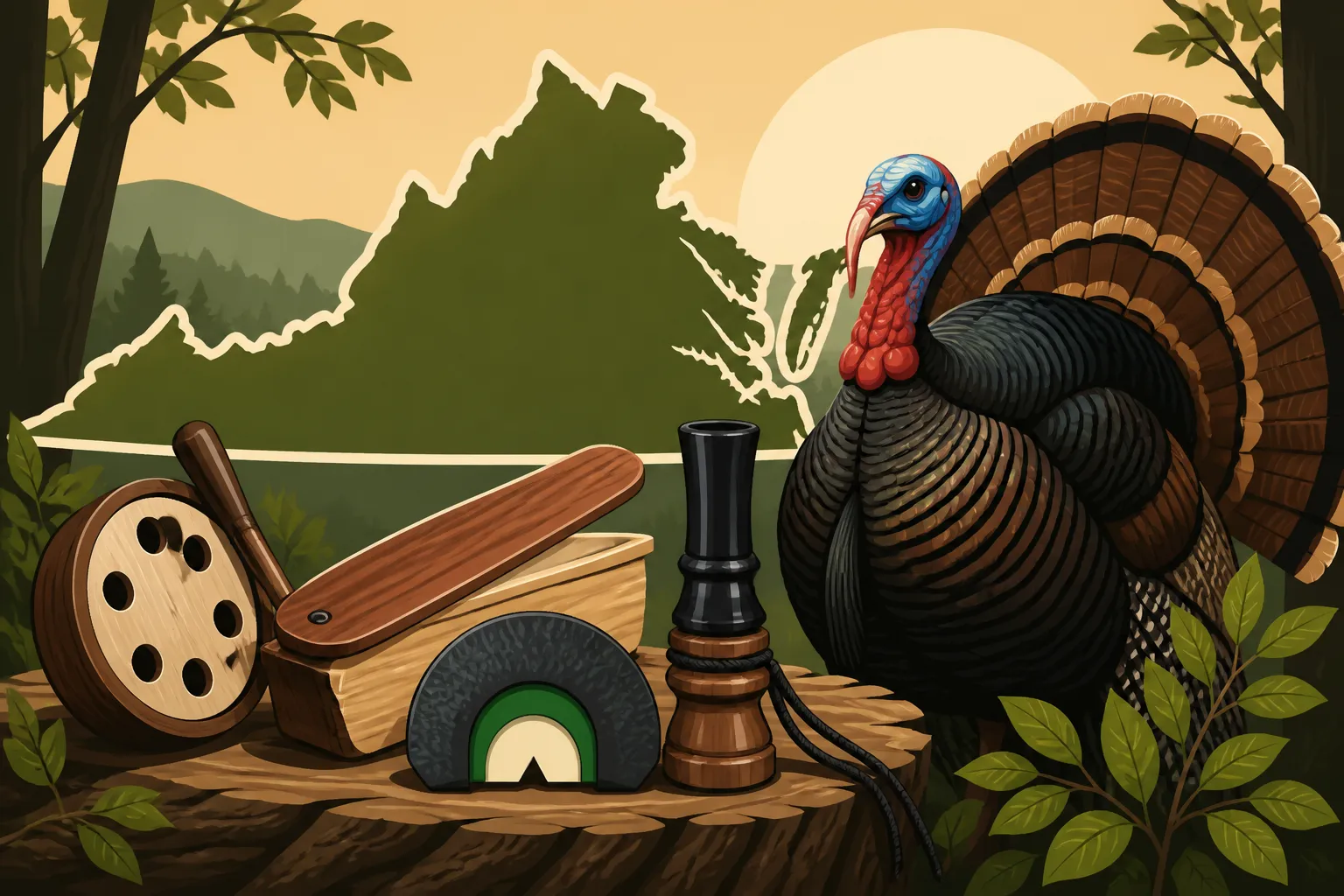
Diaphragm calls come in a vast array of reed configurations—single, double, triple, batwing, ghost cut, cutter—each designed to produce slightly different tones, pitches, and rasps. This variety allows you to mimic the full range of turkey vocalizations, from soft clucks and purrs to aggressive yelps, cuts, and even gobble imitations. With practice, you can switch between hen and gobbler sounds effortlessly, adding a realistic layer to your calling. Learning to control the air pressure and tongue position to create different sounds takes time and patience, but the payoff is immense. For Run-and-Gun Turkey Tactics on Public Land, their hands-free nature is indispensable.
Slate and Pot Calls: The Realistic All-Rounder
When it comes to producing incredibly realistic turkey sounds, it's tough to beat a good slate or pot call. These calls consist of a circular pot made of slate, glass, aluminum, crystal, or even copper, and a striker, usually made of wood, carbon, or synthetic materials. By rubbing the striker across the surface of the pot, you can create a wide range of sounds, from soft, seductive purrs and clucks to loud, piercing yelps and cuts.
What makes slate and pot calls so effective is their ability to produce highly realistic, varied tones. Each combination of pot material and striker material will create a unique sound, allowing you to have multiple "voices" in your vest. A slate surface with a wooden striker might give you a soft, raspy hen, while a glass surface with a carbon striker might produce a high-pitched, crisp yelp. They are fantastic for enticing wary birds, especially when you need subtle, convincing sounds at close range. However, they do require two hands to operate, which means you need to practice drawing your gun or bow smoothly after calling. They can be particularly effective when trying to Call a Virginia Gobbler Off the Roost as the day begins, or for working Turkey Tactics for Piedmont Field Edges where realism is key.
Box Calls: The Loud and Proud Locator
For sheer volume and ease of use, the box call reigns supreme. This classic call consists of a hollow wooden box with a lid that pivots. By running the lid across the lip of the box, you produce a loud, clear, and resonant sound that carries incredibly well through the woods. It's often the go-to call for those early morning "shock gobble" situations or for trying to locate a bird that's a long way off.
Box calls are excellent for cutting through wind and dense foliage, making them perfect for covering large areas, such as the vast tracts of the George Washington National Forest Hunting. They are also relatively easy for beginners to pick up and produce decent turkey sounds right out of the box. While they might not offer the same nuanced versatility as a diaphragm call, their ability to get a quick response from a distant gobbler is unparalleled. Just remember, like pot calls, they require two hands, so plan your calling and shooting sequence carefully. GoHunt often has articles reviewing the best box calls for different terrains, which can be super helpful for Virginia hunters looking for specific models.
Advanced and Specialty Calls for Tricky Situations
Once you've got the basics down with your diaphragms, pots, and boxes, you might find yourself wanting to expand your repertoire. There are times when a standard hen yelp just won't cut it, or you need a very specific sound to seal the deal. This is where advanced and specialty calls come into play, offering unique advantages for particular scenarios you might encounter while hunting Virginia's wild turkeys.
Locator Calls: Reaching Out Across the Ridge
Sometimes, the primary goal isn't to sound like a hen, but to provoke a gobbler into revealing his location. That's where locator calls shine. These aren't turkey calls in themselves, but rather mimic other wild animals whose sounds often make a gobbler "shock gobble" in response. Popular locator calls include owl calls (especially hooters), crow calls, and even coyote howlers.
Think about it: at first light, an owl hooting from a distant ridge might just be the trigger a sleepy gobbler needs to let out a thunderous gobble, giving away his roost tree location. Later in the day, a sharp crow caw or a coyote howl can often elicit a shock gobble from a bird that's gone silent. These calls are invaluable for Roost Hunting Virginia Gobblers or simply trying to find a bird throughout the day, particularly when you're covering a lot of ground in areas like Jefferson National Forest Hunting. They don't attract the turkey directly, but they tell you where to go next. Remember, too much of a good thing can be bad – use them sparingly and authentically to avoid making gobblers wise to your tricks.
Push-Button Calls: Simple and Effective
For those moments when you need a simple, consistent, and quick call, a push-button call can be a fantastic addition to your vest. These calls are incredibly easy to operate, often requiring just one hand and a thumb press to produce a clean yelp, cluck, or purr. They remove much of the technique required for mouth or pot calls, making them excellent for beginners or for experienced hunters who need a quick, subtle sound in a tight spot.
Push-button calls are often a favorite for their reliability. They produce consistent sounds without much effort, which can be a huge confidence booster. While they might not offer the same range of tonal variations as a skilled diaphragm caller can achieve, their simplicity is their strength. They're particularly useful when a gobbler is very close, and you need to make a subtle "lost hen" sound with minimal movement. They also work well in conjunction with other calls, allowing you to add a quick, natural-sounding cluck without breaking your rhythm on a pot call, for example.
Wing Bone and Trumpet Calls: Old School Charm
Venturing into the more traditional and challenging world of turkey calls, we find wing bone and trumpet calls. These calls are often handcrafted from the actual wing bones of a turkey or from turned wood, producing a distinct, often higher-pitched, and very realistic sound. They require a unique technique, essentially sucking air through the call to create the vibrations.
While these calls certainly have a learning curve, many seasoned hunters swear by their natural sound and the sense of satisfaction that comes from mastering them. The sounds they produce can be incredibly pure and authentic, sometimes offering a different "voice" that can pique the interest of a gobbler that has ignored every other call. Because they are less commonly used, they might present a sound that pressured birds haven't heard as often. For the dedicated Virginia hunter looking for an extra edge or just wanting to connect with the heritage of turkey hunting, adding a wing bone or trumpet call to your practice routine can be a rewarding experience.
Factors to Consider When Choosing Your Turkey Calls
Stepping into a sporting goods store or browsing online for turkey calls can feel overwhelming. There are so many options, so many brands, and everyone has a strong opinion on what's "best." But what truly matters is finding calls that work for you and for the turkeys you hunt in Virginia. It's about personal connection to the tool, reliable performance, and how it stands up to the rigors of a spring season.
Sound Quality and Authenticity
This is paramount. A call is only as good as the sounds it produces. You want calls that sound like real turkeys – not squeaky toys or generic noisemakers. When you're listening to calls, pay attention to the pitch, tone, and rasp. Does it sound throaty? Crisp? Do the yelps break over realistically? Does it have that true "hen" sound?
Different calls excel at different sounds. Some mouth calls are incredible for purrs, while others are better for aggressive cuts. A slate call might give you a softer hen, while a glass call provides a sharper edge. A quality call will allow you to produce both loud and soft notes effectively. Don't be afraid to try out calls in the store (if permitted) or listen to sound clips online. Your ears are the ultimate judge. Remember, a turkey isn't looking for perfection, but authenticity. Even a slightly off-key yelp from a real hen can be effective. This is particularly true in areas where Virginia Turkey Population Trends show a decrease, and birds might be warier.
Durability and Weather Resistance
Hunting in Virginia means dealing with all sorts of weather. Early spring mornings can be frosty, afternoons can turn into sudden downpours, and humidity can be a constant factor. Your calls need to withstand these conditions without failing. A call that sounds great but becomes useless in the rain isn't much good when a gobbler is hammering back during a spring shower.
Wooden box calls and some pot calls can be sensitive to moisture, swelling or losing their tone in high humidity or rain. Slate calls might need to be "conditioned" more frequently in wet weather. Look for calls made from weather-resistant materials, or be prepared to protect your calls. Many companies make waterproof box calls, and synthetic strikers are often more forgiving than wood in damp conditions. Diaphragm calls are generally less affected by weather but can dry out if not stored properly. A reliable call is one that you can count on, rain or shine. GoHunt often features gear reviews, including how calls hold up in various field conditions.
Hunter Skill Level and Preference
Let's be honest with ourselves: some calls are harder to master than others. A beginner might struggle to get consistent sounds from a diaphragm call, while an experienced hunter might find a simple push-button call too limiting. There's no shame in choosing calls that match your current skill level and that you enjoy using. Confidence in your calling is almost as important as the call itself.
Start with calls that feel natural to you. If a box call feels intuitive, start there. If you enjoy the hands-on control of a pot call, dedicate time to it. As you gain confidence and skill, you can gradually introduce more challenging calls like diaphragms, wing bones, or trumpet calls. The key is consistent practice. The "best" call is the one you can operate effectively and reliably in the field. Don't feel pressured to use a particular call just because others do. Your personal preference and comfort will ultimately lead to more effective calling and more enjoyable hunts.
Practicing Your Calls and Adapting to Virginia's Turkeys
Having the right calls is only half the battle; the other half is knowing how to use them, and crucially, how to adapt your calling to the specific situation and the mood of the gobblers you're pursuing in Virginia. Practice makes perfect, but informed practice makes you a better hunter. You can have the fanciest calls on the market, but if you don't know how to speak the language, those turkeys aren't going to listen.
Mastering the Basics at Home
The spring woods are not the place to be learning the fundamentals of a new call. That work needs to happen beforehand, in the comfort of your home, car, or even your backyard. Start by focusing on the basic turkey vocalizations: the yelp, the cluck, and the purr. These three sounds form the backbone of almost all turkey calling. Use instructional videos, CDs, or even better, recordings of real hens to guide your practice. Try to mimic the cadence, pitch, and duration of their calls.
Practice consistently, even if it's just for 10-15 minutes a few times a week. The goal is to build muscle memory and consistency in your sounds. Don't just make noise; listen critically to what you're producing. Record yourself and play it back to identify areas for improvement. A great resource like GoHunt can provide tutorials and articles on specific calling techniques. Getting comfortable with your calls at home builds the confidence you'll need when that moment of truth arrives in the field, whether you're trying to Call a Virginia Gobbler Off the Roost or trying to get a hang-up to commit.
Listening and Learning in the Field
While home practice is vital for technique, learning to call effectively in the field requires a different skill set: observation. Every time you're out scouting or hunting, pay close attention to the real birds. How do hens yelp when they're feeding casually? How do they cluck when they're content? What does an excited hen sound like when she's trying to find the flock? These real-world lessons are invaluable and will inform your calling strategy far better than any instruction manual alone.
Listen not only to the hens but also to the gobblers. What's their response rate? Are they gobbling on their own before you call, or do they need a locator to get started? Do they shut down after a few calls, or do they respond with enthusiasm? Understanding these nuances helps you adapt. Sometimes, the best calling is minimal calling, letting the gobbler come to you after an initial setup. Knowing when to call, how loudly to call, and when to be silent is a skill honed through countless hours of field experience. This critical listening helps you adjust your Turkey Calls Worth Carrying in Virginia to the particular situation.
Matching Calls to Conditions and Behavior
The true art of turkey calling comes from adapting your calling strategy to the specific conditions of the hunt and the behavior of the bird. This means not just what calls you use, but how you use them. For instance, in windy conditions or across open terrain, you'll need calls with more volume and projection. If you're in thick timber or a gobbler is close, softer, more subtle calls are often more effective.
The gobbler's behavior is your biggest clue. If he's gobbling aggressively, he might respond to more excited, rapid-fire cutting and yelping. If he's hung up or henned-up, a softer, almost pleading call, or even a period of silence, might be what finally convinces him to come investigate. Don't be afraid to change calls, change calling sequences, or even switch to a different 'voice' from another call type if what you're doing isn't working. Flexibility and a willingness to experiment are key. Consider the time of day too; Virginia Early Turkey Period Closing Time means you have until noon, but birds often behave differently in the late morning compared to right off the roost. The total Making the Most of a Three-Bird Season Limit often comes down to adaptability.
Virginia's diverse turkey population and hunting landscapes offer an incredible challenge and reward. By equipping yourself with a versatile array of calls – from the hands-free convenience of mouth diaphragms to the realistic tones of slate calls and the far-reaching power of box calls – and committing to consistent practice and keen observation in the field, you'll be well on your way to speaking the gobbler's language. Remember, it's about more than just making noise; it's about building a conversation that leads that old tom right into your setup.
| Call Type | Best Use Cases | Pros | Cons |
|---|---|---|---|
| Mouth Diaphragm | Close-range, hands-free, versatile sounds | Hands-free, wide range of sounds, portable | Steep learning curve, can get "blown out" |
| Slate/Pot Call | Realistic close-to-mid range, subtle sounds | Highly realistic, varied tones, easy for beginners | Requires two hands, can be affected by moisture, bulkier |
| Box Call | Long-range locating, loud clear sounds | Loud, easy to use, great for locating | Requires two hands, less versatile in tone, bulkier |
| Locator Call | Shock gobbling, finding birds at a distance | Effective for locating, doesn't sound like a turkey | Doesn't attract, can alert birds if overused |
| Push-Button Call | Simple, consistent, close-range clucks/yelps | Very easy to use, consistent sound, one-handed | Limited range of sounds, less volume |
| Wing Bone/Trumpet | Unique, traditional, very realistic sounds | Distinct, natural sound, less common | Difficult to master, specialized, less forgiving |
Disclaimer
This article is for general informational purposes only and does not constitute professional advice. Laws, prices and regulations vary by location and change over time. Consult a qualified professional for guidance on your specific situation.