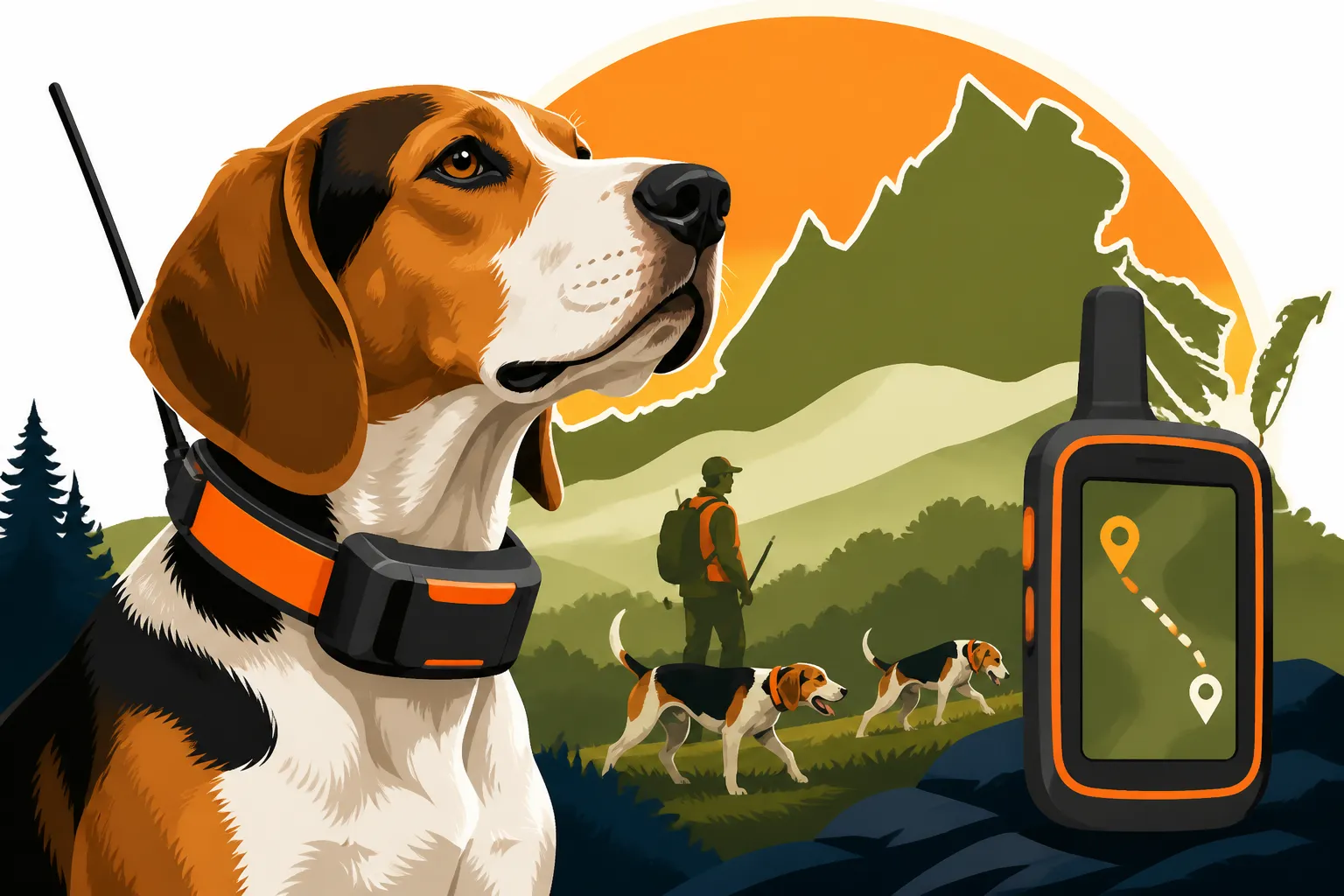
GPS Collars for Virginia Bear Hounds
For any bear hound hunter in Virginia, the thought of losing a valuable dog in the vast, rugged terrain of the Blue Ridge or the dense cover of the Piedmont is a constant, gnawing worry. The forests are thick, the mountains steep, and a dog on a hot track can cover incredible distances in no time. This comprehensive guide will walk you through everything you need to know about GPS collars for Virginia bear hounds, from why they're indispensable to choosing the right system and making the most of its features for successful and safe hunts.
Why GPS Collars Are Essential for Virginia Bear Hounds
Hunting bears with hounds in Virginia is a tradition steeped in challenge and excitement, but it also comes with significant responsibilities, especially regarding the safety and well-being of your dogs. The sheer scale and wildness of much of Virginia's bear country make traditional tracking methods a gamble, and that's where modern GPS collar systems become not just useful, but absolutely essential.
Navigating Virginia's Diverse Terrain
Virginia offers an incredible variety of landscapes, from the rolling hills and deep hollows of the Blue Ridge Mountains to the thick, swampy bottoms of the Piedmont and the coastal plain. When your hounds are pushing a bear, they aren't sticking to trails or easy-to-navigate terrain. They're busting through rhododendron thickets, scrambling up rocky outcrops, swimming creeks, and disappearing into dense evergreen stands. Trying to keep tabs on them with just your ears or traditional radio telemetry can quickly become a frustrating, if not impossible, task.
Imagine your hounds opening up on a track deep in the George Washington National Forest Hunting or Jefferson National Forest Hunting. One minute you hear their music echoing through a hollow, the next it's fading as they top a ridge and drop into the next valley, potentially miles away. A GPS collar provides that critical real-time location data, letting you know exactly where each dog is, even when they're out of earshot and out of sight. This allows you to anticipate their movements, position yourself effectively, and, most importantly, understand if they're heading into dangerous territory like a major road or private property.
Ensuring Compliance with DWR Regulations
Virginia has specific rules and regulations surrounding Virginia Bear Season Rules and Virginia Bear Hound Training Season Rules, and staying within those guidelines is paramount. While GPS collars aren't explicitly mandated for all types of hound hunting, they can be an invaluable tool for ensuring you and your dogs are always operating legally. For instance, knowing precisely where your hounds are helps you confirm they aren't crossing into areas closed to hunting or entering properties where you don't have permission.
Furthermore, in specific areas or during certain periods, there might be nuanced regulations about dog behavior or retrieval. A GPS collar provides a digital record, or at least real-time awareness, of your dog's movements. This awareness can be crucial if you ever need to demonstrate compliance or if a dog strays onto land where its presence might be questioned. It’s an extra layer of responsibility that any ethical hunter should embrace, helping to maintain a positive public perception of hound hunting.
Prioritizing Hound Safety and Recovery
The most compelling reason for GPS collars, beyond everything else, is the safety and well-being of your hounds. These dogs are family, and they're also highly trained athletes. When they're in pursuit, they face numerous hazards. Bears themselves can be dangerous, especially if cornered. There's also the risk of encountering other predators like coyotes, getting tangled in fences, falling into crevices, or even getting struck by vehicles if they cross a busy road.
A GPS collar drastically increases your chances of a quick and safe recovery. If a dog goes silent, you can pinpoint its last known location and head straight there. If it becomes injured, you can find it much faster to render aid. Without GPS, searching for a lost hound in the vastness of Virginia's wild places can turn into a multi-day ordeal, increasing the risk of exposure, injury, or even death for the dog. The peace of mind that comes from knowing you can track your dogs in real-time is, for most hound hunters, priceless. It's an investment in their safety that no responsible owner would overlook.
Key Features to Look for in a GPS Collar System
When you start looking at GPS collar systems, you'll quickly realize there's a lot of technology packed into these devices. Choosing the right one for Virginia bear hunting means focusing on a few critical features that directly impact performance in the field. Don't just pick the cheapest or the one with the most bells and whistles; think about how it will perform when it truly matters, deep in a mountain hollow or a dense Piedmont swamp.
Range and Signal Reliability in Dense Cover
Virginia's terrain, especially in the mountains and certain heavily wooded areas, can be incredibly challenging for radio and GPS signals. Steep ridges, deep valleys, and thick stands of timber can all obstruct line-of-sight and weaken signals. You need a system that boasts a robust range and reliable signal acquisition, even in the worst conditions. Some systems rely heavily on satellite GPS alone, which can be affected by dense canopy, while others integrate VHF radio signals for a more resilient connection in tough terrain.
Consider how the system handles signal loss. Does it store track data so you can see where the dog went once the signal is re-established? Can it transmit even a weak signal over several miles through thick cover? Look for systems that have proven track records in similar, challenging environments. A system that works great in open fields might be a complete failure when your hounds are winding through a laurel thicket on a steep mountainside in southwest Virginia.
Battery Life and Durability for Extended Hunts
Bear hunts, especially when the dogs are hot on a track, can last for hours, sometimes extending well into the night. Your GPS collars need to be able to keep up. A collar that dies after four hours is virtually useless on a ten-hour chase. Look for collars with advertised battery lives that comfortably exceed your typical hunt duration, ideally offering a full day or more on a single charge. Many modern collars also offer adjustable update rates, allowing you to conserve battery by tracking less frequently when dogs are stationary, and increasing frequency when they're actively moving.
Beyond battery life, durability is non-negotiable. Your hounds are going to be crashing through brush, swimming creeks, and generally putting these collars through the wringer. They need to be waterproof, shockproof, and capable of withstanding extreme temperatures. Check for rugged casings, secure latches, and antennae that are well-protected or flexible enough to endure impacts without breaking. A collar that falls apart or stops working after one tough hunt is not just an inconvenience, it's a dangerous liability.
Mapping and Tracking Capabilities
The raw GPS coordinates are helpful, but a robust mapping interface is what truly transforms those numbers into actionable information. You need to visualize your dogs' movements in relation to the terrain, property lines, and your own location. This means looking for systems with detailed topographic maps, satellite imagery, and the ability to mark waypoints, plot routes, and define boundaries. Some systems come with pre-loaded maps, while others allow you to download or subscribe to map services.
Many modern GPS handhelds and companion apps, like those that integrate with GoHunt's mapping platform or similar robust hunting apps, allow you to overlay custom map layers, like public land boundaries from Public Hunting Land in Virginia or Virginia Wildlife Management Areas, or even create your own private property boundaries. This is crucial for anticipating where your dogs might go and ensuring you stay within legal or permitted hunting areas. The ability to see elevation changes, creek beds, and dense cover on your screen helps you predict the bear's likely escape routes and your dogs' potential movements, making you a more effective and responsible hunter.
Popular GPS Collar Systems for Bear Hunters
The market for GPS collar systems has grown significantly, offering a range of options to suit different hunting styles and budgets. Understanding the distinctions between these systems can help you narrow down the best fit for your Virginia bear hunting adventures.
Handheld Device and Collar Combos
These are perhaps the most traditional and widely used GPS tracking systems among hound hunters. They typically consist of a robust handheld unit that communicates directly with the GPS collars worn by your dogs. Brands like Garmin and Alpha have long been leaders in this space, offering systems that are purpose-built for the rigors of hunting. The handheld unit usually features a bright, clear screen with mapping capabilities, buttons that are easy to operate even with gloves on, and often an external antenna for extended range.
The advantage of these dedicated systems is their reliability and independence from cell service, which is often spotty or non-existent in Virginia's remote hunting areas. The communication between the handheld and collar is typically a proprietary radio signal that relays GPS data, making it incredibly robust. These systems are designed to be intuitive for hunters, with features like compass views, distance to dog, and even bark indicators. While the initial investment can be higher, many hunters find the peace of mind and performance well worth the cost, especially when dogs are miles away in Hunting the Western Region Antlered Buck Limits territory.
App-Based Tracking Solutions
A newer, increasingly popular option involves GPS collars that pair with your smartphone or tablet, utilizing a dedicated app for tracking and mapping. Some systems operate solely via Bluetooth or WiFi to a nearby phone, while others integrate with cellular networks for broader range, assuming you have signal. Some companies, like Trackimo or Whistle, lean into this model, focusing on convenience and leveraging the powerful processing and display capabilities of modern smartphones.
The major benefit here is convenience and often a lower entry cost, as you're using a device you already own. Many of these apps can integrate with or overlay on top of existing mapping platforms, enhancing their utility. For example, if you already use a powerful mapping application like GoHunt for scouting and navigation, you might find an app-based collar system that can feed its data into or run concurrently with your preferred mapping software, creating a seamless experience. However, a significant drawback for Virginia bear hunting is the reliance on cellular service for many of these systems, which can be a critical limitation in areas like the Hunting Blue Ridge Parkway Adjacent Ridgelines or deep in the Jefferson National Forest where cell reception is a luxury. Always confirm the actual communication method of the collar itself – if it's purely cellular, it might not be suitable for truly remote hunts.
Integrated Training and Tracking Features
Some high-end GPS collar systems go beyond just location tracking and integrate advanced training features. These collars often include e-collar functions, allowing you to deliver tone, vibration, or static stimulation cues to your dogs directly from the handheld unit or app. This can be incredibly valuable for reinforcing commands, redirecting a dog from danger, or bringing a dog back to you when they've lost the track or run too far.
The beauty of these integrated systems is the single-device convenience. Instead of carrying a separate GPS tracker and an e-collar remote, you have one unit that handles both. This streamlines your gear, which is always a plus when you're covering tough ground on a Packs for a Jefferson Forest Day Hunt. When considering these systems, look for precise control over stimulation levels, clear feedback from the collar, and robust safety features to prevent accidental activation. These combined features can make a significant difference in managing your hounds effectively and safely during an intense bear chase in the Virginia wilderness.
| Feature | Handheld & Collar Combo (e.g., Garmin Alpha) | App-Based System (e.g., Trackimo, Whistle) | Integrated Training & Tracking |
|---|---|---|---|
| Range & Reliability | Excellent, uses proprietary radio/VHF | Varies (Bluetooth/Cellular), signal dependent | Excellent, similar to combo |
| Battery Life | Very good, dedicated power | Varies, uses phone battery/collar battery | Very good, dedicated power |
| Durability | Extremely rugged, built for abuse | Phone durability is a factor, collar varies | Extremely rugged |
| Mapping | Dedicated maps, often pre-loaded | Leverages phone maps/apps (like GoHunt) | Dedicated maps |
| Cell Service Needs | Minimal to none | Often required or highly beneficial | Minimal to none |
| Training Features | Some models include e-collar functions | Less common, often separate devices | Core feature, e-collar built-in |
| Cost | Higher initial investment | Potentially lower entry cost | Highest investment |
Maximizing the Effectiveness of Your GPS Collars
Just buying a high-end GPS collar system isn't enough; you need to understand how to use it effectively to truly get the most out of your investment. From pre-season prep to in-hunt tactics and post-hunt analysis, there are several steps you can take to ensure your GPS collars are always performing at their peak.
Pre-Season Setup and Training
The off-season is the perfect time to get intimately familiar with your GPS collar system. Don't wait until opening day to figure out the buttons or menu structure. Spend time at home, in your yard, and then in local hunting areas practicing. Learn how to create waypoints, set boundaries, and understand all the different display options. Get comfortable with the handheld unit or app interface.
More importantly, get your dogs accustomed to wearing the collars. Start by putting them on for short periods, gradually increasing the duration. Ensure the collars fit snugly but not too tightly, allowing for comfortable movement without chafing. Check that the GPS antennae are clear and not obscured by fur or other gear. Practice using the tracking functions during training exercises, even if it's just a walk in the woods. This builds confidence in both you and your dogs, and helps you troubleshoot any issues long before the Virginia Bear Season Opening Day arrives.
In-Hunt Monitoring and Communication
During the hunt, constant vigilance is key. Don't just glance at your screen occasionally. Actively monitor your dogs' locations, speed, and direction of travel. Pay attention to changes in their movement patterns – if a dog suddenly stops or starts moving very slowly, it might be injured or have treed a bear. If multiple dogs converge on a spot, it's a good indication they've got the bear cornered.
Effective use also involves communication with your hunting partners. Many modern GPS systems allow you to share your location and your dogs' locations with other members of your hunting party who have compatible devices or apps. This is invaluable for coordinating efforts, especially on drives or when trying to intercept a bear. Discuss communication protocols beforehand: how often will you check in? What are the codes for different situations (e.g., "dog treed," "dog injured," "on the road")? Use your two-way radios for voice communication, but let the GPS data guide your movements and decisions, especially in complex terrain.
Post-Hunt Analysis and Data Review
The usefulness of GPS collars doesn't end when the hunt is over. Many systems allow you to record and review the entire track history of your dogs. This data can be a goldmine for improving future hunts and understanding your dogs' performance. Look at the routes they took, how fast they moved, where they spent the most time, and how they reacted to different terrain features.
Analyzing this data can help you identify prime bear habitat, understand travel corridors, and even reveal areas where your dogs might be getting hung up or losing track. Did they consistently hit a certain bedding area or cross a particular ridge? This information can be integrated with your scouting efforts, perhaps even by importing tracks into a mapping platform like GoHunt to combine with satellite imagery and topo maps. Over time, this kind of review builds a robust understanding of both the game and your hounds, making you a more knowledgeable and successful hunter. It's also excellent for training new hounds or evaluating the performance of experienced ones.
Understanding Virginia-Specific Considerations
Virginia hunting presents its own unique set of circumstances, from legal nuances to environmental challenges. When using GPS collars for your bear hounds, being aware of these state-specific factors will contribute to safer, more ethical, and more successful hunts.
Legal Aspects of GPS Tracking Hounds
While GPS collars are generally permissible for tracking hunting dogs in Virginia, it's always wise to be aware of the exact regulations. The Virginia Department of Wildlife Resources (DWR) outlines rules for hunting with dogs, and while they don't typically restrict the use of GPS for tracking, there are broader rules about dog training seasons, when dogs can run free, and property access. Ensure your GPS collar usage aligns with all DWR guidelines. For example, if you're training during the Virginia Bear Hound Training Season Rules, your GPS collars allow you to monitor that your dogs aren't accidentally crossing into areas that might be off-limits for training or actual hunting.
There are also laws concerning trespassing and retrieving dogs from private land. While your GPS unit might show your dog on a neighboring property, that doesn't grant you permission to enter. Always seek landowner permission before crossing property lines. Being able to pinpoint your dog's location precisely, even if it's on private land, helps you communicate effectively with the landowner and arrange for a respectful retrieval, rather than blindly searching. It demonstrates a commitment to responsible hunting practices, which is crucial for maintaining good relationships with landowners.
Adapting to Weather and Terrain Challenges
Virginia's weather can be unpredictable. You might start a bear hunt in crisp fall air only to be hit with a sudden rain shower, sleet, or even early snow, particularly in the mountains. Your GPS collars need to be built to withstand these conditions. Beyond the durability of the collar itself, consider how moisture and cold affect battery life. Lithium-ion batteries, common in many electronic devices, perform less efficiently in freezing temperatures. Carry spare charged batteries for your handheld unit, or portable power banks if your system can be recharged on the go.
The challenging terrain also means that sometimes a dog might get into a spot where a signal is temporarily lost. Don't panic immediately. The DWR has excellent resources, and a good understanding of Wind and Thermals on a Blue Ridge Slope can help you predict where your dogs might be headed even without a live signal. Trust your hounds, but also trust your preparation. Regularly checking for updates from the manufacturer or online hunting forums can also keep you informed about how specific GPS models perform in Virginia's unique environment.
Community and Ethical Hunting Practices
Using GPS collars is not just about technology; it's about being a responsible member of the hunting community. Ethical hound hunting means respecting private property, being courteous to other outdoor enthusiasts, and ensuring the welfare of your dogs. The ability to precisely locate your dogs helps you to be a good neighbor, preventing them from harassing livestock or other wildlife unintentionally.
Always be prepared for the unexpected. Even with the best GPS technology, dogs can get lost or injured. Carry a First Aid Kits for Remote Mountain Ground and know basic canine first aid. Have a plan for retrieving a dog that's miles deep in the woods or across a river. Use your GPS data to make informed decisions that prioritize safety and ethics above all else. By demonstrating responsible use of this technology, you contribute positively to the image of hunting with hounds in Virginia, helping to preserve this tradition for future generations.
Disclaimer
This article is for general informational purposes only and does not constitute professional advice. Laws, prices and regulations vary by location and change over time. Consult a qualified professional for guidance on your specific situation.