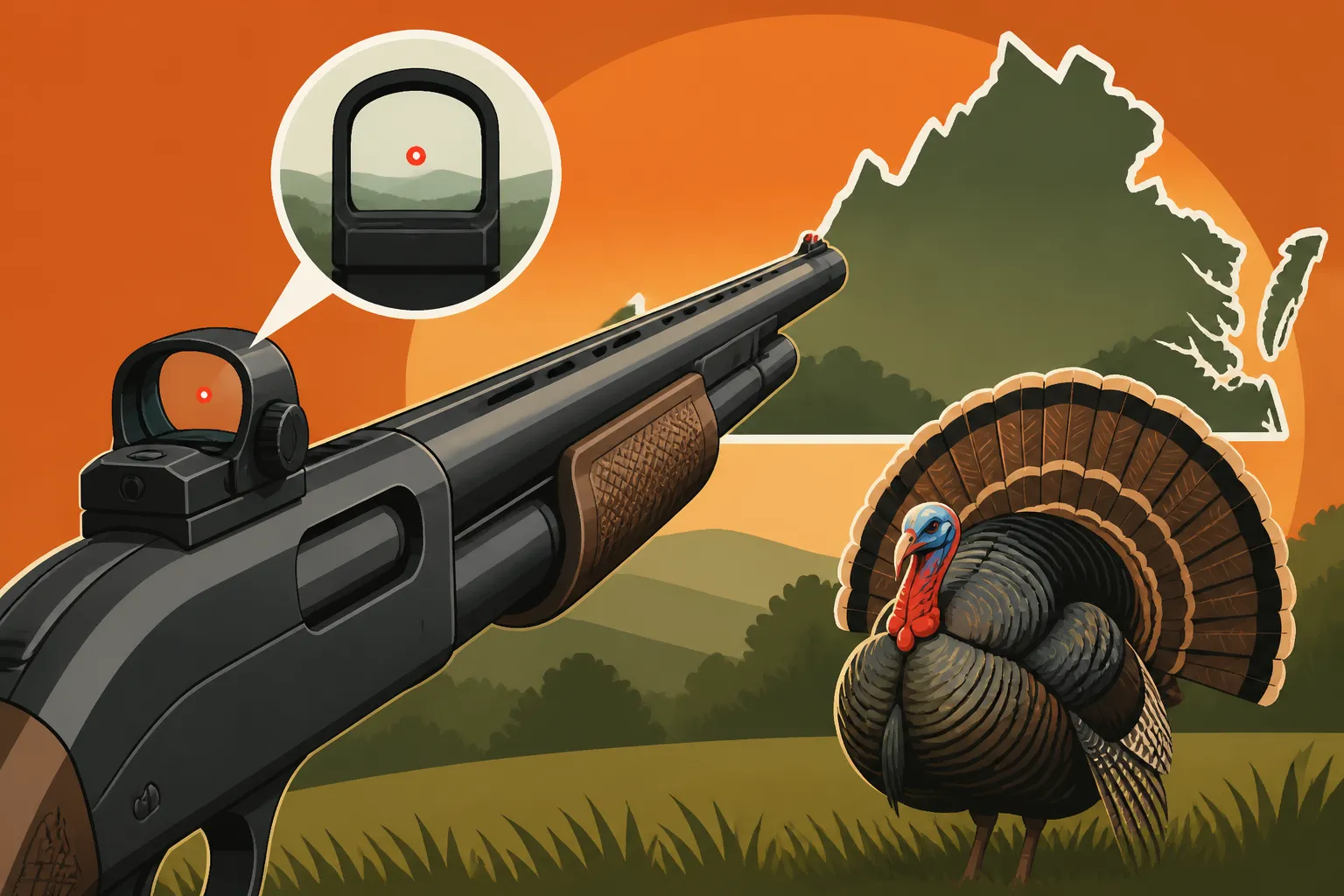
Red Dots on a Turkey Shotgun
Trying to make a precise shot on a wary Virginia gobbler with traditional bead sights can be incredibly frustrating. One moment he's strutting in the open, the next he's peeking from behind a thick oak limb, and you find yourself contorted, struggling to get that bead lined up perfectly before he melts back into the timber. This guide is all about simplifying that aiming process and boosting your confidence with a red dot sight on your turkey shotgun, ensuring you're ready when that moment of truth arrives, no matter how awkward the angle.
Why Traditional Beads Fall Short for Turkey Hunting
For generations, hunters have relied on the simple bead sight on their shotgun barrels, and for flying targets like ducks or doves, it often does the job just fine. But when you're targeting the stationary, small, and often partially obscured head and neck of a wild turkey, those traditional sights can quickly feel inadequate. The precision required for a clean kill shot on a turkey is far greater than for swinging on a pheasant, and this is where many hunters hit a wall.
The Limitations of Front Bead Sights
Imagine you’ve spent hours calling, working a bird, and he finally commits, strutting into your setup at 30 yards. He holds up behind a tree, only his head and neck visible. You're tucked into some thick cover, perhaps lying against a log, and you have to twist your body into an awkward position to get a shot. With just a single front bead, you're trying to align that tiny point with the very small target of the gobbler's head, while also ensuring your eye is perfectly centered over the rib. The smallest shift in your head position can lead to a significant miss at typical turkey ranges. It's a game of perfect alignment that often works against you in the heat of the moment, especially when your heart is pounding and your adrenaline is surging. This isn't like shooting clays; the target isn't moving away from you in a predictable path, but often standing still or slowly turning, daring you to make a mistake.
The Problem with Rib-Mounted Sights
Some turkey shotguns come equipped with a set of adjustable rifle-style sights or fiber optic sights mounted on the rib. These are certainly an improvement over a single front bead, as they give you a more defined rear sight to work with, similar to how a rifle is aimed. However, they still require you to align two or three points—the rear sight, the front sight, and the target—all at the same time. This can still be a slow process, especially if the gobbler is a bit skittish or only offers a fleeting window. In dense Virginia hardwoods, where a shot might come quickly as a bird slips through the trees, the extra split second it takes to achieve that perfect alignment can be the difference between a successful hunt and watching that gobbler disappear, leaving you wondering what went wrong. Every hunter knows that feeling of a missed opportunity, and often, it comes down to a struggle with sight alignment.
Low Light and Camouflage Challenges
Think about those early morning hunts in the Virginia mountains, just as the sun is barely peeking over the ridges. A gobbler might fly down from the roost into a dark hollow, his head a dark silhouette against the even darker timber. Or perhaps you're hunting a Piedmont field edge, and a bird emerges from the shadows of a fencerow, his vibrant colors muted in the dim light. In these conditions, a traditional black bead or even a fiber optic sight can simply disappear. The colors can blend into the background, making it incredibly difficult to pick up your aiming point quickly and clearly. Your camouflage works both ways; while it helps you hide from the bird, it can also make your own sights harder to see against the mottled greens and browns of the forest or the dark plumage of a turkey. This visual struggle adds another layer of complexity to an already high-pressure situation, making accurate shot placement a real challenge.
The Game-Changing Benefits of a Red Dot Sight for Turkeys
Stepping up to a red dot sight for your turkey shotgun can truly transform your aiming experience. It addresses all those frustrations you might have with traditional sights, offering a faster, more precise, and more confident way to put your pattern exactly where it needs to go. This isn't just a gadget; it's a tool that can drastically improve your success rate on those tough birds.
Speed and Precision on the Shot
The primary advantage of a red dot sight is its incredible speed and precision. Instead of aligning multiple components, you simply place a bright, illuminated dot on your target. This means you can get on target much faster, which is critical when a gobbler suddenly appears or offers only a brief opportunity. Imagine a situation where a gobbler unexpectedly pops out of a thicket at 20 yards, and you have only a second or two to react. With a red dot, your eye naturally finds the dot and places it on the head and neck, allowing for an almost instantaneous shot. This single focal plane aiming means your brain doesn't have to work as hard to process multiple points of focus, letting you concentrate entirely on the bird and its vitals. It reduces the mental clutter and allows for a much more instinctive shot, which is what you want when adrenaline is surging. Many turkey hunters, myself included, have found that practicing with a red dot greatly improves their ability to get on target quickly and cleanly.
No Parallax, No Problem
One of the most significant benefits of a quality red dot sight is its parallax-free design, usually within a reasonable shooting range, which is perfect for turkey hunting distances. What does "parallax-free" mean for you in the field? It means that as long as that red dot is visible somewhere within the optic's window and placed on your target, your shot will go where the dot is aiming, regardless of your eye's exact position behind the sight. This is a game-changer for those awkward, contorted shots from a ground blind or when you're trying to peek around a tree.
Think about it: with traditional sights, if your head isn't perfectly aligned, your point of aim can shift drastically. With a red dot, if you have to lean out from behind a tree and can only see the dot in the top corner of the glass, your shot will still be accurate. This forgiveness in head position is invaluable when a gobbler hangs up or comes in from an unexpected direction, forcing you to adjust your body in uncomfortable ways. It takes a huge amount of stress out of the aiming process, allowing you to focus purely on the bird's head.
Enhanced Visibility in All Conditions
Red dots are designed to be highly visible, regardless of the ambient light or the background. Most modern red dots offer adjustable brightness settings, allowing you to crank up the intensity on a bright, sunny day in an open field or dial it down for those gloomy, overcast mornings in the deep woods. This means your aiming point will always stand out clearly against the dark feathers of a gobbler or the dense Virginia timber. Many red dots also offer different reticle options, like a simple dot, a dot with a circle, or a crosshair, giving you further flexibility. The contrast makes it much easier to hold steady on a bobbing turkey head or a bird partially obscured by brush. You won't have to worry about your sight disappearing against the backdrop, a common frustration with traditional black beads. If you're using a reliable optic, perhaps from a brand you researched on GoHunt, you can expect this kind of performance.
Choosing and Mounting Your Turkey Shotgun Red Dot
Deciding to go with a red dot is one thing, but choosing the right one and getting it properly mounted and zeroed is another critical step. Not all red dots are created equal, and some are certainly better suited for the harsh recoil and specific demands of a turkey shotgun.
Key Features to Look For
When you're looking for a red dot for your turkey gun, you'll want to prioritize a few key features. First and foremost, durability is paramount. Turkey shotguns kick, and the recoil can be brutal on electronics. Look for optics that are explicitly rated as shockproof, waterproof, and fogproof. You’re going to be out in all sorts of Virginia weather, from damp, misty mornings to sudden spring downpours, so environmental sealing is crucial.
Battery life is another big one. You don't want your dot to die in the middle of a stand. Some models boast thousands of hours of battery life and include features like shake-awake technology or auto-shutoff to conserve power.
Consider the reticle size, usually measured in MOA (Minutes of Angle). A 3 MOA dot is generally a good all-around choice, small enough for precision at 40 yards but still quick to acquire. Some hunters prefer slightly larger dots (5-6 MOA) for faster target acquisition at closer ranges, while others like a smaller dot for tighter groups at distance.
Finally, think about ease of adjustment. You'll need to zero your sight, and intuitive windage and elevation adjustments are a blessing. Some models like the Bushnell RXS-250 or the Vortex Venom are popular choices among turkey hunters for their robust build and reliable performance. Optics for Blue Ridge and Piedmont Hunting can give you more general insights into optics choices, but for turkey, the specific demands are quite high.
Mounting Options and Considerations
Getting your red dot securely mounted is non-negotiable. A loose sight will ruin your day faster than anything else. Most turkey shotguns come without a pre-drilled and tapped receiver. If yours doesn't, you'll need to consider a few options.
- Picatinny Rail Mount: This is the most common and versatile option. You can install a Picatinny rail on your shotgun's receiver, which typically requires drilling and tapping if your gun isn't already set up for it. This is often best left to a qualified gunsmith to ensure precise alignment and secure attachment, especially given the significant recoil a turkey load generates. Once the rail is on, many red dots come with a standard Picatinny mount that clamps directly onto it.
- Direct Mount Systems: Some popular turkey shotguns, like certain Mossberg and Remington models, have specific mounting plates that allow certain red dot footprints (like the Docter/Noblex or Shield RMSc) to be mounted directly to the receiver, often requiring less hardware and sitting lower on the gun. This offers a very clean, low-profile setup.
- Vent Rib Mounts: Less common but available, these mounts clamp onto the shotgun's existing vent rib. While they don't require drilling, they can sometimes sit higher, which might require adjusting your stock or head position for a comfortable cheek weld. Always ensure any vent rib mount is extremely robust and specifically designed to withstand shotgun recoil.
Regardless of your chosen method, security is key. Use thread locker on all screws and check them periodically. Recoil can loosen things up faster than you'd think. A properly mounted red dot will maintain its zero shot after shot, giving you confidence when it matters most.
Zeroing Your Red Dot for Optimal Turkey Patterns
This is perhaps the most crucial step, and where many hunters make a mistake. You don't "zero" a shotgun in the same way you would a rifle. With a shotgun, you're patterning it to see where the densest part of your shot cloud hits. The red dot simply helps you consistently aim the center of that pattern.
Here's how to do it:
- Start Close, But Not Too Close: Begin at about 20-25 yards with a large patterning target (like a piece of cardboard with a turkey head outlined on it).
- Shoot for Pattern, Not Just Dot: Take a few shots using your chosen turkey load and choke combination. Don't just look at where the red dot was when you pulled the trigger; analyze the center of the pattern.
- Adjust the Dot, Not Your Aim: If the densest part of your pattern is consistently hitting, say, two inches high and one inch left of where your red dot was when you aimed, you need to adjust your red dot's windage and elevation so that the dot moves to that point of impact. In other words, you want the red dot to sit exactly where the center of your pattern hits.
- Repeat and Confirm: Continue shooting, making small adjustments until the center of your shot pattern consistently lands directly behind your red dot.
- Test at Range: Move back to your maximum comfortable turkey shooting distance, typically 35-40 yards. Fire a few more shots to confirm your pattern density and point of impact. You want to make sure you have enough pellets in the head and neck region at that distance for a clean kill. This process is absolutely vital, and getting it right can mean the difference between tagging a gobbler and a clean miss. For more detailed information, check out Patterning a Turkey Gun at 40 Yards.
Practical Tips for Hunting Virginia Gobblers with a Red Dot
A red dot is a fantastic tool, but like any piece of gear, it performs best when you understand its nuances and integrate it smoothly into your hunting routine. From staying aware of your surroundings to proper battery care, these tips will help you maximize your success in the Virginia turkey woods.
Maintaining Situational Awareness
It's easy to get tunnel vision when you're looking through a red dot sight, especially when you're hyper-focused on that incoming gobbler. The illuminated dot draws your eye right to the center of the glass, and it can sometimes make you less aware of your periphery. While precision aiming is critical for turkeys, so is knowing what's happening around you. A gobbler might come in from a direction you don't expect, or another bird might be sneaking in silently.
To combat tunnel vision, make a conscious effort to keep both eyes open when using your red dot, if comfortable. Many red dot sights are designed for two-eyes-open shooting, which helps maintain your full field of view. Additionally, practice quickly bringing the shotgun up, acquiring the dot, and then scanning around the edges of your vision before settling back on the target. This ensures you're not missing crucial cues from other birds or potential hazards. Staying alert and aware is key, especially when hunting public land like you might find detailed on GoHunt.
Battery Management
Modern red dots are quite efficient, but batteries don't last forever. The last thing you want is for your red dot to go dim or die completely just as that trophy gobbler steps into range. Always, and I mean always, check your red dot's battery before the season, and ideally, before each hunting trip. Many hunters make it a habit to replace the battery at the start of every turkey season, even if the old one isn't dead yet. It’s cheap insurance.
Beyond that, carry a spare battery (or two!) in your turkey vest, in a small, waterproof container. Store them in a place where they won't get lost or damaged. If your red dot has a shake-awake feature, understand how it works and how long it takes to activate. If it has a manual on/off switch, remember to turn it off when not actively hunting to conserve power. A dead battery can turn a confident shot into a frantic scramble, or worse, a missed opportunity. This is particularly relevant during the longer spring season when you might be out day after day.
Practicing with Your Setup
Simply buying and mounting a red dot isn't enough; you need to become proficient with it. Just like learning to call or master a particular setup, using a red dot effectively takes practice. Start with dry firing at home. Practice quickly shouldering your shotgun and finding the red dot on a target. Focus on smooth, repeatable movements. This builds muscle memory for when you're out in the field.
Once you've zeroed your red dot at the range, don't stop there. Take the time to pattern your gun again with different choke tubes and loads, just to see how they perform. Understand how your chosen setup throws a pattern at various distances – 20, 30, 40 yards. While a red dot simplifies aiming, knowing your gun's ballistic performance remains critical for ethical and successful turkey hunting. The more you practice, the more intuitive and natural aiming with a red dot will become, allowing you to focus on the hunt itself and making that critical shot. Many local ranges in Virginia offer patterning boards, or you can set up your own in a safe location.
| Feature | Traditional Bead Sights | Red Dot Sights |
|---|---|---|
| Aiming Principle | Align front bead with target (and rear sight if present), then align eye. | Place illuminated dot on target. |
| Speed | Can be slower due to multiple alignment points. | Fast target acquisition; single focal plane. |
| Precision | Requires perfect eye/head alignment; can be inconsistent. | Parallax-free (within limits); consistent point of aim. |
| Low Light/Contrast | Can disappear or blend into background. | Illuminated dot stands out; adjustable brightness. |
| Awkward Angles | Very challenging with off-axis eye position. | Forgiving of head/eye position. |
| Cost | Minimal to none (comes with shotgun). | Additional investment (hundreds of dollars). |
| Durability | Very durable (simple metal bead). | Requires shockproof/waterproof construction. |
| Battery Life | N/A | Needs regular battery checks and spares. |
If you're looking for more general information on turkey hunting, you might find articles like Wild Turkeys in Virginia or Virginia Spring Turkey Season Rules helpful for background context. For specific tactics, consider Roost Hunting Virginia Gobblers or Run-and-Gun Turkey Tactics on Public Land. And if you're ever questioning your gear or need to check regulations, resources like GoHunt can provide valuable insights. The information provided there is often comprehensive and can help you make informed decisions about everything from your license to your setup. For further reading about specific ammunition performance, you might want to review Tungsten Turkey Loads Worth the Price. When you're considering your full setup, including decoys, don't forget to look at Turkey Decoys That Work on Pressured Birds to make sure your whole system is cohesive and effective. Thinking about those late season birds? When Virginia Gobblers Go Quiet in May offers insights into dealing with tougher conditions.
Disclaimer
This article is for general informational purposes only and does not constitute professional advice. Laws, prices and regulations vary by location and change over time. Consult a qualified professional for guidance on your specific situation.