Turkey Decoys That Work on Pressured Birds
It's incredibly frustrating, isn't it? You've spent hours scouting, you've practiced your calls until your lungs ache, and you set up your decoys perfectly – or so you thought – only to have a longbeard hang up at 100 yards, or worse, completely ignore your spread. Virginia's wild turkeys, especially those that have been "educated" by previous hunting pressure, can be incredibly wary. This guide is here to unravel the mystery of decoy strategies that actually work on those hard-to-fool gobblers, helping you bring those elusive birds into range.
Understanding Pressured Turkeys and Decoy Aversion
Hunting Virginia's wild turkeys is a cherished tradition, but with each passing season, many birds become wiser to common hunting tactics. What works on opening day might send a late-season gobbler sprinting in the opposite direction. Understanding why turkeys become wary of decoys is the first step in adapting your approach.
The Impact of Hunting Pressure on Turkey Behavior
Imagine a mature gobbler who has seen a full-strut decoy set up in every field edge or heard the same aggressive calling sequence repeated countless times. He's probably encountered more than a few hunters and escaped by giving a wide berth to anything that looks or sounds too good to be true. This accumulative experience changes their behavior significantly. Instead of charging in, they become hesitant, circling wide, observing from a distance, or simply moving off. It’s not that they don't like hens or jakes; it's that they've learned to associate certain visual cues with danger. This is particularly true on public lands where Hunting Pressure on Virginia Public Land is higher, making birds extremely cautious.
They might strut for a bit, trying to draw the "hen" closer without committing themselves, or they might gobble from afar, waiting for the hen to come to them. This shift in behavior means that the standard, aggressive decoy setups that work beautifully on unpressured birds can be counterproductive on those that have learned a hard lesson or two. We have to think like them, or rather, think about what they expect based on negative past experiences, and then offer them something different.
Common Decoy Mistakes That Spook Wary Birds
One of the biggest mistakes hunters make with pressured birds is going too big or too aggressive with their decoy spread. A full-strut gobbler decoy, while a great challenge to a dominant bird, can sometimes be a red flag. If a gobbler has already fought and lost, or been shot at while approaching such a setup, he'll likely avoid it. Similarly, using too many decoys can look unnatural and intimidating to a lone bird, especially if the local population isn't thriving, which you can often glean from Virginia Turkey Population Trends. It's about blending in, not sticking out.
Another common error is poor decoy placement or orientation. Decoys facing the wrong way, not positioned for an ethical shot, or placed in a way that forces the bird to expose itself in open terrain for too long, can all lead to hang-ups. A bird that's already on edge will notice these small details. Even bright, reflective decoys on a sunny day can scream "fake" to a cautious gobbler. It's the little things that add up when you're dealing with a bird that's already had his trust betrayed.
Types of Decoys for Wary Virginia Gobblers
When dealing with pressured turkeys, you often need to scale back, simplify, and prioritize realism over flashiness. The right decoy choice can make all the difference, sending a subtle message of availability and safety rather than aggressive challenge.
Submissive Hen Decoys: The Low-Threat Approach
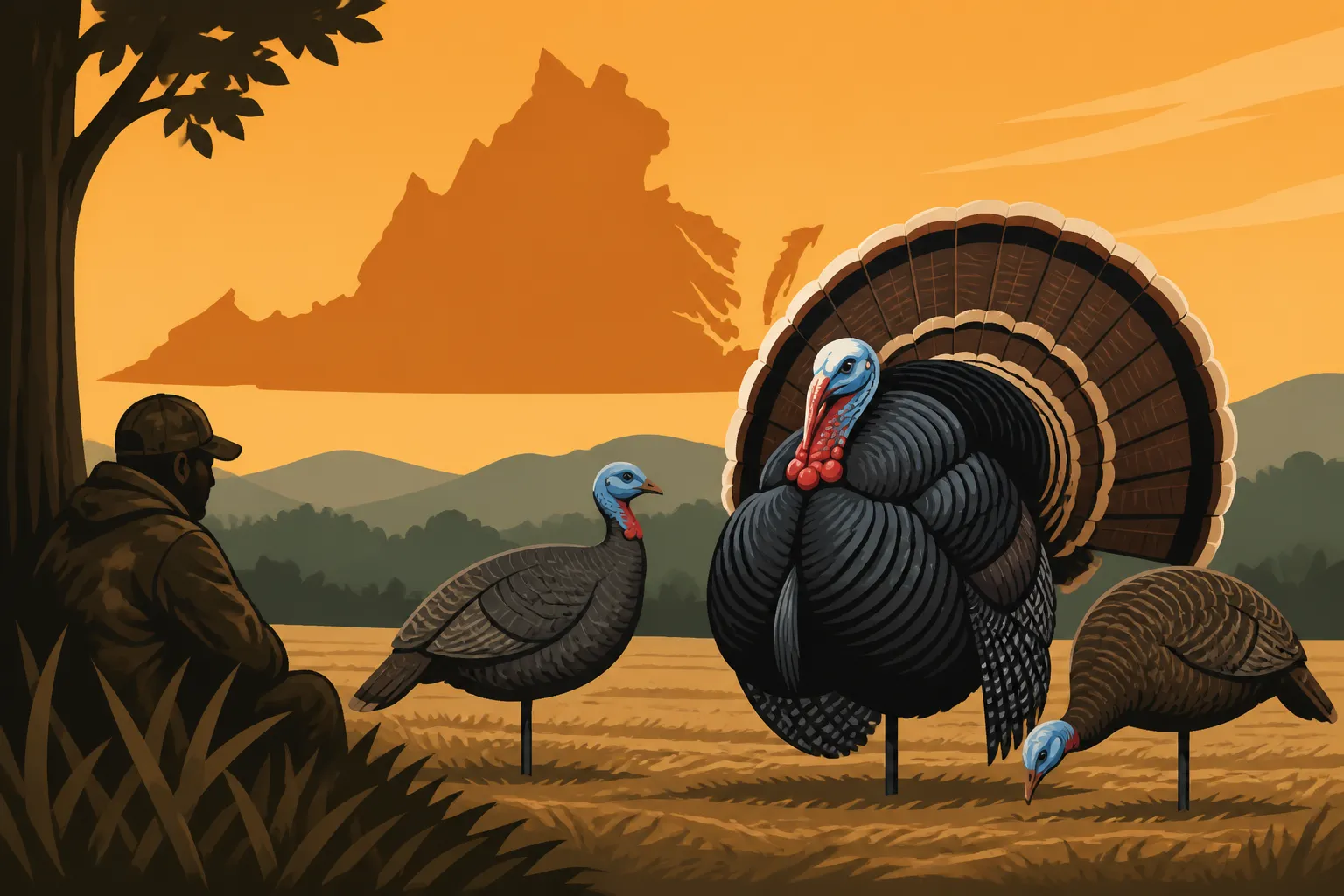
For wary gobblers, a submissive hen decoy often works wonders. This type of decoy typically portrays a hen in a breeding posture, often squatting or lying down. The message it sends is one of readiness and vulnerability, a non-threatening invitation that's hard for a love-sick gobbler to resist. It lacks the assertive, challenging posture of an upright hen, which might cause a pressured gobbler to feel he needs to assert dominance or size up the situation. A submissive hen simply says, "Here I am, come breed me," without any perceived competition.
This approach bypasses the "fight or flight" response that an aggressive decoy might trigger. A gobbler sees an easy opportunity, not a rival. It’s perfect for situations where you suspect gobblers are wary of dominant setups. You're not trying to challenge them; you're just offering an easy win. Placing one of these on a Turkey Tactics for Piedmont Field Edges can be deadly, as it implies safety and a comfortable breeding spot.
Jake Decoys: Young and Non-Threatening
A quarter-strut or half-strut jake decoy can be another excellent option for pressured areas. The key here is "jake." A jake is a young, immature male, usually less intimidating than a fully mature gobbler. Many gobblers will still come in to run off a jake, especially if they see it with a submissive hen. The jake isn't a direct threat in the same way a full-strut dominant gobbler is, but it's enough of a nuisance to pique a mature bird's interest and draw him closer for a confrontation.
Using a jake decoy with a hen allows a gobbler to feel like he's asserting his dominance over a weaker rival, rather than facing a direct challenge from an equally dominant bird. It feeds his ego without putting him on high alert. Many hunters find that a jake-and-hen combo can be particularly effective in areas where gobblers are accustomed to seeing and avoiding full-strut setups. It’s a subtle shift that makes a big difference to a bird who's already been fooled once or twice. When scouting new ground, using a tool like the GoHunt app can help identify open areas or ridges where a jake decoy might be visible from a distance, drawing birds in without making them too suspicious of your exact location.
Fan Decoys: Minimalist and Effective
Sometimes, less is truly more. A fan decoy, which is essentially just the tail fan of a turkey (real or artificial), can be incredibly effective on pressured birds because it offers minimal commitment from the hunter while providing a visual cue. This can be used in two main ways: either stationary, placed low to the ground to simulate a bird fanning behind a bush or rise, or "fanned" directly by the hunter. The latter is a more aggressive tactic, involving the hunter slowly moving the fan to mimic a strutting bird, often used for stalking or enticing a hung-up bird.
For stationary setups, a fan provides just enough visual interest without presenting a full, potentially threatening body silhouette. It can suggest a bird that's just out of sight, peaking a gobbler's curiosity enough to investigate. This can be particularly useful when you're tucked into thick cover, like around Setting Up Against a Big Oak, and only want to offer a hint of a turkey. It’s non-threatening and suggests movement or interest without giving away your full hand.
Here's a comparison of common decoy types and their potential effectiveness on pressured birds:
| Decoy Type | Visual Message | Effectiveness on Pressured Birds | Best Use Scenario | Pros | Cons |
|---|---|---|---|---|---|
| Full-Strut Gobbler | Dominant male challenging others | Low to Moderate | Highly aggressive birds, unpressured areas, early season | Can draw dominant birds in fast | Can intimidate wary birds, too aggressive |
| Jake (1/4 or 1/2 Strut) | Young male trying to impress or challenge | Moderate to High | Any scenario with wary gobblers, with hens | Less threatening than full-strut, still draws confrontation | Can still be avoided by extremely wary birds |
| Submissive Hen | Ready to breed, non-threatening | High | Best for wary birds, late season, quiet calling | Highly appealing, low threat | Doesn't challenge dominant birds directly |
| Upright/Alert Hen | Observing, curious, potentially moving | Moderate | Pairs well with jakes, adds realism | Creates natural scene | Can make gobblers hang up waiting for movement |
| Feeding Hen | Content, safe, natural | High | Mimics natural behavior, good for subtle setups | Very natural, low threat | May not command immediate attention |
| Fan Decoy (stationary) | Hint of a bird, curiousity | High | Minimalist approach in thick cover, stalking | Extremely subtle, lightweight | Less visual presence than full-body decoys |
Strategic Decoy Placement and Setup
It's not just what decoy you use, but how and where you place it. Strategic placement is paramount when you're trying to outsmart a gobbler that's already suspicious of anything that doesn't feel completely natural.
Positioning for the Shot and the Approach
When setting up your decoy, always think about the shot first. Most hunters are right-handed, so you want the bird approaching from your left side, offering a clear shot as he struts past or stops to assess the decoy. This means positioning your decoy so that the bird's natural approach path, usually from a rise or field edge, will put him in that sweet spot. Remember that Turkey Shotgun Gauge Choice and Turkey Chokes and Patterning become much more effective when the bird is at your desired range, typically 20-30 yards.
For pressured birds, consider placing your decoy about 15-20 yards in front of your position, slightly off to the side of where you expect the bird to come from. This allows the gobbler to focus on the decoy and not directly on your blind or calling position, drawing his attention away from you. If he comes in from behind the decoy, he'll still present a good shot as he attempts to investigate. Using the GoHunt app to mark your position and plan an ideal decoy location on aerial photos can significantly improve your chances, allowing you to visualize approach lanes before you even step foot in the woods.
Creating a Natural Scene: Less is More
For wary birds, a minimalist approach often yields the best results. Instead of a flock of decoys, try one or two. A single submissive hen, or a submissive hen paired with a small jake, often looks much more natural and less intimidating. Think about how turkeys naturally move and feed. They aren't always in huge groups, especially in areas where they've been pressured. A solitary hen feeding contentedly or a jake subtly challenging her might be exactly what a cautious gobbler expects to see.
Place your decoys in a slightly open area, but not completely exposed. A slight rise, a subtle clearing in the timber, or just inside a field edge where they might naturally appear are all excellent spots. Don't put them right in the middle of a wide-open field where a gobbler can approach from any angle and study them for too long. Give him some natural cover for his approach, and make it look like a safe place for a hen to be. When using a full-body decoy, consider its profile against the skyline. You want it to break up naturally, perhaps near some low brush or against a natural backdrop, rather than silhouetted perfectly, which can look unnatural.
Leveraging Terrain for Decoy Advantage
Terrain plays a huge role in how effectively your decoys work, especially with pressured birds that are prone to hanging up. Use natural features to your advantage. If you're hunting a ridge line, consider setting your decoys just over the crest, so an approaching gobbler has to commit to coming over the top to see them fully. This can prevent him from hanging up at a distance and give you a better shot opportunity. Similarly, if hunting a creek bottom or a shallow hollow, position your decoys to force the bird into a specific approach path.
For example, on a property with rolling hills or subtle depressions, you might place your decoy in a spot where it's partially obscured from a distant view, but fully visible once the gobbler commits to coming over the nearest rise. This element of surprise, however slight, can sometimes be enough to push a hesitant bird over the edge. It's like Reading a Ridge for Blue Ridge Deer or Wind and Thermals on a Blue Ridge Slope, but applied to turkeys. You're trying to funnel them into your kill zone by making the decoy setup the most appealing and direct path.
Decoy Maintenance and Realistic Presentation
Even the best decoy selection and placement can be undermined by a decoy that looks unnatural or poorly maintained. Realism is critical when trying to fool a wily gobbler.
Keeping Your Decoys Realistic and Clean
A dirty, faded, or shiny decoy is a dead giveaway to a sharp-eyed gobbler. After a few hunts, your decoys will inevitably accumulate dust, mud, and scuffs. Make sure to clean them regularly. A quick wipe-down with a damp cloth can remove dirt and prevent unnatural glare that might spook a bird. Pay attention to any parts that might reflect sunlight unnaturally, like shiny plastic heads or tails. A bit of matte spray paint can help dull any overly reflective surfaces.
Also, consider the condition of your decoys. Are they slumped over? Do they have bent stakes? Do they look like they've been run over by a tractor? A realistic posture is key. If a hen decoy is always looking down at the ground, it might not catch a gobbler's eye from a distance. If a jake is leaning precariously, it looks unnatural. Small details like these make a big difference, especially when you're hunting educated birds. Bow Sights for Timber Shots are designed for precision; your decoys should contribute to a precise setup, not detract from it.
Adding Movement for Enhanced Realism
Still decoys can work, but adding even a little bit of subtle movement can dramatically increase realism and draw in a wary bird. Many modern decoys come with stakes designed to allow for natural bobbing in the breeze. Even a slight head turn or tail fan flutter can simulate a live bird. You can also purchase motion devices that gently sway a decoy's head or tail, mimicking a bird feeding or strutting.
However, don't overdo it. Erratic or exaggerated movement can be just as alarming as no movement at all. The goal is subtle, natural motion that suggests life, not a puppet show. When you're dealing with a bird that's hanging up and gobbling from a distance, a small flick of a fan or a gentle sway of a hen's head might be the final convincing touch needed to get him to commit. It taps into their natural instincts to investigate something that appears alive and moving.
Calling and Decoy Synergy
Decoys are a visual component, but they work best when paired with effective calling. Your calls should reinforce the scene your decoys are setting. If you have a submissive hen decoy, your calls should be soft, inviting yelps and purrs, mimicking a contented hen. If you have a jake and a hen, some light clucking and soft yelps, perhaps followed by a jake gobble (if you're comfortable with a Locator Calls for Virginia Gobblers or other specific jake calls), can complete the picture. You can even experiment with Rattling and Grunting in Virginia for deer, but with turkeys, softer clucks and purrs are often more persuasive.
Avoid overly aggressive calling if your decoys are subtle. A shy hen decoy paired with loud, aggressive cutting can send mixed signals and spook a wary gobbler. Think of your calling as the audio track to the visual story your decoys are telling. They need to be in harmony, creating a believable illusion of real turkeys going about their business. The more natural and consistent the scene you create, the higher your chances of bringing in that pressured bird.
Disclaimer
This article is for general informational purposes only and does not constitute professional advice. Laws, prices and regulations vary by location and change over time. Consult a qualified professional for guidance on your specific situation.