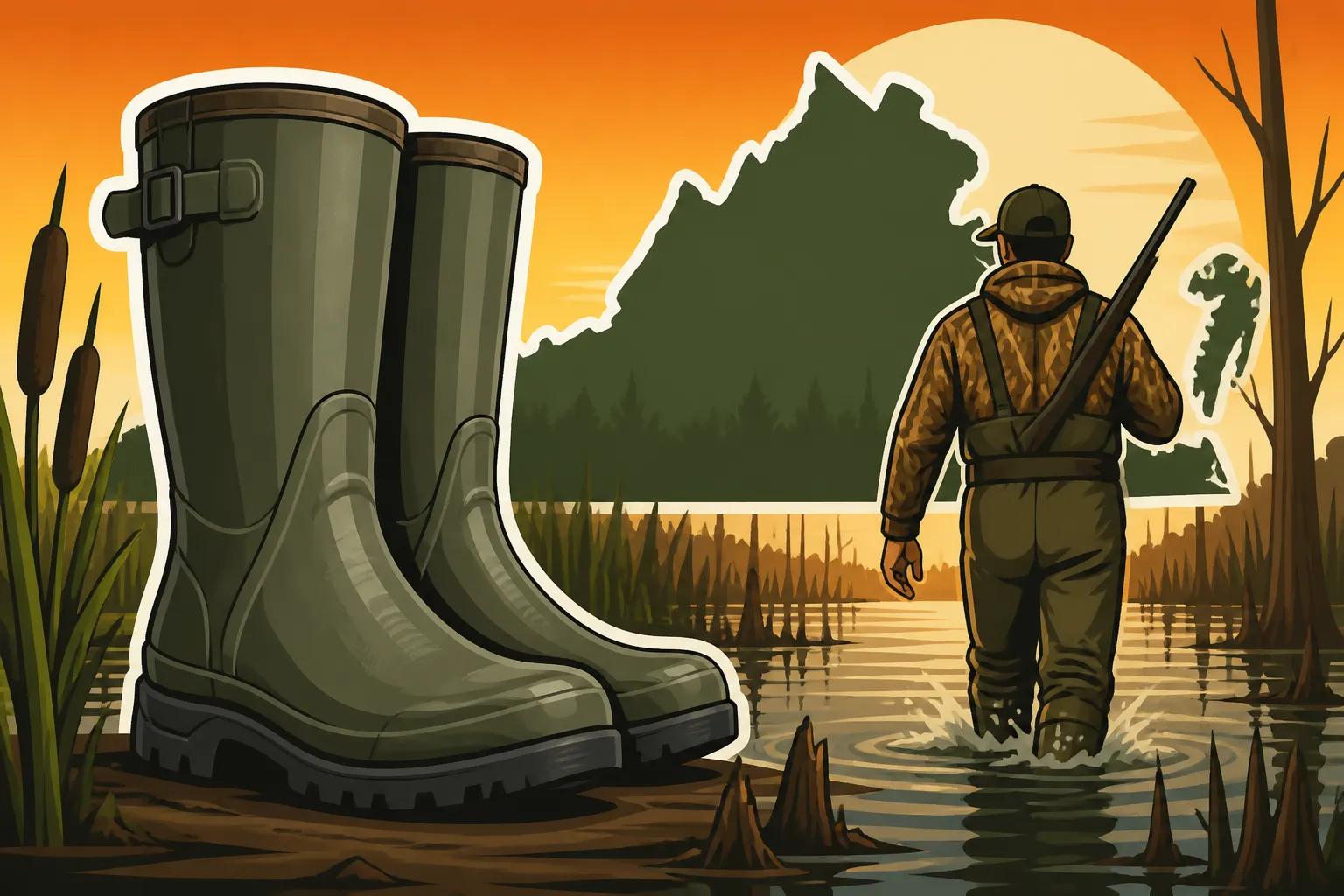
Rubber Boots for Swamp Walking
There's nothing quite like the feeling of cold, wet feet seeping into your boots when you're deep in a Virginia swamp, trying to stay quiet for that elusive whitetail or a wary gobbler. It's a miserable experience that can cut a hunt short and leave you shivering. This guide is all about helping you conquer those soggy challenges by choosing the absolute best rubber boots for navigating Virginia's notorious wetlands and keeping you warm and dry, no matter the conditions.
Why Rubber Boots Are Essential for Virginia's Wetlands
Virginia is a diverse state, boasting everything from mountain hollows to vast coastal plains. However, a significant portion of its prime hunting grounds, especially in the Piedmont and Tidewater regions, involves low-lying areas, creek bottoms, and expansive swamps. These aren't just damp; they're often truly wet, muddy, and sometimes even submerged. Trying to hunt these areas in traditional leather or even waterproof fabric boots is a recipe for misery, and frankly, a ruined hunt.
The moment you step into standing water or sink into that thick, silty mud, you'll understand why rubber is king. It's not just about staying dry, though that's paramount. It's also about scent control, ease of cleaning, and durability against the abrasive muck that can tear other materials to shreds. If you plan to pursue deer along a flooded creek bottom or push through a cypress swamp for ducks, rubber boots aren't a luxury; they're a necessity.
The Ubiquitous Mud and Water Problem
From the James River bottoms to the far reaches of the Eastern Shore, Virginia's landscape is crisscrossed with swamps, floodplains, and damp woodlands that are often just too wet for anything but dedicated rubber footwear. Think about the spring rains that swell creeks, turning low-lying fields into boggy messes, or the ever-present standing water in a cypress and tupelo swamp. Hunters attempting to navigate these areas without the right boots quickly find themselves sidelined.
I’ve personally ruined more than one pair of "waterproof" hiking boots trying to save a few bucks, only to find my socks squelching and my hunt cut short. The deep, sticky mud found in many Virginia bottoms can suck the boot right off your foot if it's not a snug fit, and then you're truly in a pickle. Whether you're hunting small game in Rabbit Hunting Virginia Fencerows or still-hunting through a wetland for deer, you'll encounter unpredictable wetness. It's not just puddles; it's often ankle-deep, calf-deep, or even higher, requiring full waterproof coverage.
Stealth and Scent Control in Watery Environments
Beyond keeping your feet dry, rubber boots offer a distinct advantage for stealth and scent control, especially crucial when targeting deer or bears in dense, wet cover. Unlike fabric boots that absorb and hold human odors, rubber is non-porous and can be easily cleaned. This means less human scent left behind on the ground as you trudge through a swampy approach to your stand. Deer have an incredible sense of smell, and anything you can do to minimize your scent trail is a huge win.
Furthermore, the right rubber boots, particularly those with flexible uppers and well-designed outsoles, can actually contribute to quieter movement through water and mud. A clunky, stiff boot will slosh and crackle, announcing your presence from a mile away. A soft, flexible rubber boot, on the other hand, allows for more subtle placement of your foot, reducing the noise of breaking twigs or squishing mud. This quiet approach can be the difference between spooking that mature buck out of a thicket or getting close enough for a shot. When you’re trying to move silently through a flooded timber, every little bit of advantage matters.
Key Features to Look for in Swamp-Ready Rubber Boots
When you're out there, deep in a Virginia swamp, relying on your boots to keep you comfortable and effective, you don't want to compromise on quality or features. There are several critical aspects to consider beyond just the basic "it's rubber" check. Investing in the right pair will pay dividends in comfort, successful hunts, and longevity.
Waterproofing and Construction Quality
This might seem obvious, but not all "rubber" boots are created equal. You want boots made from high-quality, durable rubber or neoprene blends that can withstand constant immersion and abuse from briars, sticks, and abrasive mud. Look for boots that are 100% seamless, or have vulcanized seams that are guaranteed against leaks. Many cheaper boots can develop pinhole leaks over time, especially in high-flex areas, turning your dry hunt into a soggy mess.
Consider the thickness of the material as well. Thicker rubber or neoprene provides better puncture resistance, which is vital when you're wading through tangled undergrowth or pushing through old corn stubble. Brands like LaCrosse and Muck Boots are often praised by hunters for their robust construction and reliable waterproofing, holding up to years of abuse in demanding conditions. When you're spending good money on boots, you want them to last more than just a season or two.
Traction and Outsole Design
Navigating slippery mud, submerged logs, and slick stream beds requires superior traction. The outsole design of your rubber boots is absolutely critical. Look for aggressive tread patterns with deep, widely spaced lugs that can shed mud easily and grip uneven terrain. A common frustration with lesser boots is their tendency to pack up with mud, essentially turning your sole into a slick slab of rubber. This is a real hazard, especially when Dragging a Deer Out of a Mountain Hollow or just trying to keep your footing on a muddy bank.
Some boots feature specific tread patterns designed for maximum grip in various conditions, from soft mud to rocky creek beds. A good outsole will provide stability and prevent slips and falls, which can be dangerous in remote, wet environments. Before you buy, feel the lugs and imagine them digging into the earth – if they look too shallow or too close together, they might not be up to the task of Virginia's swampy terrain.
Insulation and Comfort for Varied Seasons
Virginia's hunting seasons span from early archery in warm September all the way through the frigid close of January. This means you'll need to consider insulation. For early season hunts in September or October, especially when Hunting Tidewater Swamp Edges where humidity can be high, uninsulated or lightly insulated boots are usually sufficient to prevent overheating. Too much insulation in warm weather will lead to sweaty feet, which paradoxically can feel colder once you stop moving, and is a breeding ground for blisters.
However, for late-season deer hunts or Waterfowl Hunting the Chesapeake Bay in December and January, you'll absolutely want well-insulated boots. Neoprene is excellent for this, with varying thicknesses (e.g., 3mm, 5mm, or even 7mm) providing different levels of warmth. Some boots incorporate fleece linings or other synthetic insulators. The key is to match the insulation to the typical temperatures you'll be hunting in. Remember, sitting still in a blind over cold water will require far more insulation than actively walking through the woods. Many hunters opt for a pair of uninsulated boots for early season and a heavily insulated pair for late season to cover all their bases comfortably.
Fit and Ankle Support
A proper fit is paramount for comfort and preventing blisters, especially when you're putting in miles in challenging terrain. Rubber boots should fit snugly but not be constrictive. You want enough room for a good pair of wool socks, but not so much that your foot slides around inside, leading to chafing. Pay close attention to the ankle area; good ankle support prevents your foot from lifting out of the boot in deep mud and provides stability on uneven ground.
Some boots feature adjustable gussets or closures around the calf to accommodate different calf sizes or layers of clothing, which can make a huge difference in comfort and fit. Trying boots on with the type of socks you typically wear for hunting is highly recommended. Spend some time walking around in them in the store to get a feel for their flexibility and support. A poorly fitting boot, no matter how waterproof, will make your hunt miserable.
Choosing the Right Height and Style
Once you've nailed down the core features, it's time to consider the boot's height and overall design. Virginia's diverse wetlands demand different levels of protection, and choosing the wrong style can leave you under-prepared or over-encumbered.
Knee-High Versus Hip Waders (or Chest Waders)
Most hunters opt for knee-high (16-18 inch) rubber boots as their go-to for general swamp walking. These offer excellent protection for most shallow creek crossings, muddy bottoms, and damp fields, providing ample coverage for typical water depths encountered while deer or turkey hunting. They strike a good balance between protection and mobility, allowing you to move fairly freely without feeling bogged down. For anyone primarily Hunting a Clear-Cut Regrowth Edge or Working a Creek Bottom for Late-Season Deer, these are usually sufficient.
However, if your primary goal is to hunt deep-water environments, like standing timber duck hunts, tidal marsh edges, or beaver swamps where water can easily get waist-deep, you might need to step up to hip waders or even chest waders. Waders for Cattail Marsh Hunting are absolutely essential if you plan to wade out to set decoys or retrieve birds in deep water. Hip waders provide coverage up to your waist, while chest waders obviously go even higher. While these offer superior water protection, they are less comfortable for long walks and can be cumbersome. It’s a trade-off: maximum dryness versus maximum mobility. Assess the typical water depths you expect to encounter before making this choice.
Slip-On Versus Gusseted Designs
Rubber boots generally come in two main styles when it comes to getting them on and off: slip-on and gusseted.
Slip-on boots, which are the most common, feature a single, continuous rubber or neoprene shaft. They are designed to be pulled on and off. The fit around the calf can vary significantly between brands, with some being quite wide and others more tapered. They are often praised for their simplicity and robust waterproofing due to fewer potential leak points. Many hunters, especially those with average to slender calves, find these perfectly comfortable and efficient.
Gusseted boots incorporate an adjustable strap or buckle, often with an expandable panel (the gusset) on the calf. This design allows for a more customized fit around the calf, which can be a huge benefit for hunters with larger calves, or those who like to tuck their pants into their boots, or wear extra layers. The adjustability helps seal out debris and water more effectively around the top of the boot. While the gusset adds a potential (though usually well-sealed) point of entry for water if submerged too deeply or if the seal fails, for many, the enhanced comfort and fit make it worthwhile. When you're doing a lot of walking or dealing with thick brush, having a boot that fits your calf well can prevent irritation and discomfort.
Here's a quick comparison of common rubber boot styles for Virginia hunting:
| Boot Type | Ideal Virginia Use | Pros | Cons |
|---|---|---|---|
| Knee-High (16-18") | General deer, turkey, small game in wet woods, shallow creek bottoms | Good balance of protection & mobility, versatile | Limited depth for deeper water |
| Hip Waders | Deeper creek crossings, wading into shallow ponds, retrieving waterfowl | Excellent protection up to waist | Less mobility for long walks, can feel bulky |
| Chest Waders | Deep water duck blinds, tidal marsh hunting, setting decoys | Maximum dryness, full body protection | Heaviest, least mobile, cumbersome for upland hunts |
| Insulated | Late-season deer, cold weather waterfowl | Warmth in freezing conditions, better for sitting still | Can be too warm for early season, adds bulk |
| Uninsulated | Early season archery, warm weather small game | Lighter, more breathable for active hunting | No warmth for cold weather |
| Slip-On | Everyday convenience, general hunting | Simple, fewer leak points, durable | Fixed calf size, can be hard to remove if tight |
| Gusseted | Customizable calf fit, layering, active movement | Adjustable fit, comfortable for various leg sizes | Potential (though rare) leak point if submerged past gusset |
Maintaining Your Rubber Boots for Longevity
Rubber boots, especially quality ones like those you might find on GoHunt's gear reviews, are an investment. To ensure they last for many seasons of sloshing through Virginia's swamps, proper care is essential. Neglecting your boots can lead to premature cracking, leaks, and a much shorter lifespan.
Cleaning and Drying After Each Hunt
This is perhaps the most crucial step. As soon as you get home from a hunt, especially if you’ve been in mud or swampy water, take the time to thoroughly clean your boots. Use a hose to spray off all mud, dirt, and debris from the exterior. A stiff brush can help dislodge stubborn grime from the treads. Pay attention to any crevices or seams where mud can get packed in.
After cleaning the exterior, turn your attention to the interior. If your boots got wet inside (which can happen, even with good boots, from sweat or water splashing over the top), you need to dry them completely. Pull out any removable insoles and let them air dry. For the boots themselves, stand them upside down or on their side in a well-ventilated area, out of direct sunlight or intense heat. Never dry rubber boots next to a roaring fire, on a heater vent, or with a blow dryer – extreme heat can dry out and crack the rubber. A boot dryer can be a good investment if you hunt frequently in wet conditions, circulating warm air gently inside the boot. Make sure they are bone dry before storage. This prevents mildew, odors, and premature material degradation.
Storage Tips to Prevent Cracking
How you store your rubber boots during the off-season, or even between hunts, makes a big difference in their lifespan. The primary enemy of rubber is ozone and UV light, which can cause the material to dry out, crack, and become brittle.
- Avoid Direct Sunlight: Never store your rubber boots in direct sunlight, like on a porch or near a window. Sunlight accelerates the degradation of rubber.
- Cool, Dry Place: Store them in a cool, dark, and dry environment, like a closet or a dedicated gear storage locker.
- Upright or Hanging: Store them upright to maintain their shape, or hang them from boot hangers if possible. Avoid folding or creasing the boots for extended periods, as this can create weak points where cracks might form.
- Treat with Conditioner (Optional): Some hunters like to occasionally treat their rubber boots with a silicone-based conditioner designed for rubber footwear. This can help keep the rubber supple and prevent drying and cracking, much like you would condition a leather boot. However, make sure the conditioner is safe for your specific boot material and doesn't leave a greasy residue that could attract dirt or affect scent control.
By following these simple cleaning and storage practices, your reliable rubber boots will be ready to tackle those challenging Virginia swamps year after year, keeping your feet dry and your spirits high. When you're scouting new areas, a resource like GoHunt can show you those low-lying areas, and with properly maintained boots, you'll be prepared for anything.
Disclaimer
This article is for general informational purposes only and does not constitute professional advice. Laws, prices and regulations vary by location and change over time. Consult a qualified professional for guidance on your specific situation.