Rattling Volume in Thick Mountain Cover
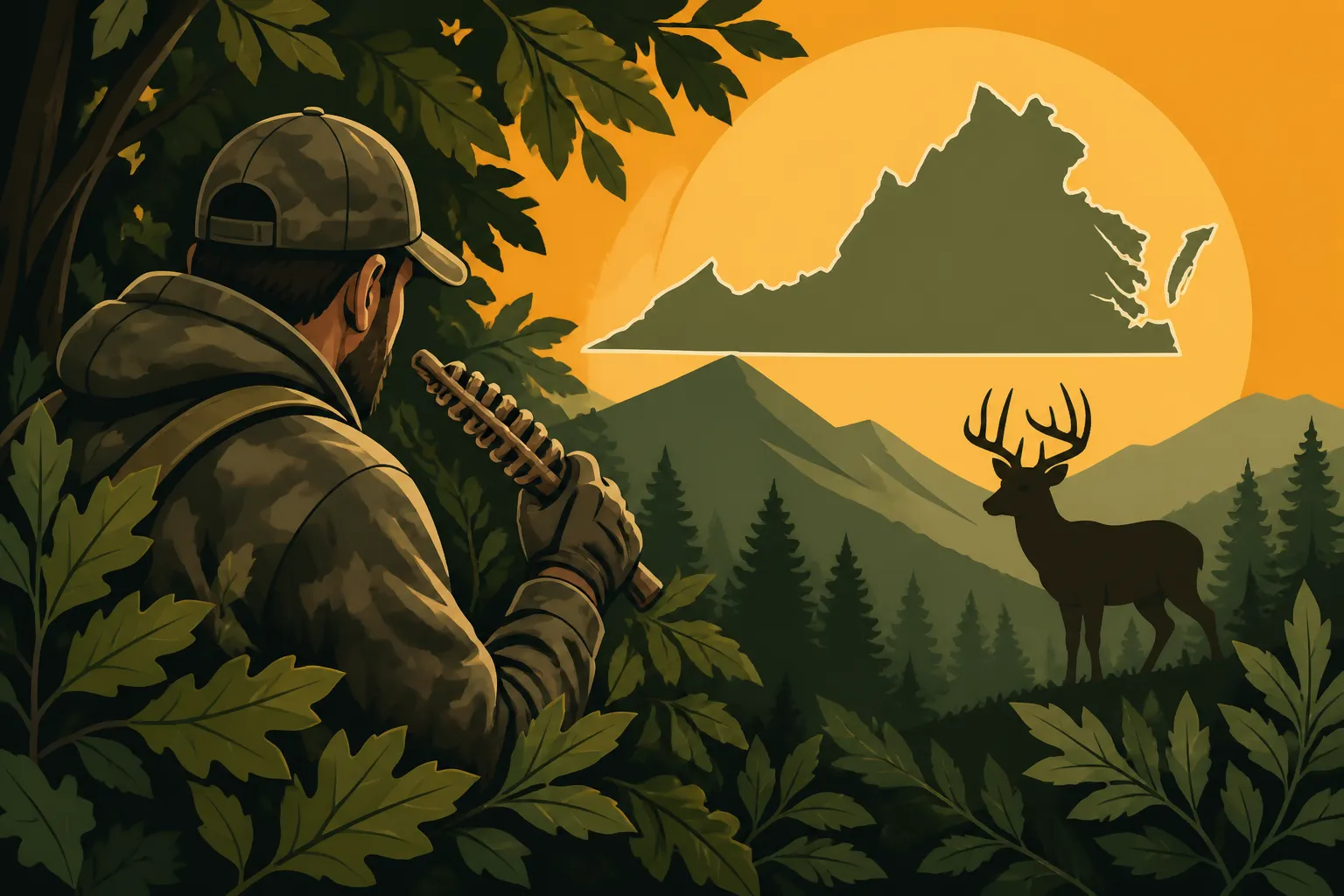
There’s nothing quite as frustrating as hauling your rattling antlers or bag deep into the Virginia mountains, clashing them together with all your might, only to be met with dead silence. You imagine bucks hearing it for miles, but in reality, that dense timber and broken topography can swallow up sound faster than a black hole. It leaves you wondering if you’re doing it all wrong, or if rattling even works at all in these thick, unforgiving environments. This guide is all about cutting through that frustration and helping you understand how to precisely adjust your rattling volume to effectively call in whitetails in the challenging, close-quarters world of Virginia's mountain cover.
Understanding the Mountain Environment for Rattling
Hunting the rugged mountains of Virginia presents a unique set of challenges that directly impact how effective your rattling efforts will be. Unlike open agricultural fields or pine plantations, the topography and vegetation here demand a different approach.
The Acoustic Challenges of Steep Terrain and Thick Woods
Imagine standing at the bottom of a steep hollow, trying to yell to someone on the ridge above you. The sound waves don't travel in a straight line; they bounce, get absorbed by the terrain, and dissipate quickly. This is precisely what happens with your rattling calls. The rolling hills, sharp draws, and deep hollows found throughout the Blue Ridge and Allegheny mountains, along with the dense undergrowth and mature hardwood timber, act as natural sound barriers. Your loud, aggressive rattling sequence that might carry half a mile in open country could barely make it a hundred yards in a Virginia mountain laurel thicket or a dense stand of oaks. Deer, too, are masters of moving quietly through this cover, so what might sound overwhelming to us can often be subtle, or even completely missed, by a deer a short distance away.
Deer Behavior in Dense Mountain Habitats
Whitetails in thick mountain cover tend to live a much more reclusive life than their open-country cousins. They often have smaller home ranges, feeling secure within the protective embrace of dense woods and steep terrain. When they hear a sound, especially something as intriguing as rattling antlers, their first instinct often isn't to charge in from a quarter-mile away. Instead, they're more likely to try and pinpoint the source, often circling downwind or moving stealthily through cover, trying to get a visual or scent check before committing. This means your rattling strategy needs to accommodate their cautious nature. You're not necessarily trying to pull them across vast distances; you're trying to pique their curiosity just enough to draw them those critical extra few yards into your shooting lane, or to reveal their presence as they sneak in. Understanding this behavior is key to adjusting your volume and cadence.
Dialing in Your Rattling Volume for Thick Cover
The key to successful rattling in dense mountain cover isn't always about how loud you can get; it's about sounding authentic and proportionate to the immediate environment. Think of it as painting with sound, adjusting your brushstrokes to the canvas you're working on.
Soft Rattling: Mimicking Subtle Interactions
In the tight confines of thick Virginia timber, a full-blown, aggressive antler clash can often sound unnatural and overwhelming, even to a buck that's close by. Instead, consider starting with a much softer approach. This "soft rattling" technique involves gently tickling the tines, lightly rubbing the bases together, and just creating enough sound to mimic two young bucks sparing or an older buck subtly raking a tree.
How to Execute Soft Rattling:
- Gentle Taps: Instead of slamming the antlers together, use controlled, light taps of the tines. Think about the sound of a deer walking through brush, bumping against small saplings.
- Light Rubs: Gently scrape the beams and tines together, creating a rustling, scraping sound. This simulates bucks pushing and shoving, without the full impact of a knock-down-drag-out fight.
- Duration and Pauses: Keep your soft rattling sequences shorter, perhaps 15-20 seconds, followed by longer periods of silence—up to 5-10 minutes. This gives a cautious buck time to process the sound and make a move.
- Scenario: This approach is particularly effective in areas where deer density is moderate, or during the early pre-rut when bucks are still establishing dominance hierarchies without full-blown aggression. It's excellent for calling in does too, which might bring a buck along.
When you're perched on a ridgetop or tucked into a laurel thicket, especially where you've noticed deer movement but haven't seen anything, soft rattling can be just enough to draw a curious buck in for a closer look.
Aggressive Rattling: When to Turn Up the Volume
While soft rattling is often your go-to in thick cover, there are times when you absolutely need to turn up the volume. Aggressive rattling aims to simulate a full-on, no-holds-barred buck fight, an intense interaction that can trigger a strong response from a dominant buck.
When to Get Aggressive:
- Peak Rut: During the peak of the rut in Virginia, roughly the first two weeks of November, bucks are highly territorial and focused on breeding. A loud fight can signal competition for a receptive doe, potentially drawing in an older, more aggressive buck looking to break up the party or claim the prize. This is often the time when you might try some Rattling and Grunting in Virginia.
- High Winds: If you're dealing with significant wind, particularly in higher elevations, you'll need to increase your volume just to ensure the sound carries even a short distance. Wind can carry scent to your advantage, but it can also make your sound disappear.
- Thickest of Thickets: Counterintuitively, if you're set up in an extremely dense, visibility-limiting thicket, you might need more volume to penetrate the immediate cover and reach a buck that might be only 50-70 yards away but completely out of sight.
Executing Aggressive Rattling:
- Loud Clashes: Don't hold back. Slam the antlers together with force, mimicking the impact of antlers colliding.
- Grunt and Snort-Wheeze: Combine aggressive rattling with vocalizations like deep grunts or even a snort-wheeze to add realism and convey intense aggression. This can make the fight sound incredibly real to a nearby buck.
- Extended Sequences: Aggressive sequences can be longer, up to 30-45 seconds, simulating a sustained battle. Follow this with a few minutes of silence, but remain on high alert.
Remember, even with aggressive rattling, the goal in thick cover is still often to bring them in from a relatively short distance, perhaps 75-150 yards, rather than hundreds of yards. Be ready for a quick shot.
Table: Rattling Volume by Cover Type and Scenario
Here’s a quick guide to help you decide when to adjust your rattling volume in Virginia’s varied terrain.
| Scenario / Cover Type | Recommended Volume | Rationale | Target Response |
|---|---|---|---|
| Dense Mountain Thicket | Soft to Moderate | Sound absorption by dense foliage; cautious deer. Aim to sound like close-quarters sparing. | Curious investigation, slow approach. |
| Steep Hollow/Draw | Moderate to Loud | Sound easily dissipates or gets trapped. Need to project enough to reach higher or across. | Alerted, moving to investigate source/downwind. |
| Ridge Top Saddle | Moderate | Good for projection but can be windy. Balance carrying power with naturalness. | Deer approaching along the ridge or from adjacent slopes. |
| Oak Flat (Thick Understory) | Soft to Moderate | Similar to dense thicket, but sound might travel slightly better if understory isn't too extreme. | Closer investigation, circling for scent. |
| Open Hardwood Timber (Sparse Understory) | Moderate to Loud | Less sound absorption. Can project further, allowing for more aggressive sequences. | More direct approach, sometimes charging in. |
| Peak Rut (any cover) | Moderate to Aggressive | Increased buck aggression; louder sounds often trigger stronger responses due to competition. | Direct charge or rapid approach. |
| Pre-Rut (any cover) | Soft to Moderate | Bucks sparring and testing dominance. Overly aggressive may seem out of place. | Curious approach, or cautious circle. |
| High Wind Conditions | Increase Volume | Wind significantly reduces sound travel. Compensate to be audible even at short range. | May only hear subtle sounds, requiring close proximity for response. |
Beyond Volume: Other Rattling Nuances for Mountain Whitetails
While volume is critical, it's only one piece of the puzzle. To truly entice a wary mountain buck, you need to master the art of realism and combine rattling with other effective techniques.
Adding Realism with Scrapes, Rakes, and Grunts
A buck fight isn't just about clashing antlers. It involves a whole symphony of sounds and actions. To make your rattling sequence believable, you need to incorporate these elements.
- Tree Raking: Use a single antler to rake a nearby sapling or small tree, just as a real buck would. This simulates a buck letting off steam, marking territory, or sparring with a tree. The sound of wood scraping against bone adds another layer of authenticity that can draw a buck in.
- Ground Pawing/Kicking: When the antlers clash, scuff your foot on the leaves and ground litter to mimic a buck pawing the ground in agitation. This subtle sound can really sell the illusion of a live interaction.
- Vocalizations: Don't forget the power of the grunt tube. A few well-timed tending grunts, an aggressive grunt, or even a snort-wheeze immediately following a rattling sequence can be incredibly effective. A single deep grunt during a pause can reassure a buck that’s sneaking in, making him believe another buck is still there. These vocalizations are particularly important when Hunting the Rut West of the Blue Ridge where deer are often more spread out.
- Silence is Golden: One of the most common mistakes is rattling constantly. After each sequence, whether soft or aggressive, put your antlers down and be absolutely still for several minutes. Bucks will often sneak in silently, trying to pinpoint the source. Being ready for a shot during these silent periods is paramount.
Pairing Rattling with Strategic Setup and Scouting
Even the best rattling technique won't work if you're in the wrong spot or haven't done your homework. Mountain hunting requires diligent scouting and strategic positioning.
- Scouting for Sign: Before you ever lift an antler, spend time scouting. Look for fresh rubs, scrapes, and heavy travel corridors, especially on benches, saddles, and funnel points. Bucks use these areas to travel and mark territory. Finding these spots is crucial for success, and tools like GoHunt's mapping features can be invaluable for identifying prime locations with thick cover adjacent to travel routes.
- Wind Direction is Paramount: Always, always, always play the wind. Bucks will almost invariably try to approach a rattling sequence from downwind to scent-check the "intruder." Position yourself so that a buck approaching from downwind will have to pass through your shooting lane. This might mean setting up with thick cover directly behind you and open shooting lanes in front, allowing you to see them before they smell you. Consider how Wind and Thermals on a Blue Ridge Slope can impact scent and sound distribution.
- Elevation Advantage: In the mountains, high vantage points can be an advantage. Setting up on a ridge or high bench allows your sound to carry more effectively into hollows and across slopes, though it also means deer might approach from below. Use binoculars to scan below you frequently during silent periods. For example, when Hunting a Ridge-Top Saddle for Rutting Bucks, you're often in a prime position to broadcast sound and intercept deer.
- Optimal Timing: Rattling is most effective during the pre-rut and peak rut, when bucks are actively searching for does and competing with rivals. Early mornings and late afternoons are generally the best times, coinciding with deer movement patterns.
Practical Scenarios and Adaptations
Let's put all this theory into practice with some real-world scenarios you might encounter while hunting Virginia's mountains.
Rattling a Steep Hollow or Creek Bottom
You've found a promising creek bottom with heavy buck sign – rubs, old scrapes, and distinct trails winding through the rhododendron thickets. You know deer bed on the steep slopes above and feed in the bottom.
Approach:
- Setup: Position yourself slightly up from the creek, perhaps on a small bench or at the base of a steeper slope, with a good shooting lane in front and thick cover behind you for concealment. Ensure the wind is blowing down into the hollow or across it, not up to where the deer might be bedding.
- Rattling Sequence: Start with a moderate rattling volume. Give a sequence of 20-30 seconds, focusing on aggressive clashing mixed with some soft scraping and a few grunts. The steep terrain will absorb a lot of sound, so you need enough volume to get attention.
- The Wait: Immediately go silent. Be prepared for a buck to come charging directly in, but more often, they'll pick their way carefully. Keep a sharp eye on trails leading down from the slopes and any breaks in the thick cover.
- Follow-Up: If nothing appears after 5-7 minutes, try another sequence, possibly increasing the aggression slightly. If a buck responds vocally (snorts, grunts), try to mimic his sound and aggression. Continue this for up to 30-45 minutes before moving on, as deer might take their time approaching. For specific areas, understanding how to read the landscape for deer is crucial, whether you're Reading a Ridge for Blue Ridge Deer or navigating a hollow.
Rattling a Mountain Ridgetop or Saddle
Ridgetops and saddles are natural travel corridors for deer in mountainous terrain. Bucks often cruise these areas looking for does, making them prime rattling locations.
Approach:
- Setup: Find a saddle or a flat section of a ridge line with good visibility down both sides of the ridge and into any adjacent hollows. Look for a natural funnel created by converging terrain features. Setting up where you have an elevated view and can see approaching deer is key. Again, use GoHunt to study topo maps to identify these features.
- Rattling Sequence: Here, you can usually start with a slightly louder, more aggressive sequence. The sound will carry better along the ridge and into the adjacent slopes. A 30-second burst of aggressive clashing, followed by a few grunts, is a good starting point.
- Scanning and Anticipating: Bucks using ridges often travel downwind, or they may approach from either side of the ridge. Be prepared to swing your gun or bow in any direction. Scan constantly, particularly into any thick cover adjacent to the ridgetop.
- Patience and Repetition: On a ridge, you can often afford to be a bit more patient and repeat your rattling sequences every 10-15 minutes for a longer period. Bucks can cover ground quickly along these travel routes. If you're on public land, consider how deer might react to Hunting Pressure on Virginia Public Land and adjust your timing accordingly.
Dealing with Non-Responsive Bucks
What happens when you rattle, and nothing seems to respond? It's a common occurrence, and it doesn't always mean you're doing it wrong.
- The Sneak-In: Often, bucks will approach silently, especially older, more wary ones. They might circle downwind for a scent check without making a sound. This is why vigilance during silent periods is so important. Many a hunter has been busted by a silent buck that came in behind them.
- Curiosity, Not Commitment: Sometimes a buck hears it, gets curious, but isn't quite ready to commit. He might move closer, stop at the edge of thick cover, and wait. If this happens, a soft grunt or a very subtle, light tickle of the antlers might be enough to draw him those last few yards.
- Wrong Time, Wrong Place: Rattling isn't a magic button. If deer aren't in the area, or if the rut isn't active, your efforts will likely be fruitless. Always ensure you're in an area with fresh sign and consider the time of year. For instance, Hunting the Virginia Rut in November will be far more productive for rattling than early archery season.
- Change Tactics: If rattling isn't working after several attempts, consider switching to different calling techniques like solely grunting, or focus on still-hunting or spot-and-stalk if the terrain allows. Sometimes, even Grunt Calls in Mature Virginia Timber on their own can be incredibly effective.
By understanding the nuances of rattling volume, adapting to the specific mountain environment, and combining it with smart scouting and strategic setups, you can significantly increase your chances of calling in a wary Virginia whitetail. It's a skill that takes practice, but the reward of a buck responding to your call is truly unforgettable.
Disclaimer
Hunting is an inherently dangerous activity. Always prioritize safety, understand and follow all Virginia Department of Wildlife Resources (DWR) regulations, and obtain proper licenses and permits before heading afield. The information provided in this guide is for educational purposes only and should not replace professional safety training or official DWR guidelines.