Filling Three Antlerless Tags Before the Rut
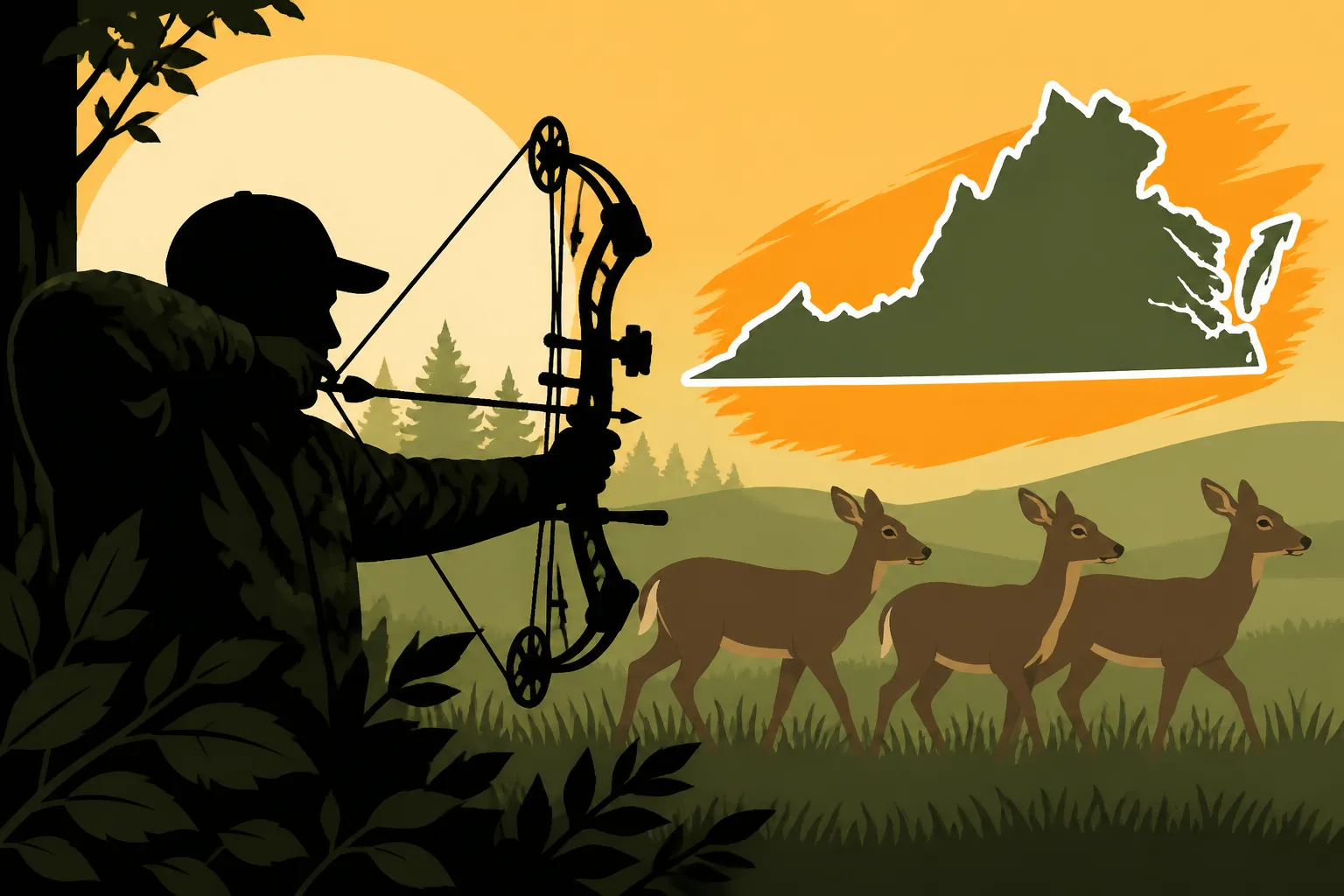
For many Virginia deer hunters, the excitement often builds towards the peak of the rut, with visions of big bucks chasing does. But let's be real: overlooking the critical opportunity to fill those antlerless tags before the rut can leave your freezer empty and contribute to an unbalanced herd. It’s incredibly frustrating to spend weeks chasing rutting deer, only to realize you still need to fill antlerless tags when the season winds down and deer patterns change. This comprehensive guide will equip you with practical strategies to consistently harvest three antlerless deer in Virginia, getting that essential meat in the freezer and contributing to healthy herd management well before the main event of the breeding season.
The Strategic Importance of Early Antlerless Harvest
It’s easy to get caught up in the pursuit of a trophy buck, but effectively managing the deer population, and ensuring your family has venison, starts with understanding the role of antlerless harvest. Focusing on does early in the season isn't just about punching tags; it's a smart, sustainable approach that benefits both you and the herd.
Why Target Does Before the Rut?
There are compelling reasons to prioritize antlerless deer during the early season. First and foremost, it's a critical component of herd health. Virginia's deer population is robust in many areas, and an excess of does can lead to overbrowsing, reduced fawn survival rates, and increased disease transmission. By reducing the number of does, you help balance the buck-to-doe ratio, which can lead to healthier, larger-bodied deer overall and more intense rutting activity later. It also helps alleviate agricultural damage in farm-heavy regions like the Piedmont.
Beyond herd management, there's the practical side for hunters: securing freezer meat. Harvesting does early means you're putting venison away when temperatures are generally milder, making field dressing and processing much easier. Imagine the relief of having your freezer stocked before the cold, unpredictable weather of late season hits, or before you shift your focus entirely to chasing a specific buck. Plus, early season deer are often less pressured and less wary than their late-season counterparts, which makes for a more relaxed and enjoyable hunt. You're also spreading out your effort; instead of scrambling for tags in December, you can enjoy the rest of the season with less pressure.
Understanding Virginia's Bag Limits and Season Structure
Virginia has a somewhat complex but very effective deer season structure designed to manage the herd across its diverse landscapes. Crucially, understanding the differences in antlerless bag limits and season dates between the Eastern and Western regions of the Blue Ridge is paramount. Generally, the Eastern Region, with its more abundant deer population and agricultural land, typically allows for a higher antlerless harvest. For instance, in many eastern counties, you might be able to take multiple antlerless deer per day, even potentially Filling a Six-Deer Eastern Limit throughout the entire season. In contrast, the Western Region, characterized by vast tracts of national forest and lower deer densities, often has more conservative antlerless limits, sometimes just one or two antlerless deer for the entire season, or specific antlerless-only days. You'll want to carefully consult the Virginia DWR regulations for your specific county to understand the East Versus West of the Blue Ridge Bag Limits that apply to your hunting area.
The early season itself typically encompasses archery season (which often includes an Urban Archery Hunting in Virginia Cities component that is largely antlerless focused), and the early muzzleloader season. These periods, often running from late September through October, offer prime opportunities for antlerless harvest before the general firearms season opens and hunting pressure significantly increases. Knowing these specific season dates and the county-by-county variations is your first step to planning a successful early season antlerless strategy. It’s not just about when a season starts, but also understanding the daily and seasonal limits on antlerless deer in your specific hunting unit.
Locating and Patterning Early Season Doe Groups
Successfully filling those antlerless tags before the rut hinges on effectively locating and patterning doe groups. Unlike rutting bucks that are driven by breeding, does in the early season are primarily focused on food, water, and security. Understanding these basic needs will be your compass.
Identifying Prime Food Sources
In the early season, deer are largely creatures of habit, and their habits revolve around food. As an astute Virginia hunter, you need to become a detective of diet. Hard mast, especially acorns, is king when available. White oaks drop first, offering a highly palatable, low-tannin treat, often drawing deer like a magnet. Later, red oaks drop their acorns, providing a sustained food source deeper into the fall. Scout areas with mature oak stands, paying close attention to fresh droppings and disturbed leaves under specific trees. A poor acorn year can shift deer patterns dramatically, pushing them to other food sources, so understanding Hunting After a Poor Acorn Year is crucial.
Beyond acorns, don't overlook soft mast like persimmons, wild grapes, and honeysuckle. These often ripen in late summer and early fall and can be irresistible to deer. In agricultural areas, green fields of soybeans, corn, and alfalfa are major draws. Deer will often move from bedding areas to these fields in the evenings. Even cut cornfields can offer residual grain and provide excellent cover, making them worth scouting. Finding these critical food sources is often the key to locating doe groups before they become more scattered during the rut.
Pinpointing Bedding Areas and Travel Corridors
Once you've identified potential food sources, your next step is to understand how deer are getting there and where they're resting. Early season does, especially those with fawns, prefer thick, secure bedding areas. This could be dense pine thickets, brushy clear-cuts, laurel and rhododendron thickets in the mountains, or even tall switchgrass fields. They want cover that offers protection from predators and the elements, often with good visibility or scent-checking ability.
Look for well-used trails leading from these bedding areas to feeding zones. These trails, or travel corridors, are your prime ambush points. Creek bottoms, old logging roads, natural saddles on ridges, and field edges that provide cover are all excellent places to set up. Deer often utilize funnels – natural constrictions in the landscape that force deer movement through a smaller area. This could be a narrow strip of woods between two fields, a pinch point along a creek, or a low spot in a ridge. Learning to identify and hunt Hunting a Funnel Between Two Hollows can be incredibly productive for consistent deer encounters. By finding these high-traffic routes, you can increase your chances of intercepting a doe group moving between their bedding and feeding sites.
Leveraging Technology for Pre-Season Scouting
In today's hunting world, technology can be a game-changer for efficiently locating and patterning deer. Mapping applications are invaluable for pre-season scouting, allowing you to identify potential food sources, bedding cover, and travel corridors from your couch. Tools like GoHunt (and others like onX Hunt, BaseMap) allow you to layer satellite imagery with topographic maps, showing you changes in elevation, creek drainages, and different timber types that might not be obvious on the ground. You can mark potential stand locations, historical deer sightings, and observe property lines to ensure you're hunting legally. GoHunt, for instance, provides detailed land ownership maps which are indispensable for finding public access or identifying landowners for permission.
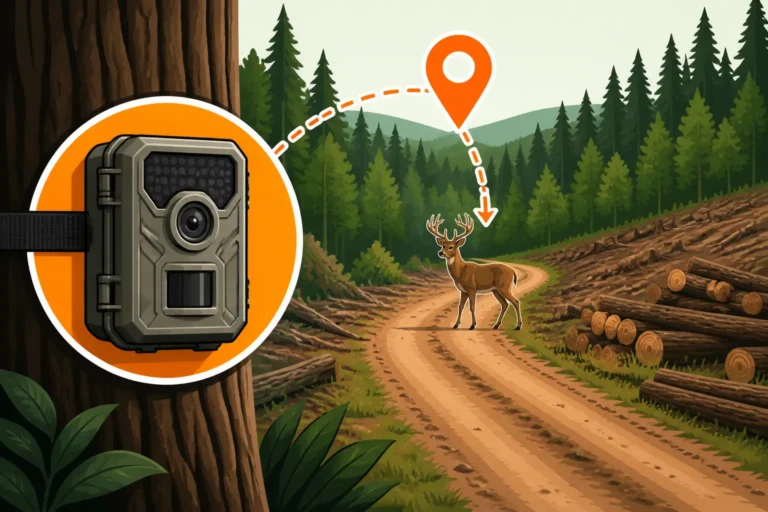
Beyond mapping apps, trail cameras are your eyes in the woods when you're not there. Strategically placing cameras on key trails, near rub lines (even if you're targeting does, bucks will use them and lead you to general deer activity), or overlooking food plots can give you real-time intelligence on deer movement patterns, including the timing of doe group activity. Pay attention to the frequency and time of day deer are passing through a specific spot. This data helps you fine-tune your hunt plans, ensuring you're in the right place at the right time. Using these digital tools to supplement boots-on-the-ground scouting can drastically cut down your learning curve and boost your success rate.
Proven Tactics for Harvesting Antlerless Deer
With your scouting complete and potential hotspots identified, it’s time to talk tactics. Early season does can be less wary than rutting bucks, but they’re still deer, and they require respect and careful planning.
Stand Hunting Key Funnels and Food Sources
One of the most effective methods for early season antlerless deer is stand hunting. This involves setting up a treestand or ground blind in a location where you've identified consistent deer movement between bedding and feeding areas. Prime spots include field edges where deer transition from timber to open agricultural fields, saddles along ridges, or bottlenecks created by terrain features. For example, Setting Up on a Piedmont Field Edge can be incredibly effective in the evenings when does emerge to feed.
Consider the time of day: mornings are often best for catching deer returning to bedding areas from feeding, while evenings are ideal for intercepting them heading to feed. Always pay meticulous attention to wind direction. Deer rely heavily on their sense of smell, and a misplaced stand with the wind blowing your scent into their travel path will likely result in a bust. A good rule of thumb is to have multiple stand options for different wind directions for each prime location. Remember, early season weather can be unpredictable. You might start a morning hunt in the 50s and end in the 70s, so layering your clothing is key. A portable treestand or saddle setup can offer the flexibility to move and adapt as deer patterns shift due to hunting pressure or changing food sources.
Still-Hunting and Spot-and-Stalk Approaches
While stand hunting is effective, sometimes the terrain or hunting pressure dictates a more mobile approach. Still-hunting, which involves moving slowly and deliberately through the woods, pausing frequently to observe and listen, can be incredibly productive. This tactic works particularly well in areas with good visibility but also enough cover for concealment, such as open timber with a good understory or along old logging roads. The key is to move at a snail's pace, taking only a few steps before stopping for several minutes, scanning thoroughly with your binoculars.
Spot-and-stalk is a challenging but rewarding method, especially suited for open country or agricultural fields where you can glass large areas. Imagine you’re hunting the open ridges of the Jefferson National Forest; glassing an open area from a distance with your Optics for Blue Ridge and Piedmont Hunting can reveal deer before they know you’re there. Once you spot a doe group, the arduous part begins: using terrain features, shadows, and wind to close the distance undetected. This requires patience, stealth, and a keen understanding of deer behavior. Both still-hunting and spot-and-stalk demand exceptional woodsmanship and a deep knowledge of the area, but they offer a dynamic alternative to static stand hunting, particularly when deer patterns are erratic or heavily pressured.
The Role of Deer Drives in Late Early Season
As the early season progresses, or if you're struggling to locate does, carefully planned deer drives can be an excellent way to harvest antlerless deer, especially on larger tracts of public land or private properties with dense cover. This tactic works best with a small group of hunters, say Deer Drives With Three or Four Hunters. The idea is simple: a few "drivers" walk through a designated area of cover, pushing deer towards "standers" positioned at strategic escape routes.
Safety is paramount during any deer drive. All participants must wear blaze orange, know the location of every hunter, and have a clear understanding of shooting lanes and safe firing zones. Communication, often through two-way radios, is critical. Drivers should move slowly and deliberately, pausing to listen, while standers should remain absolutely still and alert, covering their assigned areas. This method is particularly effective for pushing deer out of thickets or swamps where they might be bedding during the day. It requires teamwork and coordination, but it can be incredibly efficient for filling multiple antlerless tags in a single push, especially as you get closer to the end of the early season window.
Navigating Virginia's Regulations and Reporting
Virginia’s hunting regulations are designed to ensure fair chase, promote safety, and manage wildlife populations responsibly. Knowing and adhering to these rules is not just a legal requirement but a fundamental part of ethical hunting.
Essential Licenses and Permits
Before you even step foot in the woods, ensuring you have the correct licenses is non-negotiable. As a Virginia hunter, you'll need a basic hunting license, and crucially, a big game license. The big game license is what allows you to harvest deer and bear. For filling antlerless tags specifically, Virginia often utilizes a bonus antlerless tag system, particularly in the Eastern region, which allows you to take additional does beyond the general season limit. Make sure you understand how many bonus tags are available in your specific county and whether they need to be purchased separately or are included with your general big game license. You can easily purchase these licenses and permits through the Virginia Department of Wildlife Resources (DWR) website, or via authorized vendors, and often using their "Go Outdoors Virginia" platform. This is also where you'd learn about Virginia Big Game License Requirements and other necessary certifications like HIP. Always carry proof of your license while hunting, whether it's a physical copy or a digital version on your phone.
Mandatory Deer Reporting and CWD Awareness
Once you successfully harvest an antlerless deer, your responsibility doesn't end there. Virginia, like many states, requires mandatory reporting of all harvested deer. This data is absolutely vital for the DWR to accurately assess herd health, population trends, and season success rates, which directly influences future hunting regulations. The good news is that reporting is streamlined and convenient. You can report your deer online through the DWR website or using their mobile app, which is often the easiest method. It typically requires information like the date of harvest, county, sex of the animal, and weapon used. You'll want to be familiar with Virginia Deer Reporting Requirements to avoid any penalties.
Furthermore, hunters in Virginia, particularly those in specific regions, need to be acutely aware of Chronic Wasting Disease (CWD). CWD is a fatal neurological disease affecting deer and elk, and Virginia has established specific Virginia's Four Chronic Wasting Disease Areas (DMAs) where special rules apply. If you harvest a deer within a CWD management area, there might be mandatory testing requirements, carcass movement restrictions, and regulations regarding baiting or feeding. Always check the current DWR regulations for CWD zones if you plan to hunt in areas like the Shenandoah Valley or parts of Northern Virginia. Understanding these rules protects the deer herd and helps prevent the spread of this serious disease, ensuring the future of Virginia's deer hunting heritage.
| Strategy Component | Focus | Key Actions | Best Time for Success |
|---|---|---|---|
| Scouting | Food | Identify active white/red oak stands, persimmon trees, agricultural fields (corn, soy). Look for fresh droppings, disturbed leaves. | Pre-season, early morning/late evening |
| Cover | Pinpoint thickets, clear-cuts, creek bottoms for bedding. Map trails connecting food to cover. | Mid-day, pre-season | |
| Hunting Tactics | Stands | Set up on funnels, field edges, or saddles. Use scent control and quiet entry/exit. | Evenings for food, mornings for bedding |
| Still-Hunting | Move slowly, pause often, use binoculars. Focus on subtle terrain changes. | Mid-day, moderate weather | |
| Deer Drives | Plan with 3-4 hunters, use blaze orange, clear communication. Drivers push, standers wait. | Late morning, mid-day | |
| Regulations | Licenses | Purchase basic hunting license and big game license. Check for county-specific bonus antlerless tags. | Before hunting season starts |
| Reporting | Immediately report harvested deer online or via the DWR app. Note county, sex, weapon. | Within 24 hours of harvest | |
| CWD | Be aware of CWD DMAs. Follow mandatory testing and carcass movement restrictions if applicable. | Ongoing throughout season |
Disclaimer
The information provided in this guide is for general informational purposes only and is not a substitute for official regulations. Hunting regulations in Virginia can change frequently. Always consult the most current Virginia Department of Wildlife Resources (DWR) regulations and local ordinances before engaging in any hunting activities. It is the hunter's responsibility to know and obey all applicable laws.