Handling a Bear After the Shot
Harvesting a black bear in Virginia is an incredible accomplishment, a testament to your patience, skill, and dedication. But let's be honest: the shot is often just the beginning of the real challenge. Unlike a deer, a bear is a substantial animal, often weighing hundreds of pounds, and getting it from a remote hollow to your truck can feel like a Herculean task. This comprehensive guide will walk you through every critical step, from ensuring safety after the shot to proper field dressing, transportation, and legal reporting, making sure your hard-earned success doesn't turn into a logistical nightmare.
Immediate Post-Shot Steps and Safety First
You’ve made the shot, and the adrenaline is pumping. That initial rush is incredible, but now is not the time to throw caution to the wind. Bears, even mortally wounded ones, can be incredibly dangerous. Prioritizing your safety and that of anyone hunting with you is paramount before you even think about approaching.
Prioritizing Your Safety in Bear Country
Believe me, the urge to rush in after a shot is almost irresistible. Every fiber of your being wants to confirm the kill, to put your hands on that magnificent animal. But a wounded bear is a formidable adversary, capable of covering ground quickly and inflicting serious injury if it feels cornered. My rule of thumb, especially in the thick cover often found in the mountains of western Virginia, is to wait at least 30 minutes, sometimes an hour, if I feel the shot was good. If the shot felt marginal or the bear was already moving fast, I might even extend that wait. Use this time to calm your nerves, replay the shot in your mind, and make a plan.
First, identify the bear's last known location and mark it mentally or with a piece of flagging tape if safe to do so from a distance. While you're waiting, consider your surroundings. Are there other hunters in the area, especially if you're on public land like the Jefferson National Forest? Yell out to make your presence known. Are you in a particularly steep or rocky area where a wounded animal could easily fall or disappear into dense laurel thickets? Think about your approach. Always approach from an angle that allows you to see the bear without getting too close, and keep your weapon ready. If you're with a partner, approach together, with one person focused on the bear and the other on the surroundings. Never assume a bear is dead until you are absolutely certain; look for breathing, eye movement, or twitching. Give it a poke with a long stick from a safe distance before getting hands-on.
Assessing the Shot and Initial Tracking Steps
Once you've confirmed the bear is down and truly expired, it's time to assess the shot location and start the tracking process from its last known position to the downed animal. Even if you watched it fall, understanding the shot placement helps you anticipate internal damage and potential complications. A good lung or heart shot usually means a quick kill and a relatively clean internal cavity. A gut shot, however, means you're dealing with stomach contents, which are messy and can spoil meat quickly if not addressed promptly. Remember, bear fat and meat can retain odors easily, and gut contents are potent.
Start by looking for signs at the shot site: hair, blood, disturbed leaves, or broken branches. What color is the blood? Bright red, frothy blood usually indicates a lung hit. Darker blood suggests a liver or muscle hit. Greenish or brownish material mixed with blood points to a gut shot. This initial assessment guides your urgency and field dressing approach. Even if the bear is right there, taking a moment to piece together the evidence confirms your shot and mentally prepares you for the next steps. Using an app like GoHunt to mark your initial shot location and the downed animal's position can be incredibly helpful for retracing your steps later or guiding others to the spot. While you might be tempted to move the bear immediately, getting a precise location logged on your device can save you headaches if you need to return or if terrain makes it difficult to remember specific landmarks.
Field Dressing and Cooling Strategies
Once the bear is confirmed down, the clock starts ticking. Bears have a thick layer of fat and a heavy hide, which can trap heat and lead to rapid meat spoilages, especially during warmer early season hunts or when the animal is shot in a sunny spot. Proper field dressing is crucial for preserving the meat.
The Critical First Steps: Gutting and Quartering
For a successful bear harvest, rapid cooling is the absolute priority. Unlike deer, where you might have a bit more leeway, a bear needs to be opened up and its heat dissipated as quickly as possible. The traditional method involves gutting the bear, much like a deer, by opening the cavity from the sternum to the pelvis and removing all internal organs. Be careful not to puncture the stomach or intestines. Once the organs are out, reach in and sever the windpipe and esophagus as far forward as you can, then pull them back. This allows for air circulation and helps the carcass cool from the inside out.
However, many experienced bear hunters, especially those dealing with larger animals or hunting in remote, rugged terrain, opt for the "gutless method." This technique involves skinning and quartering the bear without ever opening the body cavity. You essentially remove the hide, then systematically bone out the four quarters, backstraps, tenderloins, neck meat, and any other desirable meat. This method is fantastic because it minimizes contamination from gut contents, significantly reduces the weight you have to move, and allows for faster cooling of individual meat portions. It's also less messy, which is a huge plus if you're far from water. To learn more about efficient deer processing techniques that can be adapted, check out our guide on Butchering a Deer at Camp.
Managing Carcass Weight and Cooling Strategies
No matter which field dressing method you choose, managing the sheer weight of a bear is a major consideration. An average mature Virginia black bear can easily weigh between 150-300 pounds, with some exceeding 500 pounds! Dragging a whole bear out of a deep hollow is a monumental task, often requiring multiple people and specialized gear. This is where quartering shines. By breaking the bear down into smaller, manageable pieces – usually four quarters, the backstraps, tenderloins, and the skull if you plan to keep it – you significantly reduce the weight of each individual load.
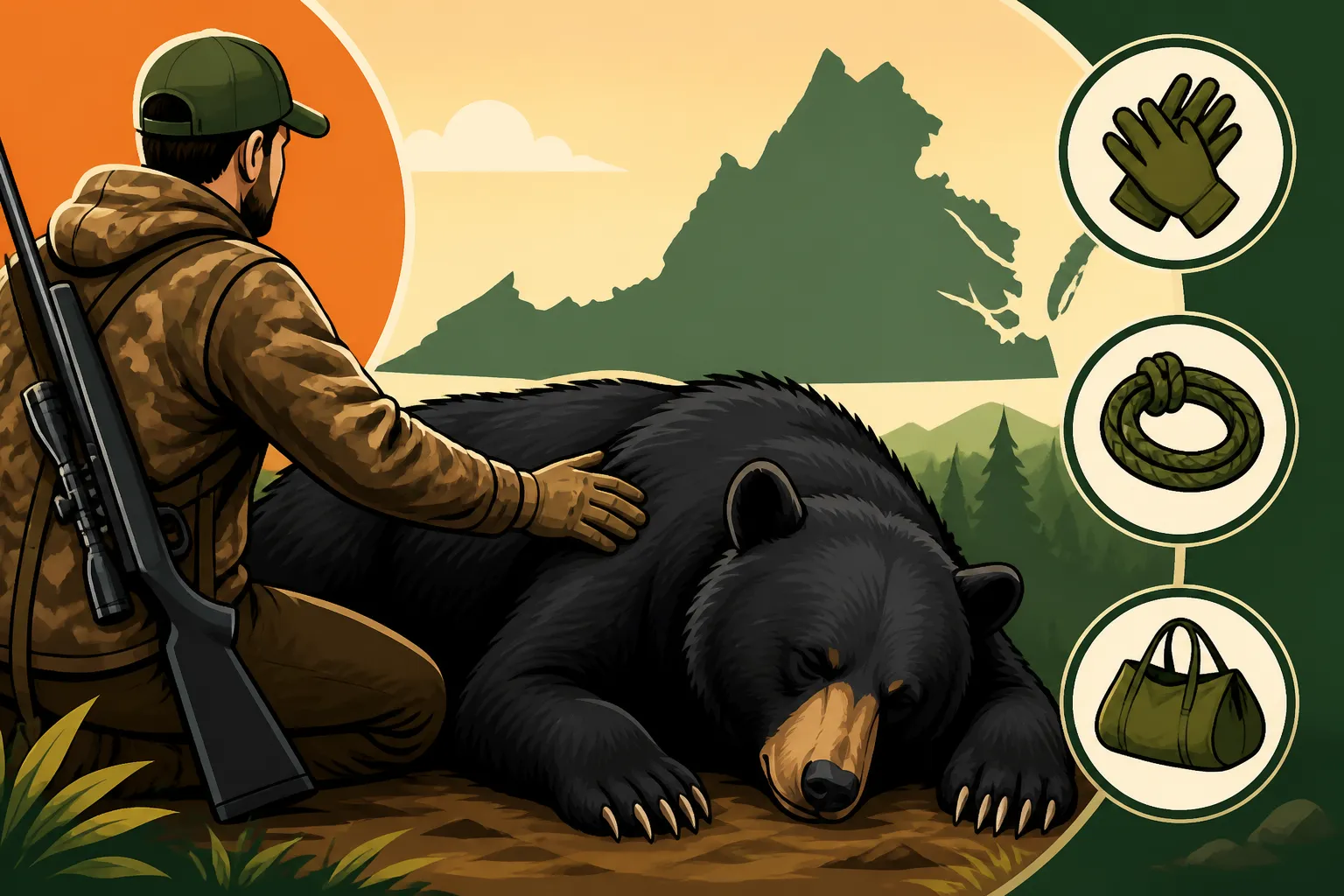
Once the meat is separated, get it into breathable game bags immediately. This protects it from dirt, insects, and scavengers while still allowing air to circulate. Get the meat out of the sun and into the shade as quickly as possible. If it's warm, try to get the meat to a cooler with ice as soon as you can. For those hunting in warmer periods, like the early archery season for bear in some areas, having a good set of game bags and plenty of ice in large coolers waiting at the truck is non-negotiable. Even in cooler weather, keeping the meat off the ground and exposed to air flow is key. A small, portable meat pole or even just draping the quarters over a clean log can make a big difference.
Here’s a quick comparison of field dressing methods:
| Feature | Traditional Gutting | Gutless Method |
|---|---|---|
| Effort | Can be physically demanding to drag whole carcass | Requires more precise knife work in the field |
| Contamination | Higher risk if gut is punctured | Minimal risk of gut contamination |
| Weight | Carcass remains heavy for transport | Reduces weight significantly for transport |
| Cooling Speed | Moderate; cavity cools, but fat layer holds heat | Faster; individual pieces cool rapidly |
| Tools Needed | Knife | Knife, bone saw (optional), game bags |
| Best For | Smaller bears, shorter drags, cooler weather | Large bears, remote areas, warmer weather |
Transporting and Checking Your Bear in Virginia
Once the bear is field dressed and cooled, the next hurdle is getting it out of the woods and fulfilling your legal obligations with the Virginia Department of Wildlife Resources (DWR). This phase requires planning, muscle, and a good understanding of the rules.
Methods for Getting Your Bear Out of the Woods
As mentioned, a whole bear is rarely transported whole, especially in Virginia's rugged mountain terrain. The vast tracts of public land, such as those within the George Washington National Forest, often mean long, challenging hauls. This is precisely why the gutless method is so popular; you can carry out individual quarters in a good frame pack. Specialized game carts can be useful on gentler terrain or old logging roads, but they quickly become a liability in steep, rocky, or heavily timbered areas. Many hunters even use deer sleds or tarps to drag large pieces over snow or relatively smooth ground. Remember to bring plenty of sturdy rope or webbing, even if you plan to pack it out.
If you're hunting with a group, coordinate your efforts. Sharing the load makes a massive difference. For solo hunters, a strong frame pack is your best friend. Be prepared to make multiple trips if necessary. It’s better to take your time and get the meat out safely and cleanly than to rush and risk injury or spoilage. Always be mindful of your energy levels, stay hydrated, and carry a good headlamp if there's any chance you'll be packing out after dark. You’ll want your hands free to navigate the challenging terrain. For more tips on navigating public lands and getting game out, consider reading our guide on Scouting Virginia Public Land Before Season which emphasizes pre-hunt planning for egress.
Understanding Virginia's Bear Checking Requirements
Virginia has specific regulations for reporting your bear harvest. After you've successfully recovered your bear, you are legally required to report it to the Virginia DWR within 24 hours of harvest. This is done through their Go Outdoors Virginia website, the DWR mobile app, or by phone. When you report your harvest, you'll receive a confirmation number. The DWR uses this data to manage bear populations and set future seasons, so it's critical that every hunter complies.
In addition to reporting, the DWR requires that all harvested bears be presented for biological sampling. This usually means taking your bear (or its skull and hide with proof of sex) to a designated DWR check station or a DWR staff member within 24 hours of harvest. They will collect data such as teeth for aging, sex, and weight, and may take tissue samples. This information is vital for understanding Virginia's Black Bear Population health and dynamics. They might even check for signs of mange, which has impacted Virginia's Mange-Affected Bear Counties. Make sure you know the specific requirements for your hunting area, as rules can occasionally vary slightly, especially if you're hunting in a Chronic Wasting Disease (CWD) Management Area, although CWD is primarily a deer concern. Details on Virginia Bear Season Rules should be reviewed before heading out.
Utilizing Your Harvest: Meat, Hide, and Fat
After all the hard work, it’s time to truly appreciate your harvest. A bear offers much more than just a trophy; it provides an abundance of delicious meat, a beautiful hide, and valuable fat that can be rendered for cooking or other uses. Maximizing your harvest respects the animal and the effort you put in.
Processing Bear Meat for Culinary Delights
Bear meat, when properly handled, is absolutely delicious. It’s a rich, dark meat, often compared to beef or venison, but with its own unique flavor profile. The key to good-tasting bear meat starts with the field dressing and cooling we discussed. Once the quarters are back at camp or your home, it's time to butcher. Treat it much like venison: remove all silverskin, tendons, and any remaining fat that might be bruised or tainted. Bear fat can sometimes carry a strong "gamey" flavor, so many hunters opt to trim most of it from the meat unless they plan to render it separately.
Common cuts include roasts, steaks, stew meat, and grind. Bear meat is excellent for slow cooking methods like pot roasts, stews, or chili. Due to the potential for trichinosis, bear meat must be cooked thoroughly to an internal temperature of at least 160°F (71°C). Never eat rare or medium-rare bear meat. Ground bear meat, often mixed with pork or beef fat, makes fantastic burgers, sausages, and meatloaf. Don't be shy about experimenting with marinades and spices; bear meat stands up well to bold flavors. For tips on preserving your hard-earned meat, check out Coolers and Game Bags for Early Archery to ensure your bear meat is perfectly cared for from field to freezer.
Preparing the Hide and Rendering Bear Fat
Beyond the meat, a bear hide is a beautiful trophy. If you plan to keep the hide, it’s critical to skin the bear promptly and properly. If you want a rug, you'll need to make specific cuts around the head and paws. If you only want a flat hide, a simpler dorsal cut down the back is sufficient. Once skinned, the hide needs to be salted thoroughly to prevent hair slippage and bacterial growth. Spread it out, flesh side up, scrape off as much excess meat and fat as possible, then generously apply non-iodized salt. Roll it up and let it sit for a day or two, then shake off the old salt and apply fresh salt. Repeat this process until the hide is dry and stiff. After salting, you can take it to a professional taxidermist or tannery.
Bear fat, often discarded, is actually a prized commodity among many hunters and cooks. When rendered down, it produces a clean, white lard that is fantastic for cooking, baking, or even making soap. To render fat, chop it into small pieces, place it in a pot with a little water, and slowly heat it over low heat. The fat will melt, and the impurities will sink to the bottom. Strain the liquid fat through cheesecloth into jars and store it in the refrigerator or freezer. It can be a healthier alternative to other cooking oils and adds a unique flavor to dishes.
Disclaimer
Hunting is an inherently dangerous activity. This guide provides general information and recommendations based on common practices and Virginia DWR regulations. However, rules and conditions can change. Always consult the most current Virginia Department of Wildlife Resources regulations before hunting. It is your responsibility to understand and comply with all applicable laws and safety guidelines. The author and publisher are not responsible for any accidents, injuries, or legal infractions that may occur. Hunt safely and ethically.