Setting Decoys on a Farm Pond
It's incredibly frustrating when you've done all your homework, scouted a promising farm pond, dragged out your decoys before dawn, and yet the ducks seem to flare off before they even commit. You might think small water means easy hunting, but those farm pond ducks can be just as wary as their big-water cousins. This guide is all about demystifying the art of setting decoys on these intimate water bodies, helping you draw in those wary Virginia ducks for a successful hunt.
Understanding Farm Pond Dynamics and Duck Behavior
Hunting farm ponds presents a unique set of challenges and opportunities. Unlike vast rivers or coastal marshes, these smaller, often privately owned water bodies require a more nuanced approach to decoy placement and overall strategy. It’s not just about throwing out some blocks; it's about understanding the specific psychology of ducks using these confined spaces.
Reading the Pond and Its Surroundings
Before you even think about dropping a single decoy, take a good, long look at the pond itself and everything around it. What does the water look like? Is it clear or murky? How deep are the edges? Critically, pay attention to the wind. Wind direction is the single most important factor determining how ducks will approach a landing zone, and consequently, where you should set your spread. Ducks almost always land and take off into the wind. This means your decoy spread needs to be positioned downwind of your blind, with an open landing zone facing into the wind.
Beyond the wind, consider the sun's position. You ideally want the sun at your back, not in the ducks' eyes or yours, to avoid silhouetting yourself and to get a clear view of incoming birds. Look for natural food sources nearby, like flooded timber, standing corn, or leftover soybeans. Ducks aren't just looking for water; they're looking for a quick meal, and if your pond is near prime agricultural fields, you know why they're there. Finally, observe the topography. Are there tall trees, power lines, or hills that might obstruct a duck's approach or force them to come in from an unnatural angle? All these factors dictate how you'll hide, how they'll approach, and where they'll feel safest to land. Understanding these subtle cues is key to drawing them in. Tools like the GoHunt app can be invaluable here, letting you analyze aerial maps and topography even before you step foot on the property, helping you predict approach lanes and identify potential blind locations.
Species-Specific Behavior on Ponds
Not all ducks behave the same, and what works for a greenhead mallard might not be ideal for a shy wood duck. In Virginia's farm ponds, you're primarily going to encounter dabbling ducks like mallards, wood ducks, and sometimes teal. You might also see Canada geese or even a few divers if the pond is deep enough and on a migration route, but that's less common for true farm ponds.
- Mallards: These are your bread and butter on farm ponds. Mallards are often less wary than big-water birds, but they still appreciate a clear, open landing strip. They're social birds and are often attracted to larger spreads that look like a comfortable feeding or loafing area. They typically circle a few times, often cupping their wings for a slow descent right into the middle of your spread.
- Wood Ducks: These stunning ducks are often the first to arrive at a pond at dawn and the last to leave at dusk. They're frequently found in more secluded, timber-lined ponds. Wood ducks don't always need a large open landing zone; they are agile flyers and can drop through tight spaces. They respond well to specific wood duck decoys, often placed closer to cover or timber edges, mimicking their natural tendency to feed along the bank. If you're targeting these fast-flying jewels, you might also want to read up on Jump-Shooting Virginia Creeks for Wood Ducks for tactics on similar small, brushy waters.
- Canada Geese: While less common on small ponds, geese might occasionally drop in, especially if nearby fields are offering food. Geese are very wary and typically require their own set of larger decoys. If you're setting up for both, keep your goose decoys separate from your duck spread, often upwind or off to the side, to create the illusion of two distinct groups. Remember to always be aware of Virginia Duck and Goose Bag Limits before heading out.
Observing how these different species behave during your scouting trips will give you crucial insights into how to tailor your spread. Do they land tight to the bank? Do they prefer the middle? Are they feeding or just resting? These small details make a huge difference.
Essential Decoy Spreads for Farm Ponds
You don't need a hundred decoys to hunt a farm pond effectively. In fact, a smaller, more realistic spread often works better here than the massive spreads favored on big water. The goal is to create a natural, inviting scene, not to overwhelm.
The J-Hook or Landing Zone Concept
The "J-hook" or "landing zone" spread is a classic for a reason: it's incredibly effective, especially on smaller bodies of water. The basic idea is to create a natural-looking "hole" in your decoy spread where ducks can comfortably land. This hole should always be facing directly into the wind, downwind of your blind.
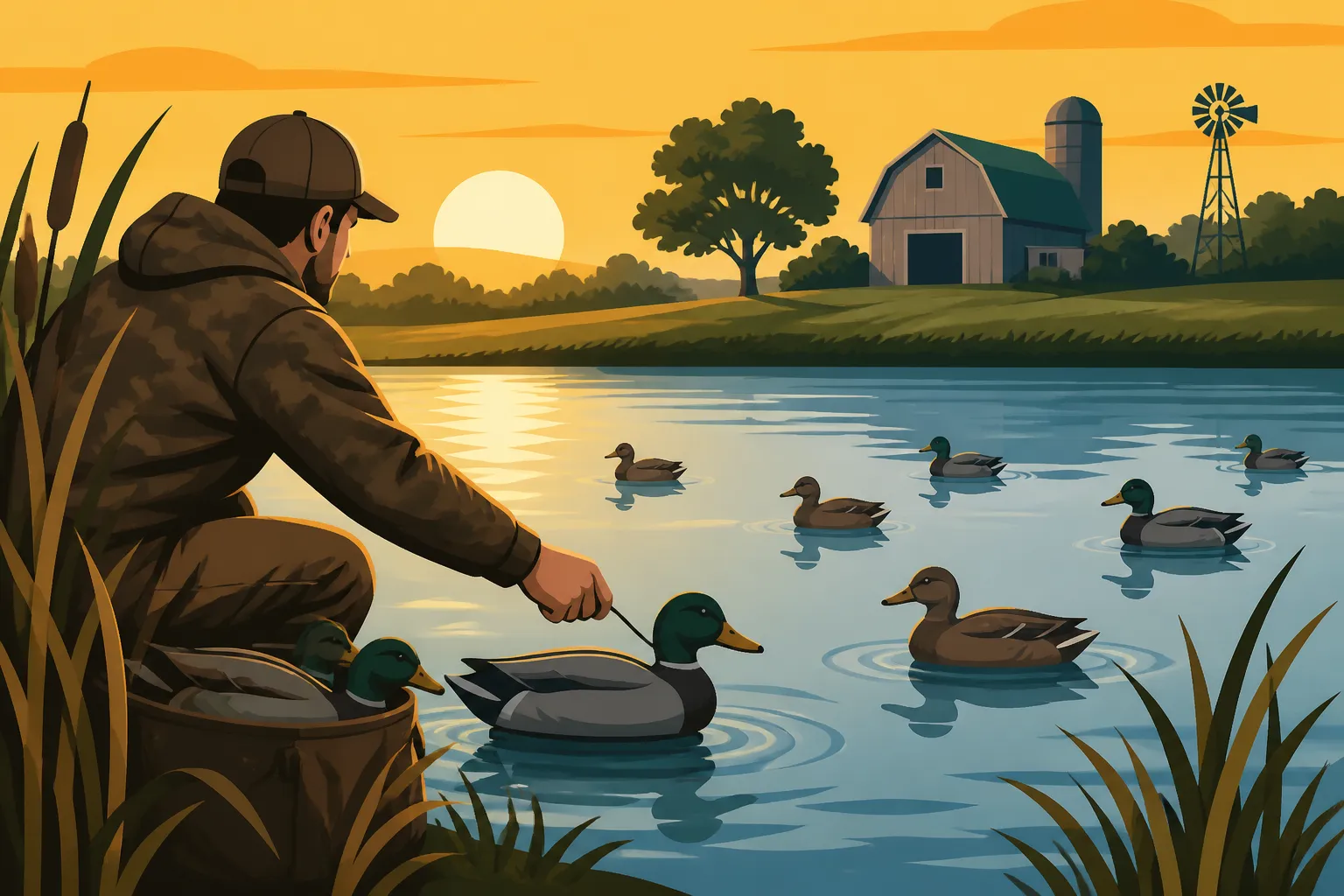
Imagine your blind is tucked into the bank. You'll string your decoys out in a J-shape, with the hook of the J curling towards your blind. The long arm of the J extends out into the pond, leading ducks in. The "crook" of the J is your prime landing zone, strategically placed within easy shooting range. This setup guides incoming birds right where you want them, making them feel safe as they cup their wings to drop into the open water. This spread works because it mimics what ducks naturally do: they approach a group of their kind, looking for an open spot to land where they can easily see their surroundings and quickly take off if danger arises. Experiment with the length of the J and the size of the landing hole based on the pond's size and the typical approach of the ducks you've scouted.
Smaller, More Realistic Spreads
For many farm ponds, especially those that see some hunting pressure, a smaller, more natural-looking spread will often outperform a large, flashy one. Ducks on small water are often local birds or small family groups, and they're used to seeing just a few of their kind loafing or feeding.
Consider a spread of 6-12 decoys. Focus on quality over quantity. A mix of mallards (drakes and hens) is usually a good starting point. If you know wood ducks frequent the pond, add 2-4 wood duck decoys, perhaps closer to the brushy banks. Instead of just static blocks, think about postures. Include a few "feeder" decoys with their heads down, mimicking ducks actively feeding. This tells approaching birds that the spot is safe and has food. Add a few "resters" or "loafers" with heads up, appearing alert but relaxed.
It's tempting to put out every decoy you own, but on a smaller pond, too many can look unnatural and make the landing zone feel crowded, potentially spooking wary birds. The key is realism. If you're Hunting Small Private Tracts in Virginia, landowners often appreciate a discreet setup that doesn't scream "hunter."
Here’s a simple table comparing common farm pond decoy spreads:
| Spread Type | Description | Best Use Case | Pros | Cons |
|---|---|---|---|---|
| J-Hook / Landing Zone | Decoys arranged in a J-shape, creating an open "hole" for ducks to land in, positioned downwind of the blind. The bend points towards the blind. | General mallard and dabbler hunting on most farm ponds, especially with a defined wind direction. | Clearly defines a landing zone, directs birds into range. Very natural. | Requires careful placement relative to wind and blind. |
| Loafing Bunch | A tight group of 4-6 decoys, mostly resting or preening, with a small open pocket. | Highly pressured birds, very small ponds, or when ducks are only using the pond for resting, not feeding. | Looks natural and non-threatening. Minimal setup. | May not attract birds from a great distance. Less defined landing zone. |
| Feeding String | A line or loose cluster of feeder decoys, mimicking ducks actively foraging, often extended towards a shallow edge. | Ponds with obvious shallow feeding areas, especially for dabblers. Effective in lower light. | Highly attractive to feeding ducks. Creates a sense of security. | Less effective if ducks are primarily using the pond for loafing. |
| "X" or Crosswind | Two lines of decoys forming an "X" or "V" shape, with the open end facing the downwind side, allowing for crosswind approaches (less common but useful in tricky winds). | Ponds with tricky or swirling winds, or when ducks approach from multiple angles due to topography. | Flexible for varying wind patterns. Creates multiple potential landing lanes. | Can look less natural if not executed well. Might not concentrate birds as effectively as a J-hook. |
Adding Movement and Realism
One of the biggest differences between your decoys and live ducks is the lack of movement. Even a slight ripple on the water can bring your spread to life. Adding movement is perhaps the single most effective way to enhance the realism of your setup, especially on calm days.
- Jerk Cords: A simple jerk cord kit with a few decoys attached can create incredibly realistic ripples and bobbing movements. A quick tug on the string, especially when birds are circling, can be the final convincing factor. It's a low-cost, high-impact addition.
- Spinning Wing Decoys (SWDs): Decoys like the Mojo Mallard have revolutionized waterfowl hunting. The flashing wings of an SWD can be seen from a long distance, acting as a beacon to draw ducks' attention. While some hunters debate their effectiveness on pressured birds, on a farm pond, a single SWD often works wonders, especially on mallards. Just be mindful of overusing them; sometimes less is more, particularly in bright sunlight or on very wary ducks. They’re excellent for getting birds to spot your spread in low light or fog.
- Decoy Placement and Spacing: Don't crowd your decoys. Give them room to "breathe" and look natural. If they're too close, it can look unnatural and wary. A few feet between each decoy is usually a good rule of thumb, but vary it. Some might be tighter, others further apart, mimicking how real ducks space themselves.
Remember, the goal is to make your spread look like a safe, inviting spot for real ducks to land. Movement, even subtle, contributes immensely to that illusion.
Strategic Placement and Concealment
Even the most perfect decoy spread is useless if you're not hidden well or if the ducks aren't finishing in range. Strategic placement of both your decoys and yourself is paramount on smaller water.
Positioning for Optimal Shots
This goes hand-in-hand with your J-hook or landing zone. The "hole" you create in your spread needs to be within comfortable shooting range – typically 20-30 yards. Any further, and your chances of a clean kill diminish significantly. Any closer, and birds might recognize the setup as unnatural right at the last second.
Always consider the wind. Ducks land into the wind. This means they will be facing away from the wind as they approach your landing zone, and often, towards your blind. This is a critical factor for shot presentation. Position your decoys so that when ducks commit and drop in, they are broadside or slightly quartering away, offering a clean shot. If you find ducks are consistently landing too far out, or at an awkward angle, adjust your spread. Move the landing zone closer, or shift the entire spread to better align with the prevailing wind and the duck's natural approach path. You can also incorporate subtle changes like placing a single "sentinel" decoy slightly upwind of your main spread, which sometimes pulls lead birds in a bit closer to investigate.
Blending Your Blind into the Environment
On a small farm pond, you are exposed. Ducks have an incredible ability to spot anything out of place. Whether you're using a natural brush blind, a portable ground blind, or just hunkering down in some cattails, concealment is non-negotiable.
- Natural Materials are Your Friend: Use what's available around the pond to break up your outline. Cattails, reeds, fallen branches, corn stalks – whatever is indigenous to the area. Don't just stand it up; weave it into your blind structure to create a seamless blend.
- Avoid Silhouettes: Never position yourself so that your blind (or your head!) is silhouetted against the sky. This is a dead giveaway. If possible, set up with a dark background, like a treeline or a hillside, behind you.
- Stay Still: This is arguably the most important aspect of concealment. Even a perfectly camouflaged blind is useless if you're fidgeting, peeking over the top, or moving when birds are working. Wait until they commit and are in range before making any move. If you're using a manufactured blind, make sure it's brushed in thoroughly. Even a portable layout blind needs to be well-camouflaged, similar to how hunters approach Layout Blind Hunting a Cut Cornfield.
- Watch Your Face and Hands: These are often shiny and can give you away. Wear a facemask and gloves. Even small movements of your hands can be spotted by sharp-eyed ducks.
Wind, Sun, and Hunter Safety Considerations
These environmental factors aren't just about duck behavior; they're about your effectiveness and safety in the blind.
- Wind Direction is King: As discussed, ducks land into the wind. Your blind should be downwind of where you expect them to land. This allows them to approach the decoys from upwind, giving them a good look, and then swing into your chosen landing zone. If the wind shifts throughout the morning, be prepared to adjust your strategy or even relocate your blind and decoys if feasible. A sudden shift can turn a perfect setup into a bust.
- Sun Position: Always try to have the sun at your back. This puts the birds looking into the sun as they approach, making it harder for them to spot your blind and giving you a clear, glare-free view. Hunting with the sun in your face will make it incredibly difficult to see incoming birds, aim accurately, and often results in you being silhouetted against the bright sky.
- Hunter Safety: Beyond concealment, think about safety. Ensure your shooting lanes are clear and that you have a safe backdrop for your shots. Never shoot across another hunter's line of sight or towards property boundaries where houses or livestock might be. When hunting with partners, communicate clearly about zones of fire. If you’re hunting near roads or occupied dwellings, always be mindful of Virginia Firearms Discharge Setback Rules. Knowing your surroundings, especially with tools like the GoHunt app showing property lines, is critical for safe and ethical hunting.
Advanced Tips and Troubleshooting for Pond Hunters
Even with a solid understanding of basic decoy placement, ducks can be unpredictable. Here are some advanced strategies and troubleshooting tips to help you adapt to changing conditions and wary birds.
Adapting to Pressure and Changing Conditions
Ducks, especially those that have seen a lot of hunting pressure, become incredibly smart. They'll often circle high, looking for anything out of the ordinary before committing.
- Less is More for Wary Birds: If ducks are flaring, try reducing your spread. Sometimes just 2-3 decoys, or even a single spinning wing decoy positioned for maximum visibility, is all it takes. A very sparse, natural-looking spread can sometimes fool birds that have been "educated" by large, elaborate setups.
- Late Season Tactics: As the season progresses and temperatures drop, ducks become more focused on food and energy conservation. They'll also be warier. Focus on late-season food sources like waste grain in nearby fields or natural mast. Decoys might need to be positioned closer to these food sources. Consider using more feeder-style decoys to emphasize the presence of food. Also, late season can bring new migrating birds. Keep an eye on Virginia Waterfowl Migration Timing to know what to expect.
- Weather Changes: Fog or heavy overcast days often make ducks fly lower and respond better to calls and decoys, as their visibility is reduced. Conversely, bright, clear days can make them extra cautious. Adjust your calling volume and decoy movement accordingly. In high winds, make sure your decoys are anchored securely so they don't drift or flip over.
Decoy Maintenance and Storage
Your decoys are an investment, and proper care ensures they last longer and remain effective. Nothing looks less natural than a faded, beat-up decoy with a broken keel.
- Cleaning: After each hunt, especially if your decoys get muddy, give them a quick rinse. Dirt and grime can dull their colors, making them less visible and realistic. A simple scrub brush and water can do wonders.
- Repairing: Check for cracks, leaks, or broken keels. Small holes can often be patched with marine-grade epoxy or plastic repair kits. Replace broken lines or weights. A decoy that's taking on water or sitting unnaturally will detract from your spread.
- Storage: Store your decoys in mesh bags or specialized decoy bags to protect them from further wear and tear. This also makes transport easier. Keep them out of direct sunlight when not in use, as UV rays can cause them to fade over time. Storing them in a cool, dry place will prevent mildew and prolong their life.
Scouting and Location Selection
The best decoy spread in the world won't help if you're not where the ducks want to be. Pre-season and in-season scouting are paramount.
- Observe Before You Hunt: Spend time watching the pond before you ever bring a gun or a decoy. Where do the ducks land? Where do they loaf? What time of day do they use the pond? Which way do they approach? This information is invaluable.
- Look for Sign: Look for droppings on the banks, disturbed mud where they've been feeding, or even feathers. These tell-tale signs indicate recent activity.
- Utilize Technology: Modern mapping apps, like the GoHunt app, are incredibly useful for scouting. You can identify potential ponds, analyze access points, and understand the surrounding habitat without disturbing the birds. This is similar to how deer hunters use apps for Reading Aerial Photos for Piedmont Deer, but tailored for waterfowl. Check property lines carefully on these maps, especially on private land, to ensure you're hunting legally and with permission.
- Talk to Locals: If you have permission to hunt a private farm pond, talk to the landowner. They often have the best insights into how ducks use their pond, when they're most active, and even historical flight patterns. Respecting the landowner and their property is crucial for maintaining access to Virginia's best private hunting land.
Ultimately, setting decoys on a farm pond is a blend of science and art. By understanding duck behavior, employing strategic spreads, mastering concealment, and continuously adapting, you'll significantly increase your chances of a successful and rewarding hunt.
Disclaimer
Hunting involves inherent risks. Always prioritize safety, understand and follow all Virginia Department of Wildlife Resources (DWR) regulations, and obtain proper licenses and permits before heading afield. The information provided here is for educational and informational purposes only and should not replace professional guidance or official DWR resources. Consider taking a Virginia Hunter Education Requirements course if you haven't already.