Virginia Quota Hunt Draw Odds
Oh, the elusive Virginia quota hunt! If you're like most hunters in Virginia, you've probably spent countless hours dreaming of that golden ticket — a drawn tag for one of our state's premier managed hunts. It's a frustrating dance, isn't it? You pour over the regulations, pick your preferred areas, submit your application, and then endure that agonizing wait, often only to be met with disappointment year after year. This guide is here to shed some light on the Virginia quota hunt draw odds, help you understand the system, and provide some real-world strategies to boost your chances, or at least manage your expectations.
What Are Virginia Quota Hunts and Why Are They So Popular?
Virginia's quota hunts are special managed hunts, typically held on public lands like Wildlife Management Areas (WMAs), State Parks, and National Wildlife Refuges. Unlike general season hunting where you just need a valid license and tags, these hunts require a specific permit that you apply for through a lottery system. The "quota" part means there's a limited number of hunters allowed to participate, sometimes for a specific species, a particular time frame, or even a designated area within a larger property.
Limited Access for Quality Opportunities
The primary reason quota hunts exist is to manage wildlife populations and habitat, while also providing unique, high-quality hunting experiences. By limiting the number of hunters, the Virginia Department of Wildlife Resources (DWR) can control harvest numbers more precisely, reduce hunting pressure, and often ensure a better experience for those who do draw a tag. Imagine stepping into a prime hunting spot knowing there are only a handful of other hunters around, instead of feeling like you're constantly bumping into someone else on a busy public land tract. This reduced pressure often translates to more natural animal behavior and a higher chance of encountering mature animals.
These hunts often target specific goals, whether it’s reducing deer numbers in an area with overpopulation, providing opportunities for hunters during prime migration periods for waterfowl, or allowing access to otherwise restricted federal lands. Because of this meticulous management, the animals on these properties can sometimes grow larger or be less wary than those on heavily hunted general public lands.
The Allure of Reduced Pressure and Higher Success
Let's be honest, part of the appeal is simply the idea of having a piece of public land largely to yourself. On regular public land, especially during popular seasons like the general firearms deer season, it can feel incredibly crowded. When you're constantly encountering other hunters, it changes how deer, bears, or turkeys move. They become nocturnal, they hole up in thick cover, and they're just plain harder to find.
Quota hunts offer a respite from this. The limited entry means less competition for prime bedding areas, food sources, and travel corridors. This can lead to increased hunter success rates, as animals are more likely to move during daylight hours and be less skittish. For many, it's not just about the kill, but the entire experience – the solitude, the challenge, and the feeling of truly being immersed in nature without constant human interruption. The potential for a larger buck or a less pressured gobbler is a huge draw, making these hunts highly coveted. Many hunters are eager to apply for Virginia State Park Hunting Rules or Virginia National Wildlife Refuges hunts, knowing the potential payoff.
Understanding the Draw System and Application Process
Navigating the application process for Virginia's quota hunts can feel like a labyrinth at times. It's not always straightforward, and the rules can change year to year, or even from one hunt unit to another. But understanding the general mechanics is your first step toward success.
General Mechanics of the Lottery
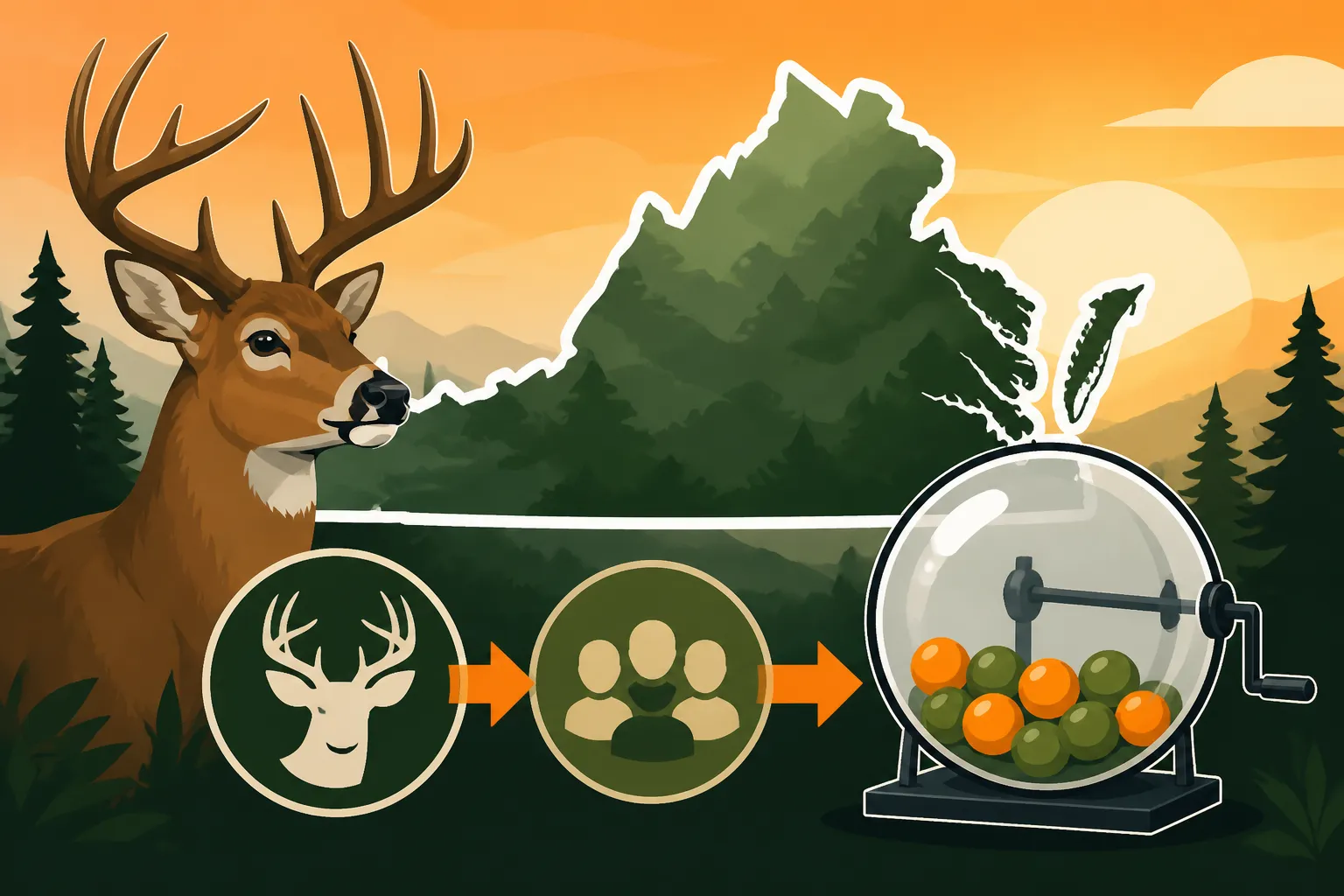
For most Virginia quota hunts, the DWR employs a lottery-style drawing. This means that every application submitted within the designated window has a chance to be selected. Some states use point systems where you accumulate points for unsuccessful applications, which then increase your odds in future draws. As of now, Virginia does not generally use a preference point system for its deer and turkey quota hunts in the way many western states do. It's largely a true lottery, where each application for a specific hunt stands on its own for that year's draw.
This "clean slate" approach can be both good and bad. It means a first-time applicant theoretically has the same chance as someone who's applied for a decade. The downside, of course, is that consistent application doesn't build equity, leading to the frustration of perennial hopefuls who never seem to get lucky. However, for certain specific opportunities, like the Virginia Quota Hunt Application Window for specific waterfowl or bear hunts, there might be slight variations or special considerations, so always double-check the latest DWR regulations.
Importance of DWR Regulations and Specific Hunt Rules
This cannot be stressed enough: read the DWR regulations for each specific hunt you're interested in, every single year. While the general lottery mechanism applies to many hunts, there are often subtle but crucial differences in eligibility, application periods, group application rules, weapon restrictions, and reporting requirements.
For example, a deer hunt at a specific WMA might allow only archery or muzzleloader, while another might be open to general firearms. Some hunts might have specific antler restrictions, or only allow antlerless deer harvest. The application dates are critical; miss the window, and you're out for the year. The DWR website is your absolute best friend here. Don't rely on what you remember from last year, or what your buddy told you. Take the time to go through the Go Outdoors Virginia portal and review the exact details for each quota hunt, whether it's for Virginia Deer Season Structure Explained or Virginia Waterfowl Zones and Seasons. A small detail missed could lead to a disqualified application, or worse, a citation if you hunt illegally after drawing a tag.
Application Strategies: Single vs. Group
When it comes to applying, you typically have two main options: apply as an individual or apply as part of a group. The rules for group applications vary greatly by hunt, so again, check the specifics.
- Individual Applications: This is straightforward. You apply, and if your name is drawn, you get a tag. Your odds are simply 1 / (total number of applicants).
- Group Applications: Some hunts allow you to apply as a group. If one person in your group draws, everyone in the group draws a tag. The key here is to understand how the DWR processes group applications. Often, the entire group's application is treated as a single entry in the lottery. So, if there are 4 people in your group, and your group application is drawn, all 4 get a tag. This means while the number of tags given to your group increases, your probability of being drawn might actually decrease, as there are fewer "slots" for groups than for individuals if the draw is looking for individual names. However, if the hunt is specifically designed for parties (like some waterfowl blinds), then a group application is often the only way to go, and your odds are tied to the group slot. Always consider the tradeoff: more tags if drawn, but potentially tougher odds for the group entry itself.
For federal lands like Fort A.P. Hill Public Hunting Rules or Quantico Marine Base Hunting Access, there are often additional base-specific registration requirements and application systems that run parallel to, or in conjunction with, the DWR draw, adding another layer of complexity.
Factors Influencing Virginia Quota Hunt Draw Odds
Understanding the draw odds for a Virginia quota hunt is less about finding a definitive number (which the DWR doesn't always publish) and more about understanding the dynamics that make one hunt harder to draw than another. It's a blend of common sense, historical trends, and a bit of detective work.
Popularity of the Hunt and Species
This is arguably the single biggest factor. If a quota hunt is known for producing trophy bucks, consistent turkey action, or incredible waterfowl opportunities, you can bet your bottom dollar it will attract a massive number of applicants. Hunts at well-known WMAs, national refuges like Presquile National Wildlife Refuge Access, or even specific state parks that have a reputation for quality animals, see disproportionately high application rates.
Think about the species too. Deer hunts, especially those perceived to offer a higher chance at a mature buck, are always in high demand. Waterfowl hunts in prime migration corridors, like along the Chesapeake Bay, also draw huge numbers. Turkey hunts, while popular, might not see quite the same level of competition as a prime deer hunt, but specific early season or limited-entry gobbler hunts can still be very tough. The more "glamorous" the hunt, the more people will apply, naturally driving down your individual draw odds.
Number of Available Tags
This is simple math: fewer tags mean tougher odds. A hunt offering 20 tags to a pool of 1,000 applicants will have dramatically different odds than one offering 200 tags to the same pool. The DWR sets the number of available tags based on their wildlife management objectives for that specific area. These objectives consider population density, habitat carrying capacity, herd health, and historical harvest data.
Sometimes, a unit might have a great reputation, but if the DWR decides to drastically cut tag numbers for a given year due to population declines or specific management goals, the draw odds will plummet, even if applicant numbers remain stable. Conversely, if an area is dealing with overpopulation, the DWR might increase tags to encourage higher harvest, which could temporarily boost your odds.
Total Number of Applicants
This goes hand-in-hand with popularity. The more people who apply for a given hunt, the lower your individual chances of success. Unfortunately, the DWR doesn't always release specific applicant numbers for every hunt, which makes calculating precise odds challenging. This is where community forums, anecdotal evidence, and tools like GoHunt come into play. Many hunters share their experiences and what they perceive to be the toughest draws.
Consider a hunt with 50 available tags. If 500 people apply, your odds are 1 in 10. If 5,000 people apply, your odds drop to 1 in 100. This massive swing highlights why choosing less popular hunts can be a viable strategy. Tools like GoHunt often aggregate past application and draw data from various states, providing estimated odds based on historical trends. While Virginia's specific data might not be as transparent as some other states, understanding similar draws elsewhere can give you a general idea.
Residency Status
In most state-run lottery systems, non-residents face significantly tougher odds and often pay higher application fees. While Virginia is no exception, the specific quota hunt rules can vary. Typically, a larger percentage of tags are reserved for Virginia residents, reflecting that the state's resources are primarily for its citizens.
For example, a hunt might have 90% of its tags allocated to residents and only 10% to non-residents. This immediately puts non-residents at a disadvantage, not only in the smaller pool of tags but often also because the non-resident pool itself might be highly competitive with dedicated hunters from other states vying for those few opportunities. Always verify the resident/non-resident tag allocation percentages before applying, especially if you're an out-of-state hunter exploring Virginia Nonresident Hunting License Options.
Preference Points and Their Impact (When Applicable)
As mentioned, Virginia doesn't widely use a traditional preference point system for most deer or turkey quota hunts where unsuccessful applicants accumulate points to increase future draw odds. However, there might be exceptions for very specific, often high-demand, limited-entry hunts or special drawing pools, so always check the latest regulations.
In states that do use preference points, consistently applying, even for "point-only" options, is key. If Virginia were to implement a broader point system in the future, it would drastically change application strategies. Hunters would have to weigh the desire for an immediate tag against the long-term goal of building points for a premium hunt. For now, for the majority of Virginia's standard quota hunts, the system is a pure lottery, meaning past applications don't increase your chances this year.
Strategies to Improve Your Odds of Drawing a Virginia Quota Hunt
While quota hunts are ultimately a game of chance, there are definitely ways to play the odds smartly. It's not about cheating the system, but rather about making informed choices that can subtly tip the scales in your favor.
Research and Apply for Less Competitive Hunts
This is perhaps the most straightforward strategy. Instead of always aiming for the most famous, highly publicized hunts, dig a little deeper. Look for hunts that are:
- New or Less Established: Sometimes new quota hunt opportunities are offered in areas that haven't built a reputation yet. These can be hidden gems.
- Less Convenient: Hunts in more remote areas, or those with very limited access or primitive camping requirements, might deter some applicants, increasing your chances.
- Less Desirable Species/Sex: If you're willing to hunt antlerless deer, or a species that isn't as popular as a trophy buck, your odds can improve. Some hunts have specific quotas for does, and these often have fewer applicants.
- Off-Peak Times: A hunt scheduled during a less ideal weather window or conflicting with other popular seasons might see fewer applications.
- Specific Weapon Types: Sometimes an archery-only hunt might be less competitive than a general firearms hunt in the same area, or a muzzleloader hunt might have slightly better odds. Remember to verify Crossbow Rules During Virginia Archery Season if considering that option.
Use tools like GoHunt, if they track Virginia data, or simply spend time on the DWR website meticulously reviewing all available hunts, not just the ones you hear about on social media. Pay attention to the descriptions and target species. Sometimes the language itself can indicate if a hunt is focused on population control (likely higher tag numbers, potentially easier draw) versus trophy management (fewer tags, much tougher draw).
Building Preference Points (If Ever Introduced)
Again, this is more for future consideration or if you're applying in other states. If Virginia were to ever introduce a preference point system for certain quota hunts, the strategy would immediately shift. You'd want to apply every single year, even if you can't make the hunt, just to accrue points. These points typically don't guarantee a tag but significantly boost your odds after several years of consistent application. For now, focus on the pure lottery aspect.
Considering Different Hunt Types and Timeframes
Don't limit yourself to just one type of hunt or one season. Broaden your horizons!
- Weapon-Specific Hunts: As mentioned, archery, muzzleloader, shotgun, or even handgun-only hunts can have different applicant pools. If you're proficient with multiple weapon types, you have more options. For example, Muzzleloader Deer Hunting in Virginia offers different challenges and opportunities.
- Early vs. Late Season: Early season hunts can be attractive due to milder weather, but late season hunts, especially in December and January, can offer unique challenges and opportunities as deer focus heavily on late-season food sources. Some hunters avoid the cold, which could mean fewer applicants.
- Youth Hunts: If you have a youth hunter in your family, be sure to look into youth-specific quota hunts. These are designed to introduce young hunters to the sport and often have their own separate draw pools with potentially better odds. Check out Hunting the Virginia Youth Deer Weekend for more info.
Applying with a Group (Strategically)
If a hunt allows group applications, decide carefully if it's the right move.
- Advantages: If your group is drawn, everyone gets a tag. This is great for hunting buddies or families who want to experience the hunt together. It streamlines the process if only one person needs to submit the application.
- Disadvantages: As discussed, if the DWR treats the entire group as a single entry in the lottery, your odds of that single entry being drawn might decrease compared to individual applications. For example, if there are 100 individual tags, and you apply as a group of 4, you're competing against 99 other individual entries, plus other group entries, for those 100 slots. You're no longer 1 of 100 individuals; your group is 1 of X total applications.
The best use of a group application is often for hunts specifically designed for group success, like waterfowl blind draws, or if the overall applicant pool is relatively small, making the decreased statistical odds less impactful on your real-world chances. Always check if a hunt requires or strongly encourages group applications.
Utilizing Resources Like GoHunt for Data Analysis
While specific, official Virginia DWR draw odds are not widely published, resources like GoHunt can be invaluable for understanding hunting trends and general draw mechanics across various states. While it might not have granular Virginia quota hunt data, it provides frameworks for how to think about draw odds:
- Understanding Application Trends: GoHunt often compiles historical application numbers for other states, helping you recognize patterns. This can inform your Virginia strategy by showing which types of hunts (e.g., high-quality units, specific species) are universally competitive.
- Evaluating Unit Quality: Their data on unit quality (e.g., trophy potential, success rates) can help you decide if a highly competitive hunt is truly worth the long odds. This can help you find overlooked gems that might not be on everyone's radar.
- Strategic Planning: GoHunt encourages long-term planning, even if it's just for point systems in other states. This mindset can be applied to Virginia by focusing on consistent application and trying different strategies each year.
The key takeaway here is to make informed decisions based on as much data as you can gather, even if some of it is inferred from similar hunting scenarios elsewhere.
Real-World Examples and Hypothetical Scenarios
Let's look at some hypothetical scenarios based on common experiences with Virginia's quota hunts. These aren't exact figures, but they illustrate the dynamics at play.
The Coveted Presquile National Wildlife Refuge Deer Hunt
Imagine the Presquile National Wildlife Refuge in Chesterfield County. It's an island, highly managed, with a reputation for producing some truly massive whitetails. Access is extremely limited, often only by boat or a specific DWR ferry service, and the habitat is phenomenal.
- Scenario: 50 deer tags are available for a two-day firearms hunt.
- Applicants: Let's say 2,500 hunters apply from across the state, eager for a shot at a Presquile monster.
- Hypothetical Odds: Approximately 1 in 50.
Now, if you apply for this hunt for five years straight, your odds each year are still 1 in 50 (since Virginia doesn't have a point system for this). It highlights the pure lottery aspect. Many hunters apply for years, never drawing. The frustration is real, but the allure of that specific, high-quality experience keeps them coming back. For some, applying for Presquile National Wildlife Refuge Access becomes a tradition, a testament to hope.
A Less Competitive WMA Archery Hunt
Now consider a quota archery hunt at a smaller, perhaps less famous, Wildlife Management Area like Amelia WMA in Amelia County. It might be for antlerless deer only, or perhaps a bucks-only hunt with very specific antler restrictions, reducing its appeal to trophy hunters.
- Scenario: 100 antlerless deer tags available for a week-long archery hunt.
- Applicants: Perhaps 500 local hunters apply, with fewer non-residents or those focused solely on trophy bucks.
- Hypothetical Odds: Approximately 1 in 5.
Here, your odds are significantly better. While it might not be the "glamor hunt," a 1 in 5 chance means you're much more likely to draw a tag and get a productive hunt. You might fill your freezer, gain valuable experience, and still enjoy a quality public land hunt with reduced pressure. This illustrates the benefit of exploring hunts that might not make the headlines.
The Impact of Consistent Application for Waterfowl Blinds
Waterfowl quota hunts, especially those for prime impoundment blinds, can also be very competitive. Places like Hog Island WMA in Surry County are highly sought after. Often, these are group draws where the group applies for a specific blind on a specific date.
- Scenario: 10 blinds available on a specific prime duck hunting day, with 100 groups applying.
- Hypothetical Odds: Approximately 1 in 10 for that specific day and blind.
This emphasizes the need for consistent application, not just for a specific type of hunt, but for multiple dates and locations. If you only apply for the opening day blind at the most popular impoundment, your odds are slim. However, if you apply for various blinds on different dates, your overall chance of drawing any waterfowl quota hunt tag increases. It's about diversifying your applications within the rules of the DWR.
Comparing Hypothetical Draw Odds
To give you a clearer picture, here’s a simplified table comparing hypothetical draw odds for different types of Virginia quota hunts. Remember, these are illustrative, as exact DWR odds are not always published, and numbers change annually.
| Hunt Type/Location | Estimated Tags Available | Estimated Applicants | Hypothetical Draw Odds (Approx.) | Key Factors Influencing Odds |
|---|---|---|---|---|
| Presquile NWR Deer (Trophy Potential) | 50 | 2,500 | 1 in 50 | High trophy potential, limited access, island management |
| Popular WMA Deer (General Firearms) | 150 | 3,000 | 1 in 20 | Good success rates, easy access, prime season |
| Remote WMA Deer (Muzzleloader) | 100 | 1,000 | 1 in 10 | Less popular weapon, more remote location |
| State Park Deer (Archery Only) | 75 | 750 | 1 in 10 | Archery only, specific park rules, potential urban setting |
| Waterfowl Blind (Prime Date) | 10 (groups) | 150 (groups) | 1 in 15 | Prime migration timing, popular species, group applications |
| Less Popular WMA Turkey (Spring) | 25 | 250 | 1 in 10 | Smaller bird population, less renowned location, specific dates |
This table highlights the significant variation in odds based on the hunt's characteristics. Your best bet is always to aim for hunts that fall into the "less popular" categories if your primary goal is to simply draw a tag.
Final Thoughts on Virginia Quota Hunt Draw Odds
It’s easy to get discouraged when you apply for Virginia quota hunts year after year and never seem to draw that coveted tag. The lack of a consistent point system for most hunts can feel unfair, as it means past efforts don't build future advantages. But don't let that dampen your spirits entirely. The draw is a lottery, but it's also an opportunity to dream, to plan, and to potentially experience some of the best managed hunting Virginia has to offer.
Remember, persistence is key, even in a pure lottery system. The more you apply, and the more strategically you apply by considering less competitive options, different weapon types, and diverse timeframes, the more opportunities you create for yourself. Use all the resources at your disposal, including the Virginia DWR website and community knowledge (and perhaps even tools like GoHunt for general research principles), to make the most informed choices. Even if you don't draw a quota hunt every year, the process of researching and applying keeps you engaged with the incredible hunting heritage and opportunities that Virginia provides. Keep applying, and good luck in the next draw!
Disclaimer
Please remember that hunting regulations, season dates, and specific quota hunt rules are subject to change by the Virginia Department of Wildlife Resources (DWR) annually. Always consult the most current DWR regulations before planning any hunt or submitting any application. This guide is for informational purposes only and does not supersede official DWR publications.