Virginia Nonresident Hunting License Options
Venturing into a new state for a hunting trip can be an incredibly exciting prospect, but let's be honest, the administrative side of things – especially figuring out licenses and tags – can feel like trying to untangle a particularly stubborn bird's nest. For those of you coming from outside the Commonwealth, navigating Virginia's nonresident hunting license options often presents a unique set of questions and frustrations. This comprehensive guide is here to unravel all those complexities, making your planning as smooth as possible so you can focus on the hunt itself.
Understanding the Basics of Virginia Nonresident Licenses
When you're planning a hunting trip to a new state like Virginia, one of the first hurdles you'll face is understanding that state's unique licensing structure for visitors. It's not just a matter of buying a single piece of paper; often, it's a combination of a general hunting license and various specialized tags or stamps. This can feel daunting, especially when you're used to your home state's system. But don't worry, Virginia’s system is quite logical once you break it down.
Why Nonresident Rules Differ
It might seem unfair at first glance that nonresidents often pay more for licenses than residents do, or that the regulations can appear slightly different. The reality is, each state's wildlife management agency, in our case the Virginia Department of Wildlife Resources (DWR), relies heavily on license sales to fund conservation efforts, habitat improvements, and enforcement. Residents, through various taxes and long-term investment in the state, are already contributing to these efforts. Nonresident fees help to balance that contribution and ensure that our shared wildlife resources continue to thrive for everyone to enjoy. For example, revenue from nonresident licenses might go directly into projects on public lands like the George Washington National Forest or various Wildlife Management Areas (WMAs) across the state, which all hunters, resident and nonresident, utilize.
Think about it from a resource management perspective. If Virginia has a finite number of deer, bears, or turkeys, and a sudden influx of hunters from outside the state occurs without appropriate funding, it could strain the resources needed to manage those populations sustainably. The differentiated fees are a way to ensure that the infrastructure and conservation programs can keep pace with the demand on our game populations, maintaining healthy herds and flocks for future generations.
The General Nonresident Hunting License
At the core of all your hunting plans in Virginia, if you're coming from out of state, is the Nonresident Hunting License. This is your foundational permit, a prerequisite for almost any other hunting activity. Without this, you can't legally hunt any game animals in Virginia, regardless of what other specific tags you might have. It's designed to cover small game species, like squirrels and rabbits, as well as providing the base authorization you need to then add big game tags or migratory bird stamps.
For many hunters, particularly those targeting a variety of species during their visit, this annual license provides the most flexibility. It allows you to hunt across the entire state during the appropriate seasons. If you're coming from, say, North Carolina to chase some squirrels in the bottomland hardwoods of southeastern Virginia, or planning to target rabbits along fencerows in the Piedmont, this is the primary license you'll need before adding any specialized tags. This license typically covers you for the entire license year, which runs from July 1st to June 30th of the following year. It’s important to note the license year start date, as it can catch some folks off guard if they’re planning a hunt that spans this transition.
Common Misconceptions About Nonresident Status
One common misconception is that if you own property in Virginia, you automatically qualify for resident privileges. Unfortunately, that's generally not the case for hunting and fishing licenses. Virginia law defines residency quite specifically, usually requiring continuous domicile within the state for a certain period (typically six months) with the intent to make Virginia your permanent home. Simply owning a vacation cabin in the Blue Ridge or a farm in the Shenandoah Valley doesn't confer resident hunting status unless you meet the full legal residency requirements. This can be a point of frustration for many out-of-state landowners who feel invested in the Commonwealth, but the rules are set to prevent loopholes and ensure fair contributions to wildlife management.
Another misunderstanding sometimes revolves around youth hunters. While Virginia does have a youth and apprentice hunting license structure, nonresident youth still fall under nonresident categories for the core licenses, though they might benefit from reduced fees or specific youth hunting opportunities like the Virginia Youth Deer Weekend Rules. It’s always best to check the DWR regulations booklet or the DWR website directly to confirm eligibility for any specific programs, as rules can occasionally be updated or changed.
Exploring Annual and Short-Term Nonresident License Choices
Virginia understands that not every out-of-state hunter needs a full annual license. Some folks are just passing through for a quick weekend hunt, while others might be planning an extended stay or multiple trips throughout the season. Because of this, the DWR offers a range of options beyond just the standard annual nonresident license. Choosing the right one can save you money and ensure you're compliant without overspending on a license you won't fully utilize.
The Annual Nonresident Hunting License: What's Included
The annual Nonresident Hunting License is your all-encompassing pass for a full year of hunting small game and providing the foundation for big game or migratory bird hunting. As of my last check, a Virginia Nonresident Hunting License typically costs around $110-120. This single license, once purchased, allows you to legally pursue resident small game species such as squirrels, rabbits, grouse, and quail during their respective seasons. It's valid from July 1st through June 30th.
If you're planning to come to Virginia multiple times within a license year, or if your trip is longer than just a few days, this annual option is almost always the most economical and convenient choice. For instance, if you're an avid deer hunter from Ohio who wants to hunt the early archery season in September, then return for Virginia's General Firearms Deer Season in November, and maybe even come back for a late-season muzzleloader hunt, the annual license makes perfect sense. It saves you the hassle and cost of buying multiple short-term licenses. Plus, it gives you the flexibility to spontaneously decide on another trip if the hunting bug bites you again!
Short-Term Options: 1-Day, 3-Day, and 5-Day Licenses
For the casual visitor or the hunter who can only squeeze in a brief trip, Virginia offers short-term nonresident hunting licenses. These are excellent choices for those looking to target specific game or just enjoy a quick weekend in the field without the commitment of an annual fee.
- Nonresident 1-Day Hunting License: This is perfect for a very quick trip, maybe you're visiting family in Virginia and want to join them for a single day of squirrel hunting, or perhaps you're coming down from Maryland for a quick dove shoot on a Saturday morning. These are typically around $20-25.
- Nonresident 3-Day Hunting License: This option caters well to a long weekend trip. If you're planning to hunt Friday, Saturday, and Sunday, this license is a cost-effective solution. Maybe you're from West Virginia and want to experience some Muzzleloader Deer Hunting in Virginia for a few days without taking too much time off work. These licenses usually fall in the $60-70 range.
- Nonresident 5-Day Hunting License: For a slightly longer excursion, perhaps a full week of hunting, the 5-day license is your best bet. This provides flexibility for a mid-week trip or a longer weekend with travel days. Prices are generally in the $80-90 range.
These short-term licenses are strictly valid for consecutive days, starting from the date you specify at purchase. It's crucial to plan your dates carefully when you buy one of these. They also don't include big game tags or migratory bird stamps; those must be purchased separately on top of your short-term hunting license, just like with the annual option.
Multi-Year Licenses and Their Value for Regular Visitors
Virginia also offers certain multi-year license options that can be incredibly beneficial for nonresidents who consistently hunt in the Commonwealth year after year. While not a direct "nonresident multi-year hunting license" in the same vein as some states, nonresidents can explore things like the Virginia's Multi-Year License Discounts for certain combinations, or specific lifetime options if they eventually establish residency.
For the nonresident, the most practical long-term consideration might be the annual Nonresident Hunting License. However, for those who are frequent visitors and are weighing the costs, a calculation of how often you plan to hunt over several years can help you determine if an annual license each year is better than constantly buying short-term ones. For instance, if you plan to hunt in Virginia more than twice a year for several years, the annual pass quickly becomes the clear winner. Many hunters I know who frequently visit from states like Pennsylvania or North Carolina find that a straightforward annual license is the easiest way to ensure they are always covered, removing any last-minute scramble before a hunt.
Here’s a quick comparison of some common nonresident license types and their approximate costs (always check the DWR website for the most current pricing, as these can change):
| License Type | Approx. Cost (as of 2024-2025) | What it Covers Primarily | Ideal For |
|---|---|---|---|
| Nonresident Hunting License | $110 – $120 | Small Game | Full season hunting, multiple trips, base for big game. |
| Nonresident 1-Day Hunting | $20 – $25 | Small Game (1 consecutive day) | Very short, single-day trips. |
| Nonresident 3-Day Hunting | $60 – $70 | Small Game (3 consecutive days) | Long weekend trips. |
| Nonresident 5-Day Hunting | $80 – $90 | Small Game (5 consecutive days) | Extended trips up to a week. |
| Nonresident Bear License | $30 – $35 | Bear (in addition to base hunting license) | Hunters specifically targeting bear. |
| Nonresident Deer-Turkey Archery | $20 – $25 | Deer & Turkey by Archery (in addition to base hunting license) | Archery season deer and turkey. |
| Nonresident Deer-Turkey Firearms | $40 – $45 | Deer & Turkey by Firearms/Muzzleloader (in addition to base hunting license) | Firearms and muzzleloader season deer and turkey. |
| Nonresident Falconry | $100 – $110 | Falconry (specialized) | Licensed falconers. |
| Nonresident Migratory Bird | $10 – $15 | Migratory Birds (in addition to base hunting license and federal stamp) | Hunters targeting doves, ducks, geese. |
Note: All prices are estimates and subject to change. Always verify current prices and regulations on the official Virginia DWR website or via the Go Outdoors Virginia platform.
Specific Big Game and Migratory Bird Stamps for Nonresidents
Once you have your foundational nonresident hunting license, your next step depends on what you plan to hunt. Virginia, like many states, requires additional permits or "stamps" for certain game species, particularly big game and migratory birds. These stamps are crucial, as they authorize you to harvest those specific animals and contribute to their targeted management programs. Missing one of these can turn a successful hunt into a legal headache.
Virginia's Big Game License Requirements
If you're coming to Virginia to pursue deer, bear, or turkey, you will absolutely need a Nonresident Big Game License in addition to your general nonresident hunting license. This isn't just one license, but rather typically a combination that covers deer and turkey, often split by weapon type. This can sometimes confuse hunters coming from other states where a single "big game tag" covers everything.
For nonresidents, you'll generally purchase either a Nonresident Deer/Turkey Archery License (around $20-25) if you're sticking to bowhunting, or a Nonresident Deer/Turkey Firearms/Muzzleloader License (around $40-45) for seasons where rifles, shotguns, or muzzleloaders are permitted. You need to ensure you have the correct one for the weapon you intend to use and the season you are hunting. For example, if you're planning on Bowhunting Virginia's Statewide Archery Season and then returning for a rifle hunt during the general firearms season, you'd need both the archery and the firearms/muzzleloader big game licenses, in addition to your base nonresident hunting license.
Bear hunting is a slightly different animal, requiring its own specific add-on. For nonresidents pursuing our growing black bear population, you'll need a Nonresident Bear License (typically $30-35) on top of your general hunting license and any other big game tags. This dedicated bear tag helps fund specific bear research, habitat management, and public education efforts that are vital to our healthy bear populations, especially in regions like the Blue Ridge and Allegheny mountains. This is a must-have if you're planning a trip to go Bear Hunting Virginia's Mountains and Piedmont.
Migratory Bird Hunting License and HIP Certification
For those of you drawn to Virginia's skies, whether it's for doves over a cut cornfield, ducks in a Chesapeake Bay marsh, or geese on a stubble field, you'll need a few more pieces of paper. First, you'll need the Virginia Migratory Bird Hunting License (around $10-15), which is separate from your general hunting license.
Beyond that, every migratory bird hunter in Virginia, resident or nonresident, must be Harvest Information Program (HIP) certified. This isn't a physical stamp, but rather a certification that you complete when purchasing your license or online. It's essentially a short survey about your previous year's migratory bird hunting success, and it helps the U.S. Fish and Wildlife Service gather critical data for population management. If you don't complete the HIP certification, you can't legally hunt migratory birds. It's a quick and essential step, and often overlooked by first-time migratory bird hunters in a new state.
Finally, don't forget the federal requirement: everyone 16 years of age or older hunting migratory waterfowl (ducks, geese, swans) must also possess a valid Federal Migratory Bird Hunting and Conservation Stamp, commonly known as a Federal Duck Stamp. These can be purchased at most post offices, many sporting goods stores, or online. The Federal Duck Stamp is critical for waterfowl habitat conservation nationwide.
Specialized Tags: Bear, Turkey, and Deer Bonus Tags
Virginia has specific rules and limits for different game. For instance, the general deer and turkey tags within the Nonresident Deer/Turkey licenses usually cover your basic bag limits. However, if you're looking to take additional antlerless deer, especially in certain counties or during specific seasons, you might need bonus antlerless deer tags. These are often available for purchase separately, and their availability and cost can vary depending on the specific Deer Management Area (DMA) or county. Understanding the regional bag limits, such as Eastern Region Antlered Buck Limits versus Western Region Antlered Buck Limits, is paramount for knowing how many tags you might need.
These bonus tags are often used in areas with higher deer densities, particularly in the Piedmont and Eastern regions, to help manage the herd and reduce deer-related conflicts. Always check the current regulations annually, as bonus tag availability and county-specific rules can change based on DWR surveys and population data. For example, if you're hunting in an urban archery zone, the rules for antlerless deer can be very generous, and understanding how to acquire and use those additional tags is key to managing the local deer population effectively.
Navigating the Purchase Process: Online, In-Person, and App Options
Getting your Virginia nonresident hunting license and all the necessary stamps is thankfully a pretty straightforward process these days, with multiple convenient options. The Virginia Department of Wildlife Resources (DWR) has streamlined things significantly, recognizing that hunters need efficient ways to comply with regulations. You won't be mailing in paper forms and waiting weeks for a response anymore.
Buying Your License on Go Outdoors Virginia
The easiest and most common way for nonresidents to purchase hunting licenses in Virginia is through the Go Outdoors Virginia platform. This is the official online portal for all DWR licenses, permits, and recreational registrations. It's designed to be user-friendly, allowing you to select all the necessary licenses and stamps for your planned hunt from the comfort of your home.
When you access the Go Outdoors Virginia website, you'll first create an account or log in if you already have one. The system will guide you through selecting your base nonresident hunting license, and then you can add specific big game tags (deer/turkey archery, deer/turkey firearms/muzzleloader, bear), migratory bird licenses, and the HIP certification. The portal is intuitive, often prompting you for additional required stamps based on what you've already selected. For instance, if you add a migratory bird license, it will remind you about HIP certification. You'll simply add everything to your cart, pay with a credit card, and then you can print your licenses immediately or save them digitally. Many hunters find using a service like GoHunt helpful for pre-trip planning, as it can consolidate information about various state regulations, but the actual purchase will always go through Go Outdoors Virginia. It’s the official source for your permits.
Retail Agents and DWR Offices for In-Person Purchases
While the online system is incredibly convenient, sometimes you might find yourself needing to purchase a license last-minute, or you simply prefer the traditional route. Virginia hunting and fishing licenses can also be purchased in person at hundreds of authorized license agents located across the Commonwealth. These agents are typically sporting goods stores, bait and tackle shops, Walmart, or other retailers that carry hunting and fishing supplies. Look for the "Go Outdoors Virginia" sign at these locations.
If you're already in Virginia and realize you forgot a crucial stamp, or if you prefer talking to a person, these agents are a lifesaver. You just walk in, tell them what you need (e.g., "I need a nonresident 3-day hunting license and a firearms deer/turkey tag"), and they'll process it for you. You'll receive a physical copy of your license right then and there. Additionally, you can visit one of the DWR's regional offices during business hours to purchase licenses. While less numerous than retail agents, DWR offices offer direct assistance from wildlife resource personnel if you have complex questions.
Carrying Proof of License in the Field
Once you've made your purchase, whether online or in person, it's absolutely critical to carry proof of your valid licenses with you at all times while hunting. Virginia law requires this, and failure to produce a license upon request by a DWR conservation police officer can result in fines.
For those who purchase online, you have a few options for carrying your license:
- Printed Copy: This is the most traditional method. Simply print a hard copy of your license and keep it in a waterproof bag or your wallet.
- Digital Copy: The DWR permits hunters to carry their licenses digitally on their smartphones. This is incredibly convenient for many. You can save a PDF of your license to your phone, or access it directly through the Go Outdoors Virginia app. Just make sure your phone is charged and protected from the elements! The DWR also offers a specialized app that helps you manage your licenses and even report your harvest directly from the field. This app can also serve as proof of your license, which is a big advantage for many mobile-savvy hunters. If you're using a platform like GoHunt for mapping and scouting, having the DWR app handy for license display and checking requirements is a great complementary tool.
- Apprentice Hunter License: If you're new to hunting and coming from out of state, or hunting with a mentor, Virginia offers an Virginia Apprentice Hunter License Rules which allows you to hunt for one license year without having taken a hunter education course. This is a great way to try hunting under the direct supervision of a licensed adult.
Regardless of how you carry it, ensure it's easily accessible and protected. There's nothing worse than having a successful hunt only to realize your license is back at camp or ruined by rain.
Key Considerations for Nonresident Hunters in Virginia
Beyond just purchasing the right licenses, there are several other critical regulations and best practices that nonresident hunters should be aware of when planning their Virginia adventure. These aspects ensure not only your legal compliance but also contribute to a safe, ethical, and successful hunting experience for everyone.
Hunter Education Requirements for Nonresidents
Virginia takes hunter education seriously, and for good reason – it promotes safety and ethical hunting practices. Generally, anyone born on or after July 1, 1970, must have a valid hunter education certificate to purchase a Virginia hunting license. This applies to nonresidents as well.
However, there are a few important caveats and options:
- Reciprocity: If you've completed a hunter education course in another state or province that is approved by the International Hunter Education Association (IHEA-USA), Virginia will recognize it. You simply need to carry proof of that certification with you, along with your Virginia licenses.
- Apprentice Hunter License: As mentioned, if you haven't completed a hunter education course, Virginia offers a one-time "Apprentice Hunter License." This allows you to hunt for one license year without hunter education, provided you are accompanied by a licensed adult who is at least 18 years old, has a valid Virginia hunting license, and maintains direct control and supervision. This is a fantastic opportunity for new hunters or those who haven't had the chance to take a course yet. This license also applies to nonresidents.
- Minimum Age: There's no minimum age to hunt in Virginia, but specific rules apply to younger hunters, especially regarding supervision. For detailed information, you can check out Minimum Age for Unsupervised Virginia Hunting.
Make sure you clarify your hunter education status well in advance of your trip. Don't wait until you're trying to buy your license to discover you need a certificate!
Understanding Virginia's Blaze Orange Laws
Safety is paramount in the field, and Virginia's blaze orange requirements are designed to keep hunters visible to one another. For nonresidents, these rules are the same as for residents, but it's crucial to be aware of them, as they can differ from what you might be used to in your home state.
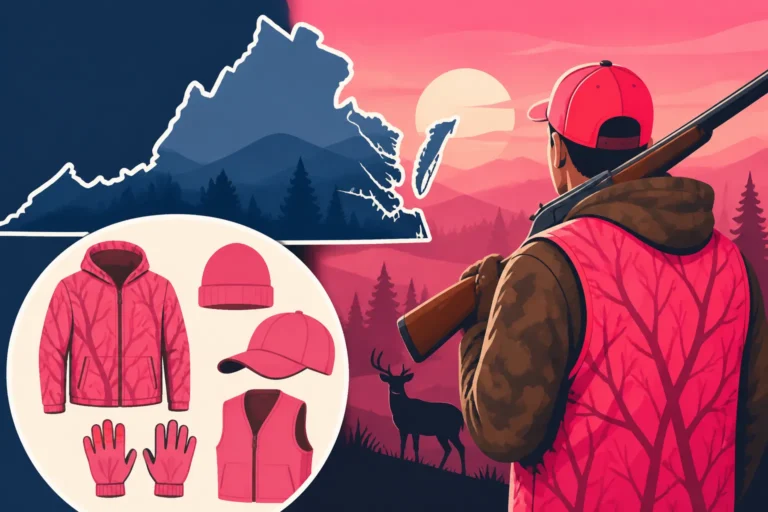
During general firearms deer season, bear season, and certain other hunts, all hunters (and accompanying persons) must wear blaze orange or blaze pink. Specifically, you need to wear at least 500 square inches of solid blaze orange or pink above the waist, visible from 360 degrees. This includes an outer garment like a vest or jacket. A blaze orange or pink hat may count towards the 500 square inches, but it cannot be the only blaze orange worn.
There are exceptions, of course:
- Archery-Only Seasons: During dedicated archery seasons (like the Virginia Statewide Archery Season Dates), blaze orange is generally not required, though it is always recommended for safety, especially on public land.
- Turkey Hunting: When turkey hunting, especially during spring gobbler season, camouflage is the preferred attire, and blaze orange is generally not worn while actively hunting to avoid spooking birds. However, if you are simply walking to and from a stand or blind during firearms season for other game, you must still wear orange.
- Hunting from a Ground Blind: If you're hunting from a fully enclosed ground blind, you typically don't need to wear blaze orange once inside the blind, provided the blind itself is visible (often with a solid blaze orange cap or panel).
Always double-check the current DWR regulations for the specific season and game you'll be hunting to ensure you're in compliance. Virginia Blaze Orange Requirements offers a deeper dive into these rules.
Chronic Wasting Disease CWD Regulations and Carcass Movement
Chronic Wasting Disease (CWD) is a serious concern for wildlife managers across North America, and Virginia is actively monitoring and managing its presence. As a nonresident, it is absolutely essential to understand Virginia's CWD regulations, especially regarding the movement of deer, elk, or moose carcasses. Failing to follow these rules can have significant consequences for the health of deer herds in Virginia and your home state.
Virginia has designated CWD Management Areas (DMAs), which include counties where CWD has been detected or where the DWR deems there's a high risk. If you harvest a deer in one of these Virginia's Eighteen CWD Counties, there are strict rules about what parts of the animal you can transport out of that DMA, or even out of Virginia.
Generally, only the following parts are allowed to leave a DMA:
- Deboned meat
- Cleaned skull plate (antlers attached) with all brain matter and soft tissue removed
- Cleaned skull (with or without antlers) with all brain matter and soft tissue removed
- Cleaned teeth
- Hides with no head attached
- Finished taxidermy products
This means you cannot transport whole carcasses, spinal columns, brains, or other high-risk parts out of a DMA. The primary goal is to prevent the inadvertent spread of the CWD prion to new areas. If you're coming from another state that also has CWD, you need to be especially diligent about these rules. Some states even have their own import restrictions on deer carcasses from CWD-affected areas. Always verify the rules for both Virginia and your home state before you head out. Finding a Virginia CWD Sampling Location is also important if you hunt in an affected area.
Disclaimer
Please remember that hunting regulations, license costs, and season dates are subject to change. While every effort has been made to provide accurate and up-to-date information in this guide, it is ultimately your responsibility as a hunter to consult the most current official Virginia Department of Wildlife Resources (DWR) regulations prior to engaging in any hunting activities. Always prioritize safety and ethical hunting practices.