Ruffed Grouse in the Virginia Mountains
For many hunters, the ruffed grouse is more than just a game bird; it's a ghost of the deep woods, an explosion of feathers and sound that tests reflexes and patience like no other. Tracking these elusive birds through Virginia's rugged mountain terrain can be a frustrating, exhausting endeavor, especially with shifting populations and increasingly dense habitat. This comprehensive guide aims to demystify the pursuit, offering seasoned advice and practical strategies for finding and hunting ruffed grouse in the Old Dominion.
The Elusive King of the Mountain Woods: Understanding Virginia's Ruffed Grouse
The ruffed grouse, often called the "King of Game Birds," holds a special place in the hearts of upland hunters. Its unpredictable nature, explosive flush, and preference for dense, unforgiving cover make every encounter a memorable, if often fleeting, experience. But before you can even think about swinging a shotgun, you need to truly understand the bird itself – its habits, its habitat, and the challenges it faces.
A Glimpse into the Grouse's World: Biology and Behavior
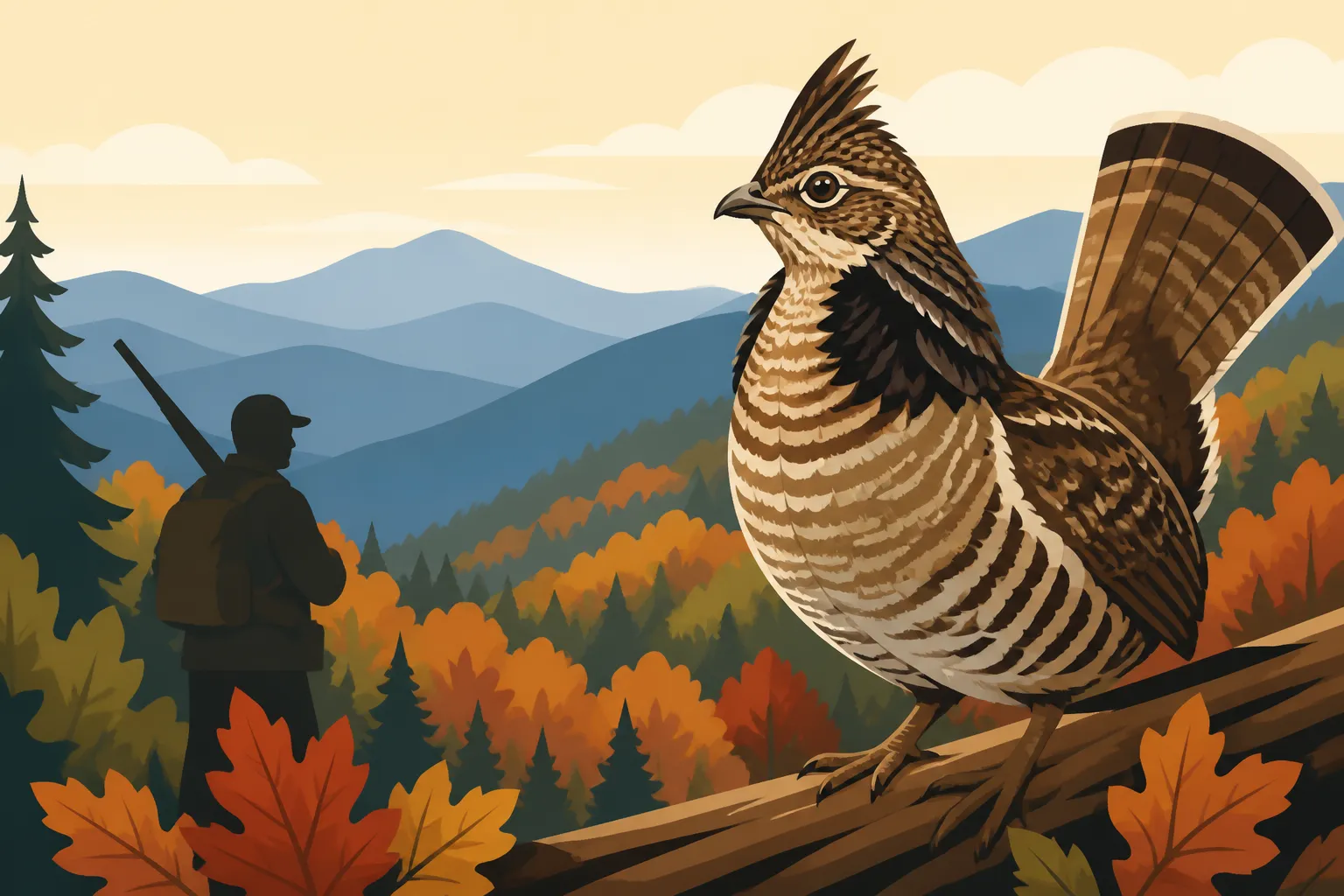
Virginia's ruffed grouse ( Bonasa umbellus ) is a master of camouflage, blending seamlessly into the dappled light of the mountain forests. These medium-sized woodland fowl typically weigh between one and two pounds, sporting a stunning plumage of mottled browns, grays, and black. Their fan-shaped tail, often tipped with a dark band, is a distinguishing feature, especially when displayed during their famous drumming ritual. You'll notice two color phases: a red phase, more common in Virginia, and a gray phase. Regardless of color, their ability to disappear into the undergrowth is legendary.
Their diet is varied and opportunistic, shifting with the seasons. In spring and summer, they feast on tender green vegetation, berries, and insects. As autumn progresses, their focus turns to the fruits and buds of woody plants, like aspen buds, catkins from birch and hazel, and the occasional acorn or grape. This seasonal diet directly influences where you'll find them. They are primarily ground-dwelling birds, though they will roost in trees. Their flight is rapid and powerful, characterized by short, quick bursts followed by glides, making them a challenging target.
Perhaps the most iconic behavior of the ruffed grouse is the male's drumming display. From late winter through spring, the male positions himself on a fallen log, rock, or stump, beating his wings rapidly against the air to create a low, thumping sound that slowly accelerates. This drumming is a territorial display and a call to hens, audible from surprising distances in the quiet woods. It's a sound that signals the awakening of the mountain forest and the beginning of the grouse's breeding season, making it a truly unique experience to witness, even if you’re just scouting.
Why They're So Hard to Find: Population Trends and Challenges
Let's be real: ruffed grouse hunting in Virginia, and much of the species' southern range, isn't what it used to be. The frustrations of walking miles of rugged terrain only to flush a handful of birds are very real for many dedicated upland hunters. The species has seen a significant decline in numbers over the past several decades, a trend that makes successful hunting even more challenging and every bird a hard-earned trophy. Understanding these trends is crucial for setting realistic expectations and appreciating the birds you do encounter.
The primary culprit behind this decline is habitat loss and degradation. Ruffed grouse are "early successional" species, meaning they thrive in young, regenerating forests – the kind that comes up after logging, fire, or other disturbances. This habitat provides the dense cover they need for protection from predators like hawks, owls, and coyotes, as well as crucial food sources. As Virginia's forests have matured, logging practices have shifted, and natural disturbances like wildfire have been suppressed, the amount of ideal young forest habitat has dwindled. Older, open timber, while beautiful, simply doesn't provide the sanctuary grouse require.
Other factors also contribute to their struggles. Climate change, leading to warmer winters and unpredictable spring weather, can impact nesting success and chick survival. Increased predator populations, especially generalists like raccoons, opossums, and even black bears, can take a toll on nests and broods. Additionally, diseases and parasites, though less understood, may play a role. When you consider these compounding challenges, you start to understand why finding a robust grouse covert in Virginia feels like discovering a hidden treasure. The Virginia Department of Wildlife Resources (DWR) actively monitors these trends, and you can delve deeper into the specifics of the species' challenges in our article on Virginia Ruffed Grouse Decline.
Prime Grouse Country: Where to Find Them in the Virginia Mountains
Virginia's ruffed grouse population is almost exclusively found in the mountainous western portion of the state, primarily west of the Blue Ridge. If you're looking to chase these kings of the cover, this is where you need to focus your efforts. But even within this vast region, not all mountain habitat is created equal. Success often hinges on knowing which specific types of coverts within the mountains are most likely to hold birds.
National Forests: George Washington and Jefferson
For the vast majority of grouse hunters in Virginia, the sprawling acres of the George Washington and Jefferson National Forests are your prime hunting grounds. These national treasures offer millions of acres of public land, but don't let the sheer size intimidate you. While immense, specific features within these forests are key to locating grouse. You can learn more about hunting in these areas by checking out George Washington National Forest Hunting and Jefferson National Forest Hunting.
Within these forests, focus your scouting on areas that have seen timber management in the last 5 to 20 years. Look for clear-cuts that are now choked with dense saplings, brambles, and brush. These are the nurseries for grouse. Areas that have undergone selective logging, leaving behind a mix of young and mature trees, can also be productive. Don't overlook old logging roads and skid trails within these areas; grouse often use these clearings to dust, feed on bordering vegetation, or access thicker cover. Look for edges where different forest types or age classes meet, as these transition zones are often high-use areas for grouse.
Elevation also plays a role. While grouse can be found from valley floors to high ridges, they often gravitate towards areas with a good mix of cover types, which can include steep hillsides carpeted in rhododendron and mountain laurel. These evergreen thickets provide crucial thermal cover in winter and protection from predators year-round. Don't be afraid to work the steep, nasty stuff – that's often where the birds feel safest.
Wildlife Management Areas and State Forests
Beyond the national forests, Virginia boasts a number of Wildlife Management Areas (WMAs) and State Forests that offer public hunting opportunities, some of which can hold grouse. These lands are managed by the DWR and the Virginia Department of Forestry (DOF) respectively, often with specific goals for wildlife and timber production.
While many WMAs are in the Piedmont or coastal plain and thus not traditional grouse country, some of the more western WMAs, particularly those in the ridge and valley region, may offer opportunities. Examples might include Rapidan WMA in Madison County, which features steep terrain and mixed hardwood forests, or the Goshen and Little North Mountain WMAs, which also provide mountain habitat. These areas often have more intensive habitat management plans, so look for recent timber harvests, prescribed burns, or other disturbances designed to create early successional habitat.
State Forests, managed by the DOF, are another often-overlooked option. These lands are managed for sustainable timber harvesting, which means you're more likely to find the clear-cuts and regenerating stands that grouse prefer. Again, the key is to pinpoint the westernmost State Forests, like the one in western Augusta County or areas further south in the Alleghany Mountains. Before heading out, always check the specific WMA or State Forest regulations, as access and hunting rules can vary. Websites and apps like GoHunt can be incredibly useful for overlaying public land boundaries with satellite imagery to identify promising habitat before you even leave home.
Unlocking Coverts: Reading the Habitat
Finding ruffed grouse isn't about aimlessly wandering through the woods; it's about understanding and "reading" the habitat. Grouse are creatures of cover, and the thicker, nastier, and more impenetrable it seems to you, the more likely a grouse is to call it home. This isn't your open deer woods; this is the stuff that grabs your clothes, scratches your face, and makes you wonder why you came out here.
The ideal grouse covert is a mosaic of different forest stages and types. Look for areas with a dense understory, often created by young hardwood saplings (especially aspen, birch, or maple), multiflora rose, greenbriar, and, crucially, thickets of rhododendron and mountain laurel. These evergreen shrubs are particularly important for year-round cover and thermal protection. If you find yourself in an area where you can see more than 20-30 yards consistently, you're probably not in prime grouse country.
Pay close attention to transition zones. These are the edges where a clear-cut meets mature timber, where a dense stand of pines gives way to hardwoods, or where a creek bottom transitions to a drier hillside. Grouse love these "edges" because they offer a mix of food and cover. Old apple orchards gone wild, abandoned farmsteads, and overgrown logging landings can also be magnets for grouse, providing food sources and dense escape cover. Just as a deer hunter learns to read the land for buck signs, a grouse hunter learns to read the cover for bird signs – the tell-tale browse on certain trees, old dusting bowls, or even the distinct scratchings in leaf litter. Understanding how deer utilize their terrain is vital, and similarly, applying that same attention to detail to grouse can significantly improve your odds, much like understanding Reading a Ridge for Blue Ridge Deer helps locate whitetails.
Seasons, Regulations, and What You Need to Know
Before you even think about loading your shotgun or strapping on your brush pants, it's absolutely essential to be well-versed in Virginia's hunting regulations. The Virginia Department of Wildlife Resources (DWR) sets the rules, and they can change from year to year, so always consult the most current hunting regulations manual. Being prepared and legal ensures a safe and enjoyable hunt.
Navigating Virginia's Grouse Season
Virginia's ruffed grouse season typically opens in October and runs through January, providing a generous window for hunters. However, specific dates can vary slightly each year, so always double-check the DWR's official regulations. The season usually begins after the leaves have fallen, which is a blessing and a curse. While bare trees can make spotting a flushing bird marginally easier, the leaf litter on the ground can make walking incredibly noisy and tracking a downed bird a nightmare.
The daily bag limit for ruffed grouse in Virginia is typically two birds per day, with a season limit of six. This reflects the relatively low population density and the DWR's conservation efforts. It's a testament to the challenge of the hunt that even a single bird is often considered a great success, let alone a limit. Remember, these regulations are in place to ensure the sustainability of the population, so adherence is critical. For the most up-to-date information on when and where you can pursue these challenging birds, you should refer to our dedicated guide on Virginia Grouse Season Status.
Licensing and Hunter Education Requirements
Like all hunting in Virginia, pursuing ruffed grouse requires proper licensing. All hunters must possess a valid Virginia hunting license. If you're planning to hunt on a Wildlife Management Area (WMA), you might also need a WMA access permit, depending on the specific area and your license type. This is an important detail many overlook, so always check the WMA's specific rules before heading out.
Furthermore, if you were born on or after July 1, 1976, you must show proof of having completed an approved hunter education course before you can purchase a Virginia hunting license. There are exceptions for apprentice hunters, but for most, hunter education is a mandatory step. This course covers vital topics like firearm safety, ethical hunting practices, wildlife management principles, and conservation. It’s not just a hoop to jump through; it instills the foundational knowledge every responsible hunter needs. You can find more detailed information about this requirement in our post on Virginia Hunter Education Requirements. While grouse aren't migratory birds, it's good practice for any small game hunter to understand HIP certification, which is required for migratory bird hunting in Virginia.
Safety First: Blaze Orange and Other Considerations
Safety in the grouse woods cannot be overstressed, especially given the rugged terrain and dense cover. Virginia law requires hunters, or anyone accompanying a hunter, to wear blaze orange during certain seasons and while hunting particular species. While the specific requirements can sometimes vary depending on the game being pursued and the active seasons, for small game hunting during deer season, it’s almost always mandatory. Even outside of mandatory periods, wearing blaze orange or blaze pink is a wise choice to maximize your visibility to other hunters, especially when you're crashing through thick brush. Our guide on Virginia Blaze Orange Requirements offers a full breakdown of what's mandated.
Beyond hunter orange, consider the challenges of the environment. The steep, uneven terrain common in grouse country demands sturdy, ankle-supporting boots to prevent falls. Carry a first-aid kit, whistle, and know how to use them. It's also wise to carry a reliable navigation tool – whether a GPS unit or a smartphone app like GoHunt, which can show your location, public land boundaries, and help you backtrack. Tell someone where you're going and when you expect to return, especially if you're hunting alone in remote areas. Finally, always be aware of your muzzle control, especially in thick cover where a partner or dog might be just out of sight. Remember, every shot must be safe and identifiable, so think before you shoot.
Gear Up for the Challenge: Essential Equipment for Grouse Hunters
Grouse hunting is a physically demanding pursuit that requires specific gear to maximize your comfort, efficiency, and safety. You're not sitting in a treestand here; you're constantly on the move, pushing through thick brush, and navigating uneven terrain. Having the right tools for the job can make all the difference between a miserable day and a successful, enjoyable one.
Shotgun Choice and Ammunition
When it comes to grouse hunting, quickness and maneuverability are paramount. Grouse don't give you much time to react once they flush. For this reason, a lightweight, fast-handling shotgun is ideal. Many seasoned grouse hunters favor smaller gauges like a 20-gauge or 28-gauge, and some even opt for a .410 for the ultimate challenge. While a 12-gauge will certainly work, its heavier recoil and often slower swing might be a disadvantage in the quick, close-range encounters typical of grouse hunting. The debate over Best Shotgun Gauge for Virginia Grouse is a lively one, but ultimately comes down to personal preference and confidence.
The most common action for grouse guns is an over/under or side-by-side double barrel, allowing for two quick shots with different choke constrictions. Many also use semi-automatic or pump-action shotguns. Regardless of action, consider a shorter barrel length (26 inches or less) for easier handling in dense cover. For choke selection, open chokes like improved cylinder (IC) or skeet (SK) are often preferred, as most shots occur at close range (10-25 yards) where a wide, fast-spreading pattern is beneficial. Having different chokes in a double barrel allows you to tailor your pattern for the first close shot and a follow-up longer shot. Our guide on Choke Choice for Fast Flushes can provide further insights.
As for ammunition, a light game load with shot sizes 7.5 or 8 is generally perfect for grouse. These smaller pellets provide a dense pattern, which is crucial for hitting a fast-moving target in thick brush, and they carry more than enough energy to humanely dispatch a grouse. Avoid heavy loads meant for waterfowl or large upland birds; they're overkill and will just leave more recoil for you to manage.
Clothing, Footwear, and Navigation
Your clothing needs to be tough, breathable, and able to withstand constant abrasion from thorns, briars, and thick brush. A good layering system is key, as you’ll be exerting a lot of energy, even in cold weather. Start with moisture-wicking base layers, add insulating layers as needed, and top it with a durable, thorn-proof outer shell. Brush pants or chaps are almost mandatory to protect your legs from punishment. An upland vest or strap vest with plenty of pockets for shells, a water bottle, and a game pouch is invaluable for keeping essential items close at hand and distributing weight comfortably.
Footwear is arguably the most critical piece of gear. You'll be traversing steep, uneven, often slippery terrain, so sturdy, waterproof boots with excellent ankle support and aggressive traction are a must. Look for boots designed for mountain hunting or hiking, with durable outsoles that can grip rocks, mud, and fallen timber. Many hunters prefer a higher cut boot to keep debris out and offer maximum support.
For navigation, a GPS unit or a reliable smartphone app is non-negotiable, especially on vast public lands like the National Forests. Apps like GoHunt offer detailed topographic maps, satellite imagery, and the ability to mark waypoints, track your path, and see public/private land boundaries. This can be a lifesaver for finding your way back to your vehicle or relocating a promising covert. Always carry a physical compass and know how to use it as a backup, as electronics can fail. Don't forget water, snacks, a small first-aid kit, and a headlamp if there's any chance you'll be walking out after dark.
Canine Companions: Hunting with a Bird Dog
For many, grouse hunting isn't truly grouse hunting without a dedicated bird dog. A good upland dog can dramatically increase your success rate and, more importantly, enhance the entire hunting experience. Whether you prefer a pointing dog or a flushing dog, a well-trained canine companion is an invaluable asset in the dense cover grouse inhabit.
Pointing breeds like English Setters, German Shorthaired Pointers, and Brittany Spaniels are often favored for their ability to locate birds by scent and hold them on point, allowing the hunter to approach for a shot. This gives you precious seconds to prepare for the flush. Flushing breeds like English Springer Spaniels or American Cockers will actively search for and flush birds, making them excellent choices for hunters who prefer a more active, fast-paced hunt. Regardless of breed, the dog needs to be conditioned for the grueling terrain, accustomed to thick cover, and responsive to commands.
A good dog doesn't just find birds; it also helps you recover downed game in dense vegetation, preventing lost birds. Equipping your dog with a bell can help you keep track of its location in thick cover, and a GPS collar can be a lifesaver in vast national forest lands. Proper training, regular exercise, and appropriate gear, like cut vests to protect them from thorns, are essential investments for a grouse dog. For more on preparing your four-legged hunting partner, check out our guide on Bird Dog Gear for Virginia Cover.
Mastering the Hunt: Tactics and Strategies for Mountain Grouse
Once you have your gear sorted and you're in promising habitat, the real challenge begins: finding and flushing these elusive birds. Grouse hunting isn't a passive sport; it's an active, engaging pursuit that demands patience, keen observation, and quick reflexes.
Walking the Coverts: Routes and Pacing
The most effective way to hunt ruffed grouse is to systematically walk through prime coverts. This means pushing through the thickest stuff, not skirting the edges. Grouse rely on that dense cover for protection, so that's where they'll be. When planning your route, consider walking along contour lines or zigzagging across a hillside. Old logging roads or overgrown skid trails can provide easier walking, but you'll often find birds just off the edges in the thicker growth, not on the open path itself. Focus on areas where you see a mix of food and cover.
Pacing is crucial. Don't rush through the woods like you're on a nature hike. Grouse will often sit tight, letting you walk right past them. Walk slowly, pausing frequently. These pauses are vital: often, a grouse that was holding tight will flush within a few seconds of you stopping, either thinking you've gone or feeling the pressure of your presence. Vary your pace, take a few steps, stop, scan, listen, then repeat. This unpredictable rhythm often tricks birds into flushing when they might otherwise hold. When hunting with a dog, pay attention to their body language; a dog on point or working scent will tell you when a bird is near. Our guide on Hunting Blue Ridge Cover offers insights into traversing similar challenging terrain, which can be adapted for grouse.
Flushing Tactics and Shot Opportunities
The ruffed grouse flush is legendary for a reason: it's explosive, often unexpected, and designed to disorient the hunter. A grouse can go from invisible to rocketing away at incredible speed in a fraction of a second, often putting obstacles like trees and branches between itself and you. This is where your fast-handling shotgun and quick reflexes come into play.
When a bird flushes, the first instinct is often to lift your gun and shoot immediately. Resist this if the bird is obscured. Instead, quickly locate the bird, track its flight path, and try to find a small window or opening in the cover. Your shot will almost always be a "timber shot" – a quick swing and pull of the trigger as the bird passes through a brief opening. Don't overthink it; trust your instincts and practice snapping the gun to your shoulder. If you miss the first shot, quickly transition to the second barrel or cycle your action, as grouse sometimes offer a second, slightly longer shot if they continue flying through sparse cover. Remember that grouse often fly downhill when flushed on a slope, so anticipate that trajectory.
Weather and Time of Day Considerations
Like most wildlife, ruffed grouse activity is influenced by weather and time of day. Generally, the best times to hunt are early morning and late afternoon, when birds are typically feeding. Mid-day can be slower, especially on warm, sunny days, as birds may be hunkered down in dense cover.
Cloudy, overcast days, or even light rain or snow, can sometimes provide excellent hunting conditions. The damp leaves on the ground can muffle your footsteps, allowing for a quieter approach. Fresh snow can also make tracking easier and highlight areas where grouse have been feeding. Conversely, extremely windy days can make it difficult to hear flushes and can also make birds more skittish. Hot, dry weather in early season can make birds less active and scenting conditions difficult for dogs. Adjust your strategy based on the conditions; on a hot day, focus on cooler, shaded creek bottoms or dense evergreen thickets. On a cold day, south-facing slopes might be more productive.
Conservation and the Future of Virginia's Ruffed Grouse
The decline of ruffed grouse populations in Virginia is a serious concern for hunters and conservationists alike. While the challenge of hunting them is part of their allure, we also have a responsibility to ensure these magnificent birds continue to thrive in our mountain forests for future generations. Understanding and supporting conservation efforts is crucial.
Habitat Management and Restoration Efforts
As mentioned earlier, the primary driver of grouse population health is habitat quality. Ruffed grouse need young, regenerating forests, and creating this habitat requires active forest management. This isn't always pretty; it often involves clear-cutting or aggressive timber stand improvement, which can look jarring to the untrained eye. However, these practices, when done sustainably and strategically, are vital for grouse and many other early successional wildlife species.
Organizations like the Ruffed Grouse Society (RGS) work tirelessly with landowners, state agencies like the DWR and DOF, and federal partners like the U.S. Forest Service to advocate for and implement sound forest management practices. This includes promoting carefully planned timber harvests, prescribed burns, and the establishment of diverse tree species that provide food and cover. Supporting these groups, either through membership or direct donations, is one of the most impactful ways hunters can contribute to grouse conservation. The DWR also actively manages some of its WMAs to create and maintain early successional habitat, making these areas critically important.
Hunter's Role in Data Collection and Advocacy
Hunters play a direct and vital role in monitoring ruffed grouse populations and advocating for their future. Every bird harvested provides valuable data to the DWR. Through harvest reporting systems, the DWR collects information on where and when birds are taken, which helps them assess population trends and make informed management decisions. It’s not just about the numbers; it's about understanding the health of the species.
Beyond reporting your harvest, consider participating in hunter surveys if the DWR conducts them. These surveys often ask about your hunting effort, number of flushes, and birds seen, providing qualitative data that complements harvest numbers. Furthermore, be an advocate for sound habitat management. Educate others about the importance of young forest habitat, even if it doesn't always conform to traditional ideas of a "beautiful" forest. Your voice, combined with that of other dedicated hunters, can help influence land management policies that benefit grouse. Keeping up-to-date on trends, such as those detailed in Virginia Ruffed Grouse Numbers Today, helps inform your advocacy.
A Challenging but Rewarding Pursuit
Hunting ruffed grouse in the Virginia mountains is not for the faint of heart. It demands physical endurance, mental toughness, and a willingness to embrace discomfort. You will walk miles, get scratched, fall down, and likely come home empty-handed more often than not. The birds are scarce, the cover is unforgiving, and the flushes are fleeting.
Yet, for those who answer the call, the reward goes far beyond a full game vest. It's the profound satisfaction of connecting with wildness in its purest form. It's the crisp mountain air, the solitude of the deep woods, the beauty of an autumn forest, and the raw thrill of that explosive flush. It's the camaraderie shared with a loyal bird dog or a fellow hunter. And when that rare bird is finally brought to hand, it represents a hard-earned trophy, a testament to skill, perseverance, and a deep appreciation for one of Virginia's most iconic and elusive game birds. The memories forged in pursuit of the King of the Mountain Woods will last a lifetime, long after the season ends.
Disclaimer
Please note that hunting regulations, seasons, and licensing requirements can change. Always consult the most current Virginia Department of Wildlife Resources (DWR) regulations manual before engaging in any hunting activities. This guide is for informational purposes only and should not be considered legal advice. Safety should always be your top priority in the field.