Virginia Deer Antler Growth Timeline
If you've spent any time in the Virginia woods, watching deer or just finding shed antlers, you've probably wondered about the incredible process behind a buck's rack. It seems almost magical how those bony structures sprout, grow, harden, and then disappear, only to return bigger and stronger next year. Understanding the Virginia deer antler growth timeline isn't just fascinating; it can actually make you a better hunter, helping you scout smarter and anticipate buck behavior throughout the seasons.
The Annual Cycle: What Triggers Antler Growth?
The annual cycle of antler growth in white-tailed deer is nothing short of amazing, a testament to nature's precise timing. It all kicks off around late winter or early spring, just after the old antlers have been cast off. What really drives this whole show isn't just good food, though that certainly plays a huge part, but rather changes in daylight hours and a complex hormonal dance within the buck's body. You see, a buck's system is incredibly tuned to the changing seasons.
The Role of Sunlight and Hormones
Think of it like this: as the days get longer after the winter solstice, the increasing sunlight exposure triggers a cascade of hormonal changes in a buck. Specifically, the pineal gland, influenced by light, signals the pituitary gland, which then starts producing growth hormones and, importantly, decreases the production of testosterone. It's this dip in testosterone that essentially gives the green light for new antler growth. It's quite counterintuitive for some, since we associate antlers with the rut, but the growth phase needs lower testosterone levels. This is why a buck that's injured or stressed, causing a hormonal imbalance, might grow an atypical or "non-typical" rack.
This initial phase is all about cellular regeneration at the pedicles – those bony stumps on a buck's skull where antlers grow. For a few weeks after shedding, these pedicles are healing, preparing for the rapid growth that's about to begin. It's a critical time when the foundation for the next year's rack is laid. The buck is essentially rebuilding, getting ready to pour resources into forming a new set of headgear.
Early Spring: The Pedicle Stage
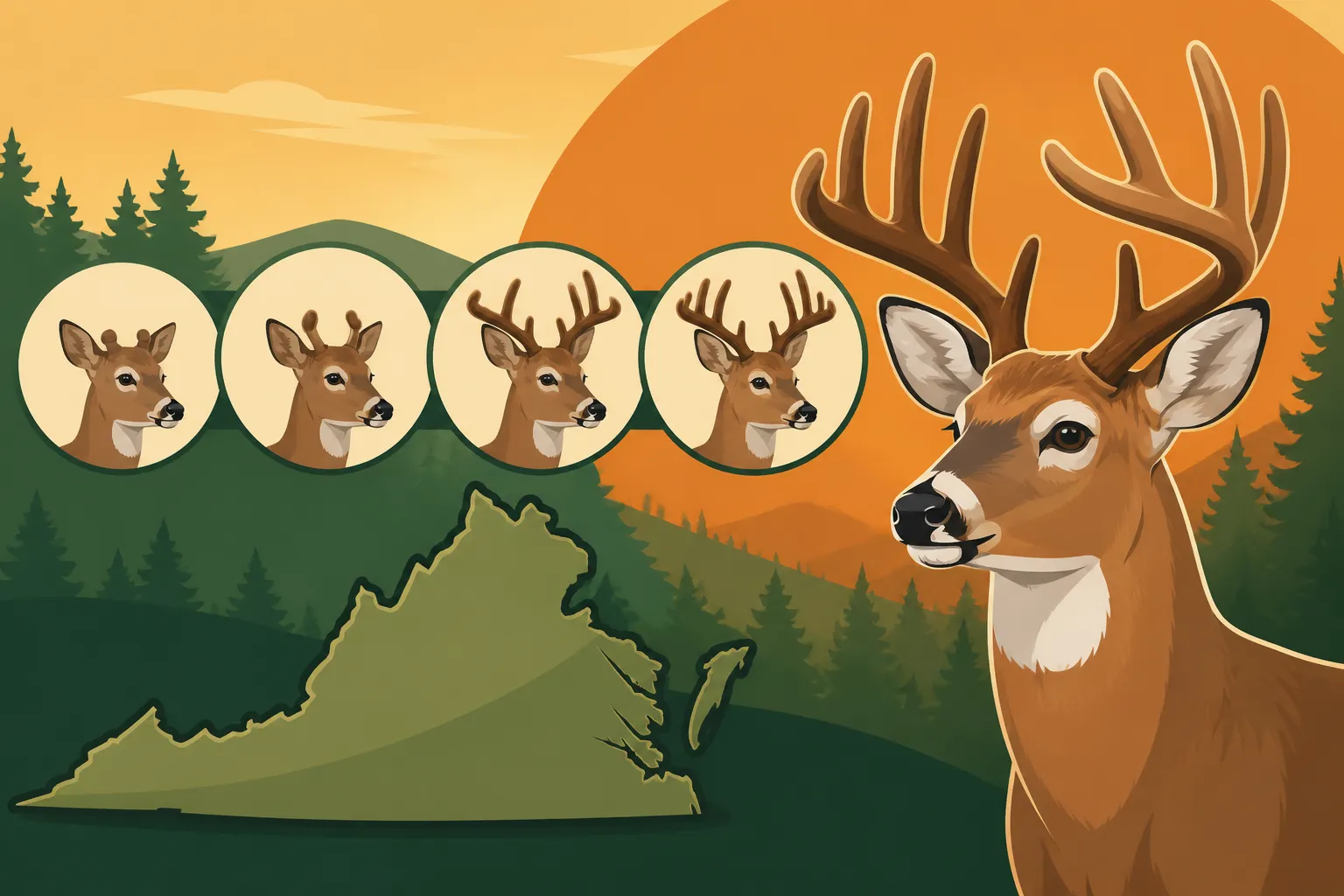
Right after those old antlers drop off, usually from late January through March in Virginia, the pedicles are exposed, raw, and sometimes a little bloody. It doesn't take long for them to heal over, forming a protective scab. Beneath that scab, the real work begins. Specialized cells within the pedicle start to activate, and within a couple of weeks, you'll see tiny, fuzzy buttons starting to emerge. These aren't antlers yet in the hard, bony sense we recognize, but rather the very beginnings of the new rack, covered in what we call velvet.
During this early spring period, a buck's body is focused entirely on putting energy into this new growth. Nutrition becomes paramount. A buck that went into winter in poor condition, perhaps after a tough rut or a lean winter, might see a slower start to antler development. On the other hand, a healthy buck with access to good early spring browse – tender new shoots, forbs, and leftover mast – is already setting himself up for a better rack. This is a quiet time in the woods, but beneath the surface, monumental changes are underway for every buck.
Spring and Summer: Velvety Rapid Development
Once those fuzzy buttons appear in early spring, the antler growth really kicks into high gear. This is the period most hunters visualize when they think of "velvet." From April through August, Virginia bucks are sporting these soft, furry antlers, and they're growing at an astonishing rate. It's an incredible biological phenomenon, unlike anything else in the animal kingdom, and it requires a tremendous amount of energy.
Fueling the Rack: Nutrition is Key
The velvet covering isn't just for looks; it's a highly vascularized tissue, packed with blood vessels and nerves. This network delivers vital nutrients, minerals, and oxygen directly to the growing bone beneath. Think of it as a living, breathing nutrient delivery system. During this phase, a buck's body is literally prioritizing antler growth, often at the expense of other bodily functions if resources are scarce. This is where age, genetics, and especially nutrition really shine. A young, healthy buck on prime agricultural land in the Piedmont or Shenandoah Valley with abundant protein and minerals will typically grow a more impressive rack than an older, stressed buck on marginal habitat. Why the Piedmont Grows Older Bucks touches on how good habitat and management can lead to larger, healthier deer, which directly translates to bigger antlers.
For us hunters, this period is often spent scouting and running trail cameras. What a buck looks like in July or August gives you a pretty good indication of his potential come fall. If you're using a tool like the GoHunt app for scouting, you might be looking at aerial photos of green fields or mineral sites, thinking about where these bucks are getting the fuel for their racks. Observing a buck's velvet development through the summer offers clues about his overall health and potential size for the upcoming season.
Vulnerability in Velvet
While the velvet is crucial for growth, it also makes the antlers incredibly sensitive and vulnerable. Imagine hitting your finger with a hammer, but all over your skull – that's what a hard knock could feel like for a buck in velvet. Bucks are much more cautious during this time, avoiding dense brush or sparring with other bucks. You won't see them rubbing their racks on trees or aggressively pushing other deer around. This sensitivity ensures the delicate structure underneath has time to form correctly.
This vulnerability also means bucks tend to be more reclusive and less migratory than during the rut. They stick close to reliable food sources and thick cover, protecting their growing racks. A buck might choose a different travel route or bedding area in July specifically to avoid snagging his velvet. They're focused on eating, growing, and staying out of trouble, which is a stark contrast to their behavior just a few months later.
Late Summer to Early Fall: Hardening, Shedding Velvet, and Asserting Dominance
As summer begins to wane and the days noticeably shorten, another critical shift occurs in the antler growth timeline. It's a dramatic transformation where the soft, sensitive velvet gives way to the hard, calcified bone we recognize as a mature deer's rack. This phase is marked by a significant increase in testosterone, which not only signals the end of growth but also ramps up a buck's aggressive behavior in anticipation of the breeding season.
The Rubbing Post: Declaring Territory
Around late August into September, depending on the individual buck and local conditions, the velvet starts to dry up and peel off. This can be a messy process, often leaving strips of bloody velvet hanging from the antlers. It looks a bit gruesome, but it's a natural and necessary part of the cycle. To get rid of the remaining velvet, bucks will begin rubbing their antlers vigorously on trees and saplings. This isn't just about cleaning; it's a crucial behavioral shift. These "rubs" serve as scent markers and visual signposts, declaring a buck's presence and establishing his dominance to other deer. Scrape Lines Along a Logging Road are also important signs that bucks are ready to start asserting themselves.
You'll see rubs popping up all over the woods, from small saplings rubbed clean to larger trees with bark shredded. Each rub is a calling card, a way for a buck to communicate his status and readiness. These signs are gold for a hunter scouting for the early archery season. Finding fresh rubs can tell you where a dominant buck is actively moving and where he feels comfortable enough to leave his mark. Using a map tool, like the one in the GoHunt app, to mark these locations can help you piece together a buck's travel patterns.
The Shift from Growth to Weaponry
With the velvet gone, the antlers are now fully calcified bone. They are no longer growing or sensitive, but are instead formidable weapons, perfectly designed for sparring and fighting. The increase in testosterone that triggers velvet shedding also drives a buck's aggression. The polite coexistence of summer bachelor groups begins to break down as bucks start to establish their pecking order. You'll see more pushing, shoving, and aggressive posturing.
This transition from soft, growing tissue to hard bone is vital for the upcoming rut. The antlers are now ready for the real work: attracting does and defending breeding rights. This shift prepares the deer herd for the intense competition of the breeding season, ensuring the strongest, most dominant bucks have the best chance to pass on their genes. For hunters, this is often when we start getting excited, seeing hard-horned bucks on camera and knowing that the intensity of the fall season is just around the corner.
The Rut and Post-Rut: Antlers for Display and Dropping Off
The period from late fall through early winter represents the peak of a buck's antler use. They are fully hardened, sharp, and ready for action, playing a pivotal role in the annual breeding cycle. However, this period also marks the beginning of the end for the current year's rack, as testosterone levels eventually decline, leading to shedding.
Antlers as Tools of the Rut
Once the antlers are hard and clean, bucks use them constantly during the breeding season, or rut. When the Virginia Rut Peaks by Region offers insights into when you'll see this behavior at its most intense. Antlers are primarily for displaying dominance. A large, impressive rack signals to does that a buck is mature and healthy, and it warns off smaller, younger bucks. It's a visual cue that says, "I'm the boss around here." They'll spar with rival bucks, pushing and shoving, often to settle disputes without serious injury. These battles can be intense, a clashing of bone that echoes through the autumn woods. You can often tell the intensity of the rut by the presence of these sparring marks on trees and the sheer number of scrapes.
Sometimes, bucks will engage in more serious fights, especially if a receptive doe is involved. While lethal injuries are rare, a broken tine or a shed antler in the heat of a battle isn't uncommon. The antlers are the primary weapons, but the bucks' thick skulls and powerful necks are also built to withstand these impacts. It's a period of high energy and constant movement, as bucks chase does and defend their territories, with their antlers serving as their badge of honor and their primary tool.
Post-Rut Decline and Shedding
After the rut winds down, typically from late November through December in Virginia, the physiological purpose of the antlers diminishes. The high testosterone levels that fueled their hardening and use begin to drop significantly. This decline in testosterone is the key trigger for antler shedding. Essentially, the body perceives the antlers as no longer necessary, and a specialized layer of cells forms between the pedicle and the antler base, weakening the connection until the antler simply detaches.
This shedding process usually occurs from late December through early March in Virginia, though the exact timing can vary widely based on individual buck health, nutrition, age, and regional factors. A buck that went through an exceptionally hard rut, losing a lot of body condition, might shed earlier. Conversely, a buck that stayed healthy and didn't expend as much energy might hold his antlers longer. Finding these shed antlers, often referred to as "shed hunting," has become a popular off-season activity, allowing us to connect with the deer woods even when hunting season is closed. Shed Hunting on Virginia Public Land is a great way to learn more about this rewarding pastime. Each shed antler is a tangible piece of a buck's life story and a promise of next year's rack.
Here's a quick overview of the antler growth timeline:
| Season | Approximate Months (Virginia) | Antler Stage | Key Activity / Characteristics |
|---|---|---|---|
| Late Winter | Jan – March | Shedding / Pedicles | Old antlers drop; pedicles heal; new growth begins. |
| Early Spring | March – April | Velvet (Early Growth) | Small, fuzzy buttons emerge; rapid growth begins. |
| Late Spring | April – June | Velvet (Mid-Growth) | Antlers grow rapidly in length and mass; very sensitive. |
| Summer | July – August | Velvet (Near Maturity) | Antlers reach near-full size, still in velvet; mineralization. |
| Early Fall | Late Aug – Sept | Shedding Velvet / Hard | Velvet peels off; bucks rub antlers; antlers harden; testosterone rises. |
| Fall (Rut) | Sept – Dec | Hard (Battle Ready) | Antlers used for sparring, dominance, attracting does; peak testosterone. |
| Early Winter | Dec – Jan | Post-Rut / Pre-Shed | Testosterone levels decline; antlers begin to loosen. |
This cycle repeats year after year, with each shed antler signifying the end of one chapter and the exciting anticipation of the next. Understanding this intricate timeline gives us a deeper appreciation for the resilience and adaptability of Virginia's white-tailed deer.
Disclaimer
This article is for general informational purposes only and does not constitute professional advice. Laws, prices and regulations vary by location and change over time. Consult a qualified professional for guidance on your specific situation.