Virginia Turkey Population Trends
It’s a feeling many of us Virginia turkey hunters know all too well: that growing worry about whether the gobblers we hear (or don't hear) are as plentiful as they used to be. You spend hours scouting, listen intently at dawn, and sometimes, the woods just feel… quieter. This comprehensive guide is here to shed some light on the reality of wild turkey populations in Virginia, exploring their incredible history, current trends, and the many factors influencing their numbers today, so you can hunt smarter and contribute to their future.
The Remarkable Comeback: A History of Virginia's Wild Turkeys
If you've been chasing gobblers in Virginia for a while, you've likely heard tales of the "good old days" when turkeys seemed to be everywhere. What many newer hunters might not realize is just how truly miraculous the wild turkey's resurgence in Virginia, and indeed across North America, truly is. Their history is one of dramatic highs and devastating lows, culminating in one of the greatest conservation success stories ever told.
From Near Extinction to Abundance
Imagine a Virginia without wild turkeys. It's hard to fathom now, but by the early 20th century, that was very nearly our reality. Unregulated market hunting, coupled with widespread habitat destruction from logging and agricultural expansion, pushed the majestic wild turkey to the brink. Their numbers plummeted to alarming lows, with only scattered, isolated populations remaining in the most remote pockets of the state, primarily in the rugged mountains. Many thought they were gone for good.
Thankfully, dedicated conservationists and early wildlife agencies weren't willing to let that happen. Starting in the mid-20th century, monumental efforts were undertaken to restore wild turkeys. The Virginia Department of Wildlife Resources (DWR, then the Game and Inland Fisheries) partnered with organizations like the National Wild Turkey Federation (NWTF) to implement what’s known as "trap-and-transfer" programs. This involved live-trapping turkeys from healthy populations in remote areas, often using cannon nets, and then carefully relocating them to suitable, vacant habitats across the state. It was painstaking work, but it worked wonders. These resilient birds, once given a fighting chance with protection and suitable habitat, quickly re-established themselves. If you want to dive deeper into this amazing journey, check out our piece on How Turkeys Were Restored to Virginia.
The success was nothing short of phenomenal. From a mere handful of birds, the population exploded, filling woodlands, agricultural edges, and even suburban areas. This incredible rebound is a testament to the effectiveness of science-backed conservation and the adaptability of wild turkeys. Without these efforts, our spring woods would be silent of those iconic gobblers.
The Golden Age of Turkey Hunting
For many of us, the late 1990s and early 2000s truly felt like the "Golden Age" of turkey hunting in Virginia. The trap-and-transfer programs had reached maturity, and populations were at their absolute peak across much of the state. It wasn't uncommon to hear multiple gobblers sounding off from different directions on a spring morning, and encounter flocks of birds roaming almost every woodlot and field edge.
During this period, hunter success rates were notably high. It felt like you had a real shot at filling your tag on any given outing, particularly if you'd done your scouting. While hunting turkeys is always challenging, the sheer density of birds meant more opportunities, more interactions, and more of those heart-stopping moments we all live for. The memories of those mornings, with gobblers echoing across the hills and multiple birds often coming to the call, are etched in the minds of many veteran hunters. It fostered a strong hunting culture around turkey season, with tales of grandfathers, fathers, and sons experiencing incredible days afield. This robust population also allowed for increasingly generous bag limits, reflecting the DWR's confidence in the health and sustainability of the turkey resource at the time.
Current State of Affairs: Are Virginia's Turkeys Declining?
Fast forward to today, and the conversation among turkey hunters has undeniably shifted. While there's still plenty of great hunting to be had, many of us are asking the tough questions: "Where did all the turkeys go?" "Are the numbers truly down, or is it just my perception?" It’s a valid concern, and one that the Virginia Department of Wildlife Resources (DWR) takes very seriously.
Examining Recent DWR Data and Hunter Observations
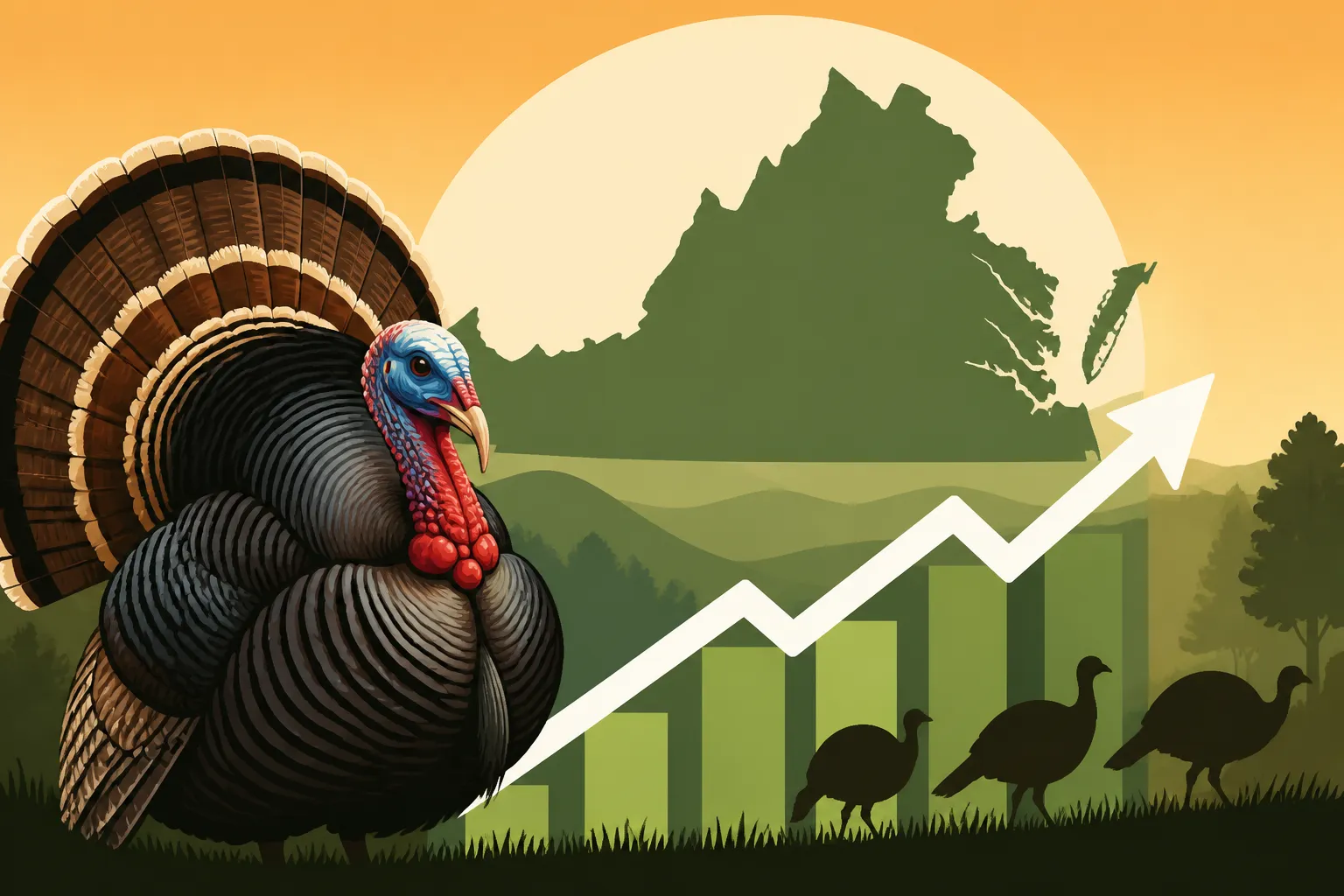
The DWR employs a range of scientific methods to monitor wild turkey populations, including brood surveys, harvest data analysis, and long-term research projects. While the DWR doesn't provide a single, exact statewide population estimate each year (it’s notoriously difficult for a species like turkeys), they do track trends. What the recent data suggests is a more nuanced picture than a simple "decline." In many areas, especially some of the traditional strongholds, turkey numbers appear to have stabilized or experienced slight decreases from their historic peaks of the late 90s and early 2000s. However, other regions might still be holding strong, or even seeing localized increases.
This can feel frustratingly vague to hunters who are out in the woods regularly. Your personal observations, hearing fewer gobblers, seeing smaller flocks, or struggling to find birds where they once were plentiful, are crucial. These anecdotal experiences often align with the broader trends observed in the DWR’s more scientific data. For instance, the annual Virginia Turkey Harvest Numbers can provide a good snapshot. If harvest numbers trend downwards over several years despite consistent hunter effort, it often signals a decrease in the overall population. It's a complex puzzle, influenced by many factors, and understanding both the scientific data and the real-world experiences of hunters helps us get a clearer picture.
Understanding Poult-to-Hen Ratios
One of the most critical metrics the DWR, and indeed turkey biologists nationwide, look at is the poult-to-hen ratio. Simply put, this ratio measures the number of poults (young turkeys) that survive into late summer per adult hen. It's a direct indicator of reproductive success and recruitment – how many new birds are successfully added to the population each year. Imagine if a company wasn't hiring new employees; eventually, the workforce would shrink. The same applies to turkeys.
A healthy poult-to-hen ratio is generally considered to be around 2.0 to 2.5 poults per hen. This means for every adult hen, you'd ideally see two to two-and-a-half young birds successfully making it to the fall. When this ratio consistently dips below that threshold, it's a red flag. In recent years, Virginia, much like many other states in the Southeast, has seen some concerning trends in these ratios, often falling below the desired level in certain regions. This directly translates to fewer young birds surviving to replace older ones, leading to a gradual decline in the overall population. Our article on Poult-to-Hen Ratios and What They Mean delves deeper into why this metric is so vital for turkey management. Low ratios can be a result of poor weather during nesting and brooding, increased predation, or a combination of environmental stressors that make it harder for young turkeys to survive their most vulnerable stage.
Major Factors Influencing Turkey Populations
Wild turkeys are incredibly resilient, but their populations are delicate ecosystems, vulnerable to a multitude of environmental pressures. Understanding these factors is key to grasping why numbers might be fluctuating and what could be done to help. It's not usually one single culprit but a complex interplay of elements.
Habitat Changes and Land Use
Habitat is the cornerstone of any healthy wildlife population, and wild turkeys are no exception. Virginia's landscape is constantly evolving, and these changes directly impact where turkeys can thrive. Urbanization and suburban sprawl, while inevitable in many areas, lead to direct habitat loss, fragmenting prime turkey woods and replacing them with development. This pushes birds into smaller, more isolated pockets, making them more susceptible to predation and reducing their overall range.
Beyond direct loss, how our remaining forests are managed plays a massive role. Mature, open timber stands might look beautiful, but turkeys need a diverse mix of habitats throughout the year. They need dense nesting cover in spring to hide their nests from predators, lush insect-rich brood-rearing habitat in early summer for poults to feed, and varied forest structures for roosting. Modern timber rotation practices, clear-cutting without proper regeneration, or even simply a lack of management can create monocultures that don't provide this essential diversity. To learn more about where these birds prefer to rest their heads, check out Virginia Turkey Roost Tree Preferences. A healthy turkey population relies on a patchwork of mature forests, young regeneration, open fields, and agricultural lands, all providing different resources at different times of the year.
Weather Patterns and Brood Success
If you've ever tracked turkey populations, you'll know that the weather, particularly during spring and early summer, can make or break a hatch. Turkeys are ground-nesting birds, and their poults are incredibly vulnerable in their first few weeks of life. Cold, wet springs are absolute killers for young turkeys. Poults are susceptible to hypothermia and pneumonia, and heavy rains can also flood nests, leading to significant nest failure. A prolonged period of cold, damp weather during the critical brooding phase can decimate a year's class of turkeys, and a few consecutive bad years can have a noticeable impact on overall numbers.
Conversely, a warm, dry spring and early summer can lead to booming hatches and excellent poult survival, setting the stage for strong populations in the following years. We often see hunters reporting more birds after such conditions. It's a stark reminder of how much wildlife populations are at the mercy of Mother Nature. These weather extremes are becoming more common, adding another layer of challenge for wild turkey populations to navigate.
Predation Pressure
It’s a natural part of the wild world: predators eat prey. However, a significant increase in predator populations can certainly put a dent in turkey numbers, especially during nesting and brooding periods. Virginia is home to a robust and healthy population of various predators, including coyotes, raccoons, opossums, bobcats, and foxes. While these animals are native and play an important ecological role, their numbers can fluctuate.
Many biologists believe that an increase in generalist predators, particularly raccoons and opossums, which are highly efficient nest robbers, contributes significantly to poor nesting success. Coyotes, now widespread across Virginia, also prey on adult turkeys and poults. It’s not about eradicating predators – that's not feasible or desirable – but understanding how their unchecked growth in certain areas, potentially fueled by changes in land use or reduced trapping pressure, can impact ground-nesting birds like turkeys. Our detailed article on Nest Predation and Virginia Turkey Hatches really dives into how these pressures affect the birds we love to hunt. Managing this balance is a continuous challenge for wildlife agencies.
Regional Differences in Virginia Turkey Numbers
Virginia is a diverse state, from the rugged Appalachians to the rolling Piedmont and the flat coastal plain. It stands to reason that turkey populations aren't uniform across this varied landscape. What's happening in one part of the state might be completely different from another, making "statewide" generalizations a bit tricky.
East of the Blue Ridge vs. West of the Blue Ridge
Broadly speaking, Virginia can be divided into two primary regions for wildlife management: East of the Blue Ridge and West of the Blue Ridge. These two areas often present different habitat types, land use patterns, and subsequently, different turkey population dynamics. West of the Blue Ridge, particularly in the vast expanses of the George Washington and Jefferson National Forests, turkeys have historically thrived in the mix of mature hardwoods, steep hollers, and regenerating timber. However, these mountain populations can sometimes be more spread out, and recent trends have shown some localized dips. Hunting these mountains often requires different tactics, as birds can cover a lot of ground.
East of the Blue Ridge, especially in the agricultural mosaic of the Piedmont, turkeys often have access to abundant food sources from crops, interspersed with woodlots and creek bottoms. This blend can create ideal conditions, and many Piedmont counties have boasted some of the highest turkey densities. However, this region is also experiencing more rapid urbanization and habitat fragmentation. While some Piedmont counties still offer fantastic hunting, others are seeing increasing pressure and habitat loss. If you’re trying to pinpoint the best spots, our guide on Best Virginia Counties for Turkeys offers a detailed look at where the birds are densest and historically most abundant. It's crucial for hunters to recognize these regional nuances and adjust their expectations and strategies accordingly.
Impact of Disease and Other Factors
While habitat and predation are major players, other factors, including disease, can also affect turkey populations. Turkeys, like any wildlife, can be susceptible to various ailments. Diseases like Avian Pox, which manifests as wart-like lesions, or Lymphoproliferative disease, a viral infection, can weaken birds and, in severe cases, cause mortality, particularly in stressed or high-density populations. The DWR actively monitors for these diseases and investigates instances of widespread turkey mortality. While not usually a primary driver of statewide decline, localized outbreaks can certainly impact local numbers.
Another significant factor, believe it or not, is human hunting pressure. While Virginia's DWR carefully crafts Virginia Spring Turkey Season Rules to ensure sustainable harvest, localized heavy pressure, especially in easily accessible public lands, can make birds warier and harder to hunt, even if the population itself isn't in severe decline. It's a perception issue as much as a numbers issue in some spots. Furthermore, understanding where populations are robust, and where they might be struggling, can help you plan your hunts. Tools like GoHunt can be invaluable here, allowing you to cross-reference DWR data with mapping layers to identify potentially less-pressured areas or optimal habitats that support higher turkey densities based on broader regional trends. This kind of planning helps you align your efforts with current turkey realities.
What Hunters Can Do and How to Stay Informed
As hunters, we’re not just consumers of the resource; we're also its most ardent conservationists. Understanding turkey population trends isn't just for academic interest; it should inform how we hunt and how we support the future of our wild turkeys. We have a crucial role to play in adapting to changing conditions and advocating for healthy populations.
Adapting Hunting Strategies
When turkey numbers are fluctuating, sticking to the same old spots and techniques might not yield the same results. It's a good time to get back to basics and ramp up your scouting efforts. Instead of just relying on past success, really put in the legwork to find where birds are currently active, feeding, and roosting. Our guide on Scouting Virginia Public Land Before Season offers fantastic advice that can be directly applied to turkeys, helping you locate fresh sign and understand their movement patterns.
You might also consider adjusting your calling strategies. If birds are scarcer, overly aggressive calling might spook wary gobblers. Sometimes, a subtle approach, or a patient wait in a high-traffic area, can be more effective. If you’re hunting public land where birds are often scattered and pressured, embracing mobility might be key. Tactics like Run-and-Gun Turkey Tactics on Public Land can allow you to cover more ground and locate birds that might not be as vocal or concentrated. Most importantly, always adhere to Virginia's Virginia Turkey Checking Requirements and regulations; accurate data is vital for wildlife managers to make informed decisions.
Supporting Conservation Efforts
The future of Virginia's wild turkeys, and indeed all our wildlife, depends heavily on sound conservation practices and the support of hunters. Organizations like the National Wild Turkey Federation (NWTF) are at the forefront of habitat improvement projects, research, and advocacy that directly benefit turkeys. Becoming a member or contributing to their efforts is a tangible way to make a difference.
Furthermore, accurate harvest reporting is not just a legal requirement; it's a critical component of wildlife management. Every turkey you check helps the DWR gather essential data on harvest rates, distribution, and overall population health. Participating in DWR surveys, such as the annual brood surveys, by reporting sightings of hens and poults, also provides invaluable information. Landowners can also play a huge part by implementing habitat improvements on their property, like creating diverse forest stands or managing for early successional habitat, which directly supports turkeys. Even advocating for better habitat management on public lands, such as those discussed in Habitat Work on Virginia WMAs, can have a lasting impact.
Utilizing Data and Tools
In today’s digital age, hunters have access to an incredible amount of information that can help them understand turkey populations better and plan their hunts more effectively. The Virginia DWR website is a treasure trove of resources, including annual reports, harvest data, and, crucially, Virginia Turkey Brood Survey Results. Regularly checking these reports can give you a clear picture of reproductive success in your target regions for the upcoming season.
Beyond official DWR resources, mapping applications and scouting tools like GoHunt are becoming indispensable. These platforms allow you to overlay public land boundaries, habitat types, topography, and even historical harvest data in some cases, giving you a comprehensive understanding of an area before you even set foot in the woods. You can identify potential roosting areas, feeding locations, and travel corridors, all while taking into account recent population trends. By staying informed and leveraging these tools, you not only improve your chances of success but also become a more knowledgeable and responsible steward of Virginia’s cherished wild turkey resource.
| Factor | Impact on Turkey Populations | Management & Hunter Actions |
|---|---|---|
| Habitat Loss/Fragmentation | Reduces available space, isolates populations, limits resources. | Support land conservation, advocate for diverse forest management, improve habitat on private land. |
| Poor Brood Success | Fewer young turkeys survive to adulthood, leading to population decline. | Monitor weather patterns, understand impact of cold/wet springs, support DWR brood surveys. |
| Increased Predation | Higher rates of nest failure and poult/adult mortality. | Support responsible predator management where necessary, protect nesting cover. |
| Disease Outbreaks | Localized mortality events, weakens overall health of populations. | Report sick or dead turkeys to DWR, avoid concentrating birds with feeders. |
| Hunting Pressure | Can make birds warier, affect local behavior and perception of abundance. | Adapt hunting tactics (scouting, subtle calling, mobility), hunt less-pressured areas, follow regulations. |
| Food Availability | Influences turkey health, reproduction, and winter survival. | Support habitat diversity, especially mast-producing trees and insect-rich areas. |
Disclaimer
The information provided in this guide is for general informational purposes only and is not intended as legal advice. Hunting regulations, seasons, and licensing requirements in Virginia are subject to change. Always consult the most current Virginia Department of Wildlife Resources (DWR) regulations and official publications before participating in any hunting activity. The author and publisher are not responsible for any actions taken based on the information presented herein.