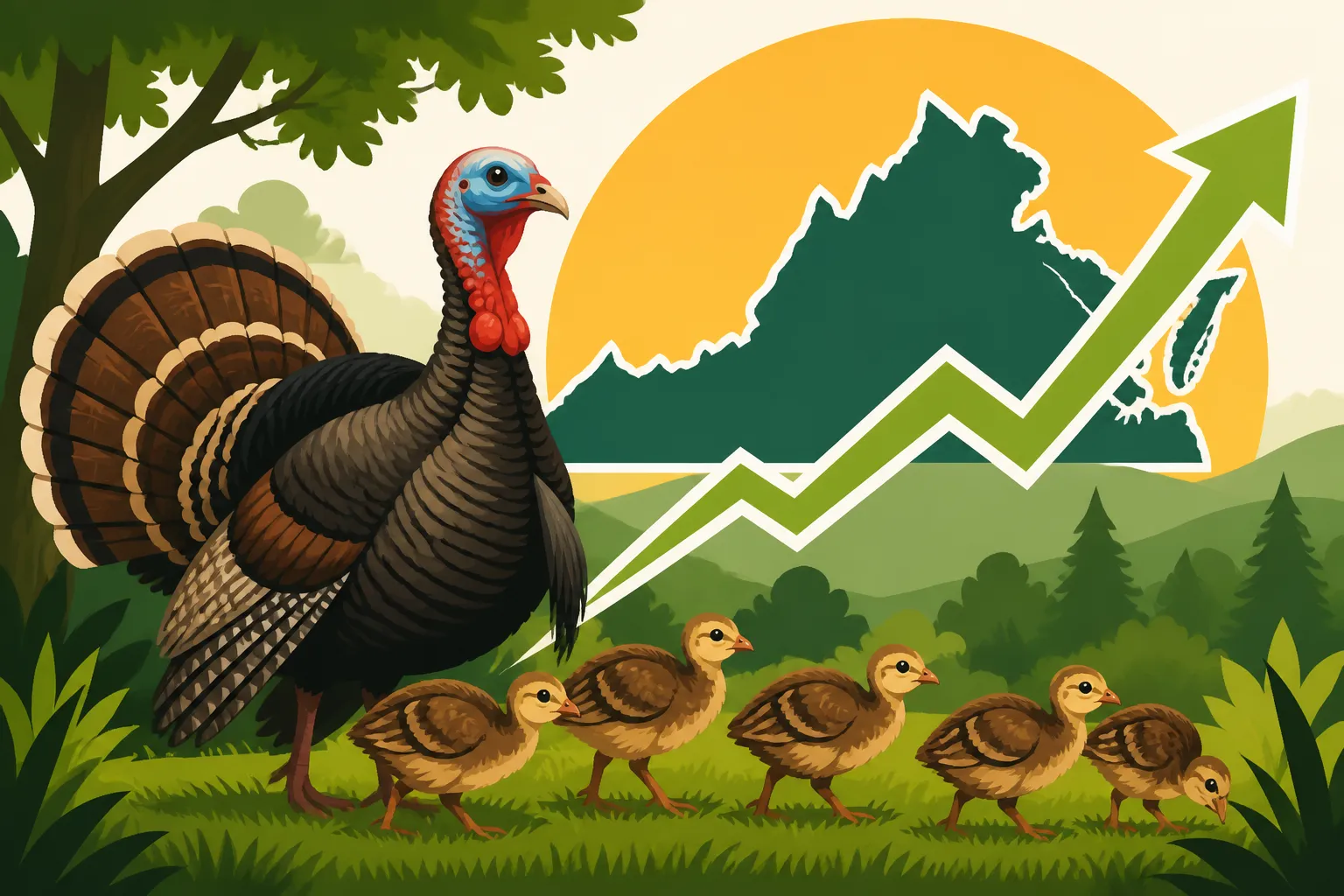
Virginia Turkey Brood Survey Results
It’s a familiar frustration for many Virginia turkey hunters: after a tough spring, you’re left wondering what next year will bring. Will the gobblers be few and far between, or will the woods be alive with young birds that have made it through their critical first few weeks? That uncertainty stems from the very real challenges wild turkeys face each year, particularly the survival rates of their young poults. This guide dives deep into Virginia’s turkey brood survey results, explaining what these vital numbers mean for the state's turkey population and how you can use this information to better plan your future hunts.
What Are Turkey Brood Surveys and Why They Matter for Virginia Hunters
For turkey hunters, understanding the health of the wild turkey population is more than just an academic exercise; it directly impacts the quality of our future hunts. The single most important factor dictating the health and trajectory of a turkey population is the success of its annual hatch, known as the brood. If poults don't survive, the number of jakes and adult gobblers in future seasons dwindles. This is precisely why turkey brood surveys are so crucial for wildlife biologists and hunters alike.
The Basics: Counting Poults and Hens
At its heart, a turkey brood survey is about gathering data on how many young turkeys (poults) are surviving per adult hen. When biologists or citizen scientists observe a hen with poults, they record the date, location, and crucially, the number of poults seen with that hen. This information is then used to calculate what's called the "poult-to-hen ratio." It's a simple metric, but incredibly powerful. A high ratio indicates a successful nesting and brooding season, suggesting a robust cohort of young birds will be entering the population. Conversely, a low ratio can signal trouble, pointing to poor nesting success, high poult mortality, or a combination of environmental factors that hinder reproduction. It’s like a report card for the season’s reproductive efforts, giving us a snapshot of the future. You can learn more about these fascinating birds in Wild Turkeys in Virginia.
Why Brood Success is the Crystal Ball for Future Seasons
Think of brood success as the foundation upon which future hunting seasons are built. If a significant number of poults survive one summer, they become the jakes and young hens of the following spring. Two years down the road, those jakes mature into the two-year-old gobblers that are often the most vocal and aggressive, providing exciting hunting opportunities. When brood success is consistently low, hunters start noticing fewer birds, particularly fewer responsive gobblers. This translates directly to tougher hunting conditions, with fewer gobblers to chase. That's why biologists pay such close attention: they're looking ahead, trying to predict the abundance of birds for hunters and to ensure the long-term sustainability of the population.
Connecting Brood Numbers to Bag Limits and Season Lengths
The data collected from these brood surveys isn't just for curiosity; it's a fundamental tool for Virginia's wildlife managers. When multiple years of brood survey data show a declining trend, it raises a red flag. Management agencies like the Virginia Department of Wildlife Resources (DWR) use this information, alongside other population indices, to make informed decisions about hunting regulations. This might involve adjusting season lengths, setting specific dates for the Virginia Early and Late Turkey Period Rules, or even tweaking bag limits to ensure the population can rebound. It’s a delicate balance, trying to provide ample opportunity for hunters while safeguarding the future of the flock. For example, if several consecutive years show poor poult survival in a particular region, DWR might consider reducing the spring gobbler limit in that area for a season or two. This proactive management helps protect the resource and ensures we'll have turkeys to hunt for generations to come.
How Virginia DWR Gathers Its Turkey Brood Data
You might wonder how exactly the DWR gets these numbers. It’s not like they have an army of biologists combing every acre of the state! While DWR staff play a critical role, a significant portion of Virginia’s turkey brood survey data comes from an invaluable resource: you, the hunters, landowners, and outdoor enthusiasts. This collaborative approach ensures a broader geographical and temporal snapshot of what’s happening on the ground across the Commonwealth.
The Citizen Science Aspect: Hunter and Landowner Participation
Virginia has a robust citizen science program for turkey brood surveys, relying heavily on the observations of folks just like us who are out in the woods, fields, and even our backyards during the summer months. From July 1st through August 31st each year, the DWR encourages everyone to report observations of wild turkeys. When you spot a hen with her poults, you’re asked to record the date, county, and the number of poults. You can submit these observations online through the DWR website or via their mobile apps. This massive influx of observations from different areas and different eyes provides a depth of data that would be impossible for DWR staff alone to gather. It’s a fantastic way for hunters to give back and actively participate in wildlife management. This type of community involvement helps fill in the gaps and provides real-world context to broad population trends.
The Role of DWR Biologists in Data Collection
While citizen science is vital, DWR biologists are far from absent. They conduct their own targeted surveys in various regions, often focusing on key wildlife management areas (WMAs) and other public lands to gather consistent, scientifically controlled data. These surveys might involve specific routes driven or walked, where all turkey sightings are recorded. They also use specialized techniques, sometimes even radio-tagging hens to track nesting success and poult survival more precisely. This provides a baseline, controlled dataset that can be compared year after year, helping to validate the broader citizen science data. They're also the ones analyzing all the submitted data, compiling reports, and identifying trends. Using tools like GoHunt can sometimes give you access to DWR data summaries or help you find public lands like Amelia Wildlife Management Area where such surveys might be focused.
The Science Behind the Numbers: Tracking Poult-to-Hen Ratios
Once all the sightings are in, the DWR’s statisticians and biologists get to work. They compile all the individual observations to calculate the average poult-to-hen ratio for different regions of the state and for the state as a whole. This ratio is more than just a raw count; it’s a key indicator of reproductive success. For example, if the average is, say, 2.5 poults per hen, it means that, on average, for every hen observed, there were 2.5 poults with her. What’s considered a "good" or "bad" ratio varies somewhat by region and over time, but generally, higher numbers are better. They look at trends over several years to see if the population is stable, growing, or declining, giving them crucial insights into the overall Virginia Turkey Population Estimate. They also delve into factors like Nest Predation and Virginia Turkey Hatches to understand what might be driving these numbers.
Interpreting Virginia's Turkey Brood Survey Results for Your Hunt
Okay, so the DWR collects all this data. But what does it actually mean for your next turkey hunt? You’re probably not a wildlife biologist, and you don’t need to be to draw valuable conclusions from these survey results. Understanding the poult-to-hen ratios can help you predict where birds might be more abundant, giving you an edge when you're out there Scouting Virginia Public Land Before Season or even when just driving around.
What a "Good" or "Bad" Poult-to-Hen Ratio Means
Generally speaking, a poult-to-hen ratio of 3.0 or higher is often considered a successful year for turkey reproduction, indicating a strong hatch and good poult survival. This suggests that in the coming one to two years, there will likely be a healthy abundance of jakes and two-year-old gobblers. If the ratio drops to 2.0 or lower, it signals a tough year. This could mean fewer jakes the following spring and a noticeable dip in the mature gobbler population a year after that. It's a key piece of information you can find by checking the DWR's annual reports. Think about it: if last summer's ratio was fantastic, say 4.0, then two springs from now, you're likely to encounter more vocal and responsive 2-year-old gobblers. If it was a dismal 1.5, expect quieter woods and tougher hunting. This is where understanding Poult-to-Hen Ratios and What They Mean becomes very practical.
Here’s a simplified look at how to interpret those ratios:
| Poult-to-Hen Ratio | Interpretation for Population Health | Impact on Future Hunting Seasons (1-2 years out) |
|---|---|---|
| Below 1.5 | Poor reproductive success | Noticeable decline in birds, very tough hunting |
| 1.5 – 2.5 | Below average, population decline likely | Fewer jakes and adult gobblers, challenging |
| 2.5 – 3.5 | Average, stable population | Consistent number of birds, typical opportunities |
| Above 3.5 | Above average, population growth | Excellent numbers of jakes and adult gobblers |
Regional Differences in Brood Success Across Virginia
It's really important to remember that Virginia is a big state, with diverse habitats ranging from the mountains to the Tidewater. Brood success can vary wildly from one region to another, even in the same year. One county in the Piedmont might have experienced ideal nesting weather, while a mountain county was hit with prolonged cold, wet spells that decimated poults. Therefore, looking at the statewide average is a good start, but drilling down to regional or even county-level data, when available, gives you a much more accurate picture for your specific hunting grounds. The DWR often breaks down their reports by the major physiographic regions – Coastal Plain, Piedmont, and Mountain. What works for Turkey Tactics for Piedmont Field Edges might be completely different from a mountain setting due to population density. For example, some years the Shenandoah Valley might report a great hatch, while the Southwest Virginia mountains struggle, or vice versa. Keep this in mind as you review the results, especially if you hunt multiple regions. Many hunters use mapping software like GoHunt to cross-reference DWR data with specific public or private tracts they might be considering.
How Past Years' Brood Surveys Can Inform Your Scouting
This is where the real strategy comes in. Don't just look at the most recent year's survey results. Go back a couple of years. If you see two consecutive years of strong brood success, you can reasonably expect a good number of two-year-old gobblers (who are typically the most active and vocal) in the upcoming spring. If the previous year was poor, but the year before that was strong, you might have fewer jakes but a decent number of older birds. This historical perspective can help you make informed decisions about where to focus your scouting efforts. If a region has had consistently low ratios, you might consider shifting your focus to an area with better long-term numbers, even if it means a bit more travel. This historical data also plays a part in understanding When Virginia Gobblers Go Quiet in May, as fewer active gobblers could be a result of past poor hatches. Understanding these trends can help you manage your expectations and even refine your hunting tactics to adapt to the population dynamics.
Key Factors Influencing Turkey Brood Success in Virginia
Turkey populations are incredibly resilient, but they are also highly sensitive to a range of environmental factors, especially during the critical nesting and brooding periods. It's a complex dance between weather, habitat, and predation that ultimately determines how many young poults make it to adulthood. Understanding these influences helps us appreciate why brood survey results can fluctuate so much from year to year.
Weather's Impact: From Cold Rains to Drought
Weather is perhaps the most significant, and least controllable, factor affecting turkey brood success. Cold, wet springs are devastating for young poults. They are highly susceptible to hypothermia and pneumonia in their first few weeks, and prolonged periods of rain can chill them to the bone, even under a hen's protective wings. Insects, a vital food source for young poults, also become less active in cold, wet weather, leading to malnutrition. Conversely, extremely hot, dry conditions can also reduce poult survival by limiting food availability (especially certain insects) and stressing hens. Moderate temperatures and timely, but not excessive, rainfall create the ideal conditions for a successful hatch and poult survival. For instance, a week of cold, driving rain during the peak hatch in early June can wipe out a significant portion of the year's poults in a particular area.
Habitat Quality: Nesting Cover, Brooding Areas, and Food Sources
Good habitat is non-negotiable for successful turkey reproduction. Hens need dense nesting cover, often in areas with a mix of woods and fields, to hide their nests from predators. Think thick brush, downed timber, or even mature stands of broomstraw. Once hatched, poults require brooding habitat: areas with abundant insect life (their primary food), such as open woodlands, old fields, and forest edges, where they can forage easily while remaining protected from aerial predators. These areas also need "escape cover" – dense patches of vegetation where poults can dart into if a hawk or coyote appears. Lack of quality nesting or brooding habitat means hens are either less successful in laying eggs, or their poults simply don't have the resources to survive. Efforts in Habitat Work on Virginia WMAs often focus on creating these varied conditions. A landowner looking to improve their property for turkeys might focus on prescribed burns to encourage new growth or selective timber harvests to create diverse age classes of trees, providing both nesting and foraging cover.
Predator Management and Its Role in Poult Survival
Predation is a natural part of the ecosystem, and turkeys have evolved to deal with it. However, an imbalance in predator populations can significantly impact turkey brood success. Raccoons, opossums, skunks, snakes, and even domestic pets are major nest predators, while coyotes, foxes, bobcats, and various avian predators like hawks and owls target young poults. While DWR generally does not manage "predator control" on a broad scale for turkeys, localized predator management on private lands can sometimes reduce pressure on nesting hens and poults. The health of other game populations can also influence predator behavior; for instance, a low deer fawn recruitment might lead predators to focus more on turkey poults. This illustrates why understanding Predator Impact on Fawn Recruitment in deer can sometimes give you clues about how other prey species like turkeys are faring. While we can't control every aspect, a healthy, diverse landscape with good cover helps turkeys avoid becoming easy prey.
Disclaimer
This article is for general informational purposes only and does not constitute professional advice. Laws, prices and regulations vary by location and change over time. Consult a qualified professional for guidance on your specific situation.