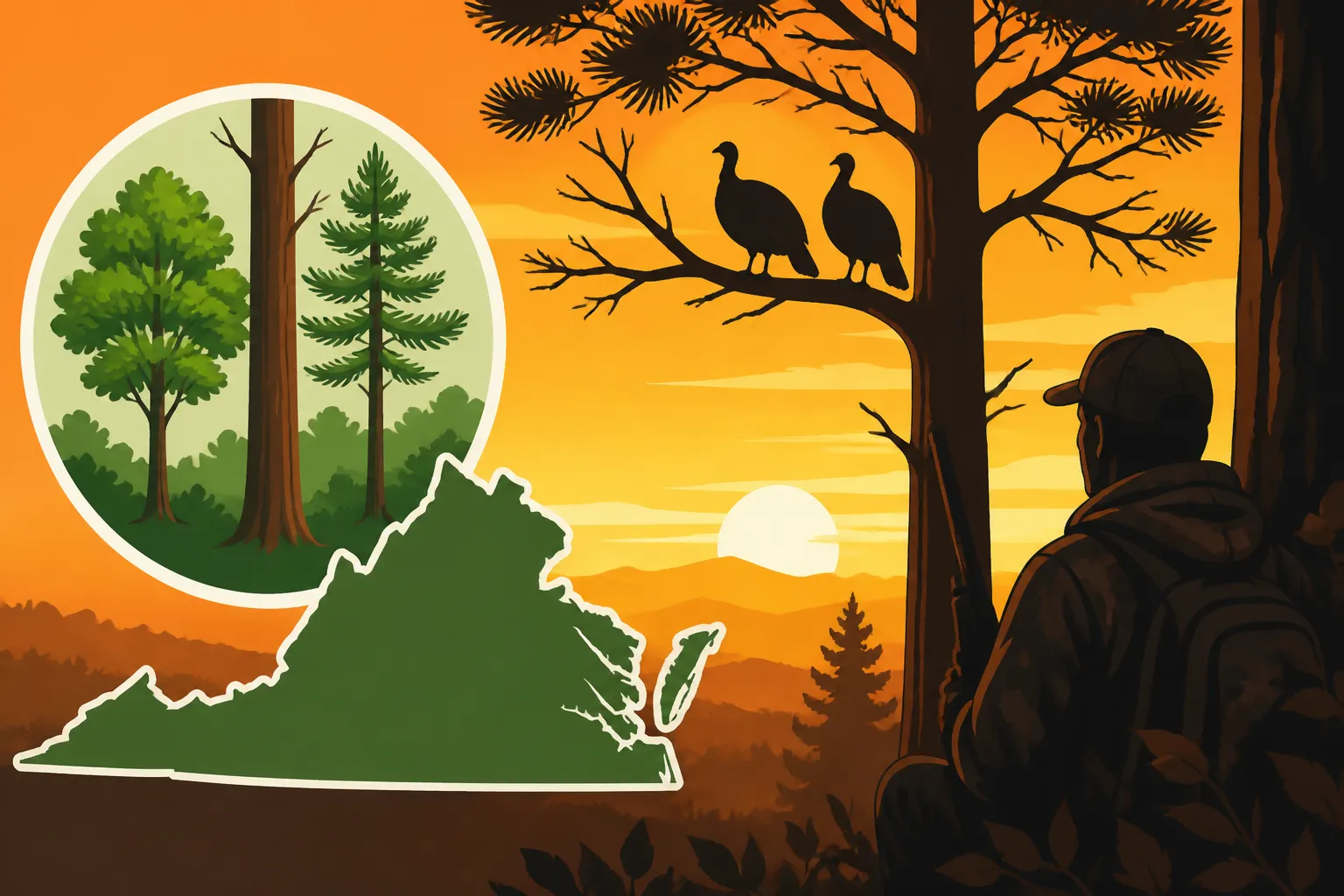
Virginia Turkey Roost Tree Preferences
One of the most elusive puzzles in turkey hunting can be figuring out where those big gobblers spend the night. It's frustrating to hear them hammering away on the roost, only to have them fly down in the wrong direction or vanish into thin air. This guide will walk you through understanding Virginia turkey roost tree preferences, helping you pinpoint those crucial evening fly-up and morning fly-down locations for better hunting success.
Why Roost Tree Selection Matters for Virginia Turkeys (and Hunters!)
Turkeys don't just pick any tree to sleep in; their choice is a careful balance of safety, comfort, and strategic positioning. For us hunters, understanding these preferences is like getting a peek into their nightly routine, which is invaluable for setting up before daylight or planning a stealthy approach in the evening. It's not just about finding a tree, it's about finding the right tree in the right spot.
Safety and Vantage Points
Think about it from a turkey's perspective. They are big, relatively slow birds on the ground, and vulnerable to predators like coyotes, bobcats, and even owls, especially at night. A high, sturdy roost tree provides a critical advantage. They want to be able to see and hear danger approaching from a distance, which is why taller trees with open understories are often favored. This elevated position gives them a bird's-eye view, literally, of the surrounding terrain, offering a sense of security that ground-level cover simply can't match.
Moreover, the branches they choose aren't just for perching; they need to be strong enough to support their weight and spaced in a way that allows for an easy, unobstructed fly-up at dusk and a safe, clear fly-down at dawn. Often, you'll find them roosting in a tree that might be on a slight ridge or overlooking a hollow, giving them an even better vantage point. This careful selection ensures they can escape quickly if a predator is spotted before they even hit the ground in the morning.
Morning Fly-Down and Evening Fly-Up Patterns
The chosen roost tree dictates much of a turkey's daily movement, particularly during the critical first and last hours of light. In the evening, turkeys will often stage in smaller trees or on a slight rise near their chosen roost before flying up to the higher branches just as darkness begins to set in. This "fly-up" ritual is often accompanied by a flurry of yelps, clucks, and even gobblers as they settle in and communicate with the flock. Observing this can give you a precise location for the next morning.
Come morning, the "fly-down" is equally telling. Turkeys rarely fly directly to a calling hunter; instead, they'll fly down to a pre-determined landing zone, often a field edge, an open timber stand, or a logging road, where they feel safe and can begin their daily foraging. Knowing where they intend to land means you can position yourself strategically between the roost and that landing zone, greatly increasing your chances. Being able to predict these patterns can be the difference between a successful hunt and a frustrating walk in the woods. Roost Hunting Virginia Gobblers is a tactic built entirely around this understanding.
Identifying Preferred Roost Trees: The "Big & Tall" Rule
When you're out scouting, or even just driving through Virginia's diverse landscapes, you'll start to notice a pattern with turkey roosts. While turkeys can and do roost in a variety of trees, there's a general "big and tall" rule that often holds true. They want something substantial and elevated, providing both stability and a clear view.
Mature Hardwoods: Oaks, Poplars, and Hickories
In many parts of Virginia, especially in the Piedmont and mountain regions, mature hardwoods are the undisputed champions for turkey roosts. Think about those towering oak trees, grand old poplars, and stout hickories that dominate the forest canopy. These trees offer exactly what a turkey needs: height, strong horizontal limbs for perching, and often a relatively open understory. The sturdy branches can easily support multiple turkeys, a common sight when a whole flock roosts together.
For example, in a mixed hardwood forest, a large white oak standing above its neighbors on a gentle slope is a prime candidate. Turkeys love the sense of security and the unobstructed flight path these giants provide. In areas where you find big tracts of mature timber, particularly along ridges or near water sources, these are the first trees you should be scanning for turkey sign. The presence of these substantial trees often correlates with Where Virginia Gobblers Roost.
Pine Plantations and Conifer Groves
While hardwoods are often preferred, don't discount pines and other conifers, especially in certain landscapes. In the southeastern parts of Virginia, or in areas with extensive timber operations, pine plantations can become crucial roosting habitat. Turkeys will often choose the tallest pines on a ridge or bordering a clear-cut. The dense needles and branches of a mature pine offer excellent thermal protection from cold winds and rain, a benefit that deciduous trees lack in the colder months.
Similarly, an isolated grove of older conifers, like a stand of Eastern red cedars or white pines, can be a magnet for turkeys, even within a mostly hardwood forest. These provide both shelter and a sense of concealment. It's not uncommon to find turkeys roosting on the sturdiest, highest branches of these evergreen giants, particularly when severe weather rolls in. Always keep an eye out for these dense, tall groupings of evergreens, especially if they are surrounded by more open ground or field edges, as they provide a safe haven.
Unusual Roosts: What to Look For
While the "big and tall" rule is a great guideline, turkeys don't always read the textbook. Sometimes, you'll find them roosting in trees that seem less than ideal at first glance. These "unusual" roosts often have a hidden advantage that makes them attractive. For instance, a medium-sized tree on a sharp bluff overlooking a river might offer an even better vantage point and escape route than a taller tree further inland. The topography itself becomes part of the roosting strategy.
I've even seen turkeys roost in dead snags or trees with broken tops if those trees happen to offer a commanding view of a nearby field or water source, or if they are the only tall structure in an otherwise short forest. The key here is always the relative advantage. If the only available tall trees are scraggly, but they're still higher than anything else around and offer a safe fly-up and fly-down, turkeys will use them. The takeaway is to focus on what makes a particular tree stand out in its immediate environment, providing the best combination of height, stability, and escape routes.
Beyond the Tree Itself: Environmental Factors for Roost Selection
It's easy to get fixated on the tree itself, but turkeys are masters of their environment, and their roost choices are heavily influenced by the surrounding landscape. A perfect roost tree in a terrible location simply won't get used. This is where understanding the broader picture comes into play, tying into how Scouting Virginia Public Land Before Season can pay off big.
Proximity to Water and Food Sources
Turkeys are like us in many ways: they appreciate convenience. After flying down in the morning, their first order of business is often to get a drink and then find something to eat. Therefore, a preferred roost site is frequently located within a reasonable distance of reliable water sources like creeks, ponds, or even dew-laden fields. They don't want to travel far to satisfy their basic needs, especially when they are still vulnerable on the ground in the low light of dawn.
Similarly, good food sources play a huge role. If a roost tree is near a productive acorn flat, a bug-rich pasture, a freshly planted green field, or a reliable patch of wild berries, it becomes even more attractive. Turkeys will often fly down directly into these feeding areas or move to them shortly after hitting the ground. When you're glassing for evening fly-ups, pay close attention to areas that offer both water and a buffet of natural turkey foods. This combination is a powerful draw for a roosting flock.
Terrain and Thermal Protection
The lay of the land, or topography, significantly influences roost selection. Turkeys often prefer to roost on ridges, saddles, or benches that offer good air circulation, which can help deter insects and also provide a clear view. They especially like roosting on the leeward side of a ridge (the side protected from the prevailing wind) on cold or windy nights, utilizing the terrain for thermal protection. This can create a microclimate that's slightly warmer and less exposed.
Conversely, on very hot nights, they might choose an exposed ridge top where a light breeze can help them stay cool. The specific contours of the land, whether it's a steep river bluff, a rolling hill, or a gentle slope, can funnel thermals and wind, which turkeys intuitively use to their advantage. Learning to read the subtle changes in terrain, similar to Reading a Ridge for Blue Ridge Deer, will help you predict not just where deer might travel, but also where turkeys might choose to spend the night.
Security and Isolation
Ultimately, a turkey's roost choice boils down to a feeling of security. They want to be undisturbed. This means they often favor areas that see less human activity, even if it's just a less-traveled corner of public land or a woodlot on the back forty of a private farm. Remote hollows, deep woods, or areas bordered by dense, difficult-to-navigate cover can offer the isolation they crave. This might mean walking a bit further into the woods yourself, but the payoff can be significant.
Even in more developed areas, turkeys will seek out the most secluded available roosts. This could be a small timber stand within an urban archery zone, or a hidden finger of woods extending into open agricultural fields. The relative lack of disturbance is key. When you're scouting, consider not just the natural features but also the human footprint. The more undisturbed an area feels, the higher the likelihood of a regular turkey roost, giving you a quiet place to consider Setting Up Against a Big Oak for the morning hunt.
Scouting for Roost Trees and Patterning Turkey Behavior
Finding roost trees isn't just about knowing what they should look like; it's about actively scouting and putting in the legwork. Patterning turkey behavior around their roosts is one of the most effective ways to increase your chances of success during the season. It's a combination of observation, technology, and old-fashioned woodsmanship.
Glassing and Listening at Dusk and Dawn
The most direct way to find roosting turkeys is to be out there at the times they're flying up and flying down. In the evenings, position yourself on a high vantage point overlooking potential roosting habitat a good hour before sundown. Use binoculars or a spotting scope to scan the tops of prominent trees, especially those on ridges or near fields. Listen intently for those telltale "tree yelps" and "clucks" as they gather and fly up to roost. Sometimes a soft gobble will give them away.
In the morning, the strategy is similar, but reversed. Get into position well before first light, listening for the distinctive sounds of turkeys waking up: soft tree yelps, wingbeats as they stretch, and of course, that booming gobble right on the limb. As the sky lightens, you'll hear them fly down. Remember, you want to be close enough to hear and see, but far enough not to spook them. This kind of hands-on scouting is invaluable for Calling a Virginia Gobbler Off the Roost.
Using Technology: Maps and Apps like GoHunt
Modern technology has revolutionized turkey scouting. Before you even set foot in the woods, you can use mapping applications to identify potential roosting areas. Look for the tallest trees, dense timber blocks, or unique topographical features like bluffs and sharp ridges. Satellite imagery on apps like GoHunt can reveal mature timber stands, isolated groves, and even subtle changes in elevation that might attract roosting birds.
You can drop pins on these potential spots and plan your access routes. Many hunters use GoHunt to mark historical roost sites, track turkey movement patterns throughout the season, and even note areas with reliable water or food sources. This allows for efficient scouting, saving you time and energy. You can also cross-reference public land boundaries and access points using these tools, which is particularly useful for planning a Run-and-Gun Turkey Tactics on Public Land approach.
Finding Evidence: Droppings and Feathers
Sometimes, turkeys will use the same roost trees or general roosting areas repeatedly, leaving behind clear evidence of their nocturnal habits. Look for turkey droppings on the ground directly beneath potential roost trees. Gobbler droppings are typically "J" or "corkscrew" shaped, while hen droppings are more blob-like. The fresher the droppings, the more recently the tree has been used. The sheer volume of droppings can tell you if it's a regularly used community roost.
In addition to droppings, scan for primary wing feathers on the ground, especially near the base of the tree or where they might have flown down. Turkeys shed feathers regularly, and finding a few under a tree is a strong indicator. You might also find scratches on the bark from their claws as they fly up and down. Paying attention to these subtle signs on the forest floor is like piecing together a puzzle, confirming your suspicions about a particular tree's appeal to Virginia's wild turkeys.
Virginia Roost Tree Preferences at a Glance
To give you a quick summary of what to look for, here's a table outlining the common characteristics of preferred turkey roost trees in Virginia.
| Tree Type / Characteristic | Why Turkeys Prefer It | Scouting Notes |
|---|---|---|
| Mature Hardwoods | Great height, strong limbs, open understory, stable. | Look for dominant oaks, poplars, hickories, especially on ridges. |
| Tall Conifers/Pines | Height, good thermal cover, often isolated. | Useful in mixed forests or pine plantations, especially in cold weather. |
| Dominant Tree in Area | Offers highest vantage point, relative safety. | Could be any species if it's the tallest around. |
| Proximity to Water | Easy access to morning drink. | Check near creeks, ponds, low-lying wet areas. |
| Proximity to Food | Quick access to morning meal. | Often near acorn flats, green fields, agricultural edges. |
| Ridge/Slope Location | Enhanced vantage, thermal regulation. | On leeward side in cold, wind; exposed side in heat. |
| Isolated/Secluded Spot | Less human disturbance, higher security. | Deeper woods, less-traveled areas, remote pockets. |
| Sturdy Horizontal Limbs | Comfortable, stable perching. | Multiple turkeys can share large, strong branches. |
| Clear Fly-Up/Fly-Down | Unobstructed escape routes. | Few obstacles directly above or below primary limbs. |
Remember that every area is different, and turkeys adapt to their specific habitat. By understanding these general preferences and then carefully scouting your hunting grounds, you'll be well on your way to locating those crucial roost trees and increasing your chances of a successful spring turkey hunt in Virginia.
Disclaimer
This article is for general informational purposes only and does not constitute professional advice. Laws, prices and regulations vary by location and change over time. Consult a qualified professional for guidance on your specific situation.