Virginia Waterfowl Migration Timing
Trying to time the waterfowl migration in Virginia can feel like chasing ghosts, a constant puzzle of weather patterns, food sources, and bird behavior that changes with every passing cold front. It's frustrating when you scout a marsh one day, only for it to be empty the next. This comprehensive guide aims to demystify the ebb and flow of ducks and geese through the Old Dominion, helping you understand when different species arrive and what influences their movements, so you can be where the birds want to be.
Understanding the Flyway and Virginia's Unique Position
Virginia isn't just a state; it's a critical stopover and wintering ground along one of North America's most important aerial highways for migratory birds. If you've ever felt like you're playing a guessing game with migration, it's because there are so many factors at play, but understanding our geographical advantage is step one.
The Atlantic Flyway: A Waterfowl Superhighway
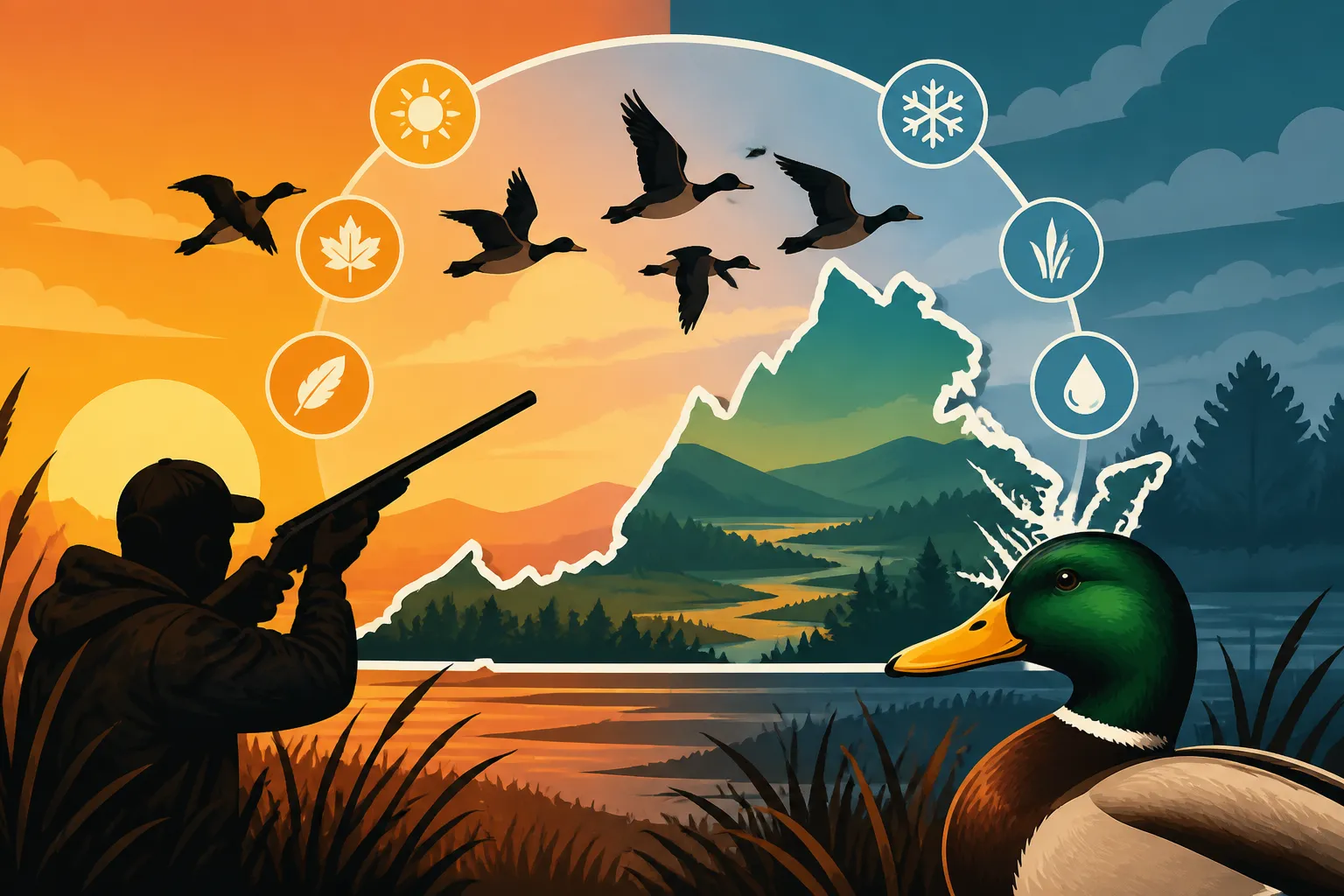
Imagine a massive, invisible interstate stretching from the Arctic tundra all the way down to the Caribbean. That's essentially the Atlantic Flyway, and Virginia sits right in a prime position along this route. Millions of ducks, geese, and swans utilize this pathway each year, moving south as the northern breeding grounds freeze over. Our state offers an incredible diversity of habitats, from the sprawling Chesapeake Bay and its tributaries to the vast agricultural fields of the Piedmont and Eastern Shore, providing crucial resting and feeding areas for these weary travelers.
This position means we get a mix of species, some just passing through, others settling in for the entire winter. Understanding the sheer volume and variety of birds that funnel through Virginia is crucial for any waterfowl hunter. It’s not just one big wave; it’s a series of smaller pushes, each species often on its own schedule, driven by its unique biological clock and the immediate weather conditions up north. Knowing the general timeline for different groups can help you tailor your scouting and hunting efforts.
Virginia's Diverse Habitats: More Than Just the Bay
When most folks think of Virginia waterfowl, their minds often jump straight to the Chesapeake Bay, and for good reason! It’s an iconic destination for divers and sea ducks. However, that's just a piece of a much larger, more intricate mosaic. The state offers an incredible variety of wetland and agricultural landscapes, each attracting different species at different times.
From the quiet, timbered swamps of the southeastern region to the expansive corn and soybean fields of the Piedmont, and the intricate tidal marshes of the Eastern Shore, ducks and geese have a smorgasbord of options. Each habitat offers specific food sources and shelter, dictating which birds will be there and when. For instance, a secluded beaver pond inland might hold wood ducks and mallards, while a wide-open bay might be teeming with canvasbacks and bluebills. Successful hunting means matching your location and tactics to the specific species and habitat available. Don't limit your thinking to just one type of water.
Early Season Arrivals: Teal, Wood Ducks, and Resident Geese
The early season in Virginia, typically from late September into October, brings a burst of energy with smaller, faster ducks and the ever-present resident Canada geese. It’s a time of optimism, warm mornings, and quick shooting opportunities.
The Quick Flashes of Early Teal Season
There's nothing quite like the rush of early teal season. Blue-winged teal, in particular, are some of the first true migrants to push through Virginia, often arriving in late August and peaking in September. They're like little rockets, zipping across marshes and shallow ponds, offering incredibly challenging wing shooting. The frustration here often comes from their unpredictable nature; they can be there in droves one day and completely gone the next, pushed by a minor cold front further south.
These birds love shallow, muddy flats with emergent vegetation. Think about those areas that are usually dry but fill up after heavy summer rains. They're dabblers, sifting through the mud for seeds and invertebrates. Hunting these birds often means quick, mobile setups, maybe just a handful of decoys, and being ready for fast action. Green-winged teal follow a bit later, often overlapping with the very beginning of the regular duck season, but the blue-wings are the true harbingers of fall. You can read more about specific regulations in Virginia Waterfowl Zones and Seasons to make sure you're ready for their arrival.
Wood Ducks: Forested Swamps and Creek Bottoms
Wood ducks are arguably Virginia's most beautiful duck, and thankfully, they're abundant. While many are resident birds, a strong migratory push often occurs from mid-October through November. Unlike the teal, wood ducks prefer wooded wetlands, beaver ponds, and slow-moving creeks – anywhere there are acorns, cypress knees, or thick overhead cover.
Hunting these birds often means breaking away from the big water. Focusing on smaller, intimate settings where they feel safe to feed and loaf can be incredibly productive. You'll often find them tucked back in places others overlook, making for a truly unique hunting experience. Knowing how to Jump-Shooting Virginia Creeks for Wood Ducks can be a real game-changer if you're willing to put in the legwork in these overlooked spots.
Resident Canada Geese: Year-Round Opportunity
While not technically "migratory" in the traditional sense of crossing vast distances, Virginia's thriving population of resident Canada geese offers consistent hunting opportunities. These birds are often born and raised right here in the state, utilizing urban parks, golf courses, and agricultural fields. Their patterns are more predictable, revolving around local food sources and roosting lakes.
Early goose season, often in September, is specifically designed to target these birds before the big northern migrants arrive and complicate identification. These birds can be very patternable, flying between specific roosting sites and feeding fields. Success often hinges on securing access to agricultural lands where they're feeding heavily. Even outside of early season, understanding their local movements can lead to great hunts throughout the regular season. For tactics specific to these local birds, check out Early Goose Season Tactics in Virginia.
Peak Migration: The November/December Deluge
This is what most waterfowl hunters live for: the heart of the migration, when cold fronts from the north push down thousands upon thousands of ducks and geese into Virginia's diverse waterways and fields.
Mallards and Black Ducks: The Bread and Butter
As November progresses and December kicks in, the real show begins. Mallards and black ducks, the classic "puddle ducks," start arriving in force, fleeing frozen waters and dwindling food supplies in the northern states and Canada. These birds are savvy, having already run the gauntlet of hunters further up the flyway. They flock to Virginia's flooded timber, agricultural fields, and shallow marshes, looking for easy food and safe resting areas.
Timing their arrival often correlates with sustained cold snaps north of us, especially in the Great Lakes region and New England. A strong northwest wind and a significant drop in temperature are often the best indicators that new birds are on the way. These are the ducks that will respond well to classic decoy spreads and calling, especially early in their stay before they get too pressured. Understanding How Many Ducks Winter on the Chesapeake Bay can give you an idea of the sheer numbers that might be available.
Diving Ducks: Bay Brilliance
While puddle ducks dominate inland and marsh hunting, the vast expanse of the Chesapeake Bay and its deeper tributaries become a magnet for diving ducks during peak migration. Canvasbacks, redheads, bluebills (scaup), ring-necked ducks, and buffleheads pour into these waters, often in spectacular numbers. These birds feed on submerged aquatic vegetation (SAV) and small invertebrates, thriving in the open, often rough waters of the bay.
Their arrival also coincides with northern freezes, particularly those that lock up larger lakes and bays further north. Hunting these birds is a different game, often requiring larger decoy spreads, specialized boats, and a tolerance for colder, windier conditions. It's an iconic Virginia waterfowl experience to be out on the bay when a huge flock of canvasbacks sets their wings. If this sounds like your kind of hunt, you'll want to dive into Hunting Chesapeake Bay Diving Ducks for more specific strategies.
Wary Migrant Geese and Their Flight Patterns
Alongside the ducks, the true northern migrant Canada geese also arrive in waves through November and December. These birds are often larger, darker, and significantly warier than their resident cousins. They've seen it all, and they've learned to avoid danger. Their flight patterns are driven by massive cold fronts, pushing them down from the Arctic and subarctic breeding grounds.
Unlike the resident geese, these migrants often hold to larger, more remote fields and expansive bodies of water for roosting. They can be incredibly challenging to decoy, demanding meticulous blind concealment, realistic spreads, and precise calling. Watching a flock of these giants lock up and commit to your spread is one of the most rewarding experiences in waterfowling. Pay close attention to weather reports out of places like upstate New York and Canada; those frigid temperatures and snowfalls are your best indicators of new geese on the way.
Late Season Challenges: Cold Weather and Pressure
As the calendar turns to January, Virginia's waterfowl season enters its final, often most challenging, phase. The birds that remain have survived months of hunting pressure, and the weather can be brutal.
The January Chill: Survival Mode for Birds
By January, many of the less hardy birds have pushed further south, leaving behind the toughest and most adaptable individuals. These birds are in full-blown survival mode. Food sources can be limited due to freezing temperatures, and open water becomes a premium. This means birds will concentrate in areas that offer both food and sanctuary, often making them highly visible but incredibly difficult to approach.
Expect to find birds congregating in large numbers on unfrozen rivers, springs, and tidal estuaries that resist freezing. They'll also hit remaining agricultural fields hard, especially those with waste grain or winter wheat. Scouting for these critical, late-season food and water sources is paramount. The weather is no longer just a migratory driver; it's a daily determinant of where birds must be to survive. Layering up and staying warm becomes just as important as your calling and shooting skills.
Decoy Spreads and Calling in Wary Birds
Hunting late-season waterfowl demands a refined approach to decoy spreads and calling. The birds have seen every trick in the book by now, and they're incredibly sensitive to anything that looks or feels wrong. Generic spreads and aggressive calling that worked in October will likely send them flaring in January.
You might need to scale back your calling, focusing on subtle clucks and murmurs rather than loud hails. Decoy spreads might need to be more realistic, perhaps featuring fewer decoys but with a focus on active, natural poses. Motion decoys, like spinning wing models or simple jerk cords, can still be effective, but placement and judicious use are key. Remember, these birds are looking for safety and food, not a party. Sometimes, less is more. For specific tips on attracting wary birds, consult Decoy Spreads for Chesapeake Bay Divers or adapt those principles to other species.
Scouting and Adaptability for Success
Late-season success boils down to relentless scouting and an unwavering willingness to adapt. The birds are constantly moving, reacting to changes in weather, ice, and hunting pressure. What worked last week might not work tomorrow. This is where tools like GoHunt become invaluable, allowing you to quickly cross-reference weather patterns, tide charts, and even recent aerial imagery to predict where birds might be concentrated.
Don't be afraid to change your location, your spread, or even the species you're targeting mid-hunt. If the puddle ducks aren't flying, maybe there's an opportunity for geese on a nearby field. If the bay is frozen, try a tidal river. The most successful late-season hunters are those who treat every hunt as a new puzzle to solve, always observing, always learning. It's often about finding the hidden sanctuaries or the last remaining food source. Learning to Scouting Virginia Public Land Before Season can give you an edge, even if the "before season" is now during late season.
Factors Influencing Migration Timing and Local Movement
Waterfowl migration isn't a single, monolithic event. It's a complex dance influenced by a variety of environmental cues. Understanding these factors will significantly improve your ability to predict bird movements.
Weather Patterns: North Winds and Cold Fronts
The number one driver of large-scale waterfowl migration is undoubtedly the weather, particularly up north. A sustained dip in temperatures, especially when combined with a strong cold front and accompanying north winds, will push birds south in waves. When those prime breeding and staging grounds in Canada and the northern U.S. start to freeze over, ducks and geese have no choice but to move.
Keep a close eye on long-range forecasts for areas like the Great Lakes, the Dakotas, and even up into Quebec and Ontario. When you see prolonged freezing temperatures and significant snow accumulation there, you can bet that a fresh push of birds is likely heading our way within a few days to a week, depending on their species and flight speed. Locally, weather also dictates daily movement, with bluebird days often meaning birds loaf on open water, while cloudy, windy, or rainy days can encourage them to fly more actively.
Food Sources: The True Driver of Duck Movement
While weather dictates when birds move, food dictates where they stop and stay. Waterfowl, particularly ducks, are constantly searching for high-energy food sources to fuel their migration and sustain them through the winter. In Virginia, this means waste grain in agricultural fields (corn, soybeans, winter wheat), acorns in flooded timber, and submerged aquatic vegetation (SAV) in tidal waters.
The availability and location of these food sources can change dramatically throughout the season. Early in the fall, fields might be abundant, but by late season, they might be picked clean or covered in snow. A good acorn crop in a flooded bottomland can hold mallards for weeks, but once those are gone, the birds move. This is why scouting isn't just about finding birds; it's about finding their food. Ducks and geese will always be where the buffet is open and safe. Using a comprehensive mapping tool like those offered by GoHunt, which can highlight agricultural areas and water bodies, can really help identify potential feeding grounds.
Hunting Pressure: Why Birds Get Smart So Fast
It's an unfortunate truth that hunting pressure plays a huge role in local waterfowl movements. Freshly arrived birds might be naive and decoy easily, but after a few days of being shot at, they quickly become "educated." They learn where the safe zones are, which fields are pressured, and how to spot a fake blind or a bad call from a mile away.
This means birds will often shift their patterns to avoid high-pressure areas. They might feed at night, loaf on massive bodies of water during the day, or move to smaller, more secluded ponds that see less activity. To counteract this, it's essential to seek out less-pressured areas, use subtle tactics, and be willing to move if the birds aren't cooperating. Thinking about how to find Finding Ground Others Walk Past is critical for consistent success, especially on public lands.
Essential Tools for Tracking Waterfowl Migration
In today's world, hunters have more resources than ever before to stay on top of migration trends. Leveraging these tools can make a significant difference in your success.
DWR Resources and Online Reports
The Virginia Department of Wildlife Resources (DWR) is an invaluable resource for waterfowl hunters. They often publish migration updates, aerial survey reports, and provide detailed information on Virginia Duck and Goose Bag Limits and season dates. Paying attention to their weekly or bi-weekly reports, especially those focused on major wintering areas, can give you real-time insights into what birds are present and in what numbers.
These reports often include counts from key locations like the Eastern Shore, the Chesapeake Bay, and various Wildlife Management Areas (WMAs). While these are broad overviews, they can confirm whether a major push of birds has indeed arrived in the state or if numbers are dwindling in certain areas. It's a great way to get a big-picture view before you commit to specific scouting trips.
Using Technology to Predict Movements
Beyond official reports, a suite of modern technologies can dramatically aid in predicting and tracking waterfowl movements. Weather apps with detailed radar and long-range forecasts are your best friend for anticipating cold fronts. Satellite imagery and mapping platforms, such as those integrated within GoHunt's mapping capabilities, allow you to identify potential feeding fields, water bodies, and secluded areas that birds might utilize.
These tools allow you to do a lot of "e-scouting" from home, saving you time and fuel. You can mark potential hunting spots, analyze access points, and even check tide charts for coastal areas—all from your computer or phone. While nothing replaces boots on the ground, technology helps you narrow down where those boots need to go. Remember to also use the DWR's Go Outdoors Virginia app for license management and harvest reporting.
The Value of Local Knowledge and Scouting
Even with all the technology in the world, there's no substitute for local knowledge and persistent boots-on-the-ground scouting. Talking to local farmers, bait shop owners, and other hunters (respectfully, of course) can provide invaluable insights into current bird patterns. They often see birds daily and can tell you about recent pushes or shifts in feeding habits.
But most importantly, you need to be out there scouting. Driving backroads at dawn and dusk, glassing fields, checking marshes, and listening for distant wingbeats are crucial. Birds will change their patterns throughout the season, and being adaptable and observant is the key. Learning to Read a Bay Marsh for a Morning Flight or identifying key feeding areas inland will always be your most powerful tool. The more time you spend in the field, observing bird behavior, the better you'll become at predicting their next move.
Waterfowl Migration Timing: A Species-Specific Overview
To help you visualize the general flow of birds, here’s a table outlining typical arrival and peak migration periods for some of Virginia's most popular waterfowl species. Remember, these are averages, and real-world conditions can shift these dates significantly.
| Species | Early Arrivals | Peak Migration | Late Season Presence | Preferred Habitat |
|---|---|---|---|---|
| Blue-winged Teal | Late August – Early Sept | Mid-September | Gone by Mid-October | Shallow marshes, muddy flats, emergent vegetation |
| Wood Duck | Year-round (residents) | Mid-Oct – Late Nov | Present through Jan | Wooded swamps, beaver ponds, slow-moving creeks |
| Green-winged Teal | Late Sept – Early Oct | Late Oct – Mid-Nov | Present through Jan | Shallow marshes, flooded fields, river bottoms |
| Mallard | Year-round (residents) | Late Oct – Mid-Dec | Present through Jan | Flooded timber, agri fields, shallow marshes |
| Black Duck | Early Oct | Mid-Nov – Early Jan | Present through Jan | Tidal marshes, coastal bays, secluded ponds |
| Canada Goose (Resident) | Year-round | Consistent | Consistent | Agri fields, urban parks, large lakes |
| Canada Goose (Migrant) | Mid-Oct | Mid-Nov – Mid-Jan | Present through Jan | Agri fields, large open water, remote areas |
| Canvasback | Early Nov | Mid-Nov – Late Dec | Present through Jan | Deep, open bay waters, large rivers |
| Scaup (Bluebill) | Early Nov | Mid-Nov – Late Dec | Present through Jan | Deep, open bay waters, tidal rivers |
| Redhead | Early Nov | Mid-Nov – Late Dec | Present through Jan | Shallow bay waters, estuaries, protected coves |
This table provides a general framework, but always cross-reference with current DWR reports and your own scouting observations.
Disclaimer
Hunting is an inherently dangerous activity. Always prioritize safety, understand and adhere to all Virginia Department of Wildlife Resources (DWR) regulations, and obtain proper licenses and permits before heading afield. This guide is for informational purposes only and should not replace official DWR guidelines or professional instruction.