Virginia Buck Age Structure
Virginia buck age classes reveal male deer distribution across yearlings, two-year-olds, and mature animals for hunters.
Know what you’re after.
Big game, small game, upland birds, and waterfowl — identification, behavior, rut and migration timing, and how each species moves through the season.
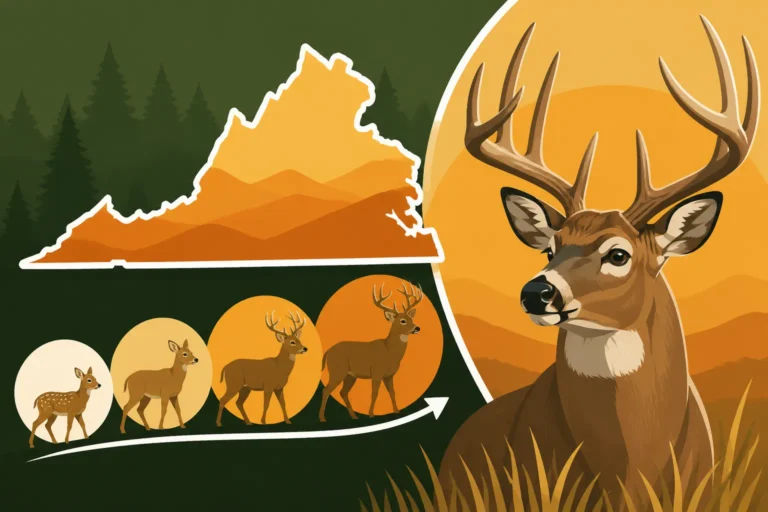
Virginia buck age classes reveal male deer distribution across yearlings, two-year-olds, and mature animals for hunters.
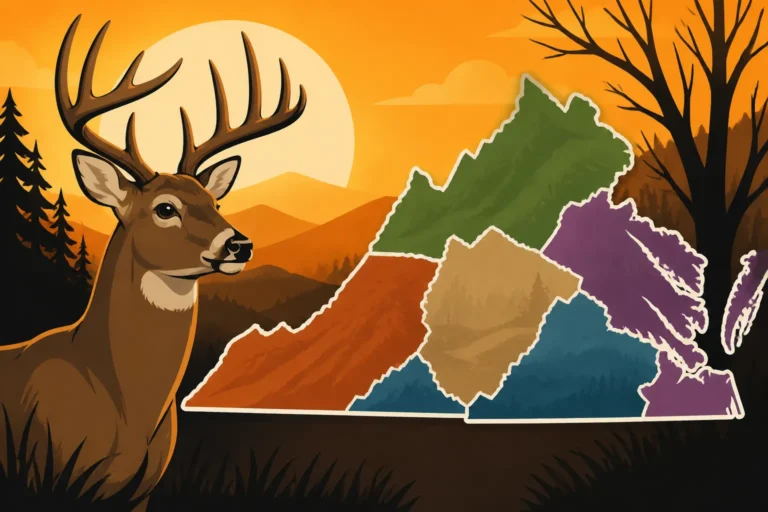
Virginia deer rut variations across the Piedmont and Coastal Plain explain peak hunting times and biological triggers.
The Virginia deer record book system uses Boone and Crockett and Pope and Young national organizations for scoring antlers.
Virginia Boone and Crockett whitetails require age, nutrition, and genetics to meet entry scores of 170 typical or 195 non-typical.
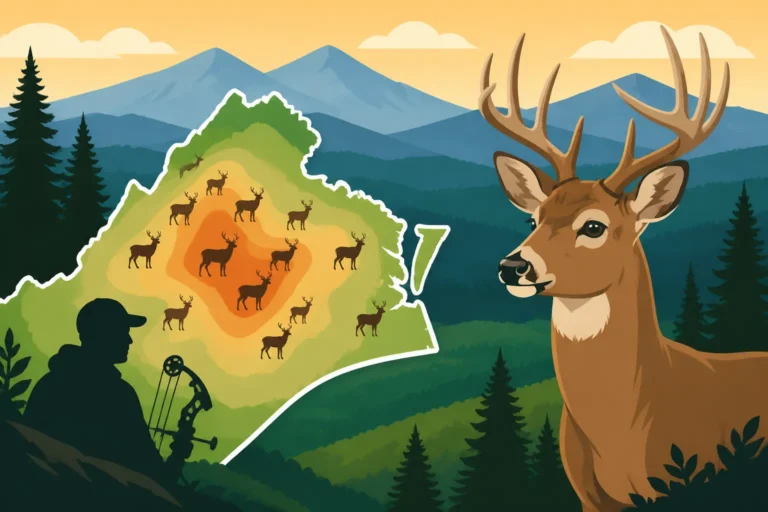
Virginia mountain region deer density is lower due to rugged terrain, cyclical food sources, and natural forest carrying capacities.
Virginia Piedmont habitat factors explain why this central region consistently produces older, heavier-antlered whitetail bucks.
Virginia deer hunting locations east of the Blue Ridge feature fertile soils that produce mature bucks with large antlers.
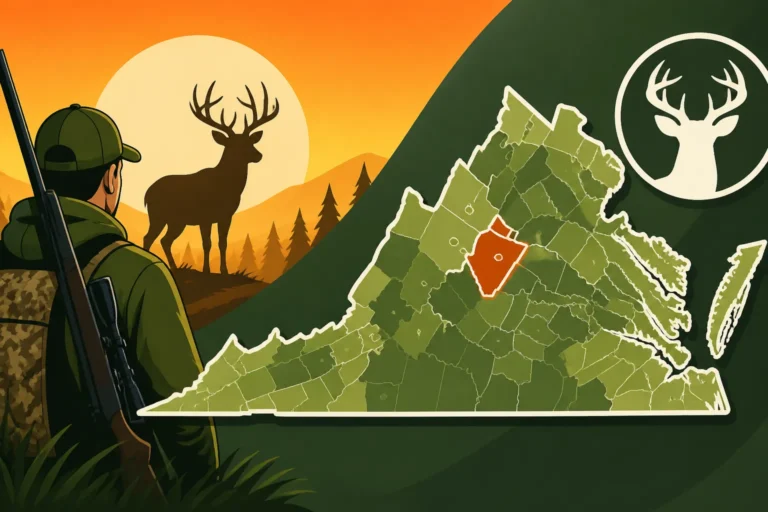
Virginia deer harvest data explains county kill counts and details how reporting requirements help the Department of Wildlife Resources.
Virginia annual deer harvest data reveals population health, environmental factors, and herd management efforts across the state.
Virginia deer herd size estimates and management practices by the Department of Wildlife Resources rely on hunter harvest data.