Virginia Deer Record Book
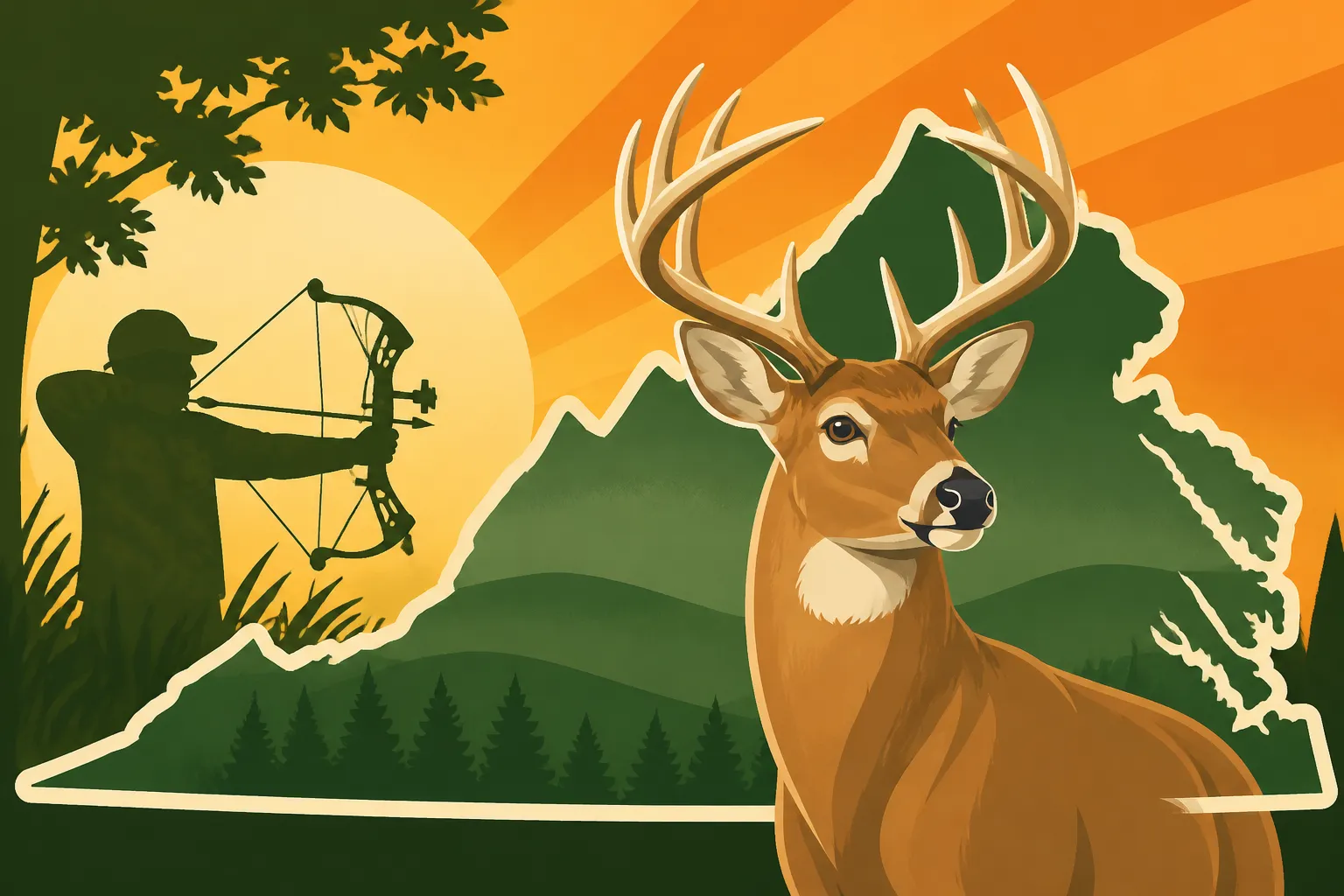
Every hunter who spends time in the Virginia woods, especially during the crisp days of fall, has that quiet dream. It’s the dream of encountering that truly magnificent buck, the one whose antlers seem to defy gravity and imagination. You might find yourself wondering, "Is this the one? Could this deer make it into a record book?" It's a natural thought, a way to quantify an incredible moment. This guide is all about demystifying the Virginia deer record book world, explaining what it means to have a trophy-class deer, how the scoring process works, and what makes a buck truly stand out in the Old Dominion.
What Defines a "Record Book" Buck in Virginia?
When we talk about a "record book buck" in Virginia, it's easy to get caught up in just the inches of antler. But for many hunters, the story behind the animal, the challenge of the hunt, and the memories forged are just as significant as any score. Yet, there’s no denying the allure of a truly impressive set of antlers, and understanding the official criteria for these majestic creatures adds another layer to our hunting heritage.
Beyond Just Antlers: Defining a "Trophy"
For most of us, a "trophy" isn't solely about a tape measure. It's about that specific buck that made your heart pound, the one that tested your skills, or the one that represents years of effort and scouting. Maybe it was your first deer, a challenging public land buck, or a deer taken with traditional archery gear. That experience, the story you’ll tell around the campfire for years to come, is the true trophy. However, when we use the term in the context of a "record book," we're usually referring to a deer that meets specific, objective antler measurements established by recognized organizations. These measurements provide a standardized way to compare the impressive racks of deer from across the country, and indeed, right here in Virginia. It’s a way of celebrating the natural wonder and the dedication of the hunter.
The Landscape of Virginia Deer Recognition
Unlike some states that maintain their own official "state record book" through their wildlife agencies, the Virginia Department of Wildlife Resources (DWR) primarily focuses on managing the herd and collecting data through mandatory harvest reports. While the DWR collects invaluable data on Virginia Deer Harvest Records and tracks population trends, they don't host a direct, DWR-run record book for antler size. Instead, hunters in Virginia typically submit their trophy deer to nationally recognized scoring organizations, which have established standards and maintain comprehensive records. These organizations provide the framework for officially recognizing outstanding animals taken ethically and legally. This distinction is important because it means if you believe you have a truly exceptional deer, you'll be looking beyond state lines to the established record-keeping bodies.
Major Record-Keeping Organizations Relevant to Virginia
While Virginia doesn't have a state-specific record book in the same vein as some other jurisdictions, the Old Dominion has a proud tradition of producing world-class whitetails. When hunters talk about "making the book" in Virginia, they're almost always referring to two prominent national organizations: the Boone and Crockett Club and the Pope and Young Club. These clubs set the gold standard for recognizing North American big game animals, and their scoring systems are meticulously designed for fairness and consistency.
Boone and Crockett Club
The Boone and Crockett Club is arguably the most prestigious record-keeping organization for North American big game. Founded by Theodore Roosevelt in 1887, its mission includes promoting fair chase hunting and wildlife conservation. For deer, Boone and Crockett recognizes both typical and non-typical antlers. A "typical" rack is symmetrical, with points growing in the expected pattern, while a "non-typical" rack features abnormal points, drop tines, or unusual growth patterns. The scoring system is incredibly detailed, measuring main beam length, circumference, length of each point, and inside spread. Deductions are made for asymmetry in typical racks. The minimum score for a Boone and Crockett entry is quite high, often requiring a truly exceptional animal, and it's something that pushes hunters to understand "Virginia Boone and Crockett Whitetails".
Achieving a Boone and Crockett entry is a testament to the quality of the deer, the habitat it lives in, and the hunter's skill. Many of these animals come from areas with strong genetics, abundant nutrition, and mature age structures, often found in regions like the Piedmont where "Why the Piedmont Grows Big Bucks" is a common refrain. The club's ethical hunting principles, centered on fair chase, mean that any animal entered must have been taken legally and ethically, adding another layer of respect to the achievement.
Pope and Young Club
For bowhunters, the Pope and Young Club holds the same revered status as Boone and Crockett. Established in 1961, Pope and Young is dedicated to promoting bowhunting and maintaining records for animals taken with archery equipment under fair chase conditions. Their scoring system for deer antlers is essentially identical to Boone and Crockett's, using the same measurements for typical and non-typical categories. The key difference, of course, is that the animal must have been harvested with a bow or crossbow.
Pope and Young minimum scores are typically a bit lower than Boone and Crockett's for obvious reasons, acknowledging the inherent challenges and closer ranges involved in bowhunting. For a Virginia bowhunter, having a buck recognized by Pope and Young is a significant accomplishment, highlighting their dedication to the craft and their proficiency with traditional or modern archery gear. It celebrates not just the size of the rack, but the unique skills required for success in Bowhunting Virginia's Statewide Archery Season or even Urban Archery Hunting in Virginia Cities.
How to Get Your Virginia Buck Scored
So, you've harvested a magnificent Virginia buck, and you're pretty sure its antlers are something special. Congratulations! The next step is to have it officially measured by a certified scorer from one of the major record-keeping organizations. This isn't a process to be rushed; there are specific protocols to ensure accuracy and fairness, which upholds the integrity of these record books.
The Scoring Process: What to Expect
First and foremost, your buck's antlers must undergo a mandatory 60-day drying period after the animal was harvested. This is crucial because antlers can shrink slightly as they dry, and the 60-day window ensures that all measurements are taken from a stable, final state. Rushing this can lead to an invalid score. During this period, keep the antlers in a cool, dry place, away from extreme heat or humidity, which could cause further shrinkage or damage.
Once the drying period is complete, you'll contact an official measurer. These individuals are certified by Boone and Crockett or Pope and Young and have undergone rigorous training to ensure they apply the complex scoring system precisely. The scoring session itself can take some time, as the measurer will meticulously measure:
- Length of main beams
- Length of all abnormal points
- Circumferences at designated locations on the main beams
- Inside spread of the main beams
- Length of each typical point (G1, G2, G3, etc.)
For typical racks, any differences in corresponding point lengths or circumferences between the left and right antlers are subtracted, resulting in a "net" score. For non-typical racks, abnormal points are added to the typical frame score, often resulting in a larger gross score with fewer deductions. It's an intricate process, but one that ensures a fair and accurate representation of your deer's trophy quality.
Finding an Official Measurer
Locating an official measurer is quite straightforward. Both the Boone and Crockett Club and Pope and Young Club maintain online databases or lists of their certified measurers, typically searchable by state or region. You can usually find these lists on their respective official websites. In Virginia, you might find measurers scattered across the state, from the Shenandoah Valley to the Piedmont, and even down to the Eastern Shore.
When you contact a measurer, be prepared to discuss the details of your harvest and schedule an appointment. Many measurers are volunteers who do this out of passion for hunting and wildlife, so be respectful of their time and schedule. They are often invaluable resources for understanding not just the scoring, but also the nuances of Virginia Deer Season Structure Explained and ethical hunting practices. Don't hesitate to ask questions about the process or what you need to bring.
What You Need to Bring
When it's time for your scoring appointment, you'll need to present a few key items:
- The Skull Plate with Antlers Attached: This is paramount. The skull plate (the upper part of the skull where the antlers are naturally attached) must be intact and properly cleaned. This ensures the integrity of the measurements, particularly the spread credit. If you mounted the deer, a taxidermist can usually prepare the skull plate correctly. Make sure no part of the skull plate has been altered or removed in a way that would affect measurements.
- Proof of Legal Harvest: This typically includes your valid Virginia hunting license and the confirmation number from your successful harvest report. Remember, in Virginia, you are required to report your deer harvest. You can easily do this through the Virginia DWR app or website, and you can even look up previous reports by checking the "Checking a Virginia Deer Harvest Online" resource. The measurer will need to verify that the animal was taken legally and ethically.
- Basic Information about the Hunt: While not strictly for scoring, being able to provide the county and date of harvest is helpful for the measurer and for the record book organizations for their overall data collection and understanding of "Virginia Deer Population Estimate" trends.
Make sure the skull plate is clean and free of any remaining tissue or debris. A well-prepared skull plate makes the measurer's job much easier and ensures that all measurements can be taken accurately without obstruction.
Factors Influencing a Virginia Buck's Rack Size
While the dream of a record book buck keeps many of us going, understanding why some deer grow truly massive racks while others don't is fascinating. It's not just luck; it's a complex interplay of environmental conditions and biological factors that converge to create those impressive headgear. For Virginia hunters, knowing these elements can even help in understanding management strategies and identifying potential trophy areas.
Age, Nutrition, and Genetics: The Big Three
These three factors are the absolute pillars of antler growth. You can't have one without the others, and the strongest racks usually result when all three are optimized:
- Age: This is arguably the most crucial factor. A buck simply needs time to reach its full antler potential. In Virginia, most bucks hit their prime antler-growing years between 4.5 and 6.5 years old. Before that, much of their energy is still going into body growth. Once their skeletal system is mature, more energy can be dedicated to antler development. This is why discussions around "Virginia Buck Age Structure" are so important for hunters and wildlife managers alike. An older buck has had more seasons to accumulate resources and refine its antler development. A 1.5-year-old buck might have spikes or a small 4-point, while that same buck at 5.5 years old, given good nutrition and genetics, could be a legitimate giant.
- Nutrition: Antlers are bone, and bone requires a lot of minerals, especially calcium and phosphorus, along with protein. A buck with access to high-quality forage throughout its life will always have an advantage. In Virginia, this means areas with diverse food sources, such as abundant acorns in oak forests, lush agricultural fields (like corn, soybeans, and alfalfa), and quality browse. A season with a bumper acorn crop, for instance, provides a massive influx of energy and nutrients that can lead to significant antler growth. Conversely, a poor acorn year can result in smaller racks across the board. The presence of mineral licks, either natural or supplemental (where legal), can also play a role, though natural food sources are typically the primary drivers of mineral intake.
- Genetics: Just like humans inherit traits from their parents, deer inherit genetic predispositions for antler size and conformation. Some bucks simply have the "genes" to grow larger, more symmetrical, or more non-typical racks. While we can't see a deer's genetics, we can infer their presence by observing the overall quality of deer in a specific area over time. If a particular watershed or private property consistently produces bucks with impressive headgear, it's a strong indicator of good genetics within that local herd. You might hear hunters discuss seeing similar antler characteristics year after year in certain areas.
Habitat and Management Practices
Beyond the individual buck's biology, the broader environment and human management play a significant role.
- Habitat Quality: A prime deer habitat offers more than just food. It provides adequate cover for bedding and security, water sources, and diverse terrain that allows deer to move and avoid pressure. Areas with a mix of mature timber, thick brush, regenerating clear-cuts, and open fields often support healthier deer populations capable of growing larger antlers. The more comfortable and less stressed a buck is, the more energy it can dedicate to antler growth rather than simply survival.
- Management Practices: This is where hunters and landowners can actively influence antler quality. Quality Deer Management (QDM) principles, which emphasize allowing bucks to reach older age classes and balancing doe populations to habitat carrying capacity, are key. By passing on younger bucks and focusing harvest pressure on antlerless deer, hunters can help shift the age structure of the buck population. This allows more bucks to reach that 4.5-year-old or older prime age, increasing the likelihood of true trophy animals. Even on public lands, where direct management is less tailored, understanding "Hunting Pressure on Virginia Public Land" and seeking out less disturbed areas can offer better chances at older, larger-racked deer. Many landowners consult resources like GoHunt to analyze local harvest data and habitat trends, helping them make informed decisions about their own properties or target specific public parcels with higher trophy potential. This conscious effort, combined with ethical hunting practices and respect for the resource, is what truly cultivates a legacy of impressive Virginia whitetails.
Here's a quick look at the major record-keeping organizations and their general minimum score requirements:
| Organization | Category | Minimum Typical Score (net) | Minimum Non-Typical Score (net) | Equipment |
|---|---|---|---|---|
| Boone and Crockett | Whitetail | 170" | 195" | Rifle, Shotgun, Muzzleloader |
| Pope and Young | Whitetail | 125" | 155" | Archery (Bow/Crossbow) |
Note: These are general minimums. Specific categories (e.g., coues deer, blacktail deer) have different minimums. Always check the official club websites for the most current and precise scoring guidelines.
Disclaimer
This article is for general informational purposes only and does not constitute professional advice. Laws, prices and regulations vary by location and change over time. Consult a qualified professional for guidance on your specific situation.