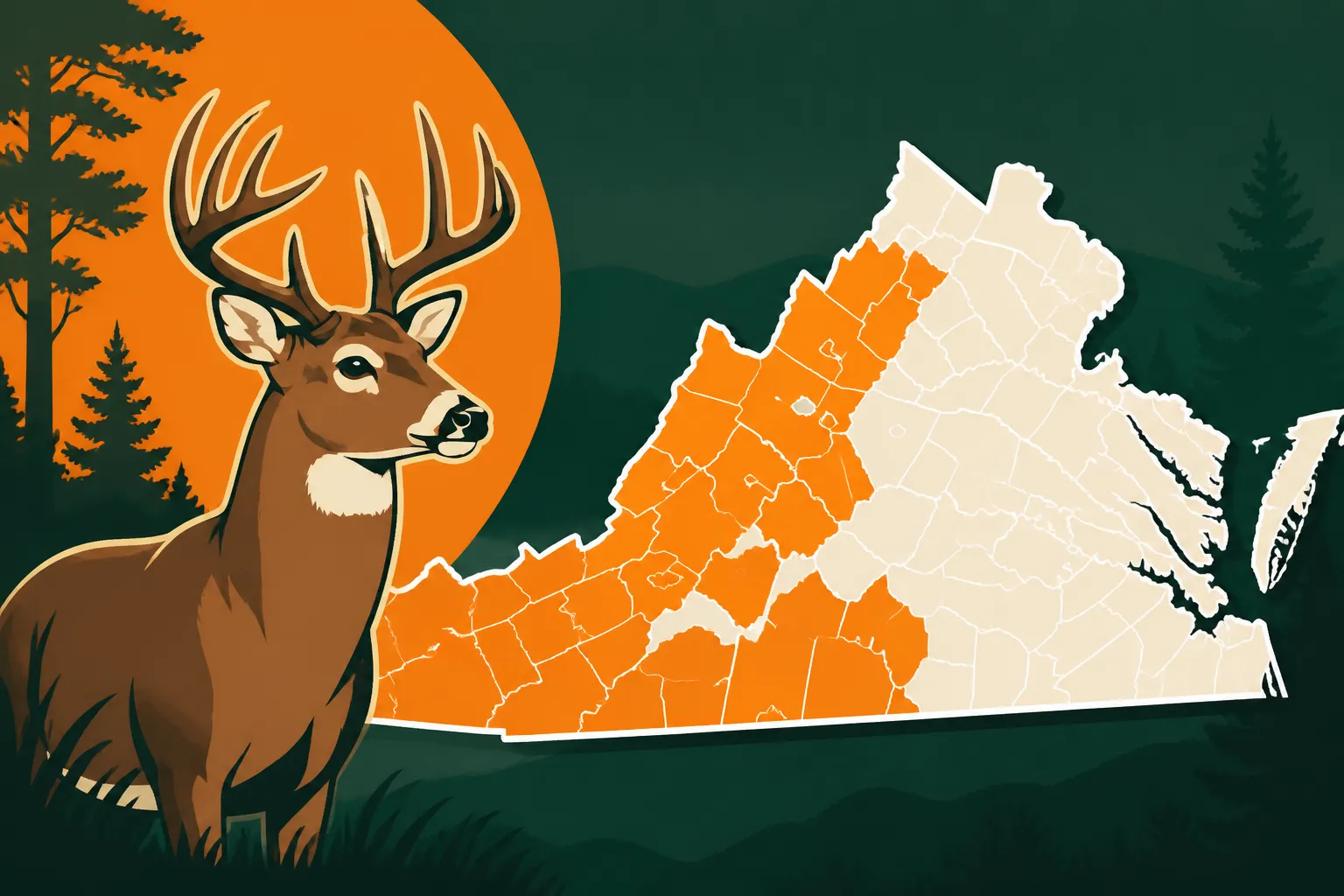
Virginia Antler Point Restriction Counties
If you're a deer hunter, especially one who's spent time in other states, you've probably encountered antler point restrictions (APRs). These rules, often dictating a minimum number of points a buck must have on one side (or a total number of points) before it can be harvested, can feel like a maze. It's perfectly natural to wonder, "Which Virginia counties have these point restrictions?" The good news, and perhaps a bit of a surprise for many, is that for most of Virginia, the answer is refreshingly simple: there are no county-wide antler point restrictions. This guide will unravel Virginia's unique approach to deer management, clarify the actual rules for antlered deer, and point out the very few, specific instances where you might encounter an APR.
Virginia's Approach to Antlered Deer Harvest: Beyond Point Counting
Virginia has historically taken a different path than many other states when it comes to managing its deer herd. Instead of imposing widespread antler point restrictions, the Virginia Department of Wildlife Resources (DWR) has focused on a more flexible, hunter-centric approach that prioritizes overall herd health and robust populations across diverse habitats. This philosophy allows hunters a good deal of freedom in the field, while still achieving crucial management goals through other regulatory levers.
The foundational rule for harvesting an antlered deer in Virginia is straightforward: an antlered deer is legally defined as any deer having at least one antler three inches or more in length. That's it. There's no need to count points, measure spreads, or guess at age based on antler configuration during the general statewide seasons. This means that if a young buck has two small spikes that are both three inches long, it's a legal antlered deer. Conversely, if a buck has a broken antler that's less than three inches, it would technically be considered antlerless for regulatory purposes, although most hunters would still treat it as a buck. This simple definition makes things much clearer in the field, reducing the stress and uncertainty that often accompany point-counting systems in other regions.
The DWR's strategy instead revolves around carefully calibrated bag limits and season structures tailored to different parts of the state. For instance, the general statewide archery season, muzzleloader season, and general firearms deer season all have specific rules, but none involve antler point counting. Instead, hunters must be aware of the overall harvest limits, which vary significantly. You'll find different regulations governing Eastern Region Antlered Buck Limits compared to Western Region Antlered Buck Limits, reflecting the differing deer densities and habitat types across the Blue Ridge Mountains. These limits, combined with generous antlerless deer opportunities, are the primary tools used to shape the deer herd's age structure and maintain healthy buck-to-doe ratios.
Why Virginia Opts Against Widespread Antler Point Restrictions
Many hunters coming from states with strict APRs might wonder why Virginia has largely foregone them. It's a question rooted in both wildlife management philosophy and practical considerations unique to the Commonwealth. The DWR's stance is built on several key principles that prioritize a balance between hunter opportunity, herd health, and simplified regulations.
One of the biggest drivers is hunter choice. Virginia DWR trusts its hunters to make ethical and responsible decisions in the field. Rather than dictating what constitutes a "keeper" buck by antler points, the department believes that hunters will, over time, pass on younger bucks if they are focused on harvesting older animals, or if they have already filled their antlered buck quota. This approach allows for a greater diversity of hunting experiences, from those looking for meat to those seeking a mature trophy. It recognizes that not every hunter has the same objectives, and a rigid APR system can frustrate those simply looking to put venison in the freezer.
Furthermore, the focus in Virginia's deer management is heavily on herd health through antlerless harvest. Often, the most effective way to improve the overall quality of a deer herd, including antler development, is to ensure the population is in balance with its habitat. This usually means harvesting enough does to keep the population from exceeding the carrying capacity of the land. APRs, in some contexts, can inadvertently discourage antlerless harvest if hunters become overly fixated on "growing" bucks by passing on too many young males, which can lead to an imbalance and potentially overbrowsing issues. Virginia's system, with its clear rules on How Many Does You Must Take Before a Third Buck in some regions, strongly encourages hunters to contribute to this crucial antlerless harvest.
Virginia's diverse geography also plays a significant role. From the dense mountain forests of the Jefferson National Forest to the open farmlands of the Piedmont and the swampy bottoms of the Tidewater region, deer habitat and population dynamics vary immensely. A universal APR could be counterproductive in certain areas. What might be a healthy management strategy for the vast expanses of George Washington National Forest Hunting might not make sense for a smaller, fragmented private land parcel in the suburbs. The DWR prefers flexible regulations that can be adjusted regionally without requiring complex point-counting rules across the entire state. For example, a tool like GoHunt can be incredibly useful here, not necessarily for checking APRs, but for its robust mapping features and quick access to official regulations, ensuring you're always up-to-date on specific bag limits and dates for the county you're hunting.
Where You Might Encounter Antler Restrictions in Virginia
While it's important to understand that Virginia does not have statewide or county-level antler point restrictions, there are very specific, isolated instances where you might encounter them. These are typically not DWR-imposed rules for an entire county, but rather area-specific regulations implemented by land managers on certain federal lands or for highly controlled special hunts. This distinction is crucial for any hunter planning a trip, as these exceptions require detailed pre-hunt research.
Military Bases and National Wildlife Refuges are the most common places where you'll find regulations that differ from the statewide DWR rules, and this can sometimes include antler point restrictions. Places like Fort A.P. Hill, Quantico Marine Base, Fort Pickett, or various National Wildlife Refuges (e.g., Great Dismal Swamp Refuge Hunting Rules, Chincoteague National Wildlife Refuge Hunting) often operate under their own specific hunt plans. These plans are designed to meet the unique conservation and management goals of those federal properties, which might involve protecting a certain age class of bucks. For example, a base might require a buck to have at least four points on one side, or a minimum outside antler spread. It's absolutely imperative to check the most current regulations for any federal land you plan to hunt. A general DWR license will typically cover you, but the specific hunting rules for that location will supersede statewide deer regulations in many cases.
Another, even rarer, possibility is special quota hunts or managed hunts on specific private lands or some Virginia Wildlife Management Areas (WMAs). The DWR occasionally partners with landowners or manages specific tracts with highly tailored objectives. In very limited instances, these specific hunts might include an experimental or temporary APR as part of a detailed management plan. These are never permanent county-wide rules and are always announced far in advance as part of the specific hunt application process. You would apply for these hunts and be fully informed of any unique requirements, including point restrictions, well before the season. However, for the vast majority of WMAs and public lands described in resources like Public Hunting Land in Virginia, you'll still be operating under the standard "at least one antler 3 inches or more" rule.
To illustrate the difference, consider this simplified comparison:
| Regulation Type | Virginia General Rule (Most Counties) | Specific Hunt Area Rule (Example) |
|---|---|---|
| Antlered Deer Definition | At least one antler 3 inches or more in length | At least 4 points on one side, or 15" outside spread |
| Primary Management Tool | Flexible bag limits, antlerless harvest, season dates | Antler point restriction (to protect young bucks) |
| Where Found | Most DWR-managed public and private lands | Select military bases, NWRs, or quota hunts |
| Hunter Action | Identify antlers > 3", then consider bag limits | Carefully count points/measure spread before shot |
Practical Advice for Hunting Virginia Deer Without APRs
Hunting in Virginia, free from the complexity of widespread antler point restrictions, offers a unique blend of challenge and opportunity. While you won't be counting points on every buck, there are still plenty of strategic considerations to ensure a successful and ethical hunt.
First and foremost, always know the legal definition of an antlered deer for Virginia's general seasons: that single antler of at least three inches. This fundamental rule simplifies field identification immensely. If you're on general public or private land (without a specific managed hunt exception), you don't need to debate if that forkhorn is technically a "legal" 3-point or if its brow tines count. It just needs to meet that minimum length.
Secondly, embrace the DWR's emphasis on antlerless harvest. This is where you, as a hunter, can make the most significant contribution to herd health and population management. By taking does, especially early in the season, you help balance the buck-to-doe ratio, which can lead to healthier, older bucks with better antler development in the long run. Don't be afraid to Filling Three Antlerless Tags Before the Rut if your region allows for it; it's a vital part of the management strategy. Your GoHunt app can help you keep track of your individual harvest limits and ensure you're complying with regional antlerless regulations.
Pay close attention to regional buck bag limits. Even without APRs, Virginia manages buck harvest through the number of antlered deer you can take. Whether you're hunting in the Eastern or Western regions, understanding How Many Bucks the Eastern Region Allows versus How Many Bucks the Western Region Allows is crucial. These limits encourage hunters to be selective, not by points, but by overall harvest strategy. You might decide to pass on a smaller buck if you're saving your tag for a potential larger animal later in the season, particularly during key times like Hunting the Virginia Rut in November.
Field judging still holds value, even without APRs. While you're not counting points for legality, you might be assessing a buck's age and antler development based on your personal hunting goals. Observing deer over time, paying attention to body size, neck thickness, and antler mass, can help you make informed decisions about which deer to harvest. A good set of binoculars and plenty of time Scouting Virginia Public Land Before Season will enhance your ability to make these judgments. Even without APRs, understanding deer movement, bedding areas, and food sources will dictate your success, whether you're setting up a Treestand Setups in George Washington National Forest or Using a Ground Blind on Virginia Public Land.
Finally, always double-check regulations for specific properties, especially federal lands. This cannot be stressed enough. If you're heading to a National Forest, Wildlife Management Area (WMA), military base, or National Wildlife Refuge, use a resource like GoHunt or visit the DWR website directly to pull up the specific rules for that exact location. These managed areas are the exceptions where you might find unique stipulations, including potential antler restrictions. Being informed is your best defense against accidental violations and ensures you have a smooth, enjoyable, and compliant hunt. Remember, whether you're looking for information on Virginia Hunting Licenses and What They Cost or understanding specific area regulations, proactive research is always a hunter's best friend.
Disclaimer
The information provided in this guide is for general informational purposes only and is based on current Virginia Department of Wildlife Resources regulations and common hunting practices. Hunting regulations are subject to change annually. It is the hunter's sole responsibility to consult the most current Virginia DWR regulations before hunting. Always prioritize safety, ethical hunting practices, and compliance with all local, state, and federal laws.