Practical Range in Virginia Mountain Hollows
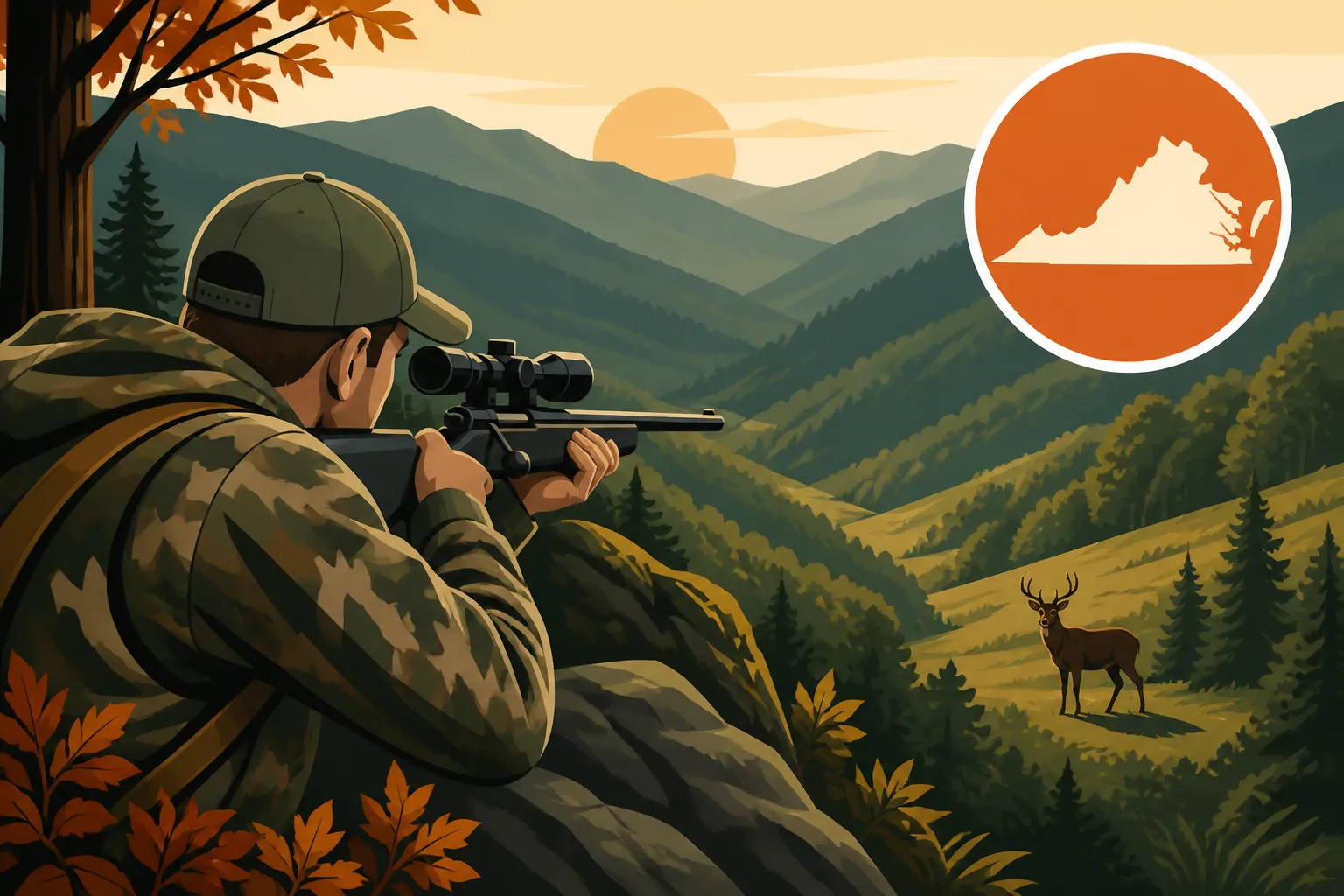
Hunting the steep, tangled hollows of Virginia's mountains presents a whole different ballgame than sitting over a Piedmont field edge. When you're tucked into a shadowy ravine, facing dense cover and dramatic elevation changes, knowing your practical shooting range isn't just a number on a ballistic chart – it's the difference between a clean harvest and a frustrating miss, or worse, a wounded animal. This guide will walk you through the unique dynamics of these environments, helping you understand what "practical range" truly means when the timber is thick and the ground falls away sharply beneath your feet.
Understanding the Unique Challenges of Virginia's Mountain Hollows
Let's be real, those mountain hollows are gorgeous, but they can be downright deceiving. The elevation changes, the thick undergrowth, and the way light and sound play tricks on you all conspire to make a 50-yard shot feel like a monumental task. It’s not just about how far your bullet can fly; it’s about how far you can confidently and ethically make a shot.
Topography and Line of Sight: Why 100 Yards Feels Like 300
When you're perched on a ridge, looking down into a hollow, or even trying to shoot across one from another finger ridge, your line of sight is rarely flat. What looks like a short distance can actually be much further due to the angle, and vice-versa. Moreover, the dense cover – think rhododendron thickets, mountain laurel, and the constant tangle of grapevines – means your actual shooting lanes are often incredibly narrow and short-lived. You might spot a deer at 80 yards, but your shooting window could be a fleeting 20 yards wide through a gap in the trees. It’s a constant battle against physical obstructions. This isn't like shooting across an open soybean field where you have clear sightlines for hundreds of yards. The reality is, most of your shots in these settings will be well under 100 yards, and often under 50.
Hunters often fall into the trap of overestimating what they can see. That dark patch across the hollow? Is it 75 yards or 125? The optical illusion created by steep grades and dense canopy is a real challenge. You'll often find yourself trying to thread a needle through a small opening. This is where pre-season scouting, looking at the actual terrain you might hunt, can really pay off. Familiarizing yourself with the nuances of Reading a Ridge for Blue Ridge Deer can give you an edge in understanding these visual challenges.
Environmental Factors: Wind, Thermals, and Light Conditions
Virginia's mountains aren't just challenging geographically; they're also a masterclass in atmospheric deception. Wind currents can swirl unpredictably, especially down in those hollows where they’re channeled or deflected by the terrain. What feels like a gentle breeze at your stand can be a stiff crosswind 50 feet below you. Then there are the thermals – those rising and falling air currents that dictate scent dispersal. In the morning, cold air sinks into the hollows, carrying your scent down. In the afternoon, as the sun warms the slopes, the air rises, potentially carrying your scent up to deer on higher ground. Understanding Wind and Thermals on a Blue Ridge Slope is absolutely critical, not just for concealment but also for how your bullet might drift on longer shots across open gaps.
Light conditions are another massive factor. Those hollows can stay dark and shaded long after the sun has risen over the ridge tops, and they'll get dark again well before legal shooting light ends. This means your effective range is also tied to your ability to clearly see your target and aim precisely in low light. A deer at 70 yards might be perfectly visible in open woods, but in a deep, dark hollow, it could be a ghost, barely discernible, making a responsible shot impossible. The dense canopy often filters out much of the ambient light, forcing you to rely on quality optics and your own eyesight more than ever.
Deer Behavior in Steep Terrain
Deer move differently in the mountains compared to flatter ground. They'll often use benches, old logging roads, and natural funnels to conserve energy, but they're also masters of disappearing into the thickest cover the hollows provide. They become accustomed to navigating the steep inclines and declines, and they often travel with purpose, moving quickly from bedding areas to feeding grounds, or escaping perceived threats. This means you might only have a narrow window of opportunity for a shot.
When a buck is slipping through a thick draw, his movement might be quick and his body partially obscured. Unlike a deer grazing calmly in a field, a mountain deer can be on high alert, making swift, unpredictable movements. You need to be able to acquire your target, assess the shot, and execute quickly and quietly. Their natural wariness, combined with the difficult terrain, means your practical range shrinks significantly, focusing on those quick, ethical shots rather than long-distance opportunities. You can often find them using these terrain features as travel corridors, similar to Hunting a Funnel Between Two Hollows.
Choosing the Right Firearm and Ammunition for Close Quarters
When you know your shots are likely to be close, powerful, and potentially through some light brush, your gear choices become even more critical. You're not looking for a flat-shooting prairie rifle; you're looking for something that delivers energy efficiently at closer ranges and can handle the rough and tumble of mountain hunting.
Caliber Considerations: Power, Ballistics, and Brush Busting
For practical range in Virginia's mountain hollows, you want a cartridge that hits hard at close distances, even if it sacrifices long-range ballistics. While flat-shooting magnum cartridges have their place, they're often overkill and can even be counterproductive in thick cover. Instead, look to calibers known for their knockdown power and energy transfer within 150 yards.
| Caliber | Common Bullet Weight (gr) | Optimal Range for Hollows (yards) | Key Benefit for Mountain Hunting |
|---|---|---|---|
| .30-30 Win | 150, 170 | 50-125 | Excellent brush penetration, quick follow-ups, classic design |
| .308 Win | 150, 165, 180 | 50-175 | Versatile, potent, good energy transfer, shorter action |
| .35 Rem | 180, 200 | 50-100 | Heavy bullet, high energy, traditional |
| .45-70 Gov't | 300, 325, 405 | 25-75 | Massive power, superb energy transfer at close range |
| 12-Gauge Slug | (Various) | 25-100 | Devastating power, common for shotgun users |
Calibers like the trusty .30-30 Winchester are perennial favorites for a reason. Its heavy, slower bullet tends to deflect less on light brush, and it delivers plenty of punch for whitetails at the ranges you'll encounter. The .308 Winchester is another fantastic choice, offering a bit more versatility and a wider range of bullet options, but still excelling at under-150-yard shots. You might also consider something like a .35 Remington for its substantial energy transfer. Even a 12-gauge shotgun with slugs is incredibly effective at the close ranges often found in these hollows, especially in counties where firearms restrictions might apply. When debating Best Rifle Caliber for Virginia Deer, always consider the actual terrain you'll be hunting. The GoHunt app can help you pinpoint areas with dense cover, reinforcing the need for these types of calibers.
Ammunition Selection: Bullet Construction for Mountain Hunting
Beyond caliber, the actual bullet you load into your firearm makes a huge difference. For thick cover and close ranges, you want a bullet designed for rapid expansion and energy dump, often with a robust construction that can resist premature breakup on light contact. Soft-point or bonded bullets are excellent choices. They hold together well, penetrate deeply, and expand reliably upon impact, even at lower velocities commonly seen in shorter barrels or with traditional calibers.
Avoid highly frangible bullets that might break apart on a twig before reaching your target. Instead, look for something with a good balance of weight retention and expansion. This ensures that when you do make a critical shot, the bullet delivers maximum damage and energy to the deer, leading to a quick, ethical kill. Many hunters specifically choose a bullet with a reputation for performing well in close-range timber, like the old-school flat-nose bullets in a .30-30. For more on this, check out our guide on .30-30 in Thick Mountain Cover.
Firearm Type: Rifles, Shotguns, and Muzzleloaders in the Hollows
When it comes to the firearm itself, consider maneuverability. A shorter barrel is often an advantage in dense cover, making it easier to swing the gun into position without snagging on branches. Lever-action rifles, for example, are fantastic for hollow hunting due to their compact size and quick handling. Bolt-actions are still excellent, but a slightly shorter barrel (e.g., 20-22 inches) can be a real blessing.
Shotguns, particularly pump-action or semi-automatic models, loaded with modern slugs, are incredibly effective within 100 yards and can be a great option if you prefer their handling in tight spaces or hunt areas with specific regulations. Muzzleloaders, too, are powerful at close ranges and offer a unique challenge and reward. Their single-shot nature means you must make that first shot count, which aligns well with the careful shot selection required in a hollow. Regardless of the firearm type, ensure it's sighted in precisely for the ranges you expect to encounter, which is often 50-75 yards.
Optimizing Your Optics for Quick, Confident Shots
Your optics are your eyes in the woods, and in the dim, broken light of a mountain hollow, they need to be exceptional. Clear, bright glass and a reticle you can quickly acquire can be the difference between seeing a deer just long enough for a shot and only catching a fleeting glimpse.
Scope Magnification and Low-Light Performance
For hunting in Virginia's mountain hollows, less is often more when it comes to scope magnification. A variable power scope with a low end of 1x to 3x is ideal, allowing for a wide field of view and quick target acquisition on close, moving deer. You rarely need anything above 6x or 8x in these environments, and too much magnification can actually hinder you by narrowing your field of view and making it harder to track a deer or find it in the scope.
Critical factors are objective lens size and glass quality. A larger objective lens (e.g., 40mm or 42mm) will gather more light, which is paramount in the shadowed depths of a hollow. High-quality glass, with good coatings, will transmit more light and provide a clearer, brighter image, especially during those crucial first and last minutes of legal shooting light. Many hunters find illuminated reticles beneficial in these conditions, as they allow for precise aiming against a dark background without losing the reticle. For specific recommendations, our article on Rifle Scopes for Low-Light Mountain Hollows dives deeper into selecting the right glass.
The Value of a Quality Rangefinder in Uneven Terrain
A rangefinder isn't just a gadget; it's a critical tool for ethical hunting, especially in terrain that constantly tricks your eye. When you're looking down into a hollow, a deer might appear closer than it is due to the steep angle. Conversely, a deer on a slope above you could seem further. Modern rangefinders with angle compensation features are invaluable. They don't just give you the line-of-sight distance; they calculate the "shoots like" horizontal distance, which is what really matters for bullet drop.
Take the guesswork out of your shots. Before you even spot a deer, range prominent landmarks – that big oak, the downed log, the cluster of rhododendrons. Having a few pre-ranged points can give you an immediate reference when a deer steps out. It saves precious seconds and ensures you know the exact distance, allowing you to hold your shot with confidence. The GoHunt app, when used in conjunction with a good rangefinder, can help you map out these key distances during your scouting trips.
Binoculars for Scouting and Spotting Detail
Even with a great scope, a dedicated pair of binoculars is indispensable. They offer a wider field of view than most scopes, making it easier to scan the dense woods for movement or subtle details like an ear twitch or a flick of a tail. For mountain hunting, 8×42 binoculars are a fantastic all-around choice. They offer a good balance of magnification, light gathering, and a steady image without being too heavy or bulky.
Use your binoculars constantly to pick apart cover, especially in those dark recesses of the hollows. Look for horizontal lines in a vertical world, which often indicate the back of a deer. Spotting a leg or a patch of hide through a tiny opening can be difficult with the naked eye, but quality binoculars make it possible. Don't underestimate their role in confirming what you're seeing before you even think about raising your rifle. For more detail, check out our guide on Binocular Power for Mountain Hunting.
Sharpening Your Skills: Practice and Fieldcraft for Mountain Success
No matter how good your gear is, your own skill and preparedness are the ultimate determinants of success. Hunting mountain hollows demands a specific kind of practice and a deep understanding of woodsmanship.
Realistic Practice Scenarios: Shooting Angles and Awkward Positions
Forget shooting off a bench at a flat target at the range. That's a great starting point, but it won't prepare you for the realities of mountain hunting. Your practice needs to mimic the conditions you'll face. Find a steep hill or embankment, set up targets at varying angles – both uphill and downhill – and practice shooting from kneeling, sitting, or even prone positions that are anything but comfortable.
Practice shooting quickly from a standing position, using a tree or shooting sticks for support. Simulate having only a small window to shoot through. Get comfortable with the limitations of your body and your rifle when you're breathing hard from a climb, or when you have to contort yourself to get a clear shot. The more you can replicate real-world scenarios, the more confident you'll be when the moment of truth arrives. This kind of practice is vital for making ethical shots on deer that might be Reading Virginia Mud for Fresh Deer Movement through a creek bottom.
Mastering Positional Shooting and Quick Decisions
In the hollows, you often don't have the luxury of perfectly clear shots or ample time. Deer might appear and disappear in a matter of seconds. This means you need to master positional shooting – being able to get steady from a variety of stances quickly. A good set of shooting sticks can be a lifesaver, providing a stable rest when no tree is conveniently placed.
More importantly, you need to practice making quick, ethical decisions. Is it a clean shot? Is there enough clear space for the bullet to travel? Can I make that shot confidently, or should I let the deer walk and hope for a better opportunity? This isn't about rushing; it's about being so practiced and familiar with your rifle and your limits that you can assess the situation almost instinctively and act decisively when the shot is right. It's about knowing your personal practical range, not just your rifle's.
Integrating Fieldcraft: Movement, Patience, and Shot Opportunity
Finally, remember that gear is only part of the equation. Excellent fieldcraft is often what truly brings success in these challenging environments. This includes silent movement through the timber, meticulous scent control, and an understanding of how deer use the terrain. Move slowly, pause frequently, and glass the cover ahead. Often, the deer you find in a hollow will be moving with similar caution, making quick, sudden shots the norm rather than the exception.
Patience is paramount. Sometimes the best shot isn't the first one you're offered. Letting a deer take a few more steps to clear a branch, or waiting for it to pause in a small opening, can turn a risky shot into a sure one. Understand that hunting these hollows is often about finding ground others walk past – getting into those hard-to-reach places where deer feel secure. If you're patient and persistent, and have practiced your practical range for these tight quarters, you'll be well on your way to success.
| Aspect of Mountain Hunting | Challenge in Hollows | Practical Solution/Tip |
|---|---|---|
| Visibility | Dense cover, limited sight lines | Pre-range landmarks, use quality binoculars for scanning, illuminated reticles for low light. |
| Distance | Deceptive angles, visual illusions | Angle-compensating rangefinder, frequent ranging of terrain features. |
| Deer Movement | Quick, wary, often partially obscured | Practice quick target acquisition, positional shooting, focus on vital zones. |
| Environmental | Swirling winds, dim light | Understand thermals, use optics with excellent low-light performance. |
| Shot Placement | Steep angles, potential bullet deflection | Use robust, expanding bullets; practice shooting uphill/downhill angles. |
Hunting Virginia's mountain hollows is an experience that demands respect for the terrain and a keen understanding of your capabilities and gear. By focusing on practical ranges, choosing appropriate firearms and ammunition, optimizing your optics, and honing your fieldcraft, you'll be well-equipped to tackle these challenging yet incredibly rewarding hunting grounds.
Disclaimer
This article is for general informational purposes only and does not constitute professional advice. Laws, prices and regulations vary by location and change over time. Consult a qualified professional for guidance on your specific situation.