Shooting Sticks From a Blue Ridge Overlook
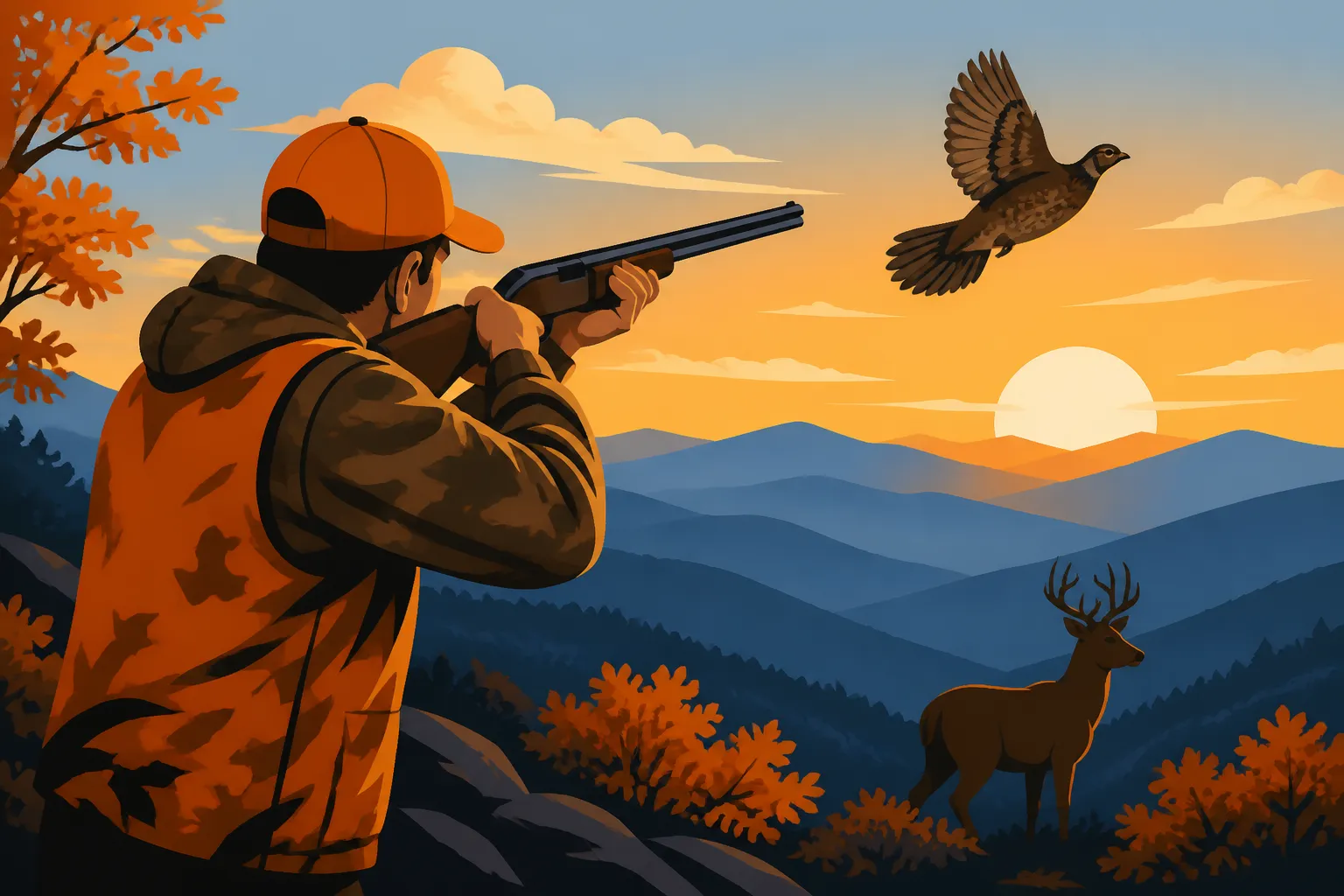
There’s nothing quite like cresting a ridge in Virginia’s majestic Blue Ridge Mountains, glassing an expansive hollow or distant slope, and spotting that buck you’ve been chasing all season. But that awe-inspiring view often comes with a challenge: making a steady, ethical shot from an elevated position, potentially across a significant distance, where the wind can play tricks. This guide is all about equipping you with the knowledge to utilize shooting sticks effectively, ensuring you're rock-solid when that moment of truth arrives on a Blue Ridge overlook.
Why Shooting Sticks Are Your Best Friend on a Blue Ridge Overlook
Hunting in the Blue Ridge is a unique experience. It’s physically demanding, often requiring long hikes up steep terrain, and the shot opportunities can be fleeting and at varied distances. When you finally get into position on a high point, you might be breathing heavily, your heart still pumping from the climb, and the last thing you want is a wobbly shot. That’s where a good set of shooting sticks really shines, transforming an unstable situation into a confident one.
The Stability Challenge of Mountain Shots
Imagine this: you've just climbed a thousand feet to reach a prime overlook, your lungs are burning, and you're trying to control your breathing as you set up your spotting scope. Suddenly, a mature buck steps out on the far side of the valley, easily 250 yards away. You need to get your rifle up and steady, but your muscles are fatigued, and there's a subtle crosswind whispering through the pines. Trying to make that shot offhand or even from a kneeling position without support is a recipe for a bad outcome. The instability of your body, magnified by distance and environmental factors, makes precise bullet placement incredibly difficult.
The uneven ground of the mountains only adds to this challenge. You rarely find a perfectly flat spot for a prone shot, and natural rests like rocks or downed logs might not be at the right height or angle. This often leaves you compromising your shooting position, which directly impacts accuracy. A solid shooting stick system removes much of this human error, giving you a consistent, stable platform regardless of your physical state or the terrain beneath your feet.
Achieving Precision from Elevated Positions
When you’re looking down from an overlook, gravity isn't the only factor affecting your bullet's trajectory. There's also the mental game of confidence. Knowing you have a rock-solid rest allows you to focus purely on your breath, trigger control, and the target, rather than fighting to hold the crosshairs steady. This focus translates directly into greater precision, especially on those longer shots common in open mountain terrain. A stable rest helps mitigate slight movements that, at 200+ yards, can mean the difference between a clean kill and a missed opportunity or, worse, a wounded animal.
For rifle calibers often favored in these open mountain scenarios, like a 6.5 Creedmoor for Blue Ridge Ridges, precision is paramount to maximize their inherent accuracy. Even with an incredibly accurate rifle and proper bullet selection, if your shooting platform isn't stable, you won't realize its full potential. Shooting sticks provide that missing link, offering the kind of consistent support that enables tight groups downrange and ethical shot placement on game. It's about taking the human element of unsteadiness out of the equation as much as possible, leaving you to execute a perfect shot.
Types of Shooting Sticks and What Works Best for Virginia's Mountains
When it comes to shooting sticks, you've got options, and choosing the right one for Virginia's varied mountain terrain is crucial. Each type offers a different balance of stability, portability, and quick deployment, all factors you'll want to consider when you're miles into the Jefferson or George Washington National Forests.
Monopods, Bipods, and Tripods: Pros and Cons
-
Monopods: These are single-leg sticks, offering a quick point of rest but not true free-standing stability. They're lightweight and deploy incredibly fast, making them good for hunters who are constantly on the move, perhaps trying Still-Hunting Jefferson Forest Ridges. They help with vertical stability, but you still need to provide horizontal stability yourself. Think of them as a quick assist for a standing or kneeling shot, not a complete support system.
-
Bipods: These have two legs and are significantly more stable than monopods. They provide excellent support from a kneeling or sitting position and can be used standing if they're tall enough. Many bipods attach directly to your rifle's sling swivel stud or a rail system, which means they're always with the rifle and deploy instantly. They offer a great balance of stability and portability for many mountain hunting situations, allowing you to settle quickly for a shot.
-
Tripods: The gold standard for stability, tripods offer three points of contact, making your rifle virtually rock-solid, even in windy conditions. They allow for hands-free glassing with your rifle, which is a huge advantage when you're patiently waiting on an overlook. While heavier and sometimes slower to deploy than bipods or monopods, their unparalleled stability is often worth the trade-off for static hunting from an overlook or when long-range precision is absolutely critical. For setting up on a High Elevation Mountain Bench and waiting, a tripod is often the best choice.
Material, Weight, and Adjustability Considerations
When you're hiking up and down those steep Blue Ridge slopes, every ounce in your pack feels like a pound. That's why the material of your shooting sticks matters.
- Carbon fiber is incredibly lightweight and strong, making it ideal for mountain hunters who prioritize shedding ounces. It's often more expensive, but the reduced fatigue over a long day of hiking is a tangible benefit.
- Aluminum is a more budget-friendly option, still durable, but noticeably heavier. Both materials hold up well to the rigors of the Virginia woods.
Adjustability is another key feature. Look for sticks that adjust smoothly and quietly, ideally with quick-release levers rather than screw-type locks, especially if you anticipate needing to change height rapidly. The ability to adjust height to accommodate varying terrain and shooting positions (standing, kneeling, sitting) is critical. Some models even have pivoting tops that allow you to track a moving animal without having to reposition the entire setup. A good resource like GoHunt often features reviews and comparisons of different shooting stick brands, detailing their adjustability features and real-world performance for hunters who put their gear through its paces in challenging environments like ours.
Finally, consider the collapsed length. If you're strapping them to a pack for a long haul, you want them to be compact enough not to snag on brush or become cumbersome. Many models are designed to be easily stowed or quickly deployed, a feature that becomes invaluable when navigating thick laurel patches or dense timber typical of Virginia's mountains.
Mastering the Art of Shooting with Sticks from an Overlook
Having a great set of shooting sticks is only half the battle. Knowing how to use them effectively, especially from the often-challenging vantage point of a Blue Ridge overlook, is where the real skill comes in. It's not just about leaning your rifle on them; it's about forming a stable shooting system with your body and the terrain.
Proper Setup and Shooting Technique
First, when you've reached your chosen overlook, take a moment to assess the immediate ground. Clear any loose rocks or debris that might shift underfoot. If using a tripod, spread the legs wide for maximum stability. With a bipod or monopod, ensure the foot or feet are firmly planted. Next, adjust the height of your sticks so that the rifle's forend rests comfortably in the cradle (or on the V-shaped yoke) when you are in your desired shooting position—standing, kneeling, or sitting. The goal is to have the rifle naturally point towards your anticipated target zone without straining your neck or shoulders.
Your body position is just as important as the sticks themselves. For standing shots, lean slightly into the sticks, creating forward pressure. Your non-shooting hand should gently rest on the forend of the rifle, acting as a "shock absorber" and adding a final touch of stability, rather than gripping it tightly. For kneeling or sitting, try to brace your elbows against your knees or inside your thighs. The idea is to create as many points of contact between your body, the sticks, and the ground as possible. Practice this setup at home or at the range. Don't wait until opening day to figure out the most comfortable and stable position. Remember, consistency in your setup translates to consistency in your shooting.
Adapting to Wind and Uneven Terrain
The Blue Ridge Mountains are notorious for unpredictable wind, especially on exposed overlooks. A light breeze can become a significant factor in bullet drift over long distances. When setting up, position your body and sticks to present the smallest profile possible to the wind. If the wind is coming from your side, angle your body slightly into it to maintain balance. For tripods, ensure the legs are securely locked and wide, as they are less susceptible to wind-induced wobble than monopods. Learning to read Wind and Thermals on a Blue Ridge Slope is crucial, as is understanding how even a moderate breeze can shift your point of impact.
Uneven terrain is another constant in Virginia's mountains. Don't be afraid to adjust each leg of your shooting sticks independently to level your rifle. Many quality sticks allow for this. If you're on a steep sidehill, you might need one leg much shorter than the other two. Use your pack as an additional rest for your rear elbow if shooting from prone or sitting on a steep slope. Sometimes, the most stable position isn't the most comfortable, but with practice, you'll find the sweet spot that offers both stability and reasonable comfort for an accurate shot. Utilizing mapping apps like the one from GoHunt can help you identify potential shooting lanes and plan your approach, giving you an edge in finding the best, most stable overlooks.
| Shooting Stick Type | Stability | Weight | Deployment Speed | Best Use Cases |
|---|---|---|---|---|
| Monopod | Moderate | Light | Very Fast | Quick, mobile shots; standing support |
| Bipod | Good | Medium | Fast | Kneeling/sitting shots; general hunting |
| Tripod | Excellent | Heavy | Moderate | Overlook hunting; long-range precision; hands-free glassing |
Integrating Shooting Sticks into Your Blue Ridge Hunting Strategy
Shooting sticks aren't just a piece of gear; they're an integral part of a successful mountain hunting strategy. Knowing how to position yourself and integrate them with your other tools can dramatically increase your odds of success. From careful scouting to pairing them with your optics, these tips will help you make the most of your Blue Ridge overlooks.
Scouting and Positioning for Overlook Shots
Before you ever step foot into the woods with a rifle, scouting is paramount. When looking for potential overlook spots, whether on public land in the George Washington National Forest Hunting area or on a private tract, identify areas that offer clear lines of sight into known deer bedding or feeding areas. Consider wind direction and thermals for your planned stand. You want an overlook that gives you good visibility but also allows you to approach and depart undetected. Once you find a spot, visualize where a deer might appear and how you'd set up your sticks.
Sometimes, pre-setting your sticks is an option if you're returning to a known spot for an all-day sit. More often, you'll need to deploy them quickly and quietly once you've spotted game. Practice this quick deployment at home until it's second nature. When you're on the overlook, always consider your backstop. When shooting down into a valley, it's easy to overlook what's beyond your target. Ensure you have a safe backdrop, whether it's the earth itself or a thick stand of timber. Remember, the deeper you get into public lands, the more critical it is to understand the terrain and animal movement, which is where skills like Reading a Ridge for Blue Ridge Deer become invaluable.
Combining Sticks with Other Gear
Shooting sticks really shine when integrated with your other essential hunting gear. For instance, a quality set of Binocular Choice for Virginia Whitetails is indispensable for picking apart distant cover from an overlook. Once you've identified an animal, a good rangefinder is your next best friend. Having your sticks already set up allows you to transition smoothly from glassing to ranging to shooting, minimizing movement and time. You can often use your tripod-style shooting sticks to support your binoculars or spotting scope while scanning, providing a rock-steady view that reduces eye strain and helps you spot subtle movements.
Consider your pack and sling as part of your overall shooting system. A comfortable Slings for a Long Jefferson Forest Walk makes carrying your rifle less of a chore, and once at your overlook, a sturdy pack can be used as an additional rest or a cushion for your body, especially if you're hunkered down for a long wait. You might even use a small, rolled-up jacket or a beanie on top of your sticks to create a softer, more custom cradle for your rifle, further enhancing stability and reducing noise. Every piece of gear should work in concert to give you the best possible advantage when that Blue Ridge buck finally steps out.
Disclaimer
This article is for general informational purposes only and does not constitute professional advice. Laws, prices and regulations vary by location and change over time. Consult a qualified professional for guidance on your specific situation.