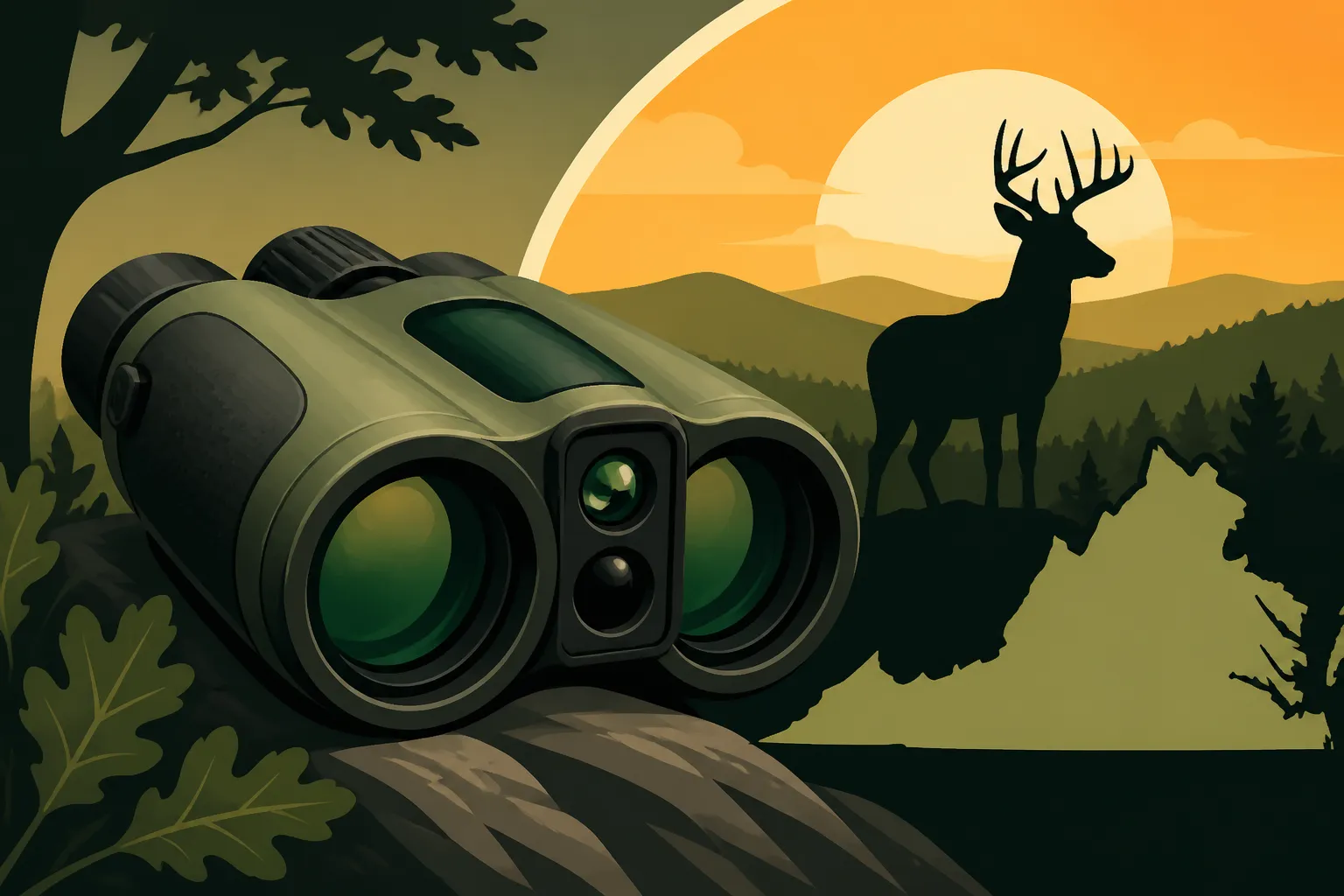
Rangefinding Binoculars Worth the Cost
It’s a tale as old as time for Virginia hunters: you spot a deer, your heart starts pounding, and then the critical question hits you – "How far is that buck?" Fumbling for a separate rangefinder, then your binoculars, trying to get a clear read before the deer vanishes into the thick cover or across the field, can be a frustrating dance. This guide is here to unravel whether those all-in-one rangefinding binoculars are truly worth the investment for your hunting adventures across the Old Dominion.
The Unbeatable Convenience of Integrated Optics
Let's face it, we all try to streamline our gear. Every ounce counts, especially when you're humping up a steep grade in the Jefferson National Forest or still-hunting through a dense Piedmont bottomland. The biggest draw of rangefinding binoculars, or "RF binos" as they’re often called, is the sheer efficiency they bring to your hunt. Instead of carrying two separate devices, fumbling to switch between them when a shot opportunity arises, you have one premium optic that does it all.
Reducing Gear Clutter and Noise
Think about it: no more strapping a small rangefinder to your pack or belt, only to have it snag on a branch or clatter against your stand when you're trying to stay silent. With RF binos, you've got one fewer item to manage. This isn't just about weight; it's about quick, fluid movements when seconds count. Imagine a wary gobbler strutting into view during Spring Turkey Hunting in Virginia, or a late-season buck slipping through the pines on a cold December afternoon. The less gear you have to manipulate, the less chance you have of making a noise or movement that spooks your game. This integrated approach simplifies your field process, allowing you to glass, identify, and range a target in one smooth motion, which can be absolutely crucial in Virginia's varied terrain and often close-quarter hunting situations.
Speed and Confidence in the Moment of Truth
When that moment arrives and a deer steps into an opening, you don't want to be guessing the range. Virginia offers diverse landscapes, from wide-open agricultural fields in the Shenandoah Valley to dense hardwoods and steep mountainsides. A shot that feels like 200 yards across a field might actually be 250, or a deer on a steep downhill slope might be closer or further than it appears. The beauty of RF binos is the rapid acquisition of both target and distance. You bring them to your eyes, assess the animal, hit a button, and bam – you have a precise range displayed within the field of view. This instantaneous feedback removes the doubt, allowing you to focus on your shot placement rather than estimating distance. This confidence is invaluable, particularly for hunters who prefer to Hunt East of the Blue Ridge where long agricultural fields might offer longer shots, or those targeting elusive mountain bears.
Key Features to Consider for Virginia Hunting
Not all rangefinding binoculars are created equal, and what works for open plains hunting out West might not be ideal for the specific challenges of Virginia's woods and fields. Knowing what features truly matter can help you make an informed decision.
Optical Quality and Low-Light Performance
First and foremost, these are binoculars. Their primary job is to provide a clear, bright image. In Virginia, especially during prime hunting hours at dawn and dusk, low-light performance is paramount. Whether you're trying to pick out a deer moving through shadowed timber in the George Washington National Forest Hunting or identifying a distant gobbler on a field edge, you need optics that gather light efficiently and render a crisp image. Look for models with high-quality glass, good coatings, and an appropriate objective lens size (e.g., 42mm or 50mm). A blurry or dim image, even with an accurate range, is ultimately unhelpful. While some hunters might gravitate toward smaller, lighter options, compromising too much on optical quality can be a mistake when those crucial minutes of first and last light roll around.
Angle Compensation and Maximum Effective Range
Virginia's terrain is rarely flat. From the rolling hills of the Piedmont to the steep inclines and declines of the Blue Ridge, angle compensation, often called "true ballistic range" or "horizontal distance," is a must-have feature. Shooting uphill or downhill can significantly alter the actual distance your bullet or arrow travels, leading to high or low shots if you don't account for the angle. RF binos with angle compensation automatically calculate this for you, giving you the corrected distance to hold for. This is particularly critical for bowhunters in an Urban Archery Hunting in Virginia Cities zone, where shots can be steep from a tree stand, or for rifle hunters taking a shot across a deep mountain hollow.
Regarding maximum range, consider your typical hunting scenarios. Most Virginia deer and bear hunting takes place within 300-400 yards, often much closer. A rangefinder that boasts 1,500+ yard capability might be overkill if you're never shooting beyond 250. However, having extra ranging capability can be useful for scouting or ranging distant landmarks, and it often indicates a higher quality ranging engine. Think about the longest shot you might realistically take, then add a buffer for ranging other objects.
Scan Mode and Battery Life
A good "scan mode" is a game-changer. Instead of single, static readings, scan mode allows you to continuously range multiple objects or track a moving animal, displaying updated distances as you pan the binoculars. This is incredibly useful for ranging through brush or when a deer is walking, helping you find clear windows or anticipate its movement. If you're Still-Hunting Jefferson Forest Ridges, being able to quickly scan the terrain for range to various trees and openings is invaluable.
Battery life is also a practical consideration. You don't want your rangefinder dying halfway through your hunting trip. Many RF binos use common CR2 batteries, which are easy to carry spares for. Some models are incredibly efficient, offering thousands of readings on a single battery, while others might drain faster. Always carry a spare, especially if you plan extended trips or hunt in cold weather, which can reduce battery performance.
Practical Applications for Virginia Hunters
Now, let’s get down to how these integrated optics truly shine in real-world Virginia hunting scenarios.
Scouting and Terrain Analysis
Before opening day, savvy Virginia hunters spend countless hours scouting. RF binos aren't just for shot placement; they're excellent scouting tools. When you're Scouting Virginia Public Land Before Season, you can glass a distant ridge, range potential bedding areas, or measure the distance across a clear-cut to a promising funnel. This allows you to better plan your approach routes, stand placements, and shot lanes. For example, if you're trying to determine the optimal location for a stand overlooking a vast field, being able to accurately range potential deer entry points and feeding areas helps you set up within your effective range. Using tools like GoHunt, you can identify a promising area on a map, but when you're boots on the ground, those RF binos provide the granular detail needed to confirm your strategy.
Stand Hunting and Still-Hunting Scenarios
Whether you're perched in a treestand on the edge of a Piedmont soybean field or quietly slipping through mountain timber, rangefinding binoculars provide instant feedback. For stand hunters, ranging key landmarks around your stand before first light is a classic tactic. You can mark specific trees, stumps, or trail intersections at 50, 100, 150 yards, and so on. This pre-ranging eliminates guesswork when a buck suddenly appears. For still-hunters, moving slowly through the woods, an RF bino allows you to pause, glass an opening ahead, and get an immediate range on any potential shot opportunity that arises, helping you confirm your maximum ethical shot distance for your chosen setup, be it a rifle or bow. This quick assessment is especially valuable when hunting in variable cover, where distances can be deceiving.
Enhancing Safety and Ethical Shot Placement
Beyond convenience and accuracy, RF binos contribute significantly to ethical hunting. There's no worse feeling than taking a shot and realizing you misjudged the distance, leading to a wounded animal. By providing precise ranges, these optics help hunters make confident decisions within their effective range, ensuring clean, ethical kills. In a state like Virginia, with its diverse game and varying shot distances, knowing your exact range to target is paramount for responsible hunting. This is particularly true when pursuing game like black bears, where precise shot placement is crucial, or when bowhunting whitetails where margins of error are much smaller. They help you stay within your comfort zone and respect the animal by only taking shots you know you can make.
Making the Decision: Are They Right for Your Hunting Style?
So, after all this, are rangefinding binoculars truly worth the cost for you? It boils down to your hunting style, budget, and priorities.
Cost vs. Value Proposition
Yes, rangefinding binoculars typically come with a higher price tag than buying separate, high-quality binoculars and a standalone rangefinder. This is often the biggest hurdle for hunters. However, consider the total cost of ownership. If you're investing in top-tier separate optics, the combined price can often approach or even exceed that of a good pair of RF binos. The value isn't just in the sum of its parts; it's in the seamless integration and efficiency. For hunters who demand maximum performance and streamlined gear, the added cost is often justified by the gains in speed, confidence, and convenience afield. Think of it as an investment in both your success and your overall hunting experience.
When a Separate Rangefinder Might Be Better
There are certainly scenarios where a traditional setup still holds its own. If you're on a very tight budget, or if you already own a premium pair of binoculars you love and a reliable rangefinder, upgrading to RF binos might not be a top priority. Some hunters also prefer the absolute smallest, lightest rangefinder possible for specific situations, like ultra-light packing trips, where even the slight weight difference of RF binos might matter. If your hunting is primarily from a fixed blind with pre-determined shot lanes, or if you rarely encounter situations requiring rapid range acquisition, the premium features of RF binos might be less critical. However, for most active Virginia hunters who stalk, still-hunt, or hunt diverse public lands like Amelia Wildlife Management Area, the benefits often outweigh these considerations.
Brands and Models to Consider
When looking at brands, you'll find a range of options that perform well. Brands like Leica, Zeiss, and Swarovski are often considered the gold standard for their optical quality and ranging precision, but there are excellent mid-range options from companies like Sig Sauer, Vortex, and Bushnell that offer fantastic value and performance for the Virginia hunter. It's always a good idea to research specific models, read reviews, and if possible, try them out at a local sporting goods store. Pay attention to the ergonomic feel in your hands, the ease of button operation, and how clear the display is for you. Remember that while a service like GoHunt can help you scout and plan, having reliable optics in hand is indispensable in the field.
Ultimately, rangefinding binoculars are a significant investment, but for many Virginia hunters, they truly are worth the cost. The ability to quickly and accurately range targets without fumbling with multiple devices leads to greater confidence, more ethical shots, and a more enjoyable, streamlined hunting experience in the diverse landscapes of the Old Dominion.
Disclaimer
This article is for general informational purposes only and does not constitute professional advice. Laws, prices and regulations vary by location and change over time. Consult a qualified professional for guidance on your specific situation.