Barrel Length for Walking Thick Cover
There's nothing quite like the frustration of busting a stealthy still-hunt because your rifle barrel snagged on a rogue honeysuckle vine or a thick clump of mountain laurel. We've all been there, trying to navigate those impossibly dense patches of Virginia cover, only to find our gear working against us. This guide is all about helping you understand how barrel length impacts your ability to move quietly and efficiently through thick woods, and how to choose the right setup to keep you in the game, not tangled in the briars.
The Maneuverability Challenge of Virginia's Thick Cover
Virginia hunting means tackling all sorts of terrain, from the steep, brush-choked hollows of the Blue Ridge to the dense, often swampy creek bottoms of the Piedmont and Tidewater regions. In these environments, your rifle or shotgun isn't just a tool for sending a projectile downrange; it's also a piece of equipment you have to carry, maneuver, and keep quiet. And a long barrel can quickly become your biggest adversary.
Why Every Inch Matters in Dense Brush
Imagine you're trying to slip through a stand of young pines so thick you can barely see ten yards. Or perhaps you're working a river bottom lined with cane, greenbrier, and downed timber, hoping to catch a late-season deer moving between bedding and feeding areas. A rifle with a 24-inch or longer barrel can feel like trying to carry a telephone pole through these conditions. It snags on every branch, clicks against saplings, and makes subtle movements almost impossible. This isn't just about comfort; it directly impacts your success. The noise you make is amplified in still woods, and the extra effort to free your snagged barrel can pull your focus away from critical game sign.
The constant battle against vegetation can also wear you out faster, especially if you're Still-Hunting Jefferson Forest Ridges or pushing through miles of dense cover on public land. Every time your barrel catches, you have to stop, untangle, and re-establish your rhythm, breaking that crucial concentration. It's a real energy drain, and it costs you valuable time and stealth.
The Realities of Virginia's Hunting Landscapes
Whether you're after deer, bear, or even small game, the sheer variety of Virginia's cover means you'll encounter everything from dense clear-cuts and thick pine plantations to kudzu-choked creek banks and stands of mountain laurel so thick you'd swear a bear could disappear into them five feet in front of you. Consider hunting in an Urban Archery Zone where small woodlots are often incredibly dense with invasive plants and secondary growth. Or picture the dense, thorny fencerows common in Piedmont farm country. In all these scenarios, a shorter, more compact firearm can be a significant advantage, allowing for quicker target acquisition in close quarters and easier navigation. It really comes down to whether your gun is helping you or hindering you in the moment when it matters most.
Understanding Common Barrel Lengths for Hunting
When you're picking out a rifle or shotgun for hunting in Virginia, the barrel length isn't just a number; it's a critical factor in how that firearm handles in the field. Let's break down the common options and what they mean for navigating our diverse Virginia landscapes.
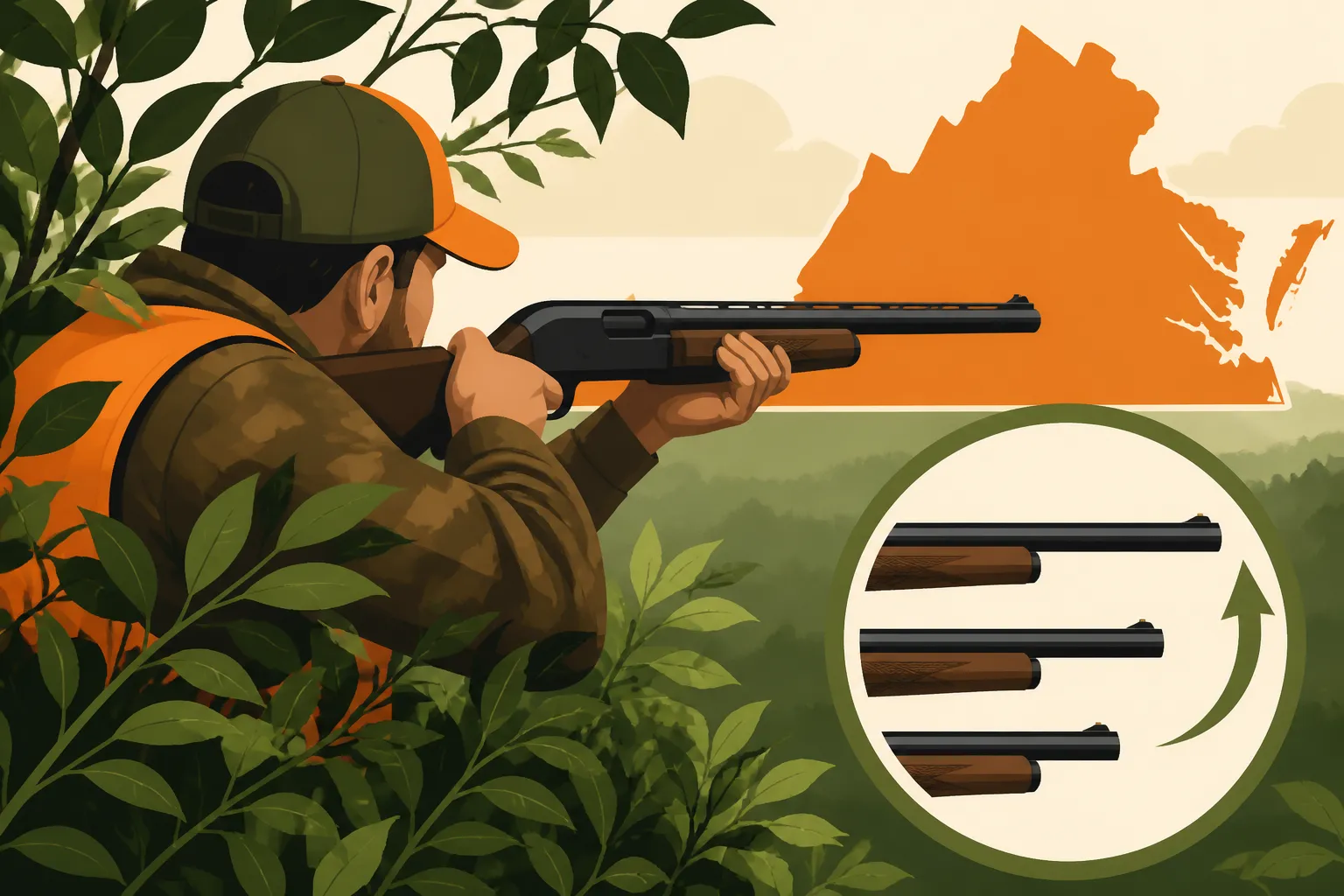
Short Barrels: The Agile Choice (16-20 inches)
These shorter barrels are often found on carbine-style rifles or some brush guns. They are truly the "agile choice" for hunters who spend a lot of time in thick, unforgiving cover.
-
Advantages:
- Superior Maneuverability: This is their biggest selling point. A 16 to 20-inch barrel is incredibly easy to swing in tight spaces, allowing you to react quickly to a sudden flush or a deer slipping through thick brush. It means less snagging on branches and fewer telltale noises as you move. When you're Working a Creek Bottom for Late-Season Deer or navigating dense clear-cuts, this maneuverability is invaluable.
- Reduced Weight: Generally, a shorter barrel means less steel, which translates to a lighter overall firearm. On long hikes, especially up and down the rugged terrain of the Blue Ridge, a lighter rifle can significantly reduce fatigue.
- Quick Handling: From the shoulder, a shorter barrel feels nimble and quick to bring on target. This is a huge benefit in fast-paced hunting scenarios or when you need to make a snap shot.
- Excellent for Ground Blinds: If you hunt from a ground blind, especially a smaller pop-up style, a shorter barrel prevents the muzzle from poking out or banging against the blind walls, which can happen with longer firearms.
-
Disadvantages:
- Velocity Loss: This is the most common concern. Shorter barrels mean less time for the powder charge to accelerate the bullet, resulting in a slight reduction in muzzle velocity. For most common deer hunting calibers like .308 Win or .30-06, this might only translate to a difference of 50-150 feet per second (fps). For typical Virginia hunting distances (under 200-250 yards), this velocity loss is usually negligible in terms of terminal performance. Magnum calibers, however, might see a more pronounced drop.
- Increased Muzzle Blast and Flash: With less barrel for gases to expand, the muzzle blast can be louder, and the flash more noticeable, especially in low-light conditions. This is a trade-off for the improved handling.
- Recoil Perception: While true recoil energy remains the same, the lighter weight of a shorter-barreled rifle can sometimes make the recoil feel sharper.
Mid-Length Barrels: The Versatile All-Rounder (21-23 inches)
Many popular hunting rifles come standard with barrels in this range, and for good reason. They strike a balance that makes them incredibly versatile for most Virginia hunting situations.
-
Advantages:
- Good Balance of Velocity and Handling: You get most of the ballistic performance of a longer barrel without sacrificing too much in terms of maneuverability. This range is often considered the sweet spot for many popular calibers like .270 Win, .30-06, and .308 Win, providing excellent velocity for shots out to 300+ yards, while still being manageable in medium-thick cover.
- Reduced Muzzle Blast Compared to Shorter Barrels: The slightly longer barrel allows for more complete powder burn, leading to a less intense muzzle blast and flash than very short carbines.
- Widely Available: Most manufacturers offer rifles with barrels in this length, giving you a vast selection of models and calibers to choose from.
- Adaptable: This length works well for everything from tree stands and box blinds to still-hunting in moderately dense woods. It's often the go-to for someone who hunts diverse terrain across the state, from Hunting East of the Blue Ridge to Hunting West of the Blue Ridge.
-
Disadvantages:
- Still Can Snag: While better than longer barrels, they can still catch on dense brush, particularly when side-carrying or transitioning quickly.
- Slightly Heavier Than Carbines: The extra length adds a bit of weight, which can be a factor on extended hunts if you're used to a very light rifle.
Longer Barrels: The Long-Range Specialist (24+ inches)
These barrels are typically favored by target shooters or hunters who anticipate long-range shots in open country. While less common for thick cover, they have their niche.
-
Advantages:
- Maximum Velocity and Energy: For magnum cartridges especially, longer barrels allow for optimal powder burn and the highest possible muzzle velocities, translating to more energy downrange and a flatter trajectory. If you're hunting expansive open fields in the Piedmont or planning very long shots in certain open areas of the mountains, this can be an advantage.
- Reduced Muzzle Blast and Recoil Perception: The longer barrel helps dissipate more of the muzzle blast, and the added weight can subtly reduce perceived recoil.
- Longer Sight Radius (for open sights): For rifles equipped with iron sights, a longer barrel provides a greater distance between the front and rear sights, which can improve accuracy.
-
Disadvantages:
- Poor Maneuverability in Cover: This is their biggest drawback for thick cover hunting. A 24-inch or 26-inch barrel is simply cumbersome in dense woods, making quiet movement and quick aiming incredibly difficult. Trying to still-hunt with one of these in a honeysuckle thicket is a recipe for frustration and busted opportunities.
- Increased Weight: The added steel contributes to a heavier rifle, which can be tiring to carry all day, especially in steep or rugged terrain.
- Awkward in Stands/Blinds: They can be difficult to manage in smaller tree stands or ground blinds, often requiring careful positioning to avoid hitting the stand or blind walls.
Here's a quick comparison of common barrel lengths and their general suitability for different Virginia hunting scenarios:
| Barrel Length (inches) | Primary Use Case in Virginia | Maneuverability in Thick Cover | Velocity Loss (vs. optimal) | Muzzle Blast/Flash | Typical Weight |
|---|---|---|---|---|---|
| 16-20 | Dense brush, ground blinds, small woodlots | Excellent | Noticeable | Higher | Lighter |
| 21-23 | All-around, mixed terrain, tree stands | Good | Minimal | Moderate | Moderate |
| 24+ | Open fields, long-range stands | Poor | Negligible | Lower | Heavier |
Finding Your Sweet Spot: Balancing Performance and Practicality
Choosing the ideal barrel length isn't just about ballistic charts; it's a deeply personal decision that balances the technical aspects of your firearm with your specific hunting style, the terrain you frequent, and what simply feels good in your hands. There's no single "best" answer, but rather a best fit for you.
Consider Your Primary Hunting Style and Terrain
Think about how you typically hunt. Are you a dedicated still-hunter, meticulously creeping through the woods, trying to surprise game in their bedding areas? Or do you prefer sitting in a treestand, waiting for deer to move through a clear-cut or along a food plot edge?
- Still-Hunting & Spot-and-Stalk: If your heart truly lies in actively hunting game on foot, constantly moving through different types of cover, then maneuverability should be your absolute priority. A shorter barrel, in the 16-20 inch range, will make a world of difference. It will allow you to navigate dense areas more quietly, react faster when game is close, and reduce fatigue over a long day. This applies whether you're working the dense bottomlands for Hunting a Funnel Between Two Hollows or slowly picking your way through a thick pine stand in the Piedmont.
- Stand Hunting (Tree Stands & Ground Blinds): For hunters who spend most of their time stationary, waiting for game, the need for extreme maneuverability decreases. If you're in a fixed position, a 22 or 23-inch barrel might be perfectly adequate, offering a good balance of ballistics and a comfortable carry to and from your stand. However, if your stand is in a particularly tight spot, or you use a compact ground blind, even a 20-inch barrel can feel handier.
- Deer Drives: On a deer drive, especially as a "pusher" moving through thick stuff, a shorter barrel can be a real asset. For "posters" who are stationary, the considerations are similar to stand hunting.
The varied terrain across Virginia plays a huge role. The sprawling, rugged public lands of the George Washington National Forest Hunting and Jefferson National Forest Hunting often involve thick mountain laurel and rhododendron thickets, where a shorter, lighter rifle is a blessing. In contrast, the more open agricultural fields and scattered woodlots of the Piedmont might accommodate a slightly longer barrel without as much hassle, but you'll still find yourself in plenty of dense fencerows and creek bottoms where a compact rifle shines.
Caliber and Ballistics: Don't Overthink It for Typical Ranges
Many hunters worry extensively about the velocity loss associated with shorter barrels. While it's true that a 16-inch barrel will produce lower muzzle velocities than a 24-inch barrel in the same caliber, the practical implications for most deer hunting in Virginia are often overstated.
For common deer cartridges like the .308 Winchester, .30-06 Springfield, or 6.5 Creedmoor, the difference in velocity at typical Virginia hunting ranges (say, out to 200-250 yards) is usually not enough to drastically alter bullet performance or drop. Most modern hunting bullets are designed to perform well within a broad velocity window. Unless you are regularly taking shots beyond 300 yards, the slight ballistic trade-off for improved handling in thick cover is almost always worth it.
If you are using a magnum caliber, like a 7mm Rem Mag or .300 Win Mag, the velocity loss from a very short barrel (under 20 inches) can be more significant. These cartridges were designed to achieve high velocities from longer barrels. However, if your primary hunting is in thick woods where shots are usually under 100 yards, even a magnum in a shorter barrel will still be incredibly effective. For instance, a .300 Win Mag in a 20-inch barrel is still a very potent cartridge, even if it's not achieving its absolute maximum advertised velocity.
Personal Preference and Fit
Ultimately, how a rifle feels in your hands is paramount. Visit a local gun store or a shooting range and handle different barrel lengths. Shoulder them, swing them, imagine navigating tight spaces. What feels balanced? What points naturally? What are you comfortable carrying for hours on end?
If you're using a quality sling, the way the rifle carries can mitigate some of the issues of a longer barrel, but it still won't change how it handles when you bring it up to shoot in a dense patch of timber. A rifle that feels unwieldy or unbalanced will undermine your confidence and performance, regardless of its ballistic potential. GoHunt has a wealth of resources on gear selection, and while they might not specify barrel lengths for Virginia's dense cover, their detailed reviews can help you weigh other factors of a Rifle Setups for Virginia Deer Hunting.
Beyond Barrel Length: Optimizing for Thick Cover
While barrel length is a key factor, it's not the only one. A holistic approach to your gear and tactics will make you even more effective in Virginia's dense woods.
Carrying Your Firearm Effectively
How you carry your rifle or shotgun can make a huge difference in maneuverability and stealth. Sling use is critical, but how you use it matters.
- Two-Point Sling: This is the most common and versatile. When still-hunting in thick brush, consider carrying your rifle in a "patrol carry" position (muzzle slightly down, angled across your chest). This keeps the barrel close to your body and reduces snagging. You can also carry it slung over one shoulder with the muzzle pointing slightly forward and down, but be mindful of the muzzle sweeping areas you don't intend to cover. For denser sections, going to a "ready carry" with your hand on the forearm and buttstock tucked, allows for quick presentation, but can be tiring.
- One-Point Sling: More common for tactical applications, these keep the rifle centered and allow for very fast transitions. However, the rifle can swing more freely, potentially snagging.
- No Sling: For short, intense stalks, some hunters prefer no sling at all, carrying the rifle "at the ready." This gives maximum control over the barrel, but you'll be feeling the weight quickly.
Practice moving through actual thick cover with your chosen firearm and sling setup. Pay attention to how the rifle moves, where it snags, and what noises it makes. Adjust your carry technique accordingly.
Other Gear Considerations for Dense Terrain
It's not just the gun; other gear choices can help or hinder your progress in thick cover.
- Brush Pants and Durable Outerwear: Invest in rugged hunting pants made from tough materials like canvas, heavy synthetic blends, or even some of the newer thorn-resistant fabrics. Virginia's greenbrier, multiflora rose, and blackberry brambles will shred lighter materials. Brush Pants for Virginia Mountain Laurel are a must-have if you spend any time in the mountainous regions.
- Sturdy Boots: Footwear with good ankle support and durable uppers are essential. You'll be stepping over logs, through thick undergrowth, and potentially into mud and water. Boots designed for rugged terrain will prevent slips and protect your feet. Boots for Virginia Swamps and Ridges are specifically designed for the type of terrain you'll encounter.
- Minimalist Pack: The less bulk you have on your back, the easier it will be to squeeze through tight spots. A streamlined day pack with only the essentials will prevent snagging.
Tactics for Moving Quietly in Thick Cover
No matter your barrel length, good woodsmanship is key.
- Slow Down: The slower you move, the more time you have to plan each step and clear your barrel and body of obstructions. Haste creates noise.
- Look for Natural Lanes: Animals inherently create paths through dense areas. Learn to "read the mud" for fresh deer movement or look for subtle tunnels in the vegetation. Using a mapping tool like GoHunt can help you identify subtle terrain features like benches or faint drainage lines that might offer slightly easier passage, even in thick areas.
- Use Your Hands: Don't be afraid to use your free hand to gently push branches aside or clear a path for your rifle barrel. Think of it as a fluid, continuous motion, rather than a series of abrupt stops and starts.
- Wind and Thermals: Always be mindful of wind direction and thermals, especially in the mountains where they can shift dramatically. Moving quietly means nothing if your scent is blowing directly to game. Wind and Thermals on a Blue Ridge Slope are a huge factor in whether you even get close enough to worry about your barrel.
By combining the right barrel length for your hunting style with smart gear choices and disciplined woodsman skills, you'll be much better equipped to navigate the challenges of Virginia's thick cover and make the most of every hunting opportunity.
Disclaimer
This article is for general informational purposes only and does not constitute professional advice. Laws, prices and regulations vary by location and change over time. Consult a qualified professional for guidance on your specific situation.