Tracking a Deer Through Virginia Leaf Litter
There's nothing quite like the rush of a successful shot, but that triumphant feeling can quickly turn to dread when you realize the deer didn't drop in its tracks, and the Virginia woods are thick with crunchy, often indistinguishable leaf litter. Losing a blood trail in these conditions is a common, gut-wrenching experience for many hunters. This guide is here to walk you through proven strategies and ethical considerations for effectively tracking a deer through even the densest Virginia leaf litter, helping you recover your game.
Initial Steps After the Shot: The Critical First Hour
The moments immediately following your shot are paramount for a successful recovery. Panic or impatience can quickly lead to a lost animal. Taking a deep breath and following a disciplined routine is your best first defense against a disappearing blood trail in the dense Virginia undergrowth.
Marking the Impact Site and Waiting Patiently
The very first thing you need to do, before anything else, is mark the exact spot where the deer was standing when you shot it. This isn't where you were standing, but where the deer received the projectile. I've lost count of how many times I've walked away from the initial impact site only to struggle finding it again in that sea of brown leaves, especially if you get distracted by scanning for the deer itself. Throw a bright piece of flagging tape, your hat, a glove, or even a brightly colored water bottle at the spot. This gives you a clear reference point, which is absolutely critical for establishing your search grid later.
Next, mark the last spot you saw the deer disappear. Even if it was just a flash of white tail entering a thicket, that last visual is important. Then, you wait. This is often the hardest part, but it’s arguably the most important. The temptation to immediately pursue is strong, but a wounded deer that feels pressured will run farther and harder, often pushing through dense cover that makes tracking nearly impossible. The recommended wait times vary depending on your shot placement:
- Lung/Heart Shot: If you're confident it was a good lung or heart shot, waiting at least 30 minutes to an hour is usually sufficient. These hits are often fatal quickly, and the deer will typically bed down nearby.
- Liver Shot: A liver hit means a longer wait, often 4 to 6 hours, sometimes even longer if conditions are cool. The deer will bleed internally, and pushing it will likely send it miles away.
- Gut Shot: This is the toughest, requiring at least 6 to 8 hours, or ideally, waiting until the next morning. Gut-shot deer bleed slowly and will seek out thick cover. Pushing them too soon almost guarantees a lost animal.
- Muscle/Flesh Wound: If you suspect a non-fatal muscle hit, still wait an hour or two to let the deer calm down, then track slowly. It might just be a superficial wound, but you owe it to the animal to confirm.
Gathering Your Resources and Planning Your Approach
While you’re waiting, don't just sit idly. Use this time to prepare. First, if possible, don't go it alone. Recruit friends, family, or fellow hunters to help. More eyes on the ground can make a huge difference, especially when the blood trail is thin or disappears in the leaf litter.
Next, gather your essential gear. This isn't just a casual stroll. You'll need:
- Good headlamps: Even if it’s midday, the woods can be dark, and a good beam can make blood glisten, especially as you track Headlamps for Walking Out After Dark.
- Extra flagging tape: You'll use a lot of this to mark every speck of blood or sign you find, creating a breadcrumb trail for yourself and others.
- Binoculars: Believe it or not, sometimes scanning ahead with binoculars can reveal the next signpost or even the downed deer itself.
- Water bottle and snacks: Tracking can be physically demanding and mentally draining.
- Small first-aid kit: Accidents happen, especially when you're focused on the ground (learn more about what to carry in First Aid Kits for Remote Mountain Ground).
- Your hunting weapon: For safety and to dispatch the animal if it’s still alive.
- Gloves and hand sanitizer: For hygiene.
Before you even step into the woods for the actual track, consult your mapping app. Modern apps like GoHunt are invaluable here. Mark your shot location, the last known direction of travel, and any prominent landmarks you remember. This digital footprint helps you establish a search grid if the trail goes cold, and it's a great way to communicate your position to others. Understanding the terrain, especially in areas like the Jefferson National Forest, can give you clues about where the deer might be headed, as they often follow contours, creek bottoms, or escape into thick cover.
Decoding the Leaf Litter: Reading the Subtle Clues
Once you've waited and gathered your team, it's time to hit the trail. But tracking in Virginia's leaf litter isn't like following clear footprints in fresh snow. It requires a keen eye for the subtle, often overlooked, details that tell the deer's story.
Interpreting Blood Sign in Virginia's Woods
Blood is usually the clearest indicator you have, but even blood can be tricky in the woods. The color, consistency, and amount of blood can tell you a lot about where the deer was hit.
- Bright Red, Frothy Blood: This is usually arterial blood, often mixed with air, indicating a lung shot or, less commonly, a heart shot. This is good news, as these are typically fatal hits, and the deer won't go far. The frothy bubbles are a dead giveaway. On leaf litter, this can appear as bright splashes, though drier leaves might absorb the liquid quickly, making it harder to spot.
- Dark Red, Non-Frothy Blood: This is venous blood. If it’s consistent and plentiful, it could indicate a muscle or deep tissue hit. If it's a steady, dark trail, you're likely on a good path to recovery.
- Dark Red, Jelly-like Clots: This often points to a liver hit. The blood will be dark, thick, and might contain small clots. This type of blood is incredibly hard to spot on damp, dark leaves, blending right in with the natural debris and often appearing sparse.
- Watery, Greenish-Brown, Foul-Smelling Blood: This is unfortunately the sign of a gut shot. It's often mixed with stomach contents, very sparse, and has a distinct, unpleasant odor. This is when patience becomes absolutely critical, as the deer will take a long time to expire.
- Pinkish, Watery Blood: If you only find sparse, watery blood, it might indicate a non-vital muscle hit or a graze. These trails can be frustratingly inconsistent.
When looking for blood on leaves, remember that dry leaves are highly absorbent. You might not see a vibrant red stain; instead, look for a darker, wet-looking patch where the blood has soaked in. On wet leaves, blood will often bead up or form more distinct spots. Sometimes, you're not seeing blood on the leaves, but through the leaves to the damp, darker soil beneath. Always scan the underside of leaves that might have been flipped.
Here’s a quick guide to blood sign interpretation:
| Blood Sign | Color/Consistency | Location/Pattern on Leaves | Implied Hit | Tracking Difficulty |
|---|---|---|---|---|
| Arterial (Lung/Heart) | Bright red, frothy | Splashes, often wide, on top | Lung/Heart (Fatal) | Moderate (can thin) |
| Venous (Muscle/Deep) | Dark red, steady | Drops, consistent trail | Muscle/Deep Tissue | Easier (consistent) |
| Liver Hit | Dark red, jelly-like | Clots, often sparse, blends | Liver (Slow Fatal) | Difficult (blends) |
| Paunch (Gut Shot) | Watery, green/brown, foul | Sparse, mixed with contents | Gut (Very Slow Fatal) | Very Difficult |
| Bone/Flesh Wound | Pinkish, watery, sporadic | Drops, inconsistent | Leg/Flesh (Non-Fatal) | Variable (can stop) |
Beyond Blood: Tracks, Scrapes, and Broken Vegetation
While blood is prime, don't limit yourself to it. In Virginia's woods, especially with a thick layer of oak and maple leaves, disturbed vegetation is often the most reliable sign, even more so than blood, especially if the blood trail thins or disappears.
- Disturbed Leaves: This is your gold standard. Look for overturned leaves showing their darker, damp underside. A deer running through leaves will scuff and kick them up. The fresh side of a leaf, exposed to air, will often be darker than the dried, sun-baked top. If you see a consistent pattern of these flipped leaves, you're on the right track. This sign often mimics what you might look for when Reading Virginia Mud for Fresh Deer Movement, just with a different medium.
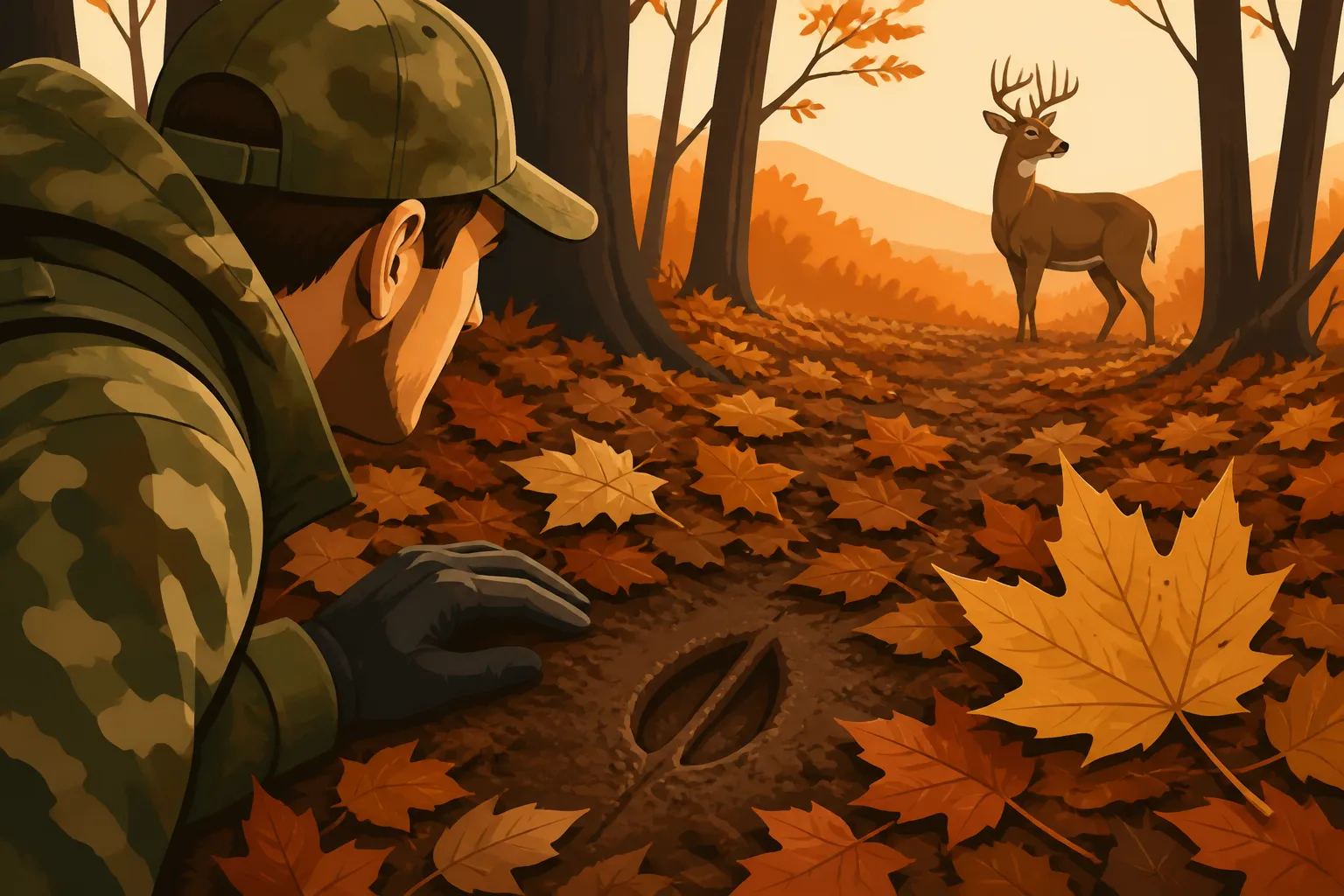
- Tracks: Deer hooves can leave subtle impressions even in leaf litter, particularly if the ground underneath is soft or damp. Get down on your hands and knees and examine the ground closely. Look for the distinct outline of a hoof, or even just the subtle marks of the dew claws, which often dig in deeper when a deer is running hard.
- Broken Twigs and Scraped Bark: A wounded deer will often become clumsy or desperate, pushing through thicker brush that an unwounded deer might avoid. Look for freshly broken twigs at knee height or lower. Check for scraped bark on small trees or saplings where the deer might have rubbed against it.
- Hair: Look for strands of deer hair, especially where the deer entered thick brush or jumped over a log. The color and type of hair can tell you if it's body hair (longer, coarse) or belly hair (shorter, finer), giving clues about shot placement.
- Deer Behavior: Consider how a wounded deer might behave. If it's hit hard, it'll often run in a relatively straight line for a distance before bedding down or circling back towards familiar cover. They tend to seek out the thickest cover available, or aim for water sources. Keep in mind that deer often use natural funnels or saddles to move through the woods, so consider checking areas like a Hunting a Funnel Between Two Hollows if the trail disappears.
As you find these subtle clues, mark them with flagging tape. Don't be shy; over-mark rather than under-mark. Every single piece of sign, no matter how small, helps build the narrative of the deer's path. Using a mapping app like GoHunt to drop pins along the trail for every significant piece of sign – a large blood spot, a clear track, a patch of disturbed leaves – is incredibly helpful. This digital breadcrumb trail helps you visualize the deer's direction of travel and allows you to easily backtrack to the last known sign if you lose the trail.
When the Trail Fades: Advanced Strategies for Recovery
There will be times, especially in thick Virginia cover and deep leaf litter, when the blood trail simply vanishes. This is where many hunters give up, but with persistence and advanced techniques, you can still find your deer.
Grid Searching and Expanding Your Search Area
When the blood trail dries up or becomes impossible to follow, it's time to switch to a systematic grid search. The key is to start at the absolute last confirmed sign. Do not push ahead past the last blood without finding more.
Have your hunting partners spread out, walking parallel to each other, about 10-15 yards apart. Move very slowly, eyes glued to the ground, looking for any of the signs we discussed: overturned leaves, tracks, blood, disturbed vegetation. The person who found the last sign should lead, or at least guide the general direction. As you walk, continually mark your path or the edges of your search area with flagging tape to keep organized. This creates a grid pattern, ensuring you cover the area thoroughly.
Focus your search on likely escape routes. Wounded deer often seek:
- Thick Cover: Areas of mountain laurel, briar patches, honeysuckle, or dense pine plantations are prime bedding areas for wounded deer.
- Water Sources: Creeks, streams, ponds, or swamps are magnets for deer, especially if they're injured or feeling warm.
- Ridge Lines and Saddles: Deer often follow contours and use saddles as travel corridors. If you’re hunting in mountainous regions like the George Washington National Forest, deer often try to climb to a higher elevation or bed down just over a ridge in a thicket. Understanding the terrain from your Scouting Virginia Public Land Before Season can really pay off here. A deer might cross a Hunting a Ridge-Top Saddle for Rutting Bucks to escape.
- Bedding Areas: Known bedding areas are always a good bet. Even if it's not a "known" spot, look for areas with dense thermal cover or good escape routes.
The "last blood" rule is paramount: if you find blood, even a tiny speck, it's the new starting point. Don't push past it without confirmation. If you lose the trail again, return to that last marked spot and restart your grid search from there, perhaps expanding your perimeter.
Leveraging Technology and Specialized Tools
Beyond your eyes and boots, modern technology and specialized help can significantly increase your chances of recovery:
- Thermal Imagers: While expensive, thermal cameras can be game-changers, especially in cooler weather or after dark. They detect heat signatures, which can reveal a downed deer even in dense cover that's impossible to see with the naked eye. Rules for thermal and night vision for hunting vary by state, so always check Virginia DWR regulations before using them for actual hunting or recovery (though for recovery, they are generally accepted).
- Game Recovery Dogs: This is arguably the most effective tool when a trail goes cold. Virginia has specific laws regarding the use of tracking dogs for game recovery, and they are an absolute game-changer for tough trails, especially in leaf litter where human eyes struggle. These dogs are highly trained to follow the specific scent of a wounded deer. Many professional game recovery services operate under DWR permits across the state. If you find yourself with a cold trail, don't hesitate to search for a local tracking dog handler. This service significantly increases recovery rates and is a testament to ethical hunting.
- Mapping Apps (like GoHunt): We've mentioned it before, but GoHunt really shines when you're doing a grid search. You can draw out your search perimeter, mark every find, and keep all members of your tracking party informed of the area already covered. This prevents wasted effort and ensures you systematically cover the ground. You can mark "no go" areas or areas that have been thoroughly searched, which is invaluable on public lands where a significant Hunting Pressure on Virginia Public Land might be present.
- Patience and Persistence: I’ve tracked deer for hours, sometimes into the next day, especially when facing a challenging trail in Virginia's varied landscape. The key is never to give up too soon, especially if you know it was a good hit. Remember that every hour you spend on the trail increases the chances of recovery. If you hit a complete dead end, take a break, regroup, and come back with fresh eyes later, or the next morning if the conditions allow. Sometimes, the deer is bedded down and expires during the night, making it easier to find in the morning.
- Scent: Though less reliable than visual cues, sometimes you can pick up the distinct musky odor of a deer, or even the coppery smell of blood, in the air, especially in thick, damp cover. Use your nose!
The Final Stretch: Recovery, Processing, and Ethics
Finding your deer is the culmination of all your effort and perseverance. But the work isn't over yet; responsible hunters have a duty to properly handle the animal and learn from the experience.
Confirming the Kill and Handling the Carcass
Once you locate your deer, approach it cautiously. Even a mortally wounded animal can be dangerous in its final moments. Use a stick to poke it from a distance, or watch for eye movement or breathing. If it's still alive, dispatch it quickly and humanely with another shot to the vitals or brain.
The very next step, before moving or field dressing, is to tag your deer immediately according to Virginia DWR regulations. Ensure the tag is correctly filled out and attached. You'll then need to report your deer harvest through the Virginia DWR system, either via their website, app, or by phone. Learn more about the specific requirements for Virginia Deer Reporting Requirements.
Promptly field dressing the deer is crucial for preserving the meat, especially during the warmer early archery season. Remove the entrails as quickly as possible to allow the carcass to cool. Even in cold weather, proper field dressing prevents spoilage and ensures you get the best possible venison (for detailed steps, check out Field Dressing a Deer in Cold Weather).
Finally, you’ll need to get the deer out of the woods. This can be one of the most physically demanding parts of the hunt, particularly if you're in rugged terrain like the mountains of western Virginia. Consider using a deer cart if the terrain allows, or a sled if there's snow or very slick ground. If you've managed to recover your deer from a steep, remote area, refer to guides on Dragging a Deer Out of a Mountain Hollow for strategies to make it less arduous. Bringing a sturdy pack, like those recommended for a Packs for a Jefferson Forest Day Hunt, can also be useful for carrying out gear and perhaps even boned-out meat if the drag is extreme.
Ethical Considerations and Learning from the Experience
Losing a deer, despite your best efforts, is a crushing feeling. It’s a stark reminder of the responsibility we take on as hunters. While it's a negative outcome, it should also be a learning experience.
- Respect the Animal: Even if you can't find it, you owe it to the animal to make every reasonable effort. A lost deer is a tragic outcome, but giving up prematurely compounds the tragedy.
- Review and Reflect: After the fact, whether successful or not, take time to review the entire incident.
- Shot Placement: Was your shot placement optimal? Did you feel confident in the shot? Were there any obstructions you missed?
- Equipment: Was your equipment (bow, rifle, broadhead, bullet) performing as expected? Was your sight or scope accurate?
- Tracking Strategy: Did you wait long enough? Did you mark the initial site effectively? Was your search systematic enough?
- Conditions: How did the terrain, light, and weather affect the tracking?
Every lost deer is a tough lesson, but it reinforces the importance of patience, careful shot selection, knowing your equipment inside and out, and refining your tracking skills. Remember that even the most experienced hunters lose an animal sometimes. The effort and dedication you put into recovering your game is what truly defines a responsible and ethical hunter.
Disclaimer
Please remember that hunting regulations and best practices can change. Always consult the official Virginia Department of Wildlife Resources (DWR) regulations annually before heading afield. This guide provides general information and should not be considered a substitute for official DWR guidelines or mandatory hunter education.