Calling a Virginia Gobbler Off the Roost
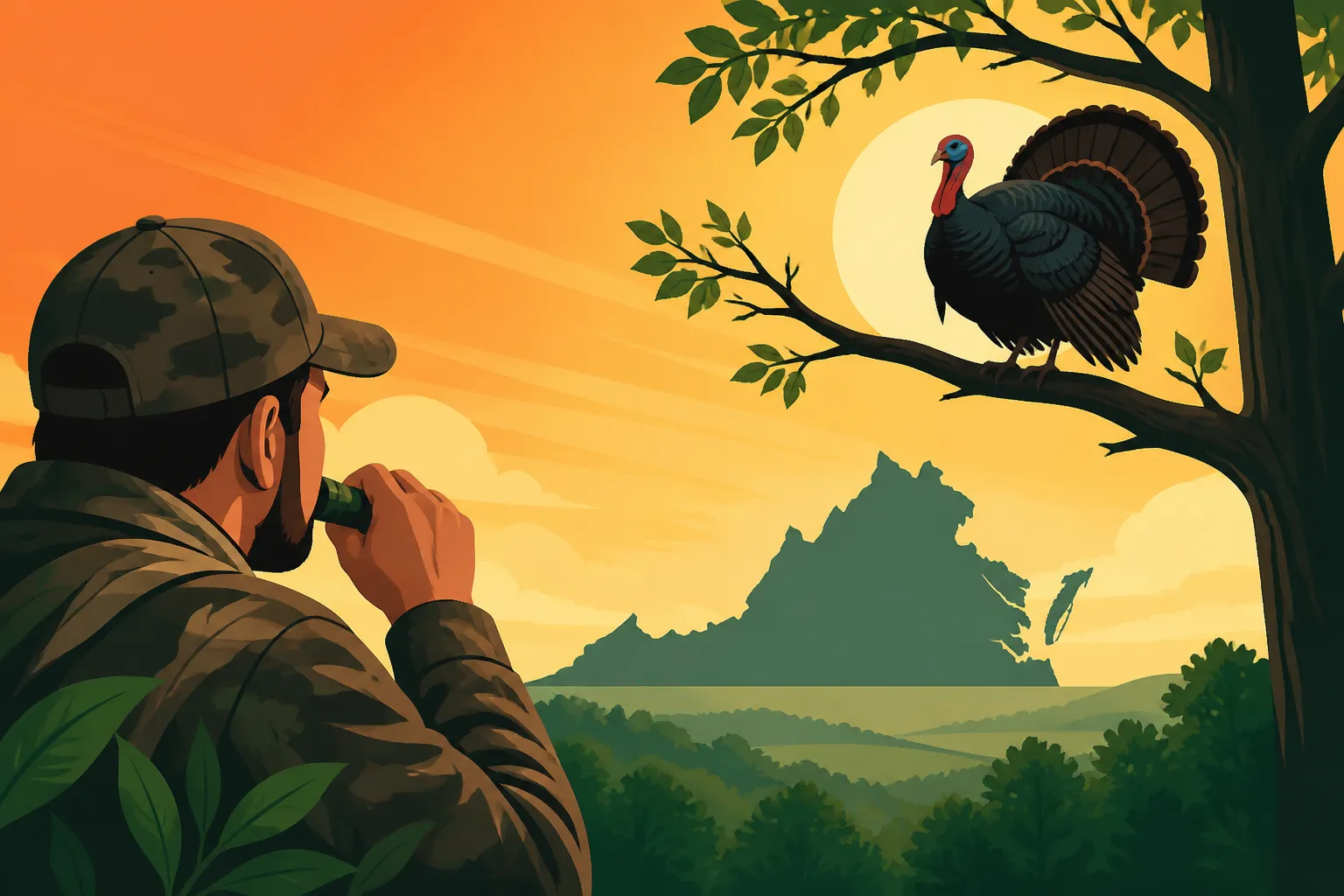
There's nothing quite like the sound of a gobbler hammering from the roost on a crisp Virginia spring morning, but getting that bird to commit to your setup after fly-down can be one of the trickiest parts of turkey hunting. Many hunters struggle with birds that gobble their heads off in the tree but fly down the other way or "hang up" just out of range. This guide is designed to help you decode their morning routine and employ effective calling strategies to coax those roosted gobblers right into your shooting lane.
Understanding the Roosting Behavior of Virginia Gobblers
Before you can effectively call a gobbler off the roost, you need a solid grasp of why they do what they do up in those trees, and what motivates their actions once their feet hit the ground. Virginia's diverse landscape, from the steep western mountains to the sprawling eastern farmlands, influences these behaviors significantly.
Why Gobblers Roost Where They Do
Gobblers aren't just picking any old tree to sleep in. Their choice of roosting spot is a calculated decision based on safety, access to food, and the presence of hens. Typically, they'll seek out the tallest trees on a ridge line, often pines or mature hardwoods, which offer a clear vantage point to scan for predators like coyotes, bobcats, or even foxes. This elevated position gives them a sense of security during the vulnerable nighttime hours. You'll often find them along prominent ridge lines in the George Washington National Forest, or towering oaks bordering a field edge in the Piedmont. Proximity to water sources or productive feeding areas like acorn flats or planted fields is also a major draw, as they want to be close to where they'll spend their morning after flying down. Knowing this helps you predict where to start your scouting and listen for those first pre-dawn gobbles. I find that using a tool like GoHunt to scout aerial maps and identify prominent ridge lines or mature timber stands near open fields can really narrow down potential roosting sites before I even step foot in the woods.
Furthermore, gobblers will often roost with hens, especially early in the season. These "hen trees" become important social hubs. A tom knows that if he can roost near a group of hens, his chances of breeding improve dramatically in the morning. This explains why sometimes a bird will gobble aggressively from the limb, seemingly right on top of you, but then fly down with his harem and move off in the opposite direction, utterly ignoring your calls. Understanding the makeup of the roost – whether it's an all-gobbler sleepover or a mixed flock – is crucial for planning your morning strategy. You might think, "Well, if he's with hens, I'm out of luck," but that's not always the case if you play your cards right.
The Morning Ritual: What Happens After Fly-Down
The period just before and after sunrise is a highly dynamic time for turkeys. As dawn breaks, the woods slowly come alive. Squirrels start to chatter, songbirds begin their chorus, and that's when you'll hear the first tentative "tree yelps" from hens and the booming gobbles from the toms still on the limb. This initial period, when they're still in the tree, is often the best time to gauge a gobbler's interest. He's feeling bold, territorial, and he wants to advertise his presence.
Once enough light fills the woods and they feel safe, turkeys will begin to fly down from their roost. Hens usually hit the ground first, often with a soft thump and a few contented clucks, ready to forage. The gobbler, ever the showman, will often fly down last, sometimes pitching directly towards the hens he's been "talking" to, or even to an open field where he can strut and display. This fly-down moment is critical. If he flies down away from you, your chances diminish significantly, unless you have a strategic plan. Conversely, if he pitches your way or lands within calling distance, you're in an excellent position. Often, a gobbler will land on a nearby rise or field edge, strutting and gobbling, waiting for the hens to come to him. This is the classic "strut zone" scenario that every hunter dreams of. Your ability to anticipate this and be set up correctly is paramount.
Essential Calling Tactics for Roosted Birds
Calling a gobbler off the roost isn't about being the loudest; it's about being the smartest. It requires a delicate balance of confidence, realism, and knowing when to shut up. The goal is to make him believe a hen is waiting, ready and willing, just out of sight.
The Art of the Soft Tree Yelps and Purrs
When a gobbler is still in the tree, he's at his most vulnerable and often his most vocal. This is when patience and subtle calling are key. Resist the urge to hammer him with loud, aggressive calls. Think about what a hen sounds like when she first wakes up on the roost: sleepy, soft, almost tentative. Start with very soft, contented tree yelps. These aren't your excited "come get me" yelps; these are more like "I'm here, I'm waking up, life is good" sounds. Use a mouth call for this, as it allows for incredibly quiet and realistic yelps and purrs. One or two soft yelps, then a purr, maybe followed by a contented cluck. Make him want to know where that sound is coming from, but don't give it all away. If he gobbles back, acknowledge it with another soft call, then go silent.
The goal here is to establish a connection without giving away your exact location or sounding desperate. You want him to think, "Hmm, there's a hen right there, she's happy, and she's not moving." This often prompts him to gobble more frequently, trying to locate you. You're creating an illusion that you are a natural, unpressured hen. Remember, he has hens with him, so you need to be just as enticing, if not more so. This soft calling can be particularly effective in areas where turkeys are heavily hunted, such as public lands like the George Washington National Forest, where birds are accustomed to aggressive calling.
Locating the Bird and Setting Up for Success
Before you even think about calling, you need to pinpoint the gobbler's exact location on the roost. This often happens well before legal shooting light. Use locator calls like an owl hooter or a crow call to get him to shock gobble. Once you have a general idea, use a mapping app like GoHunt to mark his position and start planning your approach. The ideal setup is usually within 100-150 yards of his roost tree, just out of his direct line of sight from the limb, but close enough that he'll hear your subtle calls and consider pitching in your direction. Find a good tree to break up your outline, or set up a ground blind if the terrain allows. Your goal is to be invisible from above.
Once you’ve settled into your spot, be absolutely still. As the sky lightens, you'll start to hear those first actual tree yelps from hens and the gobbler's enthusiastic responses. This is your cue to begin your soft calling. If he's directly across a creek or on the other side of a thick draw, don't be afraid to adjust your setup slightly, using the terrain to your advantage. Remember, in Virginia's rolling hills, Wind and Thermals on a Blue Ridge Slope can play a huge role, carrying your sound and scent. Make sure the wind isn't blowing your scent directly toward the roost, and that your calls will carry effectively. A common mistake is setting up too close, making it impossible for the gobbler to approach without seeing you. Give him space to work.
Reading the Gobbler's Mood and Adjusting Your Calls
Every gobbler is different, and his mood can change with the rising sun. One morning he might be red-hot, gobbling at every breath, while the next he might be tight-lipped. Your calling strategy needs to adapt. If he's gobbling aggressively on the limb, a few soft yelps might be all it takes to get him interested. If he's only gobbling every few minutes, you might need to be a bit more persistent, but still don't overdo it.
Once he flies down, the game changes. If he pitches your way and starts strutting, a few soft clucks and purrs, maybe a light fly-down cackle, might seal the deal. If he flies down and starts moving away with hens, you might need to become a bit more aggressive, mimicking those bossy hens to try and draw him back. Sometimes, completely shutting up after fly-down can be the most effective strategy. If he knows a hen is there and she's gone silent, he might get curious enough to come investigate. This is where experience and knowing Turkey Calls Worth Carrying in Virginia really pays off. Having a variety of calls – mouth calls, slate calls, and box calls – allows you to mimic different hen voices and adjust your volume and tone. Keep an eye on his body language through binoculars; if he’s strutting, drumming, and his head is blazing red, he’s ready to commit.
Common Mistakes and How to Avoid Them
Even seasoned hunters can make mistakes when trying to call a gobbler off the roost. The pressure of that first morning gobble can lead to poor decisions, but understanding these pitfalls can significantly improve your odds.
Overcalling and Spooking Your Bird
This is perhaps the most common mistake made by new and even experienced turkey hunters. When a gobbler is hammering, it's incredibly tempting to keep calling back, matching his enthusiasm. However, excessive calling, especially loud and aggressive calling, can often have the opposite effect. Turkeys are wild animals, and they're inherently cautious. If a "hen" is just screaming at them from a fixed position, it can sound unnatural or even like a trap. Think about it: real hens don't constantly squawk. They make a few contented noises, then go about their business.
When you overcall, you not only risk spooking the bird, but you also give away your exact position too clearly. A smart gobbler, especially one that's been hunted before, might associate that with danger. Instead, try to be sparse with your calls. Once you establish contact with a soft call, let him gobble a few times. If he cuts you off, that's a good sign of interest. Respond with a single, soft yelp or cluck, then wait. Force him to wonder where you went, to want to find you. Remember, the goal is to entice him, not to challenge him. If he's gobbling every thirty seconds, you don't need to call every time. Maybe every third or fourth gobble, throw out a single, soft yelp.
Approaching Too Close and Blowing the Setup
Another common error is getting too aggressive with your approach, especially in the pre-dawn darkness. You hear him gobble, and your adrenaline kicks in, pushing you to get as close as possible. While getting close is good, getting too close can be disastrous. If you bump a roosted bird, or if he sees you against the skyline as you approach, your hunt is almost certainly over for that morning. Turkeys have exceptional eyesight, and they're especially vigilant when silhouetted against the morning sky.
When you're sneaking in, always assume he's looking. Use terrain features like ridges, creek bottoms, or thick timber to conceal your approach. Stop frequently and listen for any soft tree yelps or wing beats that might indicate turkeys are stirring earlier than expected. A good rule of thumb is to set up at least 80-100 yards away from the roost tree, giving the bird ample space to fly down and work his way in naturally. This also gives you a buffer zone in case he flies down in an unexpected direction. If you're hunting public land, where other hunters might be trying to do the same thing, giving yourself a bit more space is even more critical. Getting into position discreetly is half the battle won. Sometimes, even if you can't get as close as you'd like, a patient setup further back can still yield success, especially if you know Where Virginia Gobblers Roost in relation to natural travel corridors.
Ignoring the Hens and Their Influence
Many hunters focus solely on the gobbler, forgetting that hens are often the real decision-makers in the morning. If a gobbler is roosted with a group of hens, his primary focus will be breeding them. He'll usually fly down with them and follow wherever they lead. If your calling is trying to pull him away from a real group of hens, you're fighting an uphill battle. Often, the best strategy in this situation isn't to try and out-call the real hens, but to mimic their calls to try and pull the whole flock towards you.
If you hear active hens on the roost, start making soft hen yelps and clucks. Try to sound like a contented, available hen, not a challenging rival. The goal is to make the gobbler think, "Here's another hen, and she sounds easy to get!" If you can convince the lead hen to come investigate your calls, the gobbler will almost certainly follow. He wants to be where the hens are. Sometimes, after fly-down, if the hens start drifting away with the gobbler, a bit of aggressive "cutting" or excited yelping can simulate a new hen joining the flock, which can sometimes pique their interest enough to change direction. The most successful hunters understand that the hens dictate the terms, and adapting your strategy to their presence is vital.
Here's a quick reference for calling sequences based on gobbler behavior:
| Gobbler Activity (Roosted) | Recommended Calling Strategy | Rationale |
|---|---|---|
| Gobbling Sparingly on Roost | Soft, contented tree yelps, purrs. Respond to 1-2 gobbles. | Don't pressure a shy bird. Curiosity is key. |
| Gobbling Aggressively on Roost | Soft tree yelps, clucks. Be patient, less frequent calling. | Keep him interested, but don't overstimulate. Let him come to you. |
| Fly-down & Strutting in Place | Very soft clucks, purrs. Mimic contented hens. | He's looking for a hen, reinforce that you're right there. |
| Fly-down & Moving Away (with hens) | Aggressive cutting, excited yelps (if hens are moving). | Try to challenge/pull lead hen, bringing gobbler with her. |
| Fly-down & Moving Away (alone) | Moderate yelps, clucks. Mimic a wandering hen. | Create urgency and a sense that he's missing out. |
| Silent After Fly-down | Go silent yourself, or a single soft cluck after a long wait. | Let his curiosity win. He might be sneaking in. |
Advanced Strategies for Pressured Virginia Gobblers
Hunting longbeards in Virginia, especially on public land or areas with high hunter traffic, often requires a more nuanced approach than simply setting up and yelping. These birds have heard it all, and they've learned to be wary.
Silent Approaches and Subtle Enticement
Sometimes, the best calling strategy is to barely call at all. For pressured gobblers, especially those that have been called to repeatedly or have learned to associate loud calling with danger, a silent or near-silent approach can be incredibly effective. This means getting into your setup spot without making a sound, long before dawn. Instead of relying on loud locator calls, you might use an owl hooter very sparingly, or simply listen for the faint sounds of a bird stirring on the roost. This can be especially useful for Hunting the Morning-Only Early Turkey Period where birds have limited time and might be more aggressive towards each other.
Once you're set up, instead of a flurry of yelps, you might start with just a few soft tree purrs and clucks. As he gobbles, respond minimally – perhaps just a single, almost imperceptible cluck or purr. The idea is to plant the seed of a hen's presence in his mind, making him think she's right there, but not giving him any reason to suspect a trap. Many times, a gobbler will actually fly down and move silently towards where he thinks that quiet hen is, without ever gobbling again. This is where patience truly becomes a virtue. You need to be ready for a silent approach, gun up, because he could materialize out of the timber at any moment. Using high-quality optics to scan your surroundings, even in low light, is critical for catching these silent birds.
Utilizing Terrain and Natural Funnels
Understanding how turkeys use terrain is paramount, especially when trying to call a roosted bird. Gobblers prefer to strut and display in open areas, and they often travel along natural corridors like old logging roads, creek bottoms, or ridge lines. Your setup should capitalize on these natural funnels. If a gobbler is roosted on a ridge, he's likely to fly down and work his way along that ridge or down into a feeding area. Setting up between his roost and a likely travel route or strut zone gives you a significant advantage. The GoHunt app can be a great tool for identifying these funnels and planning your approach.
Consider what we call "drift calling." If a gobbler is hung up across a field or a deep ravine, trying to call him straight across might be futile. Instead, set up in a way that suggests the hen is moving parallel to him, or slightly away, along a natural travel route. Offer soft calls as if you're slowly drifting away, mimicking a hen that's going about her business but still making herself known. This can often make a hung-up gobbler nervous that he's going to lose an opportunity, prompting him to break off and follow the "drifting" hen. Setting up near features mentioned in Turkey Tactics for Piedmont Field Edges can be highly effective, as birds will often stick to these transition areas. Understanding the lay of the land, whether it's the steep inclines of the Jefferson National Forest or the creek bottoms of the Piedmont, allows you to anticipate his movements and place yourself in the perfect ambush point.
Disclaimer
Hunting is an inherently dangerous activity. Always prioritize safety, understand and follow all Virginia Department of Wildlife Resources regulations, and ensure you have proper landowner permission if hunting private land. The information provided here is for educational purposes and should not replace sound judgment and ethical hunting practices.