Where Virginia Gobblers Roost
Oh, the elusive Virginia gobbler and their secret bedtime spots! If you've spent countless pre-dawn hours creeping through the woods, hoping to catch a distant gobble only to have it sound like it's coming from a ghost, you know the frustration. It's like they have a knack for picking the most inconvenient, highest, or thickest tree to roost in, making it a real challenge to get a bead on their location. But understanding where these magnificent birds prefer to spend their nights is absolutely critical for any successful spring turkey hunt here in the Old Dominion. This guide is all about helping you unlock the secrets of Virginia gobbler roosting habits, from identifying prime locations to effective scouting techniques and smart approach strategies.
Understanding Turkey Roosting Behavior in Virginia
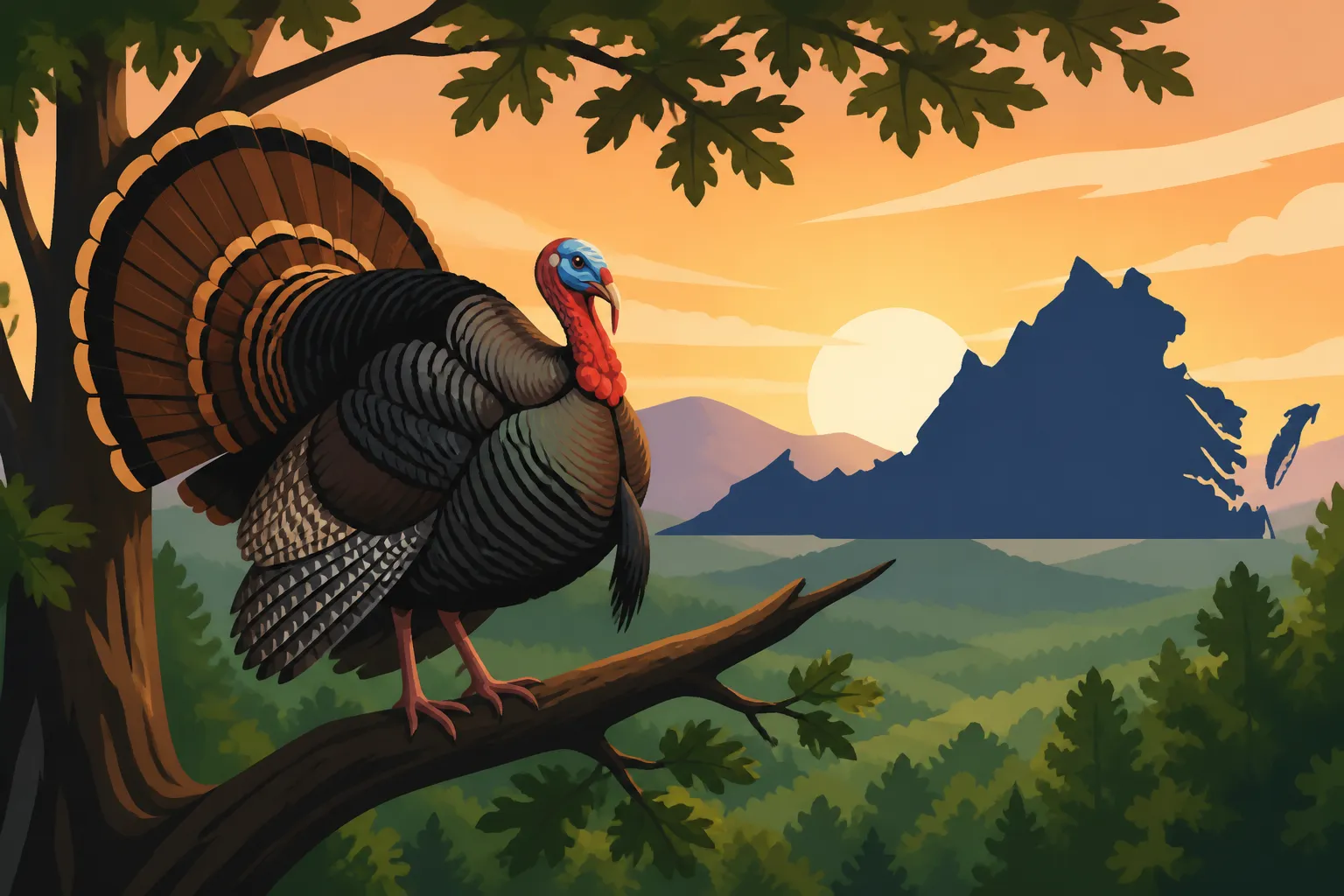
Wild turkeys, including our beloved Eastern gobblers here in Virginia, are creatures of habit and survival, and their roosting behavior is a prime example of both. They don't just pick any old tree to sleep in; their choice is a deliberate act driven by instinct for safety, a good vantage point, and sometimes even social dynamics. When you're trying to figure out where Virginia gobblers roost, you're essentially trying to get inside their heads and understand these fundamental needs.
Think about it from a turkey's perspective. The ground at night is a dangerous place. Predators like coyotes, foxes, bobcats, and even great-horned owls are on the prowl. Getting up into a tree provides an elevated sanctuary, putting a barrier between them and most ground-based threats. This isn't just about avoiding being eaten; it's about minimizing disturbance and ensuring they wake up refreshed, ready to get on with their daily routine of feeding and, for the gobblers, attracting hens. They want a tree that's tall enough to offer security, sturdy enough to hold their weight, and often located in an area that gives them a good view of their surroundings as the sun comes up. They also need some clear airspace to fly up to their chosen limb and, crucially, to fly down in the morning. A tree too dense with lower branches, or surrounded by impenetrable brush, isn't going to cut it.
The specific factors influencing a Virginia gobbler's roost tree choice can vary quite a bit, even within the same woodlot. In the mountains, they might favor towering oaks or hickories on a ridge top, where they can survey vast expanses of timber. In the rolling hills of the Piedmont, a large pine tree standing sentinel on a field edge or along a creek bottom might be their preferred perch. Sycamores along river bends are also classic roosting spots, their smooth, pale bark often standing out against the darker woods. The proximity to reliable food sources, like acorn flats or agricultural fields, and consistent water, such as a meandering creek or a farm pond, also plays a significant role. Turkeys aren't going to fly miles to roost if there's a perfectly suitable tree closer to where they've been feeding all evening. Seasonal changes affect this too; early in the spring, when leaves are just budding, they might be more exposed, leading them to seek out denser evergreens. As the canopy fills in, hardwoods become more appealing.
It truly can feel like they just vanish when you're scouting. You see them feeding in a field, then they disappear into the woods, and suddenly all sounds cease. That's because they're making their way to their roost, often a subtle, almost unnoticeable transition. Understanding these behavioral nuances helps you narrow down potential spots and anticipate their movements. It's not just about finding a tree, but finding the tree they're likely to use repeatedly, or at least one in their general roosting corridor.
Key Roosting Locations and Habitat Types in Virginia
Virginia's diverse landscape means our gobblers have a variety of preferences when it comes to bedding down for the night. From the Appalachian Mountains to the coastal plains, you'll find different tree species and terrain features that consistently attract roosting turkeys. Knowing these common denominators can save you a lot of aimless wandering and help you focus your scouting efforts.
One of the most classic roosting setups, especially in the western half of the state, involves large hardwood trees on ridge tops or along creek bottoms. Mature oak and hickory trees, with their strong, horizontal limbs, offer excellent perches. Gobblers love a commanding view, and a ridge top provides just that, allowing them to hear and see danger approaching from below. Conversely, creek bottoms, while offering less elevation, often feature massive, old-growth timber that provides ample cover and protection, especially if the creek itself offers some natural barrier. I've found that turkeys often choose to roost on the downwind side of a ridge if there's a strong wind, seeking a bit of shelter. You might want to explore these types of areas while you're out Scouting Virginia Public Land Before Season.
Another prime location, particularly prevalent in the Piedmont and eastern regions, involves pine stands, especially those bordering open fields or clearings. While hardwoods are great, a tall, mature pine tree offers dense, year-round cover. During early spring when other trees are still bare, pines offer a much-needed sense of security. I’ve seen countless gobblers fly up to the highest branches of a pine on the edge of a harvested cornfield or a sprawling pasture. The transition zone between dense woods and open areas creates a perfect scenario: feeding in the field, then a short flight into the safety of the pines for the night. This is a common pattern for Turkey Tactics for Piedmont Field Edges.
Then there are the less obvious, but equally important, spots like sycamore trees lining major river systems or larger streams. The smooth, white bark of a sycamore often stands out against the darker greens and browns of the forest, making them easy to spot. These trees typically grow quite large and often have sprawling limbs perfect for multiple birds to roost together. The water below offers an additional layer of security, as ground predators are less likely to cross. These areas can be fantastic, but they can also be challenging to access quietly in the morning.
When scouting for these prime roosting habitats, technology can be your best friend. Services like GoHunt offer incredible satellite imagery that allows you to zoom in and identify these specific tree types and terrain features from your couch. You can often pick out the tell-tale clusters of large hardwoods on a ridge, or the distinct green canopy of a pine stand next to an open field. Using these mapping tools to overlay property lines (crucial for private land hunts) and topographical maps to pinpoint elevation changes and water sources is invaluable. It’s like having an aerial view without the drone. Don't forget that using the Go Outdoors Virginia Map Tool can also help identify public land boundaries.
Regardless of the specific tree, look for clusters of trees rather than isolated ones. Turkeys often roost in small groups, particularly during the spring, seeking safety in numbers. They might not all be in the same tree, but they'll be in adjacent trees, often within easy calling distance of each other.
Signs of a Turkey Roost Site
Spotting a roost tree isn't always about seeing the bird fly up. Sometimes, you need to play detective. Here's what to look for:
| Sign | Description | Why it Matters |
|---|---|---|
| Droppings (Scat) | Look for a concentrated pile of white-capped, dark droppings directly beneath a large tree or group of trees. Turkey scat is typically elongated, often J-shaped for gobblers, and can be quite numerous under an active roost. | Fresh, abundant droppings confirm recent and repeated use of the tree. The volume can indicate multiple birds. |
| Feathers | You might find wing feathers, breast feathers, or even entire primary feathers on the ground. These are often shed during preening or as the birds fly up and down from the roost. | Fresh feathers, especially primary wing feathers, are strong indicators. The quantity and condition (clean, undamaged) suggest recent activity. |
| Scratch Marks | While not as common, sometimes you might notice bark rubbed or scratched on the main trunk or larger limbs where birds frequently fly up and down, though this can be subtle. | Less reliable on its own, but combined with other signs, it adds to the evidence. |
| Limb "Wash" | Over time, the repeated roosting of birds on a particular limb can cause the bark to appear "washed" or smoothed, and sometimes even stained from droppings running down the bark after rain. This is especially true on lower limbs used for intermediate perches. | A very subtle but telling sign of long-term, habitual use, particularly on older, well-established roosts. |
| Dust Bowls/Tracks | While not directly under a roost, nearby dust bowls (where turkeys dust themselves) or abundant tracks leading to/from the roost area can confirm general turkey activity in the vicinity. | Shows general turkey presence and travel patterns, helping to confirm that the roost is part of a larger active area. |
Scouting for Roosts: Techniques and Timing
Finding a reliable roost tree isn't just luck; it's a skill developed through diligent scouting, both pre-season and during the hunt. It requires patience, keen observation, and a willingness to put in the legwork.
Pre-season scouting is arguably the most crucial step, well before Virginia Spring Turkey Season Rules even kick in. During late winter and early spring, when foliage is sparse, it's easier to spot those big, old trees that gobblers favor. I'll spend afternoons hiking potential areas, looking for those tell-tale droppings and feathers under specific trees. This is where your mapping apps really shine; you can mark potential roost trees or areas on your GoHunt app and then physically check them out. Look for the biggest trees, especially pines or hardwoods, standing taller than their neighbors, or on prominent landscape features like ridge points or benches. I also pay close attention to terrain. Are there subtle saddles or benches on a ridge that provide a natural funnel for turkeys moving to and from the roost? Is there a creek that they might follow?
As spring approaches and turkey season nears, auditory scouting becomes paramount. This means being in the woods at dawn and dusk, listening intently. Gobblers are most vocal just before fly-down at first light and just before they fly up to roost in the evening. This is your absolute best chance to pinpoint their location. Get to your chosen scouting spot about 45 minutes before sunrise and listen. When you hear that first booming gobble, mark the direction. Don't rush in! Just listen and try to triangulate their position. In the evening, reverse the process. Be in the woods an hour or so before sunset, and listen for the characteristic "tree yelps" and soft clucks as birds gather, followed by the sound of heavy wings beating as they fly up. A locator call, like an owl hoot or a crow call, can sometimes provoke a "shock gobble" from a bird already on the roost, giving away his position.
Remember the anti-summary rule here: be patient. It might take several evenings or mornings of listening to confirm a pattern. Sometimes, a gobbler will gobble from the roost for ten minutes straight; other times, he'll only offer a single, soft gobble right at fly-down. It's frustrating when they're tight-lipped, but consistency in your scouting efforts will eventually pay off. You're not just looking for a single gobble; you're trying to understand their preferred roosting area and approach routes.
Another effective, though often overlooked, scouting method involves finding physical sign during the day. As mentioned earlier, fresh droppings and shed feathers are definitive proof of a roost. I also look for well-used turkey trails leading to and from these areas. Turkeys tend to use the same travel corridors day after day, and these paths often lead to their evening roosting spots. A good pair of binoculars, like those from a brand like GoHunt, can help you spot these subtle clues from a distance, minimizing disturbance. If you're looking to consistently find those birds, you'll benefit from understanding more about Where Virginia Gobblers Roost by learning to read the land.
Approaching a Roosted Bird for Success
Alright, you've done your homework, found a roost, and you know where that gobbler is sleeping. Now comes the moment of truth: the morning approach. This is where many hunts are made or broken, because spooking a roosted bird is one of the quickest ways to ruin your day. The key here is stealth, timing, and understanding the bird's likely behavior.
Your approach should always happen well before first light. This means getting into the woods at least an hour, sometimes two, before you expect that bird to fly down. You want to be set up, concealed, and absolutely still before the first hint of daylight paints the sky. The darkness is your friend, providing cover for your movement. Plan your route carefully using your GPS or mapping app, like the one from GoHunt. Identify landmarks you can use in the dark and, if possible, choose a route that avoids heavy leaf litter or thick brush that could create noise. If you're hunting public land, be extra vigilant for other hunters who might also be trying to get close to the same bird. Safety is paramount, and knowing where others might be is crucial, especially during the peak of Virginia's General Firearms Deer Season, though turkey hunters primarily use shotguns.
Once you're within what you believe is optimal calling and shooting range (typically 75-150 yards from the roost, depending on terrain and cover), it's time to set up. You need to be invisible. Look for a large tree, a thick blowdown, or a natural blind that offers excellent concealment. Remember to consider your background; you don't want to be silhouetted. If you're using a decoy, position it strategically. For a gobbler, a single hen decoy or a jake decoy can be incredibly effective, but make sure it's visible to the bird as he flies down, but not so close that he can spot your setup flaws. For more on this, check out Turkey Decoys That Work on Pressured Birds.
When the first light appears, and the gobbler starts sounding off from his perch, resist the urge to call too aggressively right away. A few soft tree yelps or subtle clucks with a mouth call or pot call might be all it takes to confirm his interest. You want to sound like an eager hen, but not desperate. The goal is to make him believe the hen is coming to him, or at least very close. If he's a hot bird, he might gobble continuously, making it easier to pinpoint him. If he's a bit more reserved, you might need to be more patient with your calling. For a deep dive into specific calling methods, take a look at Calling a Virginia Gobbler Off the Roost.
The moment of fly-down is critical. Listen for the sound of powerful wing beats and watch for movement in the trees. Once he's on the ground, he might strut and gobble a bit, trying to survey the scene. This is your window. If he's heading your way, stay still, absolutely motionless. If he hangs up, or moves off in a different direction, you might need to adjust your calling strategy or even attempt a very slow, subtle move to get back into his line of sight. This is where a "run-and-gun" approach might be necessary, as detailed in Run-and-Gun Turkey Tactics on Public Land, but usually, you want to stay put. If he completely leaves the area, it's time to pack up, reposition, and find another bird, or try to locate him later in the day. Sometimes, the most successful hunts are those where you make a mental note, learn from the experience, and refine your approach for next time.
Disclaimer
This article is for general informational purposes only and does not constitute professional advice. Laws, prices and regulations vary by location and change over time. Consult a qualified professional for guidance on your specific situation.