Bowfishing Virginia Rivers in the Off-Season
As the hunting seasons wind down in Virginia, many of us feel that familiar ache, that yearning for the thrill of the chase, the quiet solitude of the water, or the challenge of a new pursuit. It's tough when your favorite deer or turkey seasons are over, leaving you counting the days until next fall. But what if I told you that the off-season doesn't have to mean putting your archery gear away? Bowfishing on Virginia's abundant rivers offers an incredible, action-packed way to stay afield, hone your shooting skills, and even help manage invasive species, transforming those slow months into exciting angling adventures.
Understanding Virginia's Bowfishing Regulations
Before you even think about stringing up your bow and hitting the water, it's absolutely crucial to understand the rules of the game. Virginia's Department of Wildlife Resources (DWR) sets clear guidelines for bowfishing, and trust me, you don't want to run afoul of them. Ignoring regulations can lead to fines, confiscation of gear, and even loss of hunting and fishing privileges, which nobody wants. It’s always best to be overly cautious and informed.
Legal Species and Seasons
One of the biggest draws of bowfishing in Virginia is that many of the most popular target species are considered "rough fish" or invasive, meaning they have very liberal or even year-round seasons. This is fantastic news for anyone looking to extend their time outdoors beyond the traditional hunting seasons. You're primarily going after species like common carp, grass carp, snakeheads, and longnose gar. Common carp are prolific throughout Virginia's freshwater systems and offer a challenging, hard-fighting target. Grass carp, while often regulated due to their use in aquatic weed control, can also be targeted in many areas.
Perhaps the most exciting target for many bowfishers, especially in Eastern Virginia, is the invasive northern snakehead. These aggressive predators have established themselves in the Potomac River and its tributaries, as well as other tidal rivers like the Rappahannock and James, posing a threat to native fish populations. They are legal to harvest year-round, with no bag limit, and the DWR actively encourages their removal. This is a rare opportunity where your recreational pursuit directly aids conservation efforts. Longnose gar, a native species with an ancient lineage, are also fair game and provide a unique challenge with their tough scales and erratic movements. Always double-check the latest DWR regulations for any updates or specific county-level rules before heading out.
License Requirements and Equipment Rules
Just like any other form of hunting or fishing, bowfishing requires the proper licensing. You'll need a valid Virginia freshwater fishing license. If you're targeting species in tidal waters, a saltwater fishing license may also be necessary, or a combination license if you plan to hit both. Don't forget, if you're a Virginia resident, there are various options available, from annual licenses to multi-year discounts, and if you're coming from out of state, be sure to check into the specific Virginia Nonresident Hunting License Options or a simpler Virginia Resident One-Year License Cost. The convenience of purchasing these online through the Go Outdoors Virginia portal or app is a huge plus, ensuring you're legal before your feet even touch the riverbank.
Beyond the license, there are specific rules regarding your equipment. Your bow must be capable of propelling an arrow with an attached line. This isn't your typical archery setup for deer; instead, you'll need specialized reels, usually mounted on the bow, to retrieve your arrow and the fish. The arrows themselves are different, too, designed with a heavy-duty barbed tip that holds the fish once struck, but also allows for easy removal. There are no draw weight restrictions for bowfishing, unlike for big game hunting, so you can use whatever setup you're comfortable with, provided it’s powerful enough to penetrate your target. Remember, safety always comes first; ensure your equipment is in good working order and practice shooting with your bowfishing setup before going afield.
Prime Virginia Rivers for Bowfishing
Virginia is blessed with an incredible network of rivers, estuaries, and lakes, many of which teem with excellent bowfishing opportunities. The topography and water conditions vary drastically across the state, offering different experiences depending on where you cast your line (or rather, shoot your arrow). From the vast, muddy tidal rivers to the clearer, rockier freshwater stretches, there's a spot for every preference.
Tidal Rivers of Eastern Virginia
For many, the tidal rivers of Eastern Virginia are the crown jewel of bowfishing, largely due to the presence of the formidable northern snakehead. Rivers like the Potomac, Rappahannock, Mattaponi, Pamunkey, and the James River are prime locations. These rivers are often wide, with extensive shallow flats, backwaters, and oxbow lakes that provide ideal habitat for carp and snakeheads, especially during warmer months. The brackish water here can hold an amazing amount of life, and it's where you'll find some of the biggest fish.
A typical outing on these rivers might involve slowly cruising in a shallow-draft boat, scanning the submerged vegetation and muddy banks for shadows or tell-tale wakes. Dawn and dusk are often the most productive times, as fish move into the shallows to feed. During the heat of the day, look for them holding in shaded areas or deeper pockets near structure. Places like the Chickahominy River, a tributary of the James, are legendary for their snakehead populations. Remember, tide charts are your best friend here. A rising or falling tide can concentrate fish or move them into accessible areas. Utilizing mapping tools like those found in the GoHunt app can help you identify prime shallow water flats and backwater creeks where fish are likely to be found. Scouting these areas, just like when you're Scouting Virginia Public Land Before Season, can make all the difference.
Freshwater Rivers and Lakes
While the tidal waters get a lot of attention, don't overlook Virginia's numerous freshwater rivers and larger lakes for fantastic bowfishing. Rivers west of the fall line, such as parts of the James, Rappahannock, and Shenandoah, offer different challenges and rewards. Here, you'll find common carp, longnose gar, and sometimes invasive species like flathead catfish (though often not as readily targeted with a bow). Many large reservoirs and smaller lakes across the state also hold abundant carp populations that are perfect for bowfishing.
Consider the expansive waters of Lake Anna, Smith Mountain Lake, or Buggs Island Lake (John H. Kerr Reservoir). These large impoundments offer vast expanses, but the key is to focus on shallow coves, mudflats, and areas with submerged timber or vegetation, particularly during spawning periods. Carp will often "tail" in extremely shallow water, making their presence obvious. Smaller rivers and creeks, especially those with slower-moving sections and nutrient-rich bottoms, are also worth exploring. These areas can be accessed by canoe, kayak, or simply by wading, offering a more intimate experience. For detailed insights into specific locations or WMA regulations, checking the DWR's resource on Virginia Wildlife Management Areas might reveal hidden gems with river access.
Essential Gear and Techniques for Success
Success in bowfishing isn't just about having a powerful bow; it's about having the right specialized gear and employing effective techniques to find and hit your targets in often murky water. This hybrid sport demands a different approach than target archery or big game hunting.
Bowfishing Setups and Arrow Choices
Your bowfishing setup starts with a reliable bow. While a dedicated bowfishing rig is ideal, many archers convert an old compound or recurve bow for the purpose. The key components include a specialized reel (either a spincast reel adapted for bowfishing or a dedicated drum-style reel), a line (usually heavy-duty braided cord), and a durable arrow rest. For the reel, a simple drum reel like those offered by AMS Bowfishing is often preferred for its simplicity and quick retrieval. The line should be strong, usually 80-200 lb test, to handle the pulling power of a carp or gar.
Arrows are distinct, too. They're heavier than hunting arrows, solid fiberglass or carbon, and lack fletching (vanes) because they travel underwater. Instead of a field point or broadhead, they have a heavy, barbed tip designed to securely hold the fish. Brands like Muzzy Bowfishing and Innerloc offer excellent options for these barbed points, often featuring retractable barbs for easy fish removal. When you're gearing up, think about what kind of shots you'll be taking. Are you shooting from a boat at close range in shallow water, or trying to hit fish deeper in the water column? Your equipment choices should reflect these conditions. For instance, a heavy, stiff arrow penetrates better in dense fish.
Spotting and Stalking Tactics
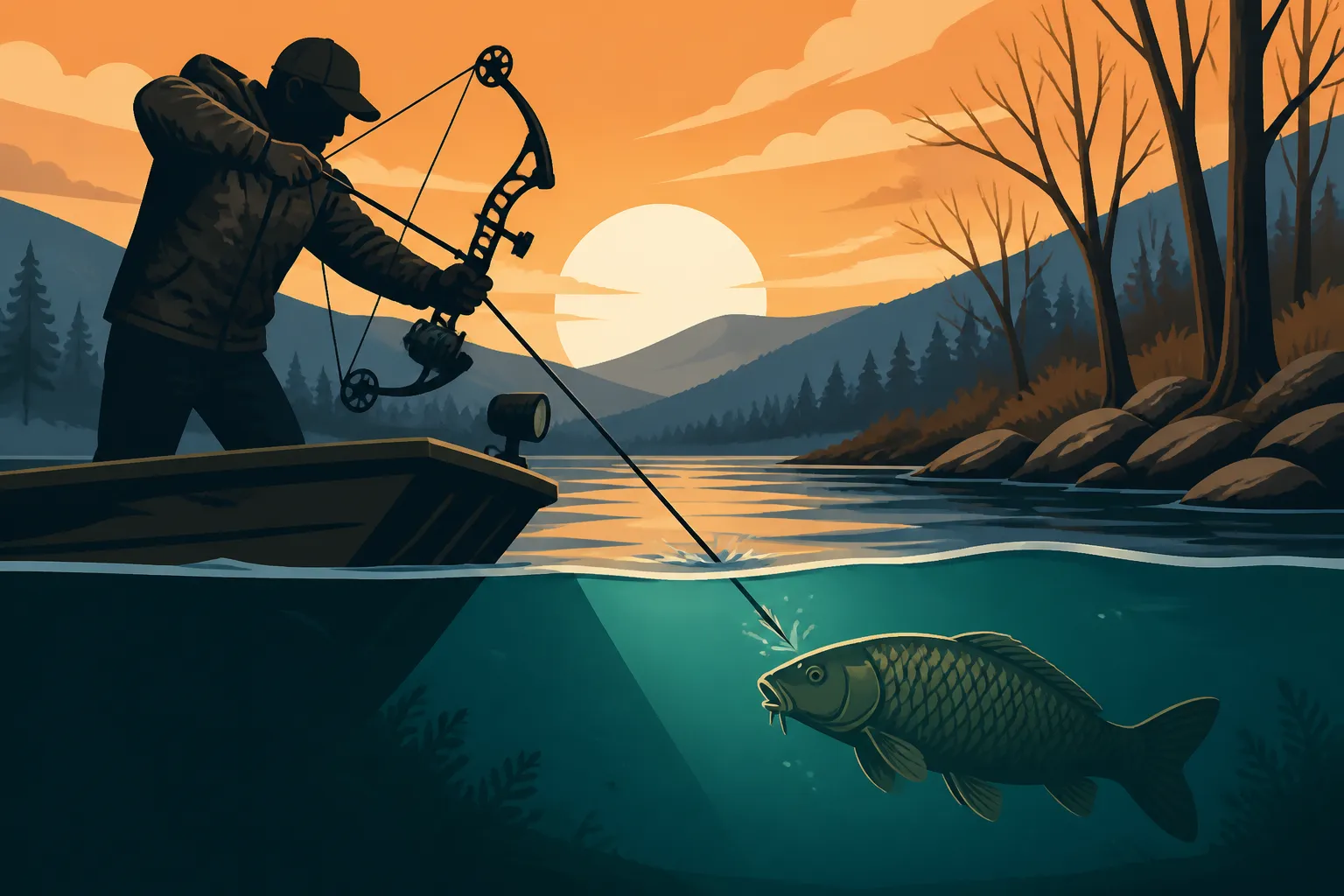
Bowfishing is largely a game of spotting and stalking. Unlike traditional fishing where you cast and wait, here you're actively searching for your quarry. This often means slowly moving through shallow water, either by boat, kayak, or on foot, and keeping a keen eye out for any sign of fish. Look for subtle movements: a dorsal fin breaking the surface, a muddy swirl in clear water, a carp "rolling," or the distinctive wake of a snakehead gliding through vegetation. Polarized sunglasses are absolutely indispensable for cutting glare and allowing you to see into the water.
When you spot a fish, the challenge really begins. You'll need to approach stealthily, staying downwind and out of the fish's line of sight as much as possible. Once in range, aim low. This is the cardinal rule of bowfishing due to light refraction. Water bends light, making the fish appear higher than it actually is. So, if you see a fish, you need to aim significantly below it to compensate. The deeper the fish, the lower you need to aim. Practice is the only way to master this optical illusion. It's a bit like learning to adjust for wind and thermals on a mountain slope when deer hunting; it takes experience to get it right consistently. Early mornings or late evenings, when the sun is lower and casts fewer shadows directly onto the water, often provide the best visibility and less glare.
The Thrill of Off-Season Bowfishing
Beyond the pure excitement of the catch, bowfishing offers a unique blend of benefits that make it an incredibly rewarding activity for any outdoor enthusiast, especially those suffering from the post-season blues. It keeps your skills sharp and provides a tangible way to contribute to local wildlife management.
Keeping Skills Sharp Year-Round
One of the biggest frustrations for hunters is the long stretch between seasons where you might feel your archery or shooting skills getting a little rusty. Bowfishing is an incredible antidote to this. It demands precision, quick reflexes, and the ability to judge distances and angles under dynamic conditions. Each shot is a unique challenge, often requiring you to lead a moving target, compensate for refraction, and react to sudden opportunities. This constant practice helps maintain your muscle memory, improves your aiming consistency, and sharpens your overall bowhunting prowess.
Think of it as active training for your Bowhunting Virginia's Statewide Archery Season or even Urban Archery Hunting in Virginia Cities. The hand-eye coordination, the controlled draw, the release – these are all skills that transfer directly. Plus, the sheer volume of shooting opportunities in bowfishing can significantly increase your comfort and confidence with your bow. You'll take more shots in a single bowfishing trip than you might in an entire deer season, leading to rapid skill improvement. And let's be honest, there's nothing quite like the satisfaction of hitting a fast-moving carp or gar, retrieving it, and feeling that strong sense of accomplishment during months when your deer stand might be gathering dust.
Sustainable Harvest and Invasive Species
Bowfishing truly shines when it comes to its positive environmental impact, particularly concerning invasive species. Targeting species like common carp and northern snakeheads is not only thrilling but also a direct form of wildlife management. Common carp, while not always invasive, can overpopulate certain waterways, outcompeting native fish for food and habitat and degrading water quality through their bottom-feeding habits. Reducing their numbers can help improve the overall health of an ecosystem.
Northern snakeheads, on the other hand, are a truly destructive invasive species. Originating from Asia, they are voracious predators that can survive out of water for extended periods and even "walk" short distances between bodies of water. Their presence can severely impact native fish populations. By actively targeting and removing snakeheads through bowfishing, you are directly helping the DWR and local conservation efforts to control their spread and mitigate their ecological damage. This isn't just about fun; it's about being an active participant in maintaining Virginia's natural heritage. What a great way to enjoy the outdoors while being a responsible steward of the environment!
| Species | Primary Habitat | Peak Bowfishing Season | Notes |
|---|---|---|---|
| Common Carp | Shallow, warm, muddy river sections, lakes, ponds | Spring – Fall | Prolific, widespread, strong fighters. |
| Grass Carp | Lakes, rivers with abundant aquatic vegetation | Spring – Summer | Often stocked for weed control, check regs. |
| Northern Snakehead | Shallow, vegetated, brackish tidal rivers, backwaters | Year-Round | Aggressive invasive, no bag limit. |
| Longnose Gar | Slow-moving rivers, backwaters, often near surface | Spring – Fall | Ancient, tough-scaled, challenging target. |
Disclaimer
Please remember that hunting and fishing regulations can change. Always consult the most current Virginia Department of Wildlife Resources (DWR) regulations before engaging in any hunting or fishing activity. This article is intended for informational purposes only and does not supersede official DWR guidelines.